We present the TESS-based discoveries of planetary systems orbiting the late G dwarfs TOI-2494 and TOI-5143, each of which harbors a hot giant planet and a smaller interior planet. TOI-2494 hosts a transiting mini-Neptune (P = 2.41 days, RP=2.35-0.15+0.16 R circle plus) and a hot Saturn (P = 8.38 days) with grazing transits, while TOI-5143 hosts a transiting mini-Neptune (P = 2.38 days, RP=2.73-0.17+0.19 R circle plus) and a hot Jupiter (P = 5.21 days) with grazing transits. We measure the masses of TOI-2494 c (80 +/- 19 M circle plus) and TOI-5143 c (208 +/- 14 M circle plus), place upper limits on the masses of the smaller planets, and explore the architectures of the planetary systems. TOI-2494 c and TOI-5143 c join a small but growing number of short-period giant planets known to be flanked by smaller companions. While the absence of close neighbors to most hot Jupiters would be consistent with disruptive dynamical evolution, the presence of nearby small planets in some hot Jupiter systems points to a separate, dynamically quiet formation pathway. In support of this conclusion, we present preliminary evidence that hot giant planets with small nearby companions tend to have low mutual orbital inclinations, consistent with the mutual inclination distribution of the dynamically quiet population of compact systems of multiple super-Earths and mini-Neptunes.
We present the results from a five-year campaign to gather multi-epoch, high-resolution spectra of a volume-complete sample of 413 M dwarfs with masses 10-30
We present the characterization of HIP 61637 b (TOI-5401 b), a brown dwarf discovered by TESS to transit an A-type star. HIP 61637 is the most massive and the brightest star known to host a transiting brown dwarf to date. The companion lies in the middle of the "brown dwarf desert". We perform a joint analysis of light curves from NASA's TESS mission and our high-resolution spectroscopy from the Tillinghast Reflector Echelle Spectrograph. We determine that HIP 61637 b has a radius of R_BD = 1.149^+0.049_-0.038 R_J, a mass of M_BD = 47.8^+1.5_-1.4 M_J, and transits its host star every 6.829104 ± 0.000011 days in a near-circular orbit (e = 0.054 ± 0.013). The host star has a mass of 2.86± 0.12 M_⊙, a radius of 4.33 ± 0.17 R_⊙, and an effective temperature of T_eff = 9180^+240_-230 K. We find that the host is nearing the end of its time on the main sequence and has begun to evolve, allowing for a precise age estimation of 396 ± 46 Myr for the system using stellar evolution models. This adds an important data point to the handful of well-characterized transiting brown dwarfs with reliable age estimates, allowing us to test the latest substellar evolution models. Theory of tidal evolution predicts that tidal dissipation mechanisms have circularized the orbit, consistent with the observed near-zero eccentricity.
We present ExoMiner++ , an enhanced deep learning model that builds on the success of ExoMiner to improve transit signal classification in 2-minute TESS data. ExoMiner++ incorporates additional diagnostic inputs, including periodogram, flux trend, difference image, unfolded flux, and spacecraft attitude control data, all of which are crucial for effectively distinguishing transit signals from more challenging sources of false positives (FPs). To further enhance performance, we leverage multisource training by combining high-quality labeled data from the Kepler space telescope with TESS data. This approach mitigates the impact of TESS’s noisier and more ambiguous labels. ExoMiner++ achieves high accuracy across various classification and ranking metrics, significantly narrowing the search space for follow-up investigations to confirm new planets. To serve the exoplanet community, we introduce a new TESS catalog containing ExoMiner++ classifications and confidence scores for each transit signal. Among the 147,568 unlabeled TCEs, ExoMiner++ identifies 7330 as planet candidates (PCs), with the remainder classified as FPs. These 7330 PCs correspond to 1868 existing TESS Objects of Interest (TOIs), 69 Community TESS Objects of Interest (CTOIs), and 50 newly introduced CTOIs. 1797 out of the 2506 TOIs previously labeled as PCs in ExoFOP are classified as PCs by ExoMiner++ . This reduction in plausible candidates, combined with the excellent ranking quality of ExoMiner++ , allows the follow-up efforts to be focused on the most likely candidates, increasing the overall planet yield.
We present the discovery of 11 new transiting brown dwarfs and low-mass M-dwarfs from NASA's TESS mission: TOI-2844, TOI-3122, TOI-3577, TOI-3755, TOI-4462, TOI-4635, TOI-4737, TOI-4759, TOI-5240, TOI-5467, and TOI-5882. They consist of 5 brown dwarf companions and 6 very low mass stellar companions ranging in mass from 25 M_ J to 128 M_ J. We used a combination of photometric time-series, spectroscopic, and high resolution imaging follow-up as a part of the TESS Follow-up Observing Program (TFOP) in order to characterize each system. With over 50 transiting brown dwarfs confirmed, we now have a large enough sample to directly test different formation and evolutionary scenarios. We provide a renewed perspective on the transiting brown dwarf desert and its role in differentiating between planetary and stellar formation mechanisms. Our analysis of the eccentricity distribution for the transiting brown dwarf sample does not support previous claims of a transition between planetary and stellar formation at ∼42 M_ J. We also contribute a first look into the metallicity distribution of transiting companions in the range 7 - 150 M_ J, showing that this too does not support a ∼42 M_ J transition. Finally, we also detect a significant lithium absorption feature in one of the brown dwarf hosts (TOI-5882) but determine that the host star is likely old based on rotation, kinematic, and photometric measurements. We therefore claim that TOI-5882 may be a candidate for planetary engulfment.
Sub-Neptunes-volatile-rich exoplanets smaller than Neptune-are intrinsically the most common type of planet known. However, the formation and nature of these objects, as well as the distinctions between subclasses (if any), remain unclear. Two powerful tools to tease out the secrets of these worlds are measurements of (i) atmospheric composition and structure revealed by transit and/or eclipse spectroscopy, and (ii) mass, radius, and density revealed by transit photometry and Doppler spectroscopy. Here, we present OrCAS, a survey to better elucidate the origins, compositions, and atmospheres of sub-Neptunes. This radial velocity survey uses a repeatable, quantifiable metric to select targets suitable for subsequent transmission spectroscopy and address key science themes about the atmospheric and internal compositions and architectures of these systems. Our survey targets 26 systems with transiting sub-Neptune planet candidates, with the overarching goal of increasing the sample of such planets suitable for subsequent atmospheric characterization. This paper lays out our survey's science goals, defines our target prioritization metric, and performs light-curve fits and statistical validation using existing TESS photometry and ground-based follow-up observations. Our survey serves to continue expanding the sample of small exoplanets with well-measured properties orbiting nearby bright stars, ensuring fruitful studies of these systems for many years to come.
Observations over the past few decades have found that planets are common around nearby stars in our Galaxy, but little is known about planets that formed outside the Milky Way. We describe the design and early implementation of a survey to test whether planets also exist orbiting the remnant stars of ancient dwarf galaxies that merged with the Milky Way, and if so, how they differ from their Milky Way counterparts. VOYAGERS (Views Of Yore-Ancient Gaia-enceladus Exoplanet Revealing Survey) is a radial velocity (RV) search using precision spectrographs to discover exoplanets orbiting very low metallicity (-2.8 < [Fe/H] <= -0.8) stars born in the dwarf galaxy Enceladus, which merged with the Milky Way galaxy about 10 Gyr ago. A sample of 22 candidates have been screened from a catalog of Gaia-Enceladus-Sausage (GES) members using a combination of stellar properties and reconnaissance observations from the TRES spectrograph. Precision RV measurements have been initiated using the NEID, HARPS-N, and CARMENES spectrographs. We plan to focus most upcoming observations on 10 main sequence targets. Data collection is well underway, with 778 observations on 22 candidates (385 of which are on 10 focus targets), but far from complete. This survey is designed to be sensitive to sub-Neptune mass planets with periods up to hundreds of days. We note that the RV analysis gives mass multiplied by sin(inclination) or the minimum mass for exoplanets. The expected survey yield is three planets, assuming that occurrence rates are similar to those in the Milky Way and taking into account the degeneracy with inclination in our yield models. Our survey is designed to detect at least one exoplanet if occurrence rates are similar to known Milky Way exoplanets or, if no exoplanets are discovered, to rule out a Milky Way-like planet population in GES with 95% confidence level.
Though missions such as Kepler, K2, and TESS have discovered >2000 sub-Neptune and Neptunian planets, there is a dearth of such planets at close-in ( P ≲ 3 days) orbits. This feature, called the Neptune desert or the evaporation desert, is believed to be primarily shaped by planetary migration and photoevaporation. However, this region is not completely devoid of planets—a small number of very hot Neptunes reside within the desert. These planets provide an opportunity to directly probe the effects of migration and photoevaporation. We present confirmation of TOI-5800 b, an eccentric sub-Neptune on an ≈2.6 day period that is likely actively undergoing tidal migration. We use radial velocity measurements from the Carnegie Planet Finder Spectrograph to constrain TOI-5800 b’s mass and eccentricity. We find that it has an unusually high eccentricity (0.39 ± 0.07) for its short orbit. TOI-5800 b is therefore currently experiencing high levels of tidal heating as it moves into the desert. Ranked as a top candidate for transmission and emission spectroscopy within its temperature and radius regime, TOI-5800 b is a prime target for atmospheric characterization with the James Webb Space Telescope. TOI-5800 b presents a unique opportunity to study the atmosphere of a planet undergoing tidal heating and to probe the composition of sub-Neptune planets.
We present the discovery of 11 new transiting brown dwarfs (BDs) and low-mass M dwarfs from NASA’s Transiting Exoplanet Survey Satellite (TESS) mission: TOI-2844, TOI-3122, TOI-3577, TOI-3755, TOI-4462, TOI-4635, TOI-4737, TOI-4759, TOI-5240, TOI-5467, and TOI-5882. They consist of five BD companions and six very-low-mass stellar companions ranging in mass from 25 M _J to 128 M _J . We used a combination of photometric time-series, spectroscopic, and high-resolution imaging follow-up as a part of the TESS Follow-up Observing Program (or TFOP) to characterize each system. With over 50 transiting BDs confirmed, we now have a large enough sample to directly test different formation and evolutionary scenarios. We provide a renewed perspective on the transiting “brown dwarf desert” and its role in differentiating between planetary and stellar formation mechanisms. Our analysis of the eccentricity distribution for the transiting BD sample does not support previous claims of a transition between planetary and stellar formation at ∼42 M _J . We also contribute a first look into the metallicity distribution of transiting companions in the range 7–150 M _J , showing that this does not support a ∼42 M _J transition too. Finally, we also detect a significant lithium absorption feature in one of the BD hosts (TOI-5882). However, we determine that the host star is likely old based on rotation, kinematic, and photometric mdeasurements. We therefore claim that TOI-5882 may be a candidate for planetary engulfment.
Fully convective M dwarfs typically remain rapidly rotating and magnetically active for billions of years, followed by an abrupt and mass-dependent transition to slow rotation and quiescence. A robust understanding of this process is complicated by difficulties in estimating M dwarf ages and potential dependencies on other variables such as birth environment or metallicity. To isolate the effect of mass, we consider M dwarfs in wide binaries. We identify 67 widely separated, fully convective (0.08–0.35 M _⊙ ) M dwarf binary systems using Gaia and measure the H α feature for each component. We classify the pairs into three categories: systems where both components are active, systems where both are inactive, and candidate transition systems, where one component is active and the other inactive. We gather higher-resolution spectra of the candidate transition systems to verify that their behavior does not result from an unresolved third component, yielding one new triple with surprising activity levels. Neglecting this triple, we find 22 active, 36 inactive, and eight transition pairs. Our results are consistent with the epoch of spindown for these binaries being primarily determined by mass, with mild second-order effects; we place a 1 σ upper limit of 0.5 Gyr or 25% on the dispersion in the mass-dependent spindown relation. Our findings suggest that the large dispersion in the spindown epoch previously observed for field stars of a given mass may stem from differences in birth environment, in addition to modest intrinsic stochasticity. We also see evidence that the wide binary population is dispersed over time due to dynamical processing.
We report the discovery of TOI-4641b, a warm Jupiter transiting a rapidly rotating F-type star with a stellar effective temperature of 6560 K. The planet has a radius of 0.73 R-Jup, a mass smaller than 3.87 M-Jup(3 sigma), and a period of 22.09 d. It is orbiting a bright star (V=7.5 mag) on a circular orbit with a radius and mass of 1.73 R-circle dot and 1.41 M-circle dot. Follow-up ground-based photometry was obtained using the Tierras Observatory. Two transits were also observed with the Tillinghast Reflector Echelle Spectrograph, revealing the star to have a low projected spin-orbit angle (lambda=1.41(-0.76)(+0.76)degrees). Such obliquity measurements for stars with warm Jupiters are relatively few, and may shed light on the formation of warm Jupiters. Among the known planets orbiting hot and rapidly rotating stars, TOI-4641b is one of the longest period planets to be thoroughly characterized. Unlike hot Jupiters around hot stars which are more often misaligned, the warm Jupiter TOI-4641b is found in a well-aligned orbit. Future exploration of this parameter space can add one more dimension to the star-planet orbital obliquity distribution that has been well sampled for hot Jupiters.
The present study reports the confirmation of BD-14 3065b, a transiting planet/brown dwarf in a triple-star system, with a mass near the deuterium burning boundary. BD-14 3065b has the largest radius observed within the sample of giant planets and brown dwarfs around post-main-sequence stars. Its orbital period is 4.3 days, and it transits a subgiant F-type star with a mass of $M_\star=1.41 \pm 0.05 M_{\odot}$, a radius of $R_\star=2.35 \pm 0.08 R_{\odot}$, an effective temperature of $T_{\rm eff}=6935\pm90$ K, and a metallicity of $-0.34\pm0.05$ dex. By combining TESS photometry with high-resolution spectra acquired with the TRES and Pucheros+ spectrographs, we measured a mass of $M_p=12.37\pm0.92 M_J$ and a radius of $R_p=1.926\pm0.094 R_J$. Our discussion of potential processes that could be responsible for the inflated radius led us to conclude that deuterium burning is a plausible explanation resulting from the heating of BD-14 3065b's interior. Detection of the secondary eclipse with TESS photometry enables a precise determination of the eccentricity $e_p=0.066\pm0.011$ and reveals BD-14 3065b has a brightness temperature of $3520 \pm 130$ K. With its unique characteristics, BD-14 3065b presents an excellent opportunity to study its atmosphere through thermal emission spectroscopy.
Context. Different theories have been developed to explain the origins and properties of close-in giant planets, but none of them alone can explain all of the properties of the warm Jupiters (WJs, Porb = 10-200 days). One of the most intriguing characteristics of WJs is that they have a wide range of orbital eccentricities, challenging our understanding of their formation and evolution. Aims. The investigation of these systems is crucial in order to put constraints on formation and evolution theories. TESS is providing a significant sample of transiting WJs around stars bright enough to allow spectroscopic follow-up studies. Methods. We carried out a radial velocity (RV) follow-up study of the TESS candidate TOI-4515 b with the high-resolution spectrograph HARPS-N in the context of the GAPS project, the aim of which is to characterize young giant planets, and the TRES and FEROS spectrographs. We then performed a joint analysis of the HARPS-N, TRES, FEROS, and TESS data in order to fully characterize this planetary system. Results. We find that TOI-4515 b orbits a 1.2 Gyr-old G-star, has an orbital period of Pb = 15.266446 +/- 0.000013 days, a mass of Mb = 2.01 +/- 0.05 MJ, and a radius of Rb = 1.09 +/- 0.04 RJ. We also find an eccentricity of e = 0.46 +/- 0.01, placing this planet among the WJs with highly eccentric orbits. As no additional companion has been detected, this high eccentricity might be the consequence of past violent scattering events.
Over a quarter of white dwarfs have photospheric metal pollution, which is evidence for recent accretion of exoplanetary material. While a wide range of mechanisms have been proposed to account for this pollution, there are currently few observational constraints to differentiate between them. To investigate the driving mechanism, we observe a sample of polluted and non-polluted white dwarfs in wide binary systems with main-sequence stars. Using the companion stars' metallicities as a proxy for the white dwarfs' primordial metallicities, we compare the metallicities of polluted and non-polluted systems. Because there is a well-known correlation between giant planet occurrence and higher metallicity (with a stronger correlation for close-in and eccentric planets), these metallicity distributions can be used to probe the role of gas giants in white dwarf accretion. We find that the metallicity distributions of polluted and non-polluted systems are consistent with the hypothesis that both samples have the same underlying metallicity distribution. However, we note that this result is likely biased by several selection effects. Additionally, we find no significant trend between white dwarf accretion rates and metallicity. These findings suggest that giant planets are not the dominant cause of white dwarf accretion events in binary systems.
JWST has ushered in an era of unprecedented ability to characterize exoplanetary atmospheres. While there are over 5000 confirmed planets, more than 4000 Transiting Exoplanet Survey Satellite (TESS) planet candidates are still unconfirmed and many of the best planets for atmospheric characterization may remain to be identified. We present a sample of TESS planets and planet candidates that we identify as “best-in-class” for transmission and emission spectroscopy with JWST. These targets are sorted into bins across equilibrium temperature T _eq and planetary radius R _p and are ranked by a transmission and an emission spectroscopy metric (TSM and ESM, respectively) within each bin. We perform cuts for expected signal size and stellar brightness to remove suboptimal targets for JWST. Of the 194 targets in the resulting sample, 103 are unconfirmed TESS planet candidates, also known as TESS Objects of Interest (TOIs). We perform vetting and statistical validation analyses on these 103 targets to determine which are likely planets and which are likely false positives, incorporating ground-based follow-up from the TESS Follow-up Observation Program to aid the vetting and validation process. We statistically validate 18 TOIs, marginally validate 31 TOIs to varying levels of confidence, deem 29 TOIs likely false positives, and leave the dispositions for four TOIs as inconclusive. Twenty-one of the 103 TOIs were confirmed independently over the course of our analysis. We intend for this work to serve as a community resource and motivate formal confirmation and mass measurements of each validated planet. We encourage more detailed analysis of individual targets by the community.
The Kepler space telescope was responsible for the discovery of over 2,700 confirmed exoplanets, more than half of the total number of exoplanets known today. These discoveries took place during both Kepler's primary mission, when it spent 4 years staring at the same part of the sky, and its extended K2 mission, when a mechanical failure forced it to observe different parts of the sky along the ecliptic. At the very end of the mission, when Kepler was exhausting the last of its fuel reserves, it collected a short set of observations known as K2 Campaign 19. So far, no planets have been discovered in this dataset because it only yielded about a week of high-quality data. Here, we report some of the last planet discoveries made by Kepler in the Campaign 19 dataset. We conducted a visual search of the week of high-quality Campaign 19 data and identified three possible planet transits. Each planet candidate was originally identified with only one recorded transit, from which we were able to estimate the planets' radii and estimate the semimajor axes and orbital periods. Analysis of lower-quality data collected after low fuel pressure caused the telescope's pointing precision to suffer revealed additional transits for two of these candidates, allowing us to statistically validate them as genuine exoplanets. We also tentatively confirm the transits of one planet with TESS. These discoveries demonstrate Kepler's exoplanet detection power, even when it was literally running on fumes.
Discovering planets in sparsely populated regions of parameter space is crucial to improving our understanding of planetary formation and evolution. One such region is the subset of planets that orbit giant, evolved stars. However, some of these evolved stars are known to exhibit long-period quasiperiodic radial velocity signals, which can masquerade as signals from orbital motion due to planetary companions. In this paper, we investigate the case of Sanders 364, a K giant star in the old open cluster M67. A paper by Brucalassi et al. reports the discovery of a giant planet with a period of 121 days orbiting Sanders 364. From our analysis of a large set of independent radial velocities, we find no convincing evidence for the giant planet reported by Brucalassi et al. We did identify six long-period radial velocity signals of unclear origin, including the 121 days signal reported by Brucalassi et al., but based on our analysis, we speculate that these are quasiperiodic signals that arise from nonplanetary origins, such as stellar variability or aliasing. The results from our study of Sanders 364 suggest that the detection of true orbital motion from a long-period planetary companion requires extra care when the host star is highly evolved. We conclude by offering recommendations for future study of planetary companions around evolved host stars.
Irradiated Jovian atmospheres are complex and dynamic and can undergo temporal variations due to the close proximity of their parent stars. Of the Jovian planets that have been cataloged to date, KELT-9b is the hottest gas giant known, with an equilibrium temperature of 4050 K. We probe the temporal variability of transmission spectroscopic signatures from KELT-9b via a set of archival multiyear ground-based transit observations, performed with the TRES facility on the 1.5 m reflector at the Fred Lawrence Whipple Observatory. Our observations confirm past detections of Fe i , Fe ii , and Mg i over multiple epochs, in addition to excess absorption at H α , which is an indicator for ongoing mass loss. From our multiyear data set, the H α light curve consistently deviates from a standard transit and follows a “W” shape that is deeper near ingress and egress and shallower midtransit. To search for and quantify any seasonal variations that may be present, we parameterize a “cometary tail” model to fit for the H α transit. We find no detectable variations between the different observed epochs. Though a “cometary tail” describes the H α flux variations well, we note that such a scenario requires a high density of neutral hydrogen in the n = 2 excited state far beyond the planetary atmosphere. Other scenarios, such as center-to-limb variations larger than that expected from 1D atmosphere models, may also contribute to the observed H α transit shape. These multiepoch observations highlight the capabilities of small telescopes to provide temporal monitoring of the dynamics of exoplanet atmospheres.
We present the discovery and characterization of six short-period, transiting giant planets from NASA's Transiting Exoplanet Survey Satellite (TESS) -- TOI-1811 (TIC 376524552), TOI-2025 (TIC 394050135), TOI-2145 (TIC 88992642), TOI-2152 (TIC 395393265), TOI-2154 (TIC 428787891), & TOI-2497 (TIC 97568467). All six planets orbit bright host stars (8.9
The legacy of NASA’s K2 mission has provided hundreds of transiting exoplanets that can be revisited by new and future facilities for further characterization, with a particular focus on studying the atmospheres of these systems. However, the majority of K2-discovered exoplanets have typical uncertainties on future times of transit within the next decade of greater than 4 hr, making observations less practical for many upcoming facilities. Fortunately, NASA’s Transiting Exoplanet Survey Satellite (TESS) mission is reobserving most of the sky, providing the opportunity to update the ephemerides for ∼300 K2 systems. In the second paper of this series, we reanalyze 26 single-planet, K2-discovered systems that were observed in the TESS primary mission by globally fitting their K2 and TESS light curves (including extended mission data where available), along with any archival radial velocity measurements. As a result of the faintness of the K2 sample, 13 systems studied here do not have transits detectable by TESS. In those cases, we refit the K2 light curve and provide updated system parameters. For the 23 systems with M _* ≳ 0.6 M _⊙ , we determine the host star parameters using a combination of Gaia parallaxes, spectral energy distribution fits, and MESA Isochrones and Stellar Tracks stellar evolution models. Given the expectation of future TESS extended missions, efforts like the K2 and TESS Synergy project will ensure the accessibility of transiting planets for future characterization while leading to a self-consistent catalog of stellar and planetary parameters for future population efforts.
 David Latham合作论文数Department of Astronomy, Faculty of Arts and Sciences, Harvard University;Harvard-Smithsonian Center for Astrophysics;Smithsonian Astrophysical Observatory216
 Allyson Bieryla合作论文数Space Science & Engineering Division;Southwest Research Institute;Space Science & Engineering Division, Southwest Research Institute127
 Perry Berlind合作论文数102
 Samuel Quinn合作论文数Harvard-Smithsonian Center for Astrophysics91
 Michael Calkins合作论文数88
 Guillermo Torres合作论文数Center for Astrophysics, Harvard & Smithsonian87
 Gaspar Bakos合作论文数Department of Astrophysical Sciences, Princeton University70
 Lars A. Buchhave合作论文数National Space Institute, Technical University of Denmark63
 Andrew W. Howard合作论文数The Division of Physics, Mathematics and Astronomy, California Institute of Technology62Karen A. Collins合作论文数Center for Astrophysics, ∣ Harvard & Smithsonian59Robert P. Stefanik合作论文数58
 Robert Noyes合作论文数Department of Astronomy, Faculty of Arts and Sciences, Harvard University56Joseph E. Rodriguez合作论文数Center for Data Intensive and Time Domain Astronomy, Michigan State University55
 Geza Kovacs合作论文数Hungarian Academy of Sciences, Konkoly Observatory54József Lázár合作论文数54
 Avi Shporer合作论文数Kavli Institute for Astrophysics and Space Research, School of Science, Massachusetts Institute of Technology53
 Keivan G. Stassun合作论文数Department of Physics & Astronomy, College of Arts & Science, Vanderbilt University52
 Benjamin J. Fulton合作论文数51P. Sári合作论文数50
 Geoffrey Marcy合作论文数Space Laser Awareness50
 David Ciardi合作论文数NASA Exoplanet Science Institute, California Institute of Technology49I. Papp合作论文数48
 Josh Winn合作论文数Department of Astrophysical Sciences, Princeton University47
 Jon Jenkins合作论文数Ames Reseach Center, National Aeronautics and Space Administration44
 Andrew Vanderburg合作论文数Department of Physic, Massachusetts Institute of Technology;Smithsonian Astrophysical Observatory43
 Dimitar D. Sasselov合作论文数Department of Astronomy, Faculty of Arts and Sciences, Harvard University43
 Debra Fischer合作论文数Department of Astronomy, Yale University43
 George Zhou合作论文数41
 John F. Kielkopf合作论文数Department of Physics and Astronomy, University of Louisville;College of Arts and Sciences, University of Louisville;Centre for Astrophysics, University of Southern Queensland41
 Kaloyan Penev合作论文数Department of Physics, School of Natural Sciences and Mathematics, The University of Texas at Dallas41
 Jason Eastman合作论文数Smithsonian Center for Astrophysics, Harvard University;Department of Astronomy, Faculty of Arts and Sciences, Harvard University40
 David Charbonneau合作论文数Department of Astronomy, Faculty of Arts and Sciences, Harvard University39Mark Everett合作论文数37
 Joshua Pepper合作论文数Department of Physics, College of Arts and Science, Lehigh University37
 Joel Hartman合作论文数Department of Astrophysical Sciences, Princeton University36
 Steve B. Howell合作论文数NASA Ames Research Center36
 Howard Isaacson合作论文数Department of Astronomy, University of California, Berkeley;Institute for Astronomy, University of Hawaiʻi at Mānoa36Chelsea X. Huang合作论文数MIT, Dept Phys, Cambridge, MA 02139 USA35
 Sara Seager合作论文数Department of Physics, Massachusetts Institute of Technology;Department of Aeronautics and Astronautics, Massachusetts Institute of Technology;Department of Planetary Science, Massachusetts Institute of Technology34Eric L. N. Jensen合作论文数Swarthmore College34B. Beky合作论文数34
 John Asher Johnson合作论文数Center for Astrophysics, Harvard & Smithsonian;Department of Astronomy, Faculty of Arts and Sciences, Harvard University33
 B. Scott Gaudi合作论文数Department of Astronomy, College of Arts and Sciences, The Ohio State University32
 Thomas G. Beatty合作论文数Steward Observatory, The University of Arizona31
 Robert Siverd合作论文数30Knicole D. Colón合作论文数27
 Courtney Dressing合作论文数Department of Astronomy, University of California, Berkeley27
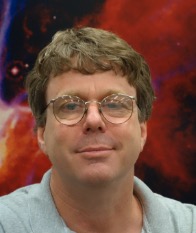 Roland K. Vanderspek合作论文数Kavli Institute for Astrophysics and Space Research, School of Science, Massachusetts Institute of Technology27
 George Ricker合作论文数Kavli Institute for Astrophysics and Space Research, Massachusetts Institute of Technology;Detector Laboratory, Massachusetts Institute of Technology;Goddard Space Flight Center, National Aeronautics and Space Administration27




