Graph neural networks (GNNs) have achieved strong performance on graph learning tasks, but their message-passing mechanism makes it difficult to capture long-range structural dependencies and may lead to over-smoothing in deeper architectures. Graph transformers offer a possible remedy, yet existing approaches typically rely on learnable attention or additional structural encodings, which increase the number of trainable parameters and computational cost while not always exploiting graph structure explicitly. Motivated by these limitations, we propose GraFix++, a graph transformer based on a fixed (non-learnable) multi-head structural attention mechanism derived from graph kernels. Multiple attention heads capture a range of structural similarities between substructures in the input graph, while a GNN is employed to improve the node features extraction. The resulting graph transformer showcases an excellent performance on standard graph classification benchmarks, matching or surpassing a wide range of alternative graph-based approaches. Furthermore, our model benefits from a reduced number of learnable parameters and competitive training runtime. In our experiments, we extensively evaluate the impact of various graph kernels, multiple attention heads, and GNN integration, demonstrating their collective contribution to the model’s superior performance.
In recent years, deep learning researchers have been increasingly interested in developing architectures able to operate on data abstracted as graphs, i.e., Graph Neural Networks (GNNs). At the same time, there has been a surge in the number of commercial AI systems deployed for real-world applications. At their core, the majority of these systems are based on black-box deep learning models, such as GNNs, greatly limiting their accountability and trustworthiness. The idea underpinning this paper is to exploit the representational power of graph variational autoencoders to learn an embedding space where a “convolution” between local structures and latent vectors can take place. The key intuition is that this embedding space can then be used to decode the learned latent vectors into more interpretable latent structures. Our experiments validate the performance of our model against widely used alternatives on standard graph benchmarks, while also showing the ability to probe the model decisions by visualising the learned structural patterns.
During the COVID-19 pandemic, the scientific literature related to SARS-COV-2 has been growing dramatically. These literary items encompass a varied set of topics, ranging from vaccination to protective equipment efficacy as well as lockdown policy evaluations. As a result, the development of automatic methods that allow an in-depth exploration of this growing literature has become a relevant issue, both to identify the topical trends of COVID-related research and to zoom-in on its sub-themes. This work proposes a novel methodology, called LDA2Net, which combines topic modelling and network analysis, to investigate topics under their surface. More specifically, LDA2Net exploits the frequencies of consecutive words pairs (i.e. bigram) to build those network structures underlying the hidden topics extracted from large volumes of text by Latent Dirichlet Allocation (LDA). Results are promising and suggest that the topic model efficacy is magnified by the network-based representation. In particular, such enrichment is noticeable when it comes to displaying and exploring the topics at different levels of granularity.
In this paper we introduce GraFix, a novel graph transformer with fixed structural attention. Inspired by recent works 1) harnessing the link between (graph) kernels and the attention mechanism of transformers and 2) favouring simple fixed (non-learnable) attentive patterns over the standard attention mechanism, we propose to use graph kernels, specifically the WL kernel, to replace the learnable attention mechanism of a transformer with a fixed one capturing the structural similarity between substructures in the input graphs. The resulting graph transformer showcases an excellent performance on standard graph classification benchmarks, performing on-par with and in some instances outperforming a wide variety of alternative graph neural network and graph transformer-based approaches while at the same time benefiting from a reduced number of learnable parameters and learning runtime.
Graph neural networks are increasingly becoming the framework of choice for graph-based machine learning. In this paper, we propose a new graph neural network architecture that substitutes classical message passing with an analysis of the local distribution of node features. To this end, we extract the distribution of features in the egonet for each local neighbourhood and compare them against a set of learned label distributions by taking the histogram intersection kernel. The similarity information is then propagated to other nodes in the network, effectively creating a message passing-like mechanism where the message is determined by the ensemble of the features. We perform an ablation study to evaluate the network’s performance under different choices of its hyper-parameters. Finally, we test our model on standard graph classification and regression benchmarks, and we find that it outperforms widely used alternative approaches, including both graph kernels and graph neural networks.
Graph neural networks are increasingly becoming the framework of choice for graph-based machine learning. In this paper we propose a new graph neural network architecture based on the soft-alignment of the graph node features against sets of learned points. In each layer of the network the input node features are transformed by computing their similarity with respect to a set of learned features. The similarity information is then propagated to other nodes in the network, effectively creating a message passing-like mechanism where each node of the graph individually learns what is the optimal message to pass to its neighbours. We perform an ablation study to evaluate the performance of the network under different choices of its hyper-parameters. Finally, we test our model on standard graph-classification benchmarks and we find that it outperforms widely used alternative approaches, including both graph kernels and graph neural networks.
Understanding the behavior of deep neural networks for Information Retrieval (IR) is crucial to improve trust in these effective models. Current popular approaches to diagnose the predictions made by deep neural networks are mainly based on: i) the adherence of the retrieval model to some axiomatic property of the IR system, ii) the generation of free-text explanations, or iii) feature importance attributions. In this work, we propose a novel approach that analyzes the changes of document and query embeddings in the latent space and that might explain the inner workings of IR large pre-trained language models. In particular, we focus on predicting query/document relevance, and we characterize the predictions by analyzing the topological arrangement of the embeddings in their latent space and their evolution while passing through the layers of the network. We show that there exists a link between the embedding adjustment and the predicted score, based on how tokens cluster in the embedding space. This novel approach, grounded in the query and document tokens interplay over the latent space, provides a new perspective on neural ranker explanation and a promising strategy for improving the efficiency of the models and Query Performance Prediction (QPP).
The convolution operator at the core of many modern neural architectures can effectively be seen as performing a dot product between an input matrix and a filter. While this is readily applicable to data such as images, which can be represented as regular grids in the Euclidean space, extending the convolution operator to work on graphs proves more challenging, due to their irregular structure. In this article, we propose to use graph kernels, i.e., kernel functions that compute an inner product on graphs, to extend the standard convolution operator to the graph domain. This allows us to define an entirely structural model that does not require computing the embedding of the input graph. Our architecture allows to plug-in any type of graph kernels and has the added benefit of providing some interpretability in terms of the structural masks that are learned during the training process, similar to what happens for convolutional masks in traditional convolutional neural networks (CNNs). We perform an extensive ablation study to investigate the model hyperparameters' impact and show that our model achieves competitive performance on standard graph classification and regression datasets.
We explore through the lens of distant reading the evolution of discourse on Jews in France during the XIX century. We analyze a large textual corpus including heterogeneous sources-literary works, periodicals, songs, essays, historical narratives-to trace how Jews are associated to different semantic domains, and how such associations shift over time. Our analysis deals with three key aspects of such changes: the overall transformation of embedding spaces, the trajectories of word associations, and the comparative projection of different religious groups over different, historically relevant semantic dimensions or streams of discourse. This allows to show changes in the association between words and semantic domains (referring e.g. to economic and moral behaviors), the evolution of stereotypes, and the dynamics of bias over a long time span characterized by major historical transformations. We suggest that the analysis of large textual corpora can be fruitfully used in a dialogue with more traditional close reading approaches-by pointing to opportunities of in-depth analyses that mobilize more qualitative approaches and a detailed inspection of the sources that distant reading inevitably tends to aggregate. We offer a short example of such a dialogue between different approaches in our discussion of the Second Empire transformations, where we mobilize the historian's tools to start disentangling the complex interactions between changes in French society, the nature of sources, and representations of Jews. While our example is limited in scope, we foresee large potential payoffs in the cooperative interaction between distant and close reading.
The Average Mixing Kernel Signature is a novel spectral signature for points on non-rigid three-dimensional shapes. It is based on a quantum exploration process of the shape surface, where the average transition probabilities between the points of the shape are summarised in the finite-time average mixing kernel. A band-filtered spectral analysis of this kernel then yields the AMKS. Crucially, we show that opting for a finite time-evolution allows the signature to account for a mixing of the Laplacian eigenspaces, similar to what is observed in the presence of noise, explaining the increased noise robustness of this signature when compared to alternative signatures. We perform an extensive experimental analysis of the AMKS under a wide range of problem scenarios, evaluating the performance of our descriptor under different sources of noise (vertex jitter and topological), shape representations (mesh and point clouds), as well as when only a partial view of the shape is available. Our experiments show that the AMKS consistently outperforms two of the most widely used spectral signatures, the Heat Kernel Signature and the Wave Kernel Signature, and suggest that the AMKS should be the signature of choice for various compute vision problems, including as input of deep convolutional architectures for shape analysis.
The pace of digitized collective knowledge accumulation has become increasingly rapid in the last few years. That means we have tremendous amounts of information content to be organized, searched, and understood that can be arranged only by employing automatic methods. In the case of textual data analysis, topic modeling, a machine learning method, is definitely the most famous framework to uncover latent topics from text documents. Adopting topic modeling approaches for studying textual sources is a well-established practice in many scientific and humanities studies fields, including the historical research scope. In this paper, we present a benchmark corpus for topic models, a dataset containing an annotated real-world collection of texts focused on the antisemitism theme in 19th century France. The benchmark corpus has been developed to address a specific machine learning task but it can also support the enhancement of other natural language processing-based studies, in particular, those concerning the historical sphere.
During the COVID-19 pandemic, the scientific literature related to SARS-COV-2 has been growing dramatically, both in terms of the number of publications and of its impact on people's life. This literature encompasses a varied set of sensible topics, ranging from vaccination, to protective equipment efficacy, to lockdown policy evaluation. Up to now, hundreds of thousands of papers have been uploaded on online repositories and published in scientific journals. As a result, the development of digital methods that allow an in-depth exploration of this growing literature has become a relevant issue, both to identify the topical trends of COVID-related research and to zoom-in its sub-themes. This work proposes a novel methodology, called LDA2Net, which combines topic modelling and network analysis to investigate topics under their surface. Specifically, LDA2Net exploits the frequencies of pairs of consecutive words to reconstruct the network structure of topics discussed in the Cord-19 corpus. The results suggest that the effectiveness of topic models can be magnified by enriching them with word network representations, and by using the latter to display, analyse, and explore COVID-related topics at different levels of granularity.
We introduce the Average Mixing Kernel Signature (AMKS), a novel signature for points on non-rigid three-dimensional shapes based on the average mixing kernel and continuous-time quantum walks. The average mixing kernel holds information on the average transition probabilities of a quantum walk between each pair of vertices of the mesh until a time T. We define the AMKS by decomposing the spectral contributions of the kernel into several bands, allowing us to limit the influence of noise-dominated high-frequency components and obtain a more descriptive signature. We also show through a perturbation theory analysis of the kernel that choosing a finite stopping time T leads to noise and deformation robustness for the AMKS. We perform an extensive experimental evaluation on two widely used shape matching datasets under varying level of noise, showing that the AMKS outperforms two state-of-the-art descriptors, namely the Heat Kernel Signature (HKS) and the similarly quantum-walk based Wave Kernel Signature (WKS) .
In this article, we present a novel analysis of time-evolving networks, based on a thermodynamic representation of graph structure. We show how to characterize the evolution of time-varying complex networks by relating major structural changes to thermodynamic phase transitions. In particular, we derive expressions for a number of different thermodynamic quantities (specifically energy, entropy and temperature), which we use to describe the evolutionary behaviour of the network system over time. Since in the real world no system is truly closed and interactions with the environment are usually strong, we assume an open nature of the system. We adopt the Schrodinger picture as the dynamical representation of the quantum system over time. First, we compute the network entropy using a recent quantum mechanical representation of graph structure, connecting the graph Laplacian to a density operator. Then, we assume the system evolves according to the Schrodinger representation, but we allow for decoherence due to the interaction with the environment in a model akin to Environment-Induced Decoherence. We simplify the model by separating its dynamics into (a) an unknown time-dependent unitary evolution plus (b) an observation/interaction process, and this is the sole cause of the changes in the eigenvalues of the density matrix of the system. This allows us to obtain a measure of energy exchange with the environment through the estimation of the hidden time-varying Hamiltonian responsible for the unitary part of the evolution. Using the thermodynamic relationship between changes in energy, entropy, pressure and volume, we recover the thermodynamic temperature. We assess the utility of the method on real-world time-varying networks representing complex systems in the financial and biological domains. We also compare and contrast the different characterizations provided by the thermodynamic variables (energy, entropy, temperature and pressure). The study shows that the estimation of the time-varying energy operator strongly characterizes different states of a time-evolving system and successfully detects critical events occurring during network evolution.
Graph anonymization aims at reducing the ability of an attacker to identify the nodes of a graph by obfuscating its structural information. In k-anonymity, this means making each node indistinguishable from at least other k - 1 nodes. Simply stripping the nodes of a graph of their identifying label is insufficient, as with enough structural knowledge an attacker can still recover the nodes identities. We propose an algorithm to enforce k-anonymity based on the Szemeredi regularity lemma. Given a graph, we start by computing a regular partition of its nodes. The Szemeredi regularity lemma ensures that such a partition exists and that the edges between the sets of nodes behave quasi-randomly. With this partition to hand, we anonymize the graph by randomizing the edges within each set, obtaining a graph that is structurally similar to the original one yet the nodes within each set are structurally indistinguishable. Unlike other k-anonymization methods, our approach does not consider a single type of attack, but instead it aims to prevent any structure-based de-anonymization attempt. We test our framework on a wide range of real-world networks and we compare it against another simple yet widely used k-anonymization technique demonstrating the effectiveness of our approach.
We consider the problem of measuring the similarity between two graphs using continuous-time quantum walks and comparing their time-evolution by means of the quantum Jensen-Shannon divergence. Contrary to previous works that focused solely on undirected graphs, here we consider the case of both directed and undirected graphs. We also consider the use of alternative Hamiltonians as well as the possibility of integrating additional node-level topological information into the proposed framework. We set up a graph classification task and we provide empirical evidence that: (1) our similarity measure can effectively incorporate the edge directionality information, leading to a significant improvement in classification accuracy; (2) the choice of the quantum walk Hamiltonian does not have a significant effect on the classification accuracy; (3) the addition of node-level topological information improves the classification accuracy in some but not all cases. We also theoretically prove that under certain constraints, the proposed similarity measure is positive definite and thus a valid kernel measure. Finally, we describe a fully quantum procedure to compute the kernel.
The von Neumann entropy of a graph is a spectral complexity measure that has recently found applications in complex networks analysis and pattern recognition. Two variants of the von Neumann entropy exist based on the graph Laplacian and normalized graph Laplacian, respectively. Due to its computational complexity, previous works have proposed to approximate the von Neumann entropy, effectively reducing it to the computation of simple node degree statistics. Unfortunately, a number of issues surrounding the von Neumann entropy remain unsolved to date, including the interpretation of this spectral measure in terms of structural patterns, understanding the relation between its two variants, and evaluating the quality of the corresponding approximations. In this paper we aim to answer these questions by first analysing and comparing the quadratic approximations of the two variants and then performing an extensive set of experiments on both synthetic and real-world graphs. We find that 1) the two entropies lead to the emergence of similar structures, but with some significant differences; 2) the correlation between them ranges from weakly positive to strongly negative, depending on the topology of the underlying graph; 3) the quadratic approximations fail to capture the presence of non-trivial structural patterns that seem to influence the value of the exact entropies; 4) the quality of the approximations, as well as which variant of the von Neumann entropy is better approximated, depends on the topology of the underlying graph.
Partial similarity problems arise in numerous applications that involve real data acquisition by 3D sensors, inevitably leading to missing parts due to occlusions and partial views. In this setting, the shapes to be retrieved may undergo a variety of transformations simultaneously, such as non-rigid deformations (changes in pose), topological noise, and missing parts - a combination of nuisance factors that renders the retrieval process extremely challenging. With this benchmark, we aim to evaluate the state of the art in deformable shape retrieval under such kind of transformations. The benchmark is organized in two sub-challenges exemplifying different data modalities (3D vs. 2.5D). A total of 15 retrieval algorithms were evaluated in the contest; this paper presents the details of the dataset, and shows thorough comparisons among all competing methods.
In this paper, we present a novel thermodynamic framework for graphs that can be used to analyze time evolving networks, relating the thermodynamics variables to macroscopic changes in network topology, and linking major structural transition to phase changes in the thermodynamic picture. We start from a recent quantum-mechanical characterization of the structure of a network relating the graph Laplacian to a density operator and resulting in a characterization of the network's entropy. Then we adopt a Schrödinger picture of the dynamics of the network, resulting in an estimation of a hidden time-varying Hamiltonian from the data, from which we derive a measure of Energy exchange. From these variables, using the thermodynamic identity, we obtain temperature under the assumption of constant volume of the system. Evaluation of real-world data shows that the thermodynamic variables thus extracted are effective in detecting critical events occurring during network evolution.
 Andrea Torsello合作论文数Dipartimento di Scienze Ambientali, Informatica e Statistica, Università Ca' Foscari Venezia19
 Luca Rossi合作论文数Department of Environmental Science, Informatics and Statistics, Ca' Foscari University of Venice11
 Luca Cosmo合作论文数Department of Environmental Sciences, Informatics and Statistics, University of Venice9
 Michael Bronstein合作论文数Department of Computer Science, University of Oxford;AITHYRA Research Institute for Biomedical Artificial Intelligence5
 Andrea Gasparetto合作论文数Ca Foscari University of Venice4
 Edwin Hancock合作论文数Department of Computer Science, University of York;Beijing Advanced Innovation Centre for Big Data and Brain Compuring, Beihang University4
 Emanuele Rodolà合作论文数Dipartimento di Informatica, Sapienza University of Rome4
 Alessandro Bicciato合作论文数3Massimo Warglien合作论文数Department of Business Economics, Ca' Foscari Università3
 Majid Masoumi合作论文数Concordia University, CIISE, 1455 de Maisonneuve Blvd. West, EV7.631, Montreal, QC H3G 1M8, Canada2V.-T. Nguyen合作论文数2Viet-Khoi Pham合作论文数2Carlo R. M. A. Santagiustina合作论文数2
 Yiyu Hong合作论文数Sangmyung Univ, Dept Copyright Protect, Seoul 03015, South Korea2
 Alexandre Boulch合作论文数Valeo.ai2
 Ryutarou Ohbuchi (大渕竜太郎)合作论文数Computer Science and Engineering Department, Faculty of Engineering, University of Yamanashi2
 Bertrand Le Saux合作论文数ESA2
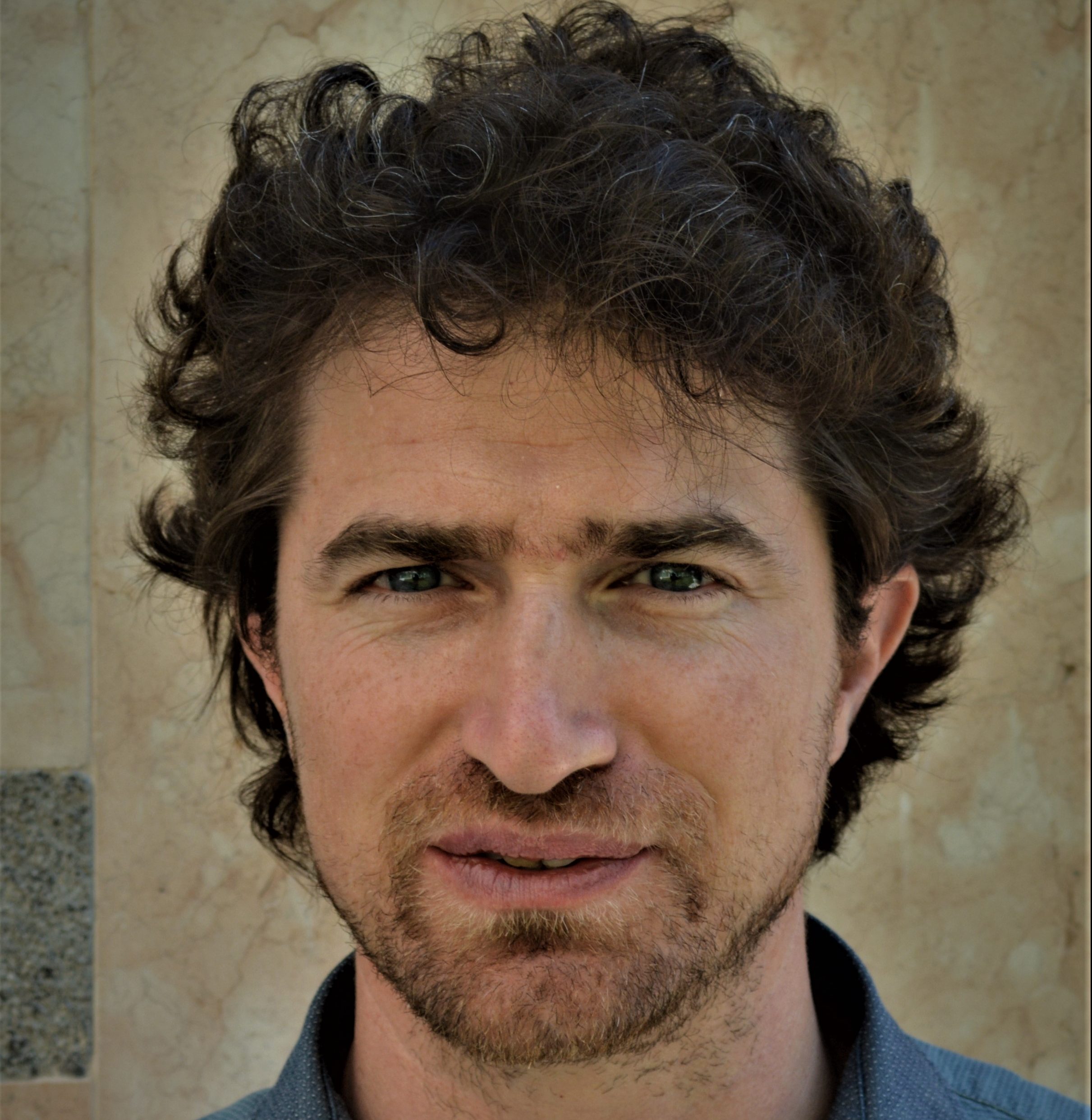 Umberto Castellani合作论文数Department of Computer Science, University of Verona2
 Or Litany合作论文数NVIDIA;Technion - Israel Institute of Technology2
 Minh Triết Trần合作论文数Faculty of Information Technology, Ho Chi Minh City University of Science2
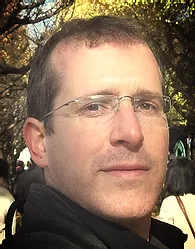 Roee Litman合作论文数Amazon Recognition2
 Nicolas Audebert合作论文数Institut National de l'Information Géographique et Forestière;Conservatoire National des Arts et Métiers2
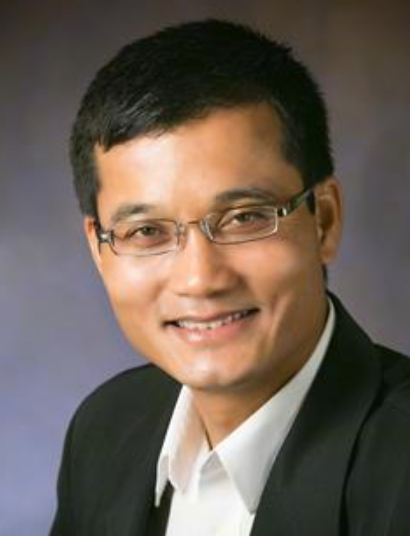 Minh N. Do合作论文数Department of Electrical and Computer Engineering, The Grainger College of Engineering, University of Illinois at Urbana-Champaign;Coordinated Science Laboratory, The Grainger College of Engineering, University of Illinois at Urbana-Champaign2Ben Hamza合作论文数Concordia Institute for Information Systems Engineering, Gina Cody School of Engineering and Computer Science, Concordia University2Hai-Dang Nguyen合作论文数1T. Furuya合作论文数1Simon Levis Sullam合作论文数1Deborah Paci合作论文数Universidade de Modena e Reggio Emilia;Universidade de Bolonha;Universidade de Modena e Reggio Emilia, Universidade de Bolonha1
 Joshua Lockhart合作论文数Dept Comp Sci, UCL1Thuyen V. Phan合作论文数1H. D. Nguyen合作论文数1
 Alberto Veneri合作论文数Foscari University of Venice & ISTI-CNR1Bao Truong合作论文数1
 Rocco Tripodi合作论文数Università Ca' Foscari Venezia1
 Simone Severini合作论文数Department of Computer Science, University College London;Amazon Web Services;International Research Center on Artificial Intelligence1
 Claudio Lucchese合作论文数Department of Environmental Sciences, Informatics and Statistics, Ca’ Foscari University of Venice1Jong Weon Kim合作论文数1
 Franco Maria Nardini合作论文数High Performance Computing Laboratory, Information Science and Technologies Institute, National Research Council of Italy1
 Salvatore Orlando合作论文数Universita Ca' Foscari di Venezia
Dipartimento di Informatica1Anh Duc Duong合作论文数1
Salvatore Orlando合作论文数Universita Ca' Foscari di Venezia
Dipartimento di Informatica1Anh Duc Duong合作论文数1 Changqing (Aaron) Zou (邹常青)合作论文数College of Computer Science and Technology, Zhejiang University1
 Raffaele Perego合作论文数HPC Lab, Istituto di Scienza e Tecnologie dell'Informazione A. Faedo, Consiglio Nazionale delle Ricerche1V.T. Phan合作论文数Laboratoire de Mécanique et Technologie, UniverSud Paris),1Alex M. Bronstein合作论文数School of Electrical Engineering, Tel Aviv University1Takahiko Furuya合作论文数University of Yamanashi1
 Duong Anh Duc合作论文数Faculty of Information Technology|University of Natural Sciences1Mahsa Rezaei合作论文数Razi Chemistry Research Center, Islamic Azad University1
 Alexander Bronstein合作论文数Department of Computer Science, Technion – Israel Institute of Technology1




