DarkSide-20k is a WIMP search experiment using liquid argon as a target, designed to perform a background-free search for dark matter with unprecedented sensitivity, and is currently under construction at INFN Laboratori Nazionali del Gran Sasso, Italy. The detector comprises a dual-phase Time Projection Chamber complemented with external veto systems and is equipped with a total of 2720 SiPM-based readout channels. This work presents the DAQ system designed for DarkSide-20k. The system is capable of continuous, triggerless digitisation of the waveforms with high single-photoelectron detection efficiency and online processing, ensuring data reduction for long-term storage. The DarkSide-20k DAQ system employs commercial CAEN VX2745 digitisers with custom FPGA firmware implementation. Timing and synchronisation across all 48 digitisers are provided by custom Global and Crate Data Manager boards distributing a phase-aligned clock derived from a disciplined rubidium standard. Waveform segments are processed in real time by Front End Processor machines. Data are organised into collections containing whole detector information and distributed across a farm of Time Slice Processors for event reconstruction, classification, and further reduction before storage and offline analysis. A full "Quadrant" of the system, corresponding to one quarter of the final DAQ, has been assembled and validated at TRIUMF laboratory in Canada. The Quadrant has been stress-tested with simultaneous pulses and demonstrated sustained digitizer readout exceeding expected physics rates and stable long-term performance.
The DarkSide-20k experiment, currently under construction at LNGS, will employ a next-generation dual-phase liquid-argon Time Projection Chamber (TPC) with SiPM-based Photon Detector Units and low-background materials to achieve the ambitious goal of operating with an instrumental background close to zero. Proto-0 is a small-scale dual-phase argon TPC operated at INFN Naples, designed to validate the integration of DarkSide-20k key technologies in a realistic detector environment and to study charge extraction and electroluminescence signal formation. In this short paper we report on the early operation of Proto-0 and its single-phase commissioning. We focus on the measurement of the scintillation light yield using external and internal calibration sources.
DarkSide-20k is a novel liquid argon dark matter detector currently under construction at the Laboratori Nazionali del Gran Sasso (LNGS) of the Istituto Nazionale di Fisica Nucleare (INFN) that will push the sensitivity for Weakly Interacting Massive Particle (WIMP) detection into the neutrino fog. The core of the apparatus is a dual-phase Time Projection Chamber (TPC), filled with 50 tonnes of low radioactivity underground argon (UAr) acting as the WIMP target. NUV-HD-cryo Silicon Photomultipliers (SiPM)s designed by Fondazione Bruno Kessler (FBK) (Trento, Italy) were selected as the photon sensors covering two $$10.5~\text {m}^2$$ 10.5 m 2 Optical Planes, one at each end of the TPC, and a total of $$5~\text {m}^2$$ 5 m 2 photosensitive surface for the liquid argon veto detectors. This paper describes the Quality Assurance and Quality Control (QA/QC) plan and procedures accompanying the production of FBK NUV-HD-cryo SiPM wafers manufactured by LFoundry s.r.l. (Avezzano, AQ, Italy). SiPM characteristics are measured at 77 K at the wafer level with a custom-designed probe station. As of March 2025, 1314 of the 1400 production wafers (94% of the total) for DarkSide-20k were tested. The wafer yield is $$93.2\pm 2.5$$ 93.2 ± 2.5 %, which exceeds the 80% specification defined in the original DarkSide-20k production plan.
The Super-Kamiokande and T2K Collaborations present a joint measurement of neutrino oscillation parameters from their atmospheric and beam neutrino data. It uses a common interaction model for events overlapping in neutrino energy and correlated detector systematic uncertainties between the two datasets, which are found to be compatible. Using 3244.4 days of atmospheric data and a beam exposure of 19.7(16.3)×1020 protons on target in (anti)neutrino mode, the analysis finds a 1.9σ exclusion of CP conservation (defined as JCP=0) and a 1.2σ exclusion of the inverted mass ordering. Published by the American Physical Society 2025
The Pandora Software Development Kit and algorithm libraries perform reconstruction of neutrino interactions in liquid argon time projection chamber detectors. Pandora is the primary event reconstruction software used at the Deep Underground Neutrino Experiment, which will operate four large-scale liquid argon time projection chambers at the far detector site in South Dakota, producing high-resolution images of charged particles emerging from neutrino interactions. While these high-resolution images provide excellent opportunities for physics, the complex topologies require sophisticated pattern recognition capabilities to interpret signals from the detectors as physically meaningful objects that form the inputs to physics analyses. A critical component is the identification of the neutrino interaction vertex. Subsequent reconstruction algorithms use this location to identify the individual primary particles and ensure they each result in a separate reconstructed particle. A new vertex-finding procedure described in this article integrates a U-ResNet neural network performing hit-level classification into the multi-algorithm approach used by Pandora to identify the neutrino interaction vertex. The machine learning solution is seamlessly integrated into a chain of pattern-recognition algorithms. The technique substantially outperforms the previous BDT-based solution, with a more than 20% increase in the efficiency of sub-1 cm vertex reconstruction across all neutrino flavours.
DarkSide-20k (DS-20k) is a dark matter detection experiment under construction at the Laboratori Nazionali del Gran Sasso (LNGS) in Italy. It utilises similar to 100 t of low radioactivity argon from an underground source (UAr) in its inner detector, with half serving as target in a dual-phase time projection chamber (TPC). The UAr cryogenics system must maintain stable thermodynamic conditions throughout the experiment's lifetime of over 10 years. Continuous removal of impurities and radon from the UAr is essential for maximising signal yield and mitigating background. We are developing an efficient and powerful cryogenics system with a gas purification loop with a target circulation rate of 1000 slpm. Central to its design is a condenser operated with liquid nitrogen which is paired with a gas heat exchanger cascade, delivering a combined cooling power of more than 8 kW. Here we present the design choices in view of the DS-20k requirements, in particular the condenser's working principle and the cooling control, and we show test results obtained with a dedicated benchmarking platform at CERN and LNGS. We find that the thermal efficiency of the recirculation loop, defined in terms of nitrogen consumption per argon flow rate, is 95% and the pressure in the test cryostat can be maintained within +/-(0.1-0.2) mbar. We further detail a 5-day cool-down procedure of the test cryostat, maintaining a cooling rate typically within -2K/h, as required for the DS-20k inner detector. Additionally, we assess the circuit's flow resistance, and the heat transfer capabilities of two heat exchanger geometries for argon phase change, used to provide gas for recirculation. We conclude by discussing how our findings influence the finalisation of the system design, including necessary modifications to meet requirements and ongoing testing activities.
The determination of the direction of a stellar core collapse via its neutrino emission is crucial for the identification of the progenitor for a multimessenger follow-up. A highly effective method of reconstructing supernova directions within the Deep Underground Neutrino Experiment (DUNE) is introduced. The supernova neutrino pointing resolution is studied by simulating and reconstructing electron-neutrino charged-current absorption on Ar-40 and elastic scattering of neutrinos on electrons. Procedures to reconstruct individual interactions, including a newly developed technique called "brems flipping," as well as the burst direction from an ensemble of interactions are described. Performance of the burst direction reconstruction is evaluated for supernovae happening at a distance of 10 kpc for a specific supernova burst flux model. The pointing resolution is found to be 3.4 degrees at 68% coverage for a perfect interaction-channel classification and a fiducial mass of 40 kton, and 6.6 degrees for a 10 kton fiducial mass respectively. Assuming a 4% rate of charged-current interactions being misidentified as elastic scattering, DUNE's burst pointing resolution is found to be 4.3 degrees (8.7 degrees) at 68% coverage.
In the frame of the EU Next Generation Europe program, the Italian Minister of University and Research has approved the IRIS project (Innovative Research Infrastructure for applied Superconductivity). IRIS will be active in six poles. The six poles are spread all over Italy: Milano, hub of the infrastructure; Genova, Frascati, Napoli, Salerno, and Lecce. The scope of IRIS is to provide an infrastructure to accompany the development of applied superconductivity for basic research like accelerators. It also aims at developing societal applications of superconductivity, especially in the fields of sustainability and medicine. The new facility will support basic research on magnetism and superconducting materials, wires, tapes and large current cable tests; superconducting magnet construction with advanced instrumentation, superconducting magnet, and power transmission line tests. The program, which represents an investment of about €60 million, has passed halfway of its three-year life; once finished will be followed by at least 10 years of infrastructure exploitation. The IRIS construction program also includes two demonstrators: a 10 T dipole HTS magnet to be operated at 10-20K and an electric superconducting transmission line capable of 1 GW (40kA-25 kV) of about 130 m long.
The Module-0 Demonstrator is a single-phase 600 kg liquid argon time projection chamber operated as a prototype for the DUNE liquid argon near detector. Based on the ArgonCube design concept, Module-0 features a novel 80k-channel pixelated charge readout and advanced high-coverage photon detection system. In this paper, we present an analysis of an eight-day data set consisting of 25 million cosmic ray events collected in the spring of 2021. We use this sample to demonstrate the imaging performance of the charge and light readout systems as well as the signal correlations between the two. We also report argon purity and detector uniformity measurements, and provide comparisons to detector simulations.
Abstract The knowledge of scintillation quenching of $$\alpha $$ α -particles plays a paramount role in understanding $$\alpha $$ α -induced backgrounds and improving the sensitivity of liquid argon-based direct detection of dark matter experiments. We performed a relative measurement of scintillation quenching in the MeV energy region using radioactive isotopes ( $$^{222}$$ 222 Rn, $$^{218}$$ 218 Po and $$^{214}$$ 214 Po isotopes) present in trace amounts in the DEAP-3600 detector and quantified the uncertainty of extrapolating the quenching factor to the low-energy region.
The stability of a dark matter detector on the timescale of a few years is a key requirement due to the large exposure needed to achieve a competitive sensitivity. It is especially crucial to enable the detector to potentially detect any annual event rate modulation, an expected dark matter signature. In this work, we present the performance history of the DarkSide-50 dual-phase argon time projection chamber over its almost three-year low-radioactivity argon run. In particular, we focus on the electroluminescence signal that enables sensitivity to sub-keV energy depositions. The stability of the electroluminescence yield is found to be better than 0.5%. Finally, we show the temporal evolution of the observed event rate around the sub-keV region being consistent to the background prediction.
ProtoDUNE Single-Phase (ProtoDUNE-SP) is a 770-ton liquid argon time projection chamber that operated in a hadron test beam at the CERN Neutrino Platform in 2018. We present a measurement of the total inelastic cross section of charged kaons on argon as a function of kaon energy using 6 and 7 GeV/$c$ beam momentum settings. The flux-weighted average of the extracted inelastic cross section at each beam momentum setting was measured to be 380$\pm$26 mbarns for the 6 GeV/$c$ setting and 379$\pm$35 mbarns for the 7 GeV/$c$ setting.
The Deep Underground Neutrino Experiment (DUNE) is a next generation experiment aimed to study neutrino oscillation. Its long-baseline configuration will exploit a Near Detector (ND) and a Far Detector (FD) located at a distance of similar to 1300 km. The FD will consist of four Liquid Argon Time Projection Chamber (LAr TPC) modules. A Photon Detection System (PDS) will be used to detect the scintillation light produced inside the detector after neutrino interactions. The PDS will be based on light collectors coupled to Silicon Photomultipliers (SiPMs). Different photosensor technologies have been proposed and produced in order to identify the best samples to fullfill the experiment requirements. In this paper, we present the procedure and results of a validation campaign for the Hole Wire Bonding (HWB) MPPCs samples produced by Hamamatsu Photonics K.K. (HPK) for the DUNE experiment, referring to them as 'SiPMs'. The protocol for a characterization at cryogenic temperature (77 K) is reported. We present the down-selection criteria and the results obtained during the selection campaign undertaken, along with a study of the main sources of noise of the SiPMs including the investigation of a newly observed phenomenon in this field.
Liquid Argon (LAr) Time Projection Chambers (TPC) operating in double-phase candetect the nuclear recoils (NR) possibly caused by the elastic scattering of WIMP dark matter particlesvia light signals from both scintillation and ionization processes. In the scenario of a low-mass WIMP(<2GeV/c(2)), the energy range for the NRs would be below 20 keV, thus making it crucial to characterizethe ionization response in LAr TPCs as the lone available detection channel at such low energy. TheRecoil Directionality (ReD) project, within the Global Argon Dark Matter Collaboration, aims tomeasure the ionization yield of a LAr TPC in the recoil energy range of 2-5 keV. The measurementwas performed in winter 2023 at the INFN Sezione of Catania and the analysis is ongoing
The dual-phase liquid argon time projection chamber is presently one of the leading technologies to search for dark matter particles with masses below 10 GeV c(-2). This was demonstrated by the DarkSide-50 experiment with approximately 50 kg of low-radioactivity liquid argon as target material. The next generation experiment DarkSide-20k, currently under construction, will use 1,000 times more argon and is expected to start operation in 2027. Based on the DarkSide-50 experience, here we assess the DarkSide-20k sensitivity to models predicting light dark matter particles, including Weakly Interacting Massive Particles (WIMPs) and sub-GeV c(-2) particles interacting with electrons in argon atoms. With one year of data, a sensitivity improvement to dark matter interaction cross-sections by at least one order of magnitude with respect to DarkSide-50 is expected for all these models. A sensitivity to WIMP-nucleon interaction cross-sections below 1x10(-42) cm(2) is achievable for WIMP masses above 800 MeV c(-2). With 10 years exposure, the neutrino fog can be reached for WIMP masses around 5 GeV c(-2).
Experiments aimed at direct searches for WIMP dark matter require highly effective reduction of backgrounds and control of any residual radioactive contamination. In particular, neutrons interacting with atomic nuclei represent an important class of backgrounds due to the expected similarity of a WIMP-nucleon interaction, so that such experiments often feature a dedicated neutron detector surrounding the active target volume. In the context of the development of DarkSide-20k detector at INFN Gran Sasso National Laboratory (LNGS), several R D projects were conceived and developed for the creation of a new hybrid material rich in both hydrogen and gadolinium nuclei to be employed as an essential element of the neutron detector. Thanks to its very high cross-section for neutron capture, gadolinium is one of the most widely used elements in neutron detectors, while the hydrogen-rich material is instrumental in efficiently moderating the neutrons. In this paper results from one of the R Ds are presented. In this effort the new hybrid material was obtained as a poly(methyl methacrylate) (PMMA) matrix, loaded with gadolinium oxide in the form of nanoparticles. We describe its realization, including all phases of design, purification, construction, characterization, and determination of mechanical properties of the new material.
Dark matter induced event rate in an Earth-based detector is predicted to show an annual modulation as a result of the Earth's orbital motion around the Sun. We searched for this modulation signature using the ionization signal of the DarkSide-50 liquid argon time projection chamber. No significant signature compatible with dark matter is observed in the electron recoil equivalent energy range above $40~{\rm eV_{ee}}$, the lowest threshold ever achieved in such a search.
DUNE is an international experiment dedicated to addressing some of the questions at the forefront of particle physics and astrophysics, including the mystifying preponderance of matter over antimatter in the early universe. The dual-site experiment will employ an intense neutrino beam focused on a near and a far detector as it aims to determine the neutrino mass hierarchy and to make high-precision measurements of the PMNS matrix parameters, including the CP-violating phase. It will also stand ready to observe supernova neutrino bursts, and seeks to observe nucleon decay as a signature of a grand unified theory underlying the standard model. The DUNE far detector implements liquid argon time-projection chamber (LArTPC) technology, and combines the many tens-of-kiloton fiducial mass necessary for rare event searches with the sub-centimeter spatial resolution required to image those events with high precision. The addition of a photon detection system enhances physics capabilities for all DUNE physics drivers and opens prospects for further physics explorations. Given its size, the far detector will be implemented as a set of modules, with LArTPC designs that differ from one another as newer technologies arise. In the vertical drift LArTPC design, a horizontal cathode bisects the detector, creating two stacked drift volumes in which ionization charges drift towards anodes at either the top or bottom. The anodes are composed of perforated PCB layers with conductive strips, enabling reconstruction in 3D. Light-trap-style photon detection modules are placed both on the cryostat's side walls and on the central cathode where they are optically powered. This Technical Design Report describes in detail the technical implementations of each subsystem of this LArTPC that, together with the other far detector modules and the near detector, will enable DUNE to achieve its physics goals.
The international collaboration designing and constructing the Deep Underground Neutrino Experiment (DUNE) at the Long-Baseline Neutrino Facility (LBNF) has developed a two-phase strategy toward the implementation of this leading-edge, large-scale science project. The 2023 report of the US Particle Physics Project Prioritization Panel (P5) reaffirmed this vision and strongly endorsed DUNE Phase I and Phase II, as did the European Strategy for Particle Physics. While the construction of the DUNE Phase I is well underway, this White Paper focuses on DUNE Phase II planning. DUNE Phase-II consists of a third and fourth far detector (FD) module, an upgraded near detector complex, and an enhanced 2.1 MW beam. The fourth FD module is conceived as a "Module of Opportunity", aimed at expanding the physics opportunities, in addition to supporting the core DUNE science program, with more advanced technologies. This document highlights the increased science opportunities offered by the DUNE Phase II near and far detectors, including long-baseline neutrino oscillation physics, neutrino astrophysics, and physics beyond the standard model. It describes the DUNE Phase II near and far detector technologies and detector design concepts that are currently under consideration. A summary of key R&D goals and prototyping phases needed to realize the Phase II detector technical designs is also provided. DUNE's Phase II detectors, along with the increased beam power, will complete the full scope of DUNE, enabling a multi-decadal program of groundbreaking science with neutrinos.
The photon detection system of the DUNE experiment is based on the X-ARAPUCA light trap. The basic elements of the X-ARAPUCA are the dichroic filters coated with wavelength shifter (para-Therphenyl), a waveshifting plate and an array of SiPMs which detects the trapped photons. A small scale prototype of the X-ARAPUCA has been installed in liquid argon in a dedicated facility at INFN-Napoli and exposed to alpha particles from a source. In order to test the stability of the overall device response the X-ARAPUCA was kept for 10 days in continuously purified liquid argon. The performed tests allowed for a preliminary estimation of the X-ARAPUCA absolute photon detection efficiency.
 A. G. Cocco合作论文数165
 A. Ereditato合作论文数Yale University99C. Giganti合作论文数94N. Canci合作论文数92
 Cristiano Galbiati合作论文数Department of Physics, Princeton University90
 Davide Franco合作论文数84G. De Rosa合作论文数82Stefano Davini合作论文数80
 Shawn Westerdale合作论文数Department of Physics and Astronomy, University of California, Riverside79Ettore Segreto合作论文数Università dell'Aquila e INFN79M.G. Catanesi合作论文数Laboratoire de Physique des Particules (LAPP),, IN2P3-CNRS77A. Renshaw合作论文数University of Houston76Y. Suvorov合作论文数76
 J. Maricic合作论文数Department of Physics and Astronomy, University of Hawai'i76Vito Palladino合作论文数76Marco Pallavicini合作论文数76G. Testera合作论文数75E. Pantic合作论文数73
 B. Rossi合作论文数70
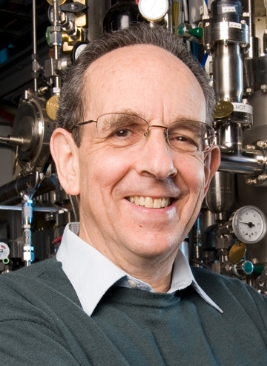 Stephen Pordes合作论文数Fermi National Accelerator Laboratory70Alessandra Tonazzo合作论文数69R. Milincic合作论文数68G. Korga合作论文数68P. Agnes合作论文数68
 A. Pocar合作论文数Department of Physics, Princeton University68L. Pagani合作论文数66R. Tartaglia合作论文数66L. Ludovici合作论文数INFN-Sezione di Roma, University of Rome66
 Matteo Cadeddu合作论文数Sezione di Cagliari, Complesso Universitario di Monserrato65
 Federico Gabriele合作论文数Princeton University, Princeton University65
 Huizhen Wang合作论文数65A. Sotnikov合作论文数64
 A. Derbin合作论文数St. Petersburg Nuclear Physics Institute64
 Pricylla Cavalcante合作论文数63D. Korablev合作论文数61
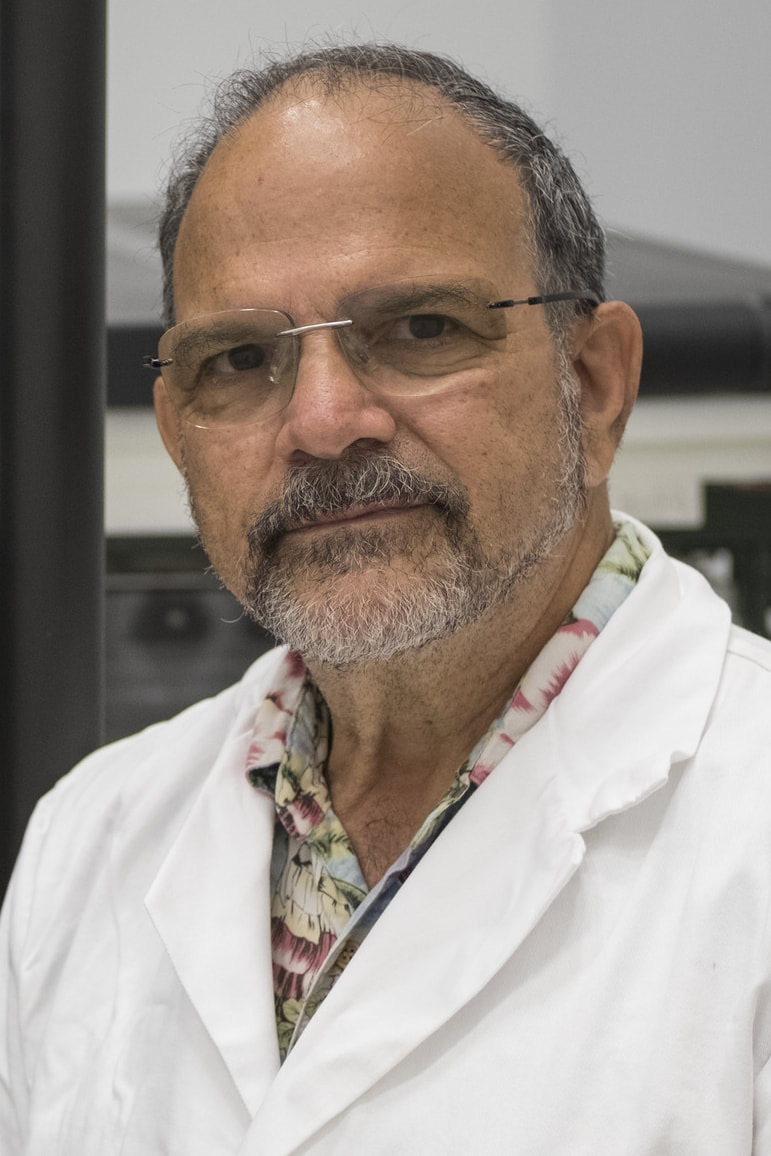 C. Jeff Martoff合作论文数Department of Physics, College of Science and Technology, Temple University61
 Alberto Devoto合作论文数61Toru Okusawa合作论文数61H. O. Back合作论文数61M. Wada合作论文数60B. Bottino合作论文数60Pierre Vilain合作论文数60G. Zuzel合作论文数Institute of Physics;Jagellonian University60Alexey Chepurnov合作论文数60
 O. Yu. Smirnov合作论文数60u dore合作论文数59k biery合作论文数59M. Lissia合作论文数59T. Alexander合作论文数59




