We present a new procedure to identify observations of known objects in large data sets of unlinked detections. It begins with a Keplerian integrals method that allows us to link two tracklets, computing preliminary orbits, even when the tracklets are separated in time by a few years. In the second step, we represent the results in a `graph' where the tracklets are the nodes and the preliminary orbits are the edges. Then, acceptable `3-cycles' are identified and a least squares orbit is computed for each of them. Finally, we construct sequences of $n \geq 4$ tracklets by searching through the orbits of nearby 3-cycles and attempting to attribute the remaining tracklets. We calculate the technique's efficiency at identifying unknown objects using real detections that attempt to mimic key parameters of the Minor Planet Center's Isolated Tracklet File (ITF) and then apply the procedure to the ITF to identify tens of thousands of new objects.
We present a new procedure to identify observations of known objects in large data sets of unlinked detections. It begins with a Keplerian integrals method that allows us to link two tracklets, computing preliminary orbits, even when the tracklets are separated in time by a few years. In the second step, we represent the results in a ‘graph’ where the tracklets are the nodes and the preliminary orbits are the edges. Then, acceptable ‘3-cycles’ are identified and a least squares orbit is computed for each of them. Finally, we construct sequences of n≥4 tracklets by searching through the orbits of nearby 3-cycles and attempting to attribute the remaining tracklets. We calculate the technique’s efficiency at identifying unknown objects using real detections that attempt to mimic key parameters of the Minor Planet Center’s (MPC) Isolated Tracklet File (ITF) and then apply the procedure to the ITF. This procedure enables the recovery of several orbits, despite some having few tracklets per apparition. The MPC accepted >95% of our linkages and most of the non-accepted linkages are 2-apparition linkages even when those linkages contained more than half a dozen tracklets.
In this paper, we address the problem of computing a preliminary orbit of a celestial body from one topocentric position vector $$\mathcal{P}_1$$ P 1 and a very short arc (VSA) of optical observations $$\mathcal{A}_2$$ A 2 . Using the conservation laws of the two-body dynamics, we write the problem as a system of 8 polynomial equations in 6 unknowns. We prove that this system is generically consistent, namely, for a generic choice of the data $$\mathcal{P}_1, \mathcal{A}_2$$ P 1 , A 2 , it always admits solutions in the complex field, even when $$\mathcal{P}_1, \mathcal{A}_2$$ P 1 , A 2 do not correspond to the same celestial body. The consistency of the system is shown by deriving a univariate polynomial $$\mathfrak {v}$$ v of degree 8 in the unknown topocentric distance at the mean epoch of the observations of the VSA. Through Gröbner bases theory, we also show that the degree of $$\mathfrak {v}$$ v is minimum among the degrees of all the univariate polynomials solving this problem. Even though we can find solutions to our problem for a generic choice of $$\mathcal{P}_1, \mathcal{A}_2$$ P 1 , A 2 , most of these solutions are meaningless. In fact, acceptable solutions must be real and have to fulfill other constraints, including compatibility with Keplerian dynamics. We also propose a way to select or discard solutions taking into account the uncertainty in the data, if present. The proposed orbit determination method is relevant for different purposes, e.g., the computation of a preliminary orbit of an Earth satellite with radar and optical observations, the detection of maneuvres of an Earth satellite, and the recovery of asteroids which are lost due to a planetary close encounter. We conclude by showing some numerical tests in the case of asteroids undergoing a close encounter with the Earth.
The concept of sphere of influence of a planet is useful in both the context of impact monitoring of asteroids with the Earth and of the design of interplanetary trajectories for spacecrafts. After reviewing the classical results, we propose a new definition for this sphere that depends on the position and velocity of the small body for given values of the Jacobi constant $C$. Here we compare the orbit of the small body obtained in the framework of the circular restricted three-body problem, with orbits obtained by patching two-body solutions. Our definition is based on an optimisation process, minimizing a suitable target function with respect to the assumed radius of the sphere of influence. For different values of $C$ we represent the results in the planar case: we show the values of the selected radius as a function of two angles characterising the orbit. In this case, we also produce a database of radii of the sphere of influence for several initial conditions, allowing an interpolation.
We consider the Keplerian distance d in the case of two elliptic orbits, i.e., the distance between one point on the first ellipse and one point on the second one, assuming they have a common focus. The absolute minimum d_min of this function, called MOID or orbit distance in the literature, is relevant to detect possible impacts between two objects following approximately these elliptic trajectories. We revisit and compare two different approaches to compute the critical points of d^2 , where we squared the distance d to include crossing points among the critical ones. One approach uses trigonometric polynomials, and the other uses ordinary polynomials. A new way to test the reliability of the computation of d_min is introduced, based on optimal estimates that can be found in the literature. The planar case is also discussed: in this case, we present an estimate for the maximal number of critical points of d^2 , together with a conjecture supported by numerical tests.
This paper addresses the problem of minimizing the impact of nonlinearities when dealing with uncertainty propagation in the perturbed two-body problem. The recently introduced generalized equinoctial orbital elements set is employed as a means to reduce nonlinear effects stemming from [Formula: see text] and higher-order gravity field harmonics. The uncertainty propagation performance of the proposed set of elements in different Earth orbit scenarios, including low-thrust orbit raising, is evaluated using a Cramér–von Mises test on the Mahalanobis distance of the uncertainty distribution. A considerable improvement compared to all sets of elements proposed so far is obtained.
We investigate the behaviour of two recent methods for the computation of preliminary orbits. These methods are based on the conservation laws of Kepler's problem, and enable the linkage of very short arcs of optical observations even when they are separated in time by a few years. Our analysis is performed using both synthetic and real data of 822 main belt asteroids. The differences between computed and true orbital elements have been analysed for the true linkages, as well as the occurrence of alternative solutions. Some metrics have been introduced to quantify the results, with the aim of discarding as many of the false linkages as possible and keeping the vast majority of true ones. These numerical experiments provide thresholds for the metrics which take advantage of the knowledge of the ground truth: the values of these thresholds can be used in normal operation mode, when we do not know the correct values of the orbital elements and whether the linkages are true or false.
The paper addresses the problem of minimizing the impact of non-linearities when dealing with uncertainty propagation in the perturbed two-body problem. The recently introduced generalized equinoctial orbital element set (GEqOE) is employed as a means to reduce non-linear effects stemming from J2 and higher order gravity field harmonics. The uncertainty propagation performance of the proposed set of elements in different Earth orbit scenarios, including low-thrust orbit raising, is evaluated using a Cramér-von Mises test on the Mahalanobis distance of the uncertainty distribution. A considerable improvement compared to all sets of elements proposed so far is obtained.
We investigate the planar motion of a mass particle in a force field defined by patching Kepler's and Stark's dynamics. This model is called Sun-shadow dynamics, referring to the motion of an Earth satellite perturbed by the solar radiation pressure and considering the Earth shadow effect. The existence of periodic orbits of brake type is proved, and the Sun-shadow dynamics is investigated by means of a Poincare'-like map defined by a quantity that is not conserved along the flow. We also present the results of our numerical investigations on some properties of the map. Moreover, we construct the invariant manifolds of the hyperbolic fixed points related to the periodic orbits of brake type. The global picture of the map shows evidence of regular and chaotic behaviour.
We introduce six quantities that generalize the equinoctial orbital elements when some or all the perturbing forces that act on the propagated body are derived from a disturbing potential. Three of the elements define a non-osculating ellipse on the orbital plane, other two fix the orientation of the equinoctial reference frame, and the last allows one to determine the true longitude of the body. The Jacobian matrices of the transformations between the new elements and the position and velocity are explicitly given. As a possible application we investigate their use in the propagation of Earth's artificial satellites showing a remarkable improvement compared to the equinoctial orbital elements.
Here, we revisit an initial orbit determination method introduced by O. F. Mossotti employing four geocentric sky-plane observations and a linear equation to compute the angular momentum of the observed body. We then extend the method to topocentric observations, yielding a quadratic equation for the angular momentum. The performance of the two versions is compared through numerical tests with synthetic asteroid data using different time intervals between consecutive observations and different astrometric errors. We also show a comparison test with Gauss’s method using simulated observations with the expected cadence of the VRO–LSST telescope.
We present a new method for computing orbits in the perturbed two-body problem: the position and velocity vectors of the propagated object in Cartesian coordinates are replaced by eight orbital elements, i.e. constants of the unperturbed motion. The proposed elements are uniformly valid for any value of the total energy. Their definition stems from the idea of applying Sundman’s time transformation in the framework of the projective decomposition of motion, which is the starting point of the Burdet–Ferrándiz linearisation, combined with Stumpff’s functions. In analogy with Deprit’s ideal elements, the formulation relies on a special reference frame that evolves slowly under the action of external perturbations. We call it the intermediate frame, hence the name of the elements. Two of them are related to the radial motion, and the next four, given by Euler parameters, fix the orientation of the intermediate frame. The total energy and a time element complete the state vector. All the necessary formulae for extending the method to orbit determination and uncertainty propagation are provided. For example, the partial derivatives of the position and velocity with respect to the intermediate elements are obtained explicitly together with the inverse partial derivatives. Numerical tests are included to assess the performance of the proposed special perturbation method when propagating the orbit of comets C/2003 T4 (LINEAR) and C/1985 K1 (Machholz).
This paper is concerned with the comparison of semi-analytical and non-averaged propagation methods for Earth satellite orbits. We analyze the total integration error for semi-analytical methods and propose a novel decomposition into dynamical, model truncation, short-periodic, and numerical error components. The first three are attributable to distinct approximations required by the method of averaging, which fundamentally limit the attainable accuracy. In contrast, numerical error, the only component present in non-averaged methods, can be significantly mitigated by employing adaptive numerical algorithms and regularized formulations of the equations of motion. We present a collection of non-averaged methods based on the integration of existing regularized formulations of the equations of motion through an adaptive solver. We implemented the collection in the orbit propagation code THALASSA, which we make publicly available, and we compared the non-averaged methods with the semi-analytical method implemented in the orbit propagation tool STELA through numerical tests involving long-term propagations (on the order of decades) of LEO, GTO, and high-altitude HEO orbits. For the test cases considered, regularized non-averaged methods were found to be up to two times slower than semi-analytical for the LEO orbit, to have comparable speed for the GTO, and to be ten times as fast for the HEO (for the same accuracy). We show for the first time that efficient implementations of non-averaged regularized formulations of the equations of motion, and especially of non-singular element methods, are attractive candidates for the long-term study of high-altitude and highly elliptical Earth satellite orbits.
We propose a method to account for the Earth oblateness effect in preliminary orbit determination of satellites in low orbits with radar observations. This method is an improvement of the one described in Gronchi et al. (Mon Not R Astron Soc 451(2):1883–1891, 2015b), which uses a pure Keplerian dynamical model. Since the effect of the Earth oblateness is strong at low altitudes, its inclusion in the model can sensibly improve the initial orbit, giving a better starting guess for differential corrections and increasing the chances to obtain their convergence. The input set consists of two tracks of radar observations, each one composed of at least four observations taken during the same pass of the satellite. A single observation gives the topocentric position of the satellite, where the range is very accurate, while the line-of-sight direction is poorly determined. From these data, we can compute by a polynomial fit the values of the range and range rate at the mean epochs of the two tracks. In order to obtain a preliminary orbit, we wish to compute the angular velocity, which is the rate of change of the line of sight. In the same spirit of Gronchi et al. (Mon Not R Astron Soc 451(2):1883–1891, 2015b), we also wish to correct the values of the angular measurements, so that they fit the selected dynamical model if the same holds for the radial distance and velocity. The selected model is a perturbed Keplerian dynamics, where the only perturbation included is the secular effect of the $$J_2$$ term of the geopotential.
We present an efficient strategy for the numerical propagation of small Solar system objects undergoing close encounters with massive bodies. The trajectory is split into several phases, each of them being the solution of a perturbed two-body problem. Formulations regularized with respect to different primaries are employed in two subsequent phases. In particular, we consider the Kustaanheimo-Stiefel regularization and a novel set of non-singular orbital elements pertaining to the Dromo family. In order to test the proposed strategy, we perform ensemble propagations in the Earth-Sun Circular Restricted 3-Body Problem (CR3BP) using a variable step size and order multistep integrator and an improved version of Everhart's RADAU solver of 15th order. By combining the trajectory splitting with regularized equations of motion in short-term propagations (1 year), we gain up to six orders of magnitude in accuracy with respect to the classical Cowell's method for the same computational cost. Moreover, in the propagation of asteroid (99942) Apophis through its 2029 Earth encounter, the position error stays within 100 metres after 100 years. In general, as to improve the performance of regularized formulations, the trajectory must be split between 1.2 and 3 Hill radii from the Earth. We also devise a robust iterative algorithm to stop the integration of regularized equations of motion at a prescribed physical time. The results rigorously hold in the CR3BP, and similar considerations may apply when considering more complex models. The methods and algorithms are implemented in the NAPLES FORTRAN 2003 code, which is available online as a GitHub repository.
Modern asteroid surveys produce an increasingly large number of observations, which are grouped into very short arcs (VSAs) each containing a few observations of the same object in one single night. To decide whether two VSAs collected in different nights correspond to the same observed object we can attempt to compute an orbit with the observations of both arcs: this is called the linkage problem. Since the number of linkages to be attempted is very large, we need efficient methods of orbit determination. Using the first integrals of Kepler's motion we can write algebraic equations for the linkage problem, which can be put in polynomial form. In Gronchi et al. (Celest Mech Dyn Astron 123(2):105–122, 2015) these equations are reduced to a polynomial equation of degree 9: the unknown is the topocentric distance of the observed body at the mean epoch of one VSA. Here we derive the same equations in a more concise way, and show that the degree 9 is optimal in a sense that will be specified in Sect. 3.3. We also introduce a procedure to join three VSAs: from the conservation of angular momentum we obtain a polynomial equation of degree 8 in the topocentric distance at the mean epoch of the second VSA. For both identification methods, with two and three VSAs, we discuss how to discard solutions. Finally, we present some numerical tests showing that the new methods give satisfactory results and can be used also when the time separation between the VSAs is large. The low polynomial degree of the new methods makes them well suited to deal with the very large number of asteroid observations collected by the modern surveys.
Reliable and efficient uncertainty propagation is crucial for the task of monitoring possible impacts of Near Earth Asteroids with our planet. It is well known that a switch of the primary body can greatly reduce the numerical truncation error in the case of planetary flybys. In the present work, the advantages of performing a primary body switch in the uncertainty propagation problem are explored. For this purpose, first we present the linear uncertainty propagation using Dromo formulation, which has been shown in previous works to have a satisfactory performance when propagating the orbit uncertainty of Near Earth Asteroids. Next, we introduce the concept of primary body switch for the uncertainty propagation problem. The algorithm is based on the following procedure. We sample the initial orbit uncertainty distribution and linearly propagate the samples, considering the N-body gravitational influence. A primary body switch, which is a nonlinear mapping, is performed for all the samples at a threshold distance from the approaching planet, the Earth. The orbit of the samples is then linearly propagated with respect to the Earth using the Dromo formulation until the threshold distance is reached again. Finally, the propagation center is changed back to the heliocentric frame and the linear propagation continues. We apply the proposed method to an extensive set of asteroids that approach the Earth. Results suggest that the average error of the linear propagation can be reduced up to a factor of 30 when compared to a purely heliocentric linear propagation using Dromo elements.
With the improvements of the observational technology for the new surveys the number of asteroid detections is rapidly increasing. For this reason we must use very efficient methods to compute orbits with these data. We have to identify observations taken in different nights as belonging to the same asteroid. If we do not have an efficient algorithm for that, the unidentified observation database can increase without control, and we risk to detect the same objects multiple times.
 Claudio Bombardelli合作论文数Advanced Concepts Team17Giovanni Federico Gronchi合作论文数12
 Jesús Peláez Alvarev合作论文数Departamento De Fisica Aplicada A la Ingenieria Aeronautica, Universidad Politecnica De Madrid7
 Davide Amato合作论文数Department of Aeronautics, Faculty of Engineering, Imperial College London5Óscar Rodríguez合作论文数4
 Javier Hernando-Ayuso合作论文数Mission Design and Operations Group, ispace inc.4
 Robert Jedicke合作论文数4Alicia Martínez-Cacho合作论文数2
 Clara Grassi合作论文数2
 Irene Cavallari合作论文数2
 Aaron J. Rosengren合作论文数Dept Phys, Univ Calif San Diego2
 Enrico C. Lorenzini合作论文数Dipartimento di Ingegneria Industriale, Università degli Studi di Padova2A. Milani合作论文数1Vincent Morand合作论文数1Stefano Marò合作论文数1
 Hodei Urrutxua合作论文数Aerospace Systems and Transport Research Group, Universidad Rey Juan Carlos1H. Ma合作论文数1Javier Roa合作论文数1Joachim Moeyens合作论文数Vera C Rubin Observ, Univ Washington1
 FRANCESCONI ALESSANDRO合作论文数Universita degli Studi di Padova1
 Tiziano Penati合作论文数Dipartimento di Matematica " F. Enriques ";Max-Planck-Institut fur Physik komplexer Systeme;Dipartimento di Matematica " F. Enriques ", Max-Planck-Institut fur Physik komplexer Systeme1
 Sara Di Ruzza合作论文数Dipartimento di Matematica, Università di Roma1
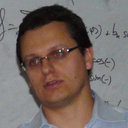 Marco Sansottera合作论文数Dipartimento di Matematica via Saldini, Università degli Studi di Milano1
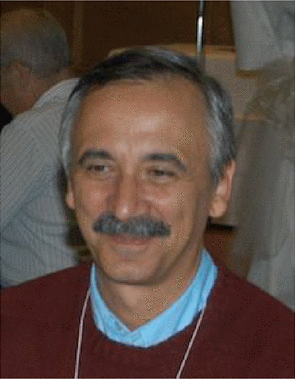 Giovanni B. Valsecchi合作论文数IAS—Planetologia, Area di Ricerca del C.N.R. Via Fosso del Cavaliere1




