In the last decade nuclear reaction measurements using heavy ion storage rings became an important tool for nuclear astrophysics studies. The new CRYRING Array for Reaction MEasurements (CARME), recently commissioned at the low energy CRYRING@ESR storage ring (GSI/FAIR), is designed to take this novel approach one step further and perform direct nuclear reaction measurements at stellar energies, as well as indirect studies of nuclear properties of interest for nuclear astrophysics. CRYRING is unique worldwide in being able to store high quality, isotopically pure, radioactive beams produced in-flight at the low energies required for nuclear astrophysics. This paper describes the first in-beam reaction measurement with CARME at CRYRING, the first beam on (conventional) target measurement for FAIR Phase-0, and the data analysis approach required by this unprecedented, unique experimental approach.
The heavy-ion storage ring CRYRING has been recommissioned downstream of GSI’s ESR, which it complements as dedicated low-energy machine. A key element of CRYRING@ESR is its electron cooler, which features one of the coldest electron beams available. This enables efficient phase-space cooling and, in addition, provides very high energy resolution when used as internal electron target. We report on technical upgrades that have been made as part of the re-installation of the cooler at GSI/FAIR and share first results obtained after recommissioning.
CRYRING was moved from Stockholm to Darmstadt, modernized and integrated into the GSI/FAIR beamline topology behind ESR. As CRYRING@ESR, it will receive and store heavy, highly charged ions from all species the present accelerator chain is capable of producing. An extensive research program on low-energy atomic collisions, spectroscopy and nuclear reactions was proposed. The facility is gradually completing commissioning, ion beams from the local injector branch have already been stored and prototype experiments performed. We present the machine status and highlight some planned experiments.
HITRAP is a facility for deceleration of highly charged ions (HCI) produced online by the GSI accelerator. It consists of two linear stages for deceleration down to several keV/charge and an ion trap for ion cooling down to sub-eV energies. We report on two recent developments within the facility: a new design for the HITRAP cooling trap in order to improve its stability and voltage rigidity, as well as the investigation of the so-called MIVOC method in the HITRAP EBIT for production of Sb35+, Fe21+, and B5+.
During the commissioning phase of CRYRING@ESR, several ion-optical measurements such as momentum spread, dispersion function, effective acceleration voltage and orbit response matrix were performed at the ring. The measurements help the commissioning process to reveal possible gauge errors and will be used to improve the theoretical model and to control the closed orbit.
We present the beam instrumentation of CRYRING@ESR, a low-energy experiment facility at the GSI Helmholtz-Centre for heavy ion research. The 1.44 Tm synchrotron and storage ring, formerly hosted at the Manne Siegbahn laboratory in Stockholm, Sweden, was modified in its configuration and installed behind the existing ESR, the experimental storage ring. As the first machine within the ongoing FAIR project, the facility for antiproton and ion research, it is built on the future timing system and frameworks for data supply and acquisition. Throughout the past year CRYRING was commissioned including its electron cooler with hydrogen beams from the local linear accelerator. Storage, acceleration and cooling have been demonstrated. The contribution provides an overview of the beam instrumentation. The design of the detector systems and their current performance are presented. Emphasis is given to beam position monitors, detectors for intensity measurements, and the ionization profile monitors.
An automated beam-setting optimization application has been implemented on top of FAIR’s control system software stack based on CERN’s LSA framework. The optimization functionality is built using the Jenetics software library implemented in Java. Tests of the software with beam have been performed at the CRYRING@ESR ion storage ring. INTRODUCTION AND BACKGROUND In recent years, with advances in machine learning and evolutionary algorithms, a number of software libraries became available, allowing researchers and application programmers to utilize these libraries for their purposes. In 2017 we successfully investigated if genetic algorithms can be applied in the context of accelerator optimization [1, 2]. Despite the promising results of this prototype, it came with some disadvantages. The prototype driving and reading device data was programmed in Python and is communicating to the low level FESA stack of the FAIR control system [3] bypassing the higher levels of the FAIR control system [4] based on the LHC Software Architecture (LSA) implemented in Java [5]. We finally decided to implement an application in JAVA built on the high-level LSA-layers and the open-source genetic-algorithm library Jenetics [6]. For testing the software with beam we used the ion source and injector of the CRYRING@ESR ion storage ring, which serves besides its main purpose as machine for atomic and nuclear physics experiments as test bench for the FAIR control system [7].
In 2012 the CRYRING storage ring was delivered from Stockholm to Darmstadt as a part of the Swedish in-kind contribution to the FAIR project. The ring lattice has been slightly changed for optimal injection and to provide additional space for experiment equipment. For the injection from the experimental storage ring (ESR), a new transfer line has been designed. The local injector line has been significantly modified compared to the previous one in Stockholm taking into account the geometry of the existing GSI building. In this paper we present the ion-optical properties of CRYRING@ESR after the described modifications. Single-turn injection from the ESR and multi-turn injection from the local injector are discussed. Ion-optical calculations of fast and slow extraction from CRYRING are also presented. The closed orbit correction scheme is considered taking into account the future arrangement of the beam position monitors and correction magnets. Based on the results of the calculations the requirements for the magnet alignment are finally discussed.
The former storage ring CRYRING has been shipped from the Manne Siegbahn Laboratory in Stockholm to Darmstadt as a Swedish in-kind contribution to FAIR. At its new location downstream of ESR all ion species presently accessible in ESR can be transferred to CRYRING, in which ions with rigidities between 1.44 and 0.054 Tm can be stored. The original Swedish layout has been modified by reconfiguring the sequence of straight sections and by slightly increasing the circumference to ESR/2. Ions can be injected from ESR or from an independent 300 keV/u RFQ test injector. The instrumentation of the ring includes an RF drift tube system for acceleration and deceleration (1 T s(-1), with a possibility for an upgrade to 7 T s(-1)), electron cooling, a free experimental section, and both fast and slow extraction of ions. We report on the present progress of this project, give a prospective timeline, and summarize the new research which will be enabled by this project. First beam for commissioning of the storage ring is expected for 2015, final bakeout to restore ultrahigh vacuum conditions in 2016 and ion beams injected through ESR in similar to 2017.
Heavy few-electron ions are relatively simple systems in terms of electron structure and offer unique opportunities to conduct experiments under extremely large electromagnetic fields that exist around their nuclei. However, the preparation of highly charged ions (HCI) has remained the major challenge for experiments. As an extension of the existing GSI accelerator facility, the HITRAP facility was conceived as a multi-stage decelerator for HCI produced at high velocity. It is designed to prepare bunches of around 105 HCI and to deliver them at low energies to various experiments. One of these experiments is Spec- Trap, aiming for laser spectroscopy of trapped, cold HCI. We present the latest results on deceleration of ions in a radio-frequency quadrupole, synchrotron cooling of electrons in a trap as a preparation step for the prospective electron cooling of the HCI decelerated in HITRAP, as well as laser cooling of singly charged Mg ions for sympathetic cooling of HCI in SpecTrap.
A beamline for transport of highly charged ions with energies as low as a few keV/charge has been constructed and commissioned at GSI. Complementary to the existing infrastructure of the HITRAP facility for deceleration of highly charged ions from the GSI accelerator, the new beamline connects the HITRAP ion decelerator and an EBIT with the associated experimental setups. Therefore, the facility can now transport the decelerated heavy highly charged ions to the experiments or supply them offline with medium-heavy highly charged ions from the EBIT, both at energies as low as a few keV/charge. Here we present the design of the 20 m long beamline with the corresponding beam instrumentation, as well as its performance in terms of energy and transport efficiency.
At the GSI accelerator complex, behind the universal linear accelerator UNILAC and the synchrotron SIS, highly charged ions up to U73+ are produced at 400 MeV/nucleon. When this beam is sent through a copper foil all or nearly all remaining electrons are stripped. The HITRAP facility, a combination of a linear decelerator and a cryogenic Penning trap, is built to decelerate those ions to almost rest and to provide them for the experiments. In a number of commissioning beam times, the deceleration in the ESR, the extraction, bunching and, finally, deceleration to 6 keV/nucleon has been shown. The remaining steps, being capture and cooling in a cryogenic Penning trap, are presently tested off-line.
HITRAP is a facility at GSI in Darmstadt for decelerating, cooling and storing heavy, highly charged ions. It is designed to decelerate a beam of A/q < 3 particles with an energy of 4 MeV per nucleon as provided by the heavy ion storage ring ESR. HITRAP's decelerating linear accelerator (linac) will decelerate ions down to 6 keV per nucleon and then inject them into a Penning trap for cooling. The trap will capture bunches of up to 105 ions as heavy as U92+ in flight, cool and store them. After extraction from the cooler trap, the vertical beam line (VBL) transports the cold ions to the experiments. The linac has shown to decelerate ions down to 500 keV per nucleon on-line and to 6 keV per nucleon off-line. Recent tests with electrons and ions injected into the trap showed the necessity of a more careful electric and magnetic field alignment. An installed test ion source as well as a system of apertures and position sensitive diagnostics will be used to align the fields. A highly charged ion beam from a small room temperature electron beam ion trap was used for commissioning the VBL.
A linear decelerator is being commissioned for heavy, highly-charged ions (HCI) at GSI in Darmstadt/Germany. HCI with only one or few electrons are interesting systems for many different experiments as for instance precision tests of the theory of quantum electrodynamics (QED). In order to transform heavy HCI produced at 400 MeV/u to stored and cooled HCI at low energy the linear decelerator facility HITRAP has been setup behind the experimental storage ring (ESR). The ions are decelerated in the ESR from 400 to 4 MeV/u, cooled and extracted. The ions are then matched to an interdigital H-type structure (IH) using a double drift buncher, decelerated from 4 to 0.5 MeV/u in the IH, and then down to 6 keV/u in a 4-rod radio frequency quadrupole (RFQ). To detect and analyze the weak and sparse ion bunches a new type of energy analyzing detector has been developed along with improvements of other standard beam instrumentation. One million highly charged ions have been decelerated with the IH from 400 MeV/u to about 0.5 MeV/u per cycle. The RFQ has shown in off-line tests to decelerate ions, however, the measured longitudinal acceptance does not fit the properties of the ion beam decelerated in the IH. This requires a refined design, which is underway.
HITRAP, the facility for heavy, highly-charged ions at rest, is being commissioned at GSI in Darmstadt. The highly-charged ions are produced by stripping all electrons at 400 MeV/u and then decelerating the beam of bare, heavy nuclei in a storage ring, the ESR, and a linear decelerator. The first steps have been taken into operation successfully; about 10 5 ions have been decelerated to 0.5 MeV/u. The remaining deceleration and cooling in a RFQ decelerator structure and a Penning trap is prepared. For off-line tests of the experiments as well as the cooler Penning trap, a compact room-temperature EBIT has been installed and delivers beam already.
This article reviews the decay studies of neutron-deficient nuclei within the mass region \(\ensuremath A=56\mbox{--}100\) performed at the Ion-Guide Isotope Separator On-Line (IGISOL) facility in the University of Jyväskylä over last 25 years. Development from He-jet measurements to on-line mass spectrometry, and eventually to atomic mass measurements and post-trap spectroscopy at IGISOL, has yielded studies of around 100 neutron-deficient nuclei over the years. The studies form a solid foundation to astrophysical rp -process path modelling. The focus is on isomers studied either via spectroscopy or via Penning-trap mass measurements. The review is complemented with recent results on the ground and isomeric states of 90Tc . The excitation energy of the low-spin isomer in 90Tc has been measured as \(\ensuremath E_x=144.1(17)\) keV with JYFLTRAP double Penning trap and the ground state of 90Tc has been confirmed to be the (8+) state with a half-life of \(\ensuremath T_{1/2}=49.2(4)\) s. Finally, the mass-excess results for the spin-gap isomers 53Co m and 95Pd m and implications from the JYFLTRAP mass measurements for the (21+) isomer in 94Ag are discussed.
 Frank Herfurth合作论文数GSI Helmholtzzentrum fur Schwerionenforschung GmbH47
 H.-J. Kluge合作论文数28
 Sergey Eliseev合作论文数Department of Sociology, Political and Social Processes, Saint Petersburg State University22
 Wolfgang Quint合作论文数21
 O. Kester合作论文数LMU München21
 Christophor Kozhuharov合作论文数20
 Michael Block合作论文数19
 Christoph Scheidenberger合作论文数II. Physikalisches Institut, Justus-Liebig-University of Giessen;Helmholtz Research Academy Hesse for FAIR16A. Sokolov合作论文数15Giancarlo Maero合作论文数14C. Weber合作论文数14
 Klaus Blaum合作论文数Max Planck Institute for Nuclear Physics;Department of Physics and Astronomy, Ruprecht-Karls-University Heidelberg14c rauth合作论文数13Zoran Andelkovic合作论文数GSI Helmholtzzentrum Schwerionenforsch, D-64291 Darmstadt, Germany13Rahaman S合作论文数13A. Schempp合作论文数13
 Ulrich Ratzinger合作论文数13Wolfgang R. Plaß合作论文数Justus Liebig University Gießen;GSI Helmholtzzentrum Für Schwerionenforschung GmbH13
 Yu. N. Novikov合作论文数12
 D. Rodriguez合作论文数12l dahl合作论文数12G. Marx合作论文数12
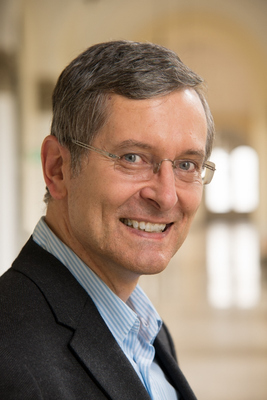 Peter Thirolf合作论文数Centre for Advanced Laser Applications, Faculty of Physics, Ludwig-Maximilians-Universität München12
 A. Chaudhuri合作论文数Ernst-Moritz-Arndt-Universität12
 Winfried Barth合作论文数12
 Lutz Schweikhard合作论文数Institut fur Physik, Universitat Greifswald12M. Kaiser合作论文数10
 D. Ackermann合作论文数10
 Thomas Stöhlker合作论文数Institut für Optik und Quantenelektronik, Friedrich-Schiller-Universität Jena;Helmholtz-Instituts Jena;Atomic Physics Division, GSI Helmholtzzentrum für Schwerionenforschung GmbH10Alfred J Martin合作论文数10S. Koszudowski合作论文数10
 Rafael Ferrer合作论文数9D. Habs合作论文数9J.B. Neumayr合作论文数9Michael Lestinsky合作论文数9F. P. Heßberger合作论文数9n kotovskiy合作论文数8p gerhard合作论文数8Z. Di合作论文数8
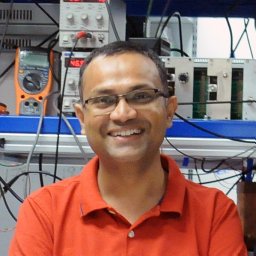 Manas Mukherjee合作论文数GSI Planckstraße 1 64291 Darmstadt Germany8Dennis Neidherr合作论文数8b franzke合作论文数7
 Marco Mazzocco合作论文数7
 Hans Geissel合作论文数II Institute of Physics, Justus Liebig University of Giessen7
 M. Steck合作论文数7
 Martin Winkler合作论文数7Gianluigi Clemente合作论文数7
 Yury A Litvinov合作论文数GSI Helmholtz Centre for Heavy Ion Research7P. Beller合作论文数7




