In this paper, we report on one Australian high school's involvement in a project designed to engage teachers in the principles of curricular justice. However, as curriculum and pedagogy are inextricably linked, it is impossible to discuss the ‘what’ of teaching without explaining the ‘how’ or the ‘enactment’ of curricular content. We contend that achieving ‘curricular justice’ is predicated upon all young people having access to the breadth and depth of differing knowledges and skills that will enable them to thrive in a democratic society. A ‘socially just curriculum’ does not narrow such opportunities and pathways based upon preconceived notions of what certain groups of students might be capable of or the futures they might be destined for. The principles of social justice underpinning this paper draw on the works of scholars such as Raewyn Connell (1993) and Nancy Fraser (1997). Regarding curricular content, we have utilised a combination of Michael Young's ideas about ‘powerful’ curriculum situated within the context of Gonzalez et al.'s (2005) ‘funds of knowledge’ approach used to bridge the gaps between students' lives and new horizons of knowledge. This ‘knowledge+’ strategy sits at the heart of this research. The government high school chosen for this paper to exemplify the project serves a high‐poverty community and has struggled with academic engagement in lower secondary disciplines drawn from the formal Australian Curriculum. Prevailing schooling attitudes towards the Australian Curriculum tend to regard it as somewhat inflexible; however, that is not the reality. Within the parameters of core content and skills, school discipline leaders have the freedom to determine teacher autonomy within their schools. Teaching workloads, along with social trends that de‐professionalise teachers, have encouraged subject heads to become more prescriptive of content and pedagogy. This project wanted to change that so that participants had the freedom to experiment as curriculum workers using concepts of ‘powerful knowledge’ and ‘funds of knowledge’, to create a ‘knowledge+ curriculum’ which would be inherently culturally responsive, extended curricular reach and hence a socially just curriculum.
Integrating mental health and wellbeing services in schools has the potential to improve students' socio-emotional wellbeing, engagement in learning and education outcomes. This scoping review aimed to establish and synthesize the current evidence base in relation to the junction of education and mental health and wellbeing practice. A systematic search and screening of peer-reviewed and gray research literature was conducted and resulted in the identification of 56 relevant sources. Extracted data was analyzed using descriptive and qualitative synthesis via content analysis. The largely exploratory and qualitative studies examined a range of influences on interdisciplinary collaborations. Enablers and barriers were interconnected and related to interprofessional relationships, the role of teachers and administrators in collaborations, territorialism, or the perceived practice divide between education and mental health, resourcing issues and the need for role clarity, appropriate training and structures and processes which support joint working. Insights gained may inform practice, policy, and research at the evolving intersection of education and mental health and wellbeing practice.
In Philippine special education, the transition program for students with disabilities incorporates a critical component - specifically, a curriculum designed to equip students for one of five targeted exit outcomes: higher education, entrepreneurship, employment, middle-level skills or a functional life path. This transition curriculum framework is at its early stage of implementation to deliver basic education to students with severe and profound disabilities who are contained in multi-age classroom settings, hence non-graded classes. In this paper, we aim to identify the approaches in the use of the curriculum framework and the implementation challenges and gaps. We focused on the reports from 23 Schools Divisions (schools grouped by city or province) in one region. Our analysis revealed the following key themes: narrow focus on basic skills, teachers practice in non-graded classes, and the support for students in the program. The observed oversimplification of learning experiences, a prevalent input-output curriculum model and support aligning more with programmatic than individual student goals, highlight critical gaps in inclusive practice and underscore the need for curriculum developers and implementers to fundamentally rethink student-centred approaches.
In a time of increasing global volatility, uncertainty, complexity and ambiguity, it is timely to consider the role of curricular justice in helping to prepare young people for a world of significant upheaval, difficult challenges and cascading socioeconomic, political and environmental crises. For this special issue, authors working in Australian and different UK contexts were invited to respond to the concept of curricular justice in contemporary schooling, in an attempt to engage in policy learning rather than policy borrowing across different national and international education contexts. The papers in this special issue provide diverse perspectives on curriculum making in Australia, Scotland and England, which draw on a range of methodological and empirical approaches. In doing so, the special issue provides important lessons for schools and other education contexts that seek to engage in more socially just curriculum policies and practices. In this editorial introduction to the special issue, we argue that a commitment to curricular justice across diverse educational contexts is essential to help young people face the complex challenges ahead.
This paper shares findings from a project that examined how schools serving marginalised communities facilitated students' substantive engagement. Through interviews with students, parents, teachers and school leaders, we determined that substantive engagement was supported by formal and informal strategies that enabled access to rich learning opportunities, the provision of welcoming school and classroom climates, and the enactment of pedagogies of care and school-wide programmes focused on substantive engagement. There were four key areas of substantive engagement: engaging curriculum and pedagogy, engaging school climate, engaging with learners, and engaging with communities. Strategies to support engagement included the removal of barriers to learning, such as assistance with breakfast or public transport, nurturing a positive school climate, providing support for ethnic groups and the delivery of alternative or flexible programmes. Drawing on the findings from five case studies, we propose four principles for substantive student engagement in complex contexts, which will be useful for school leaders and teachers who work in schools that serve marginalised communities.
In Australia coeducation dominates government schooling, with single-sex institutions usually being the preserve of selective government schools and private, often elite, institutions. For marginalised young people who ‘drop out’ or are forced to leave the coeducational mainstream system, flexible and/or non-traditional schools provide alternative pathways. Such schools are primarily coeducational. This paper draws upon data from two flexible/non-traditional schools in Australia that attempted to address the issues of educational disengagement via the provision of single-sex schooling: Fernvale Education Centre and Lorem School. The data are insightful with regard to these two very different gender and education paradigms and to their associated discourses about masculinity and femininity. The paper will identify the ways in which these schools both reproduce and challenge dominant constructions of gender within the context of responding to disenfranchised/disengaged young people.
This paper draws together data from two projects on schooling dis/engagement in Australia. One project focused on mainstream schools and the strategies employed to retain and engage young people in learning, whereas the other explored the growing sector of alternative/flexible education for similar solutions. We found interesting parallels. For example, rich, relevant curricula delivered through innovative pedagogies alongside positive staff/student relationships were key elements in schooling engagement across both sectors. Those findings have been published elsewhere. This paper focuses on the contributions to schooling engagement that may be derived from mutually beneficial school/community relationships. Here, we examine one mainstream high school and one flexi secondary school, both situated in remote geolocations, that established bespoke school/community partnerships in response to local needs. The data from each site provide blueprints for other schools that wish to tap into the wealth of human and material support systems in their own local areas.
Despite the commitment by governments and educational leaders to high-quality and high-equity systems, the defining features of contemporary schooling in Australia and elsewhere are increasing inequality and the uneven distribution of educational opportunities and outcomes. Therefore, it is timely to consider what the concept of curricular justice means for schooling in the twenty-first century. This paper argues for a rich, common curriculum that provides all young people with learning choices that have relevance to their worlds, contribute to the preparation for work or further education, alongside opportunities for engagement with a broader knowledge base connected to critical understandings of culture and society. We contend that a knowledge + plus curriculum is one that is committed to the tripartite social justice principles of redistribution, recognition and representation, which brings together powerful knowledge and young people’s community funds of knowledge in a common curriculum. Such a common curriculum is essential for a common schooling, which can deliver on the promise of a high-quality and high-equity education system for all young people.
Curricular justice, achieved through a counter-hegemonic curriculum that serves the needs of the least rather than most advantaged members of society, plays a central role in providing more equitable access to meaningful education for all young people. We contend that the defining features of the contemporary schooling context in many parts of the globe, including Australia, are growing inequality and increasing disparity between students who have access to educational opportunities and outcomes, and those who do not. We take Connell's claims—made in Schools and Social Justice, published in 1993—of the centrality of social justice in schooling and consider its relevance nearly 30 years later. In particular, we argue that curricular justice must sit at the heart of schooling that fosters democratic participation and meaningful opportunities for civic participation and belonging within society.
International organizations, such as the Organisation for Economic Co-operation and Development (OECD), as well as governments in OECD member countries are implementing policies aimed at increasing secondary school completion rates. Some decades ago, the senior secondary years were an exclusive option for an elite minority. Now, a common expectation is that they will cater to 90% or so of young people. However, too often the practices in contemporary schooling contexts have not kept up with this change. In particular, there is extensive evidence that concerning numbers of socially and educationally marginalized students are rejected by, and themselves reject, mainstream schooling. As a result, in many jurisdictions alternative educational provision has been central to re-engaging young people and enabling their secondary school completion. Such provision includes “flexible,” “second-chance,” or “alternative” schools that, although not all the same, often have in common an inclusive and democratic approach to educating young people who have not been well served in mainstream schools. Rather than such alternative schools being seen only as a useful “stop-gap” measure for marginalized students, they offer a valuable opportunity to re-imagine education. Such sites demonstrate structural, relational, and curricular changes that enable a range of education and learning options. First, in terms of structures, practical support and wraparound services are central to removing or alleviating structural barriers and clearing a path for learning. Second, supportive relationships are significant in enhancing the quality of young people’s educational experiences and outcomes. In particular, connectedness and partnerships are key factors. Finally, a diverse curriculum is needed to facilitate an education that is meaningful and authentic, and builds the capabilities young people need in the 21st century. Initiatives aimed at speaking more meaningfully to young people who have traditionally been poorly served by schooling are at the core of many alternative schools, but they are also present in outstanding mainstream schools. These innovations offer inspiration for reform across all schools, for all students. Embedding such reform through broad systemic change in mainstream schooling is necessary to facilitate an education for all young people that is: meaningful in holistic ways, democratic and respectful, supportive and enabling, and equips them with the skills and knowledge to progress their hopes, dreams, and imagined futures.
This chapter presents some innovative educational leadership initiatives and programs designed to support and engage young people in secondary schooling in complex settings. Data from various case studies are shared to demonstrate school-level strategies that help keep students who are in danger of disengaging from education, not only in school but enthused about their learning. In this chapter, we emphasise strategies for school leaders and outline a series of principles for engaging with young people in mainstream school settings that have complex features, including: rural and remote locations; high proportion of students from Indigenous or English as an Additional Language or Dialect backgrounds; low-SES/high-poverty; and drought-affected regions and areas of low employment. We argue for the importance of community connectedness as a core pillar of engaging with young people in meaningful learning, as well as for a variety of deeply contextualised, local practices that best meet the learning needs of students within their local communities.
 Martin Mills合作论文数School of Education, The University of Queensland49
 Aspa Baroutsis合作论文数16
 Kitty Te Riele合作论文数University of Technology, Sydney16
 Debra Hayes合作论文数Sydney School of Education and Social Work, Faculty of Arts and Social Sciences, The University of Sydney14
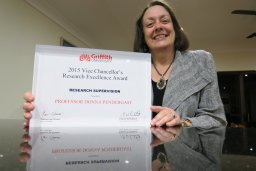 Donna Pendergast合作论文数University of Queensland10
 Jeanne Allen合作论文数Faculty of Education, University of Tasmania8
 Michelle Ronksley-Pavia合作论文数Griffith Inst Educ Res GIER, Griffith Univ7
 Stewart Riddle合作论文数Sch Educ, Univ Southern Queensland7
 Angelique Howell合作论文数Sch Teacher Educ & Leadership, Queensland Univ Technol4
 Pat Thomson合作论文数School of Education, Faculty of Social Sciences, University of Nottingham4Jodie Pennacchia合作论文数Sch Educ, Univ Nottingham2
 Bob Lingard合作论文数Institute for Learning Sciences & Teacher Education, Australian catholic University2
 Marilyn Casley合作论文数School of Health Sciences and Social Work, Griffith University1
 Lucena Miranda合作论文数1
 Kim Nichols合作论文数School of Education, Faculty of Humanities and Social Sciences, The University of Queensland1
 Christina Gowlett合作论文数School of Education, Faculty of Humanities and Social Sciences, The University of Queensland1
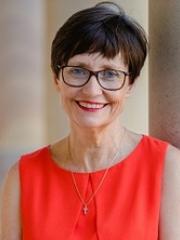 Rhonda Faragher合作论文数School of Education, Faculty of Humanities and Social Sciences, The University of Queensland1
 Merrilyn Goos合作论文数School of Education, Faculty Of Education & Health Sciences, University of Limerick1
 Eileen Honan合作论文数The University of Queensland1
 Amanda Keddie合作论文数School of Education, Faculty of Arts and Education, Deakin University1Tony Wright合作论文数1
 Sandy Muspratt合作论文数Monash University1Peter D. Renshaw合作论文数Griffith University1
 Jennifer Leigh Cartmel合作论文数Griffith University1




