Yemen, with its rich historical background and strategic geographical position at a major crossroads of trade and migration, offers an ideal setting for exploring population genetics. This study aimed to develop a Y-STR database for a Yemeni population and compare it with existing regional databases in the Middle East. For this investigation, buccal swabs were collected from 128 unrelated males. Genomic DNA was extracted using the QIAamp® DNA Mini Kit, and Y-chromosomal STR profiling was performed with the AmpFℓSTR® Yfiler™ PCR Amplification Kit to generate haplotype data across 17 Y-STR loci. The final dataset exhibited a haplotype diversity of 0.008 and a discrimination capacity of 0.95. Among the STR loci assessed, DYS458 emerged as the most polymorphic, displaying a gene diversity of 0.87 and accounting for the majority of microvariant alleles (62.5%). Additionally, haplogroup analysis using the NevGen haplogroup predictor tool revealed two predominant haplogroups within this Yemeni population: J1a (59.37%) and E1b1b (21.09%). Comparisons with 52 Middle Eastern populations (encompassing 5,568 individuals) through multidimensional scaling, phylogenetic assessments, admixture analyses, and ancestry variability evaluations collectively underscore the unique genetic landscape of Yemen. Overall, the combined findings indicate evidence of a potential founder effect within the Yemeni population. Taken together, these data not only enrich the forensic and population genetic understanding of the region but also emphasize Yemen's pivotal role in illuminating migration and demographic processes in the Middle East.
Most exhibits received in the forensic genetics laboratory of Ras Al Khaimah (United Arab Emirates) are swabs or clothing with stains suspected of being either blood, semen or saliva; swabs from touch DNA are also reasonably common. Routine practice has been to use presumptive tests to characterize the materials before DNA extraction. In this study we evaluated the presumptive methods currently used for blood (Hemastix® and Kastle-Meyer), semen (Phosphatesmo KM) and saliva (Phadebas®) in comparison to the confirmatory tests OBTI Hexagon and RSID™ Blood, RSID™ Semen and RSID Saliva™. Results from this study showed that, as expected, presumptive tests were generally more sensitive in detecting body-fluids than confirmatory tests. The presumptive tests were at least two-fold more sensitive than the RSID™ Blood, Semen and Saliva confirmatory tests. However, the OBTI Hexagon test showed comparable sensitivity to Kastle-Meyer and Hemastix® for the detection of blood; this test utilizes an anti-hemoglobin antibody, which enables the high level of sensitivity. DNA was extracted from different dilutions and quantified using real-time PCR with the Quantifiler™ Human kit. Except for the RSID™-Blood and Saliva, the limit of detection for the tests was at dilutions where recovery of sufficient DNA for STR analysis was not likely.
This study assessed the performance of five different DNA extraction methods for the recovery of DNA from bone: ChargeSwitch & REG; gDNA Plant Kit, DNA IQTM System Kit, DNeasy & REG; Blood & Tissue Kit, PrepFiler & REG; BTA Forensic DNA Extraction Kit and phenol-chloroform-isoamyl alcohol. DNA was extracted from pig rib and femur bones that was fresh, had undergone surface decomposition for three months, and had undergone surface decomposition for one year. Extracted DNA was analyzed using real-time PCR and amplification of an in-house PCR multiplex that assessed the quality and quantity of DNA and for the presence of inhibitors. The phenolchloroform-based method consistently yielded the highest amounts of DNA and DNA IQ the lowest; however, all methods produced relatively high yields of DNA from both pig rib and femur samples that could be amplified without any detected inhibition. The data demonstrate that with reasonable quality bone samples any of the tested methods can isolate DNA that can be successfully analyzed. The effective use of internal PCR controls is also demonstrated.
This study describes the use of the 27 loci Yfiler & REG; Plus kit and TaqManTM SNP genotyping to characterise and predict the haplogroups of Y chromosomes within the four major ethnic populations of Ghana. Haplogroups were assigned using the desktop NevGen software (https://www.nevgen.org/). The E1b1a and E1b1b haplogroups are the most common in the Ghanaian population and form 95% of the dataset. The Mole-Dagomba sub-population had 4. 8% assigned to the haplogroups G, H, R1b, R2 and T. The Ewe had two samples assigned to haplogroups C and D whilst the Akan had one sample each assigned to haplogroups B, J1 and J2. The NevGen predicted haplogroups were further screened with TaqManTM genotyping for confirmation. In conclusion, & AP;95% of the dataset was classified as M-E1b1a using NevGen combined with TaqManTM SNP Genotyping for confirmation. The TaqManTM also revealed 5% as J1 and other haplogroups, using an in-house control from the J1 haplogroup.
Touched items at crime scenes are frequently analysed to help link suspects to crimes, for example, Touch DNA is collected from victims' clothes in cases such as sexual assault, homicide, theft etc. Tape lifting is the preferred collection method of choice for trace DNA from clothes, fabric items and porous surfaces such as paper, therefore this study investigated the impact of deposition area and time on Touch DNA collected from fabric using minitapes. The amount of Touch DNA collected from the fabric was significantly affected by deposition area (p < 0.05), time (p < 0.05) and the interaction between the deposition area and time (p < 0.05), with the quantity of DNA collected decreasing over time. Also, the buttocks area of the trouser compared to the chest area is more prone to friction from an activity like repeatedly sitting on different surfaces which reduces the amount of Touch DNA available. In conclusion, it is more effective to collect trace DNA from victim clothes as soon as possible after the crime is committed.
Our previous work focused on validation the SureID 23comp Human Identification Kit (Health Gene Technologies, China), following the minimum criteria for validation recommended by the European Network of Forensic Science Institutes (ENFSI) and the Scientific Working Group on DNA Analysis Methods (SWGDAM) using 500 samples from the population of Saudi Arabia. The kit genotypes 22 STRs, 17 of which are non-CODIS, and Amelogenin. The validation tests showed that it has the potential to increase the power of testing in complex cases. In this paper, the allele frequency data, common forensic parameters for the 17 non-CODIS STR loci are presented. We found the majority of loci had an excess of homozygosity in the data set, which is most likely explained by the relatively high levels of consanguinity in the population of Saudi Arabia.
Short tandem repeat (STR) profiling has been routinely used in kinship testing since the introduction of commercial kits in the mid-1990s. While 15 to 23 STR loci normally give definitive results in simple kinship testing, additional loci are sometimes required to resolve complex cases. The SureID 23comp Human Identification Kit, recently released by Health Gene Technologies (China), multiplexes amelogenin and 22 autosomal STRs, 17 of which are non-CODIS STRs. This enables the profiling of 38–40 loci when used in conjunction with widely used commercial kits. In this study, the kit was evaluated for kinship applications as a supplementary STR kit following the minimum criteria for validation recommended by the European Network of Forensic Science Institutes (ENFSI) and the Scientific Working Group on DNA Analysis Methods (SWGDAM) using 500 samples. Performance was comparable with other commercial kits demonstrating: repeatability and reproducibility; precision (maximum s.d. 0.1048 nt); accuracy, all alleles were within ±0.41 nt compared to the actual sizes; heterozygous peak balances at all loci >68%; stutter ratios ranged from 3.8% to 16.15%; full profiles were generated with 125 pg DNA (95.12% of alleles at 62 pg),; and we found 100% concordance over 5 common STRs with the GlobalFiler kit.
A set of 87 reference samples collected from the population of Saudi Arabia were sequenced using the ForenSeq™DNA Signature Prep Kit on a MiSeq FGx™. The FASTQ files contain the sequences of the SE33 STR, but are not reported by the ForenSeq™ Universal Analysis Software (UAS). The STRait Razor software was used to recover and to report SE33 sequence‐based data for the Saudi population. Ninety-six sequence-based alleles were recovered, most of which had previously reported motif patterns. Two unreported motif patterns found in three alleles and seven novel allele sequences were reported. We also reported a single discordance between the sequence-based data and the CE data that was due to the presence of a common TTTT deletion. SE33 had 130% more sequence-based alleles; the highest number of observed sequence variants were in alleles 27.2 and 30.2, which each had 7 sequence variants. The statistical parameters emphasize the usefulness of using the sequence-based data.
The effectiveness of five methods for the preservation of bone were assessed: cell lysis solution (with 1% sodium azide), dehydration/freeze-drying, ethanol (96%), freezing, and room temperature storage. Preserved bone samples were extracted using five optimised extraction methods. These preservation methods were tested for their efficiency for storage of fresh and degraded bone samples for 6 weeks, 6 months and 1 year. Freezing was found to be the best preservation method for longer-term storage of bone samples; this was followed by ethanol (96%), dehydration/freeze-drying, and room temperature storage. Full profiles were obtained from bone samples using all these preservation methods.
There are different variables that affect the success of Touch DNA recovery, including surface type, the collection method used and extraction techniques. This experiment investigated how a range of porous and non-porous surfaces, different DNA collection (cotton swab, nylon flocked swab and SceneSafe Fast™ minitape) and extraction methods (PrepFiler Express BTA™ and QIAamp® DNA Investigator) affected touch DNA recovery.
Touch or trace DNA analysis has become an important routine of the forensic laboratory workload and a useful tool for investigators. Most samples, such as touch DNA, are collected using cotton swabs and choosing the right collection technique when using a cotton swab can improve DNA recovery from the surfaces. Therefore, this paper investigates three recovery techniques commonly used with cotton swabs and validate different conditions on the collected swabs such as drying prior freezing or direct freezing to see how they affect the amount of DNA recovered. The results show that there is a significant difference between the three recovery techniques used to recover touch DNA with cotton swab (F2,21 = 39.504, p<0.001), similarly with the cotton swab tested conditions prior extraction (F2,21 = 68.328, p<0.001).
Touch DNA analysis has become an important aspect of a forensic laboratory’s workload and a crucial tool for investigators in many cases. However, there is a lack of research regarding the influence of environmental conditions on Touch DNA, which is proven to reduce traces of biological material in samples. This study investigated the influence of time between deposition and recovery of Touch DNA, as well as the impact of temperature and humidity on a range of porous and non-porous surfaces.
Mitochondrial DNA analysis has earned its place in the field of genetics for providing a new window into understanding population ancestry. Its ability to produce results from minimal or decayed samples where nucleus DNA profiling proves are difficult is an additional benefit to forensic genetics. A total of 150 whole blood samples were collected on FTA paper, from Arabs population in United Arab Emirates, including inhabitants from rural regions. Both extraction of whole blood samples using PrepFiler (R) as well as direct amplification of mtDNA control region from purified 1.2 mm disc of FTA card stained with blood were attempted in this study. Quantity of the amplified control region was estimated using gel electrophoresis. Three sets of primers were used afterward to sequence purified products of amplified control region of mtDNA using Sanger sequencing method. 150 mtGenome sequences were obtained for UAE Arabs population, generated using MPS technology - Ion (TM) 5S. Concordance with control region sequences obtained using Sanger Sequencing approach was investigated. Resulted haplotypes were compared against worldwide mtDNA database (EMPOP) and estimated haplotypes frequency is shown in this study. As a forensic lab, non-probative challenging bone samples were tested to highlight the potentials value of using MPS technology - Ion (TM) 5S. This study shows the first mtGenome data generated for UAE Arabs population which helps extending the current available mtDNA control region database. As a result, this study shows great value of implementing MPS in the routine work in forensic genetics at Dubai Police.
The Precision ID Ancestry panel from ThermoFisher contains 165 SNP markers. In this study we compared library construction using the automated workflow with the Ion Chef and a manual workflow. Casework samples that were collected between 2005 and 2018 in the State of Qatar where used for the study and the samples varied from routine stains to challenging samples that yielded full and partial STR profiles. One hundred and forty-three samples were processed: sixteen using both workflows. Full and partial profiles were seen with both methods. The assay was sensitive; one sample with only 0.12 ng of input DNA having a full profile. No significant differences were seen between the two workflows. However, the automated workflow saved considerable hands-on lab time and reduced the potential for pipetting errors.
DNA isolation in sexual assault cases is complicated by the presence of large numbers of female epithelial cells, which are often in vast excess when compared to spermatozoa. The two-step differential extraction has been a standard method for isolating the spermatozoa; however, new techniques in forensic science allow the use of precision techniques for capturing spermatozoa. We have used an immuno-magnetic bead-based technique for sperm cell separation. We identified two antibodies that were specific to spermatozoa: SP17 polyclonal antibody and SP10 Intra Acrosomal Protein monoclonal antibody. These were conjugated to Dynabeads (R) M-450 Epoxy beads and used to isolate the spermatozoa in samples that exhibited the characteristic of sexual assault samples. Using these antibodies, we achieved separation of spermatozoa in the samples with sperm concentration 10(4)/ml and 10(3)/ml; STR analysis produced full male profiles. Mixed profiles were obtained with reduced levels of spermatozoa. Our preliminary data illustrate the potential to apply antibody-based capture to sexual assault cases.
This study profiled 1047 volunteers using the GlobalFiler (TM) Kit from the four main ethnic groups in Ghana: the Akan (282), Mole-Dagomba and Northern ethnic minority (253), Ewe (250) and Ga-Dangbe (262), representing about 98.4% ethnic coverage of the Ghanaian population. The polymorphic nature of the African population was demonstrated during the profiling of the reference dataset with the occurrence of some rare triplet variant alleles. At the TPDX locus, three tri-allelic variants were found with the allelic patterns 6-8-10, 8-9-10 and 9-10-11. In addition, tri-allelic patterns were seen at D5S818 (11-13-14) and D3S1358 (15-16-17). Although the TPDX tri-allelic pattern has been reported in other populations including African, the D5S818; 11-13-14 has never been reported in an African population. It has however, been reported once with a frequency of 1 in 69,600 in a convicted offender case in the USA. The D351358; 15-16-17 pattern has not been reported in an African population. In conclusion, the occurrence of rare alleles is illustrative of the genetic diversity within the Ghanaian population. This was further illustrated by the presence of three individuals that were heterozygous at all 21 STR loci.
When profiling a reference dataset of 500 DNA samples for the population of Saudi Arabia, using the GlobalFiler® PCR amplification kit, six unusual alleles were detected. At the SE33 locus, four novel alleles were found: 2, 14.3, 20.3, and 38; two alleles at the D1S1656 locus: 7 and 8 had been previously reported, but no published sequence data was available. The D1S1656 alleles were sequenced using ForenSeq™ DNA Signature Prep with the MiSeq FGx System (Illumina, USA). As the SE33 is not reported by available Massively Parallel Sequencing (MPS) systems, samples that exhibited the unreported alleles were sequenced using BigDye™ Terminator v3.1 Cycle Sequencing Kit. Here we present the sequence and structure of the previously uncharacterized alleles.
The commercial PowerPlex® Fusion kit is an autosomal STR multiplex kit that has high discrimination power and is more informative in forensic, paternity, and relationship-testing cases. Key features of this multiplex system are the possibility to direct amplify FTA™ card punches as well as non-FTA cards and commonly used swabs; optimised inhibitor tolerance and high sensitivity generating full profiles from amount as little as 100 pg of human DNA. This study focused on the optimization of performance variables such as FTA™ punch sizes, reduced reaction volumes, and FTA™ purification reagent aiming to increase the analytical sensitivity, decrease the sample consumption, and cost effectiveness. LOD and LOQ values demonstrated high sensitivity of the PowerPlex® Fusion system. In addition, population databases of Brunei Malay and Chinese from the Brunei Darussalam were established, and parameters of forensic importance were calculated. Overall, the forensic parameters indicated an enhanced utility of the PowerPlex® Fusion kit for forensic evidence analysis and paternity testing in Brunei Malay and Chinese populations.
 Sibte Hadi合作论文数16S. Hadi合作论文数12
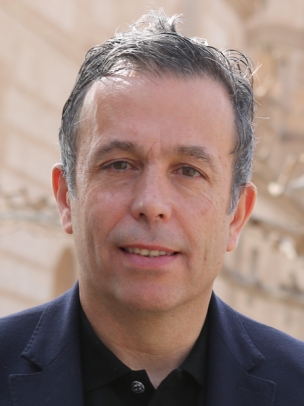 Yannis Pitsiladis合作论文数Department of Sport, Physical Education and Health, Faculty of Arts and Social Sciences, Hong Kong Baptist University10Robert A Scott合作论文数Univ Cambridge, Sch Clin Med, Inst Metab Sci, MRC Epidemiol Unit, Cambridge, England9
 Igor V. Ovchinnikov合作论文数Department of Chemistry and Biochemistry, University of California at Los Angeles7
 Adrian Linacre合作论文数College of Science and Engineering, Flinders University7Richard H. Wilson合作论文数7
 Hussain Alsafiah合作论文数6
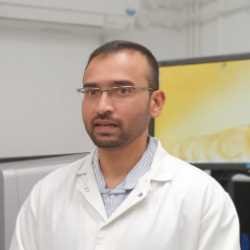 Iyavoo Sasitaran合作论文数6
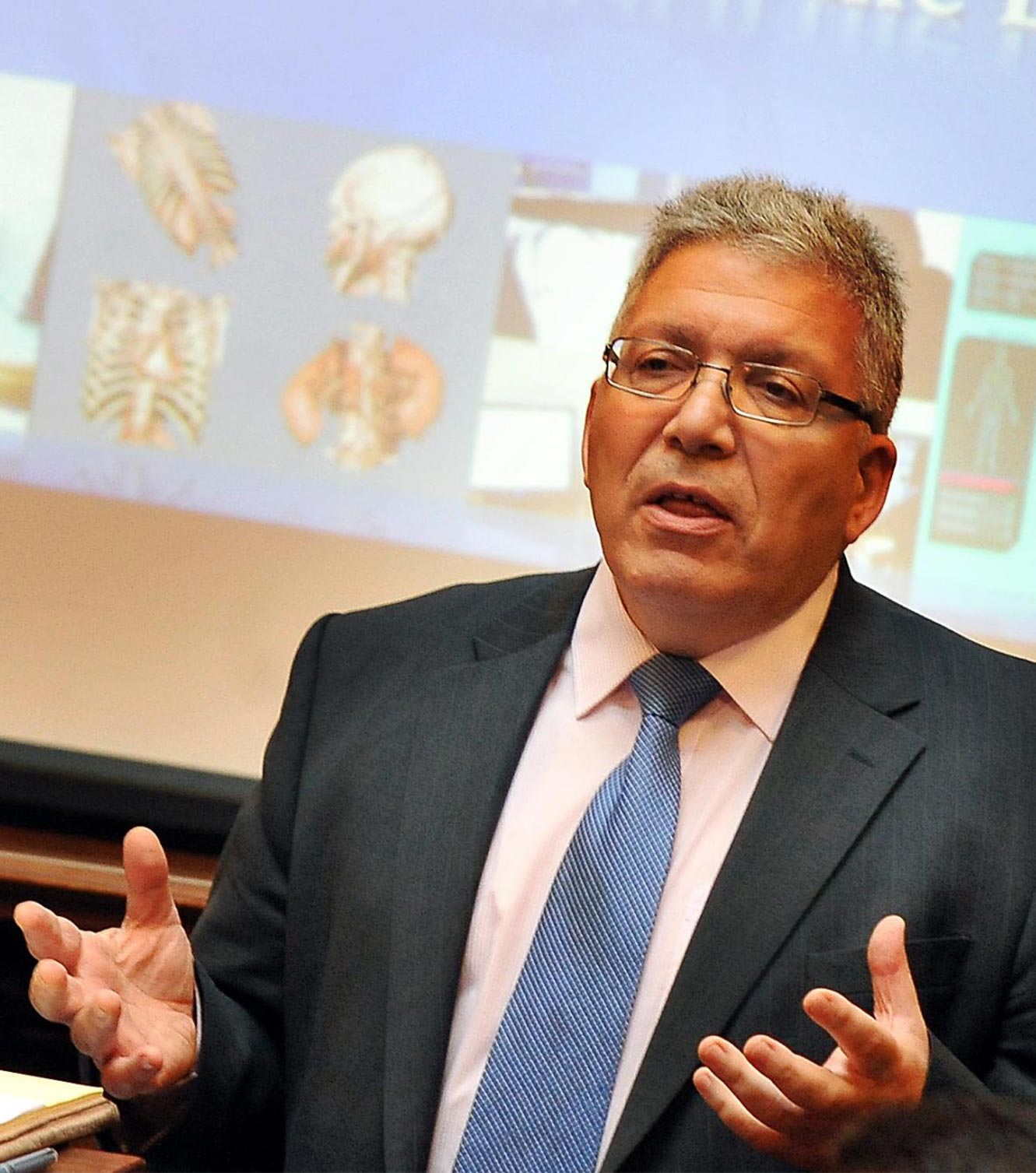 Peter Vanezis合作论文数The William Harvey Research Institute, Faculty of Medicine and Dentistry, Queen Mary University of London/Forensic Medicine, University of Glasgow6Arati Iyengar合作论文数School of Biological Sciences, University of Southamptom Bassett Crescent East6
 Nathalie Zahra合作论文数5
 Vincent Ochieng Onywera合作论文数Dept Recreat Management & Exercise Sci, Kenyatta Univ5
 Judith Ann Smith合作论文数5
 Sharizah Alimat合作论文数4
 Salem K Alketbi合作论文数General Department of Forensic Science and Criminology, Dubai Police4
 Rashed Alghafri合作论文数School of Forensic and Investigative Sciences, University of Central Lancashire;General Department of Forensic Sciences and Criminology, Dubai Police General Head Quarters;School of Forensic and Investigative Sciences, University of Central Lancashire4Bezabhe Wolde合作论文数4E Georgiades合作论文数3Vitaliy M. Kharitonov合作论文数3Galina P. Romanova合作论文数3Mike Boit合作论文数3muhammad s nazir合作论文数3Pet-Paul Wepeba合作论文数3Khazanehdari Kamal合作论文数3
 Nils Anders Götherström合作论文数Archaeological Research Laboratory, Department of Archaeology and Classical Studies, Stockholm University3
 Zainuddin Zafarina合作论文数School of Health Sciences, Universiti Sains Malaysia (USM),3
 Kerstin Liden合作论文数Department of Archaeology and Classical Studies, Stockholm University3C. N. Moran合作论文数2
 nur haliza Hassan合作论文数2Waleed M Alshlash合作论文数2
 Dina Aloraer合作论文数2
 Balnd Mustafa Albarzinji合作论文数Microgene Diagnost Ctr2Lais Vicente Baptista合作论文数2
 Mohammad Alenizi合作论文数2Sanqoor Sheikha H合作论文数2
 Michael K. Boit合作论文数Department of Exercise and Sports Science, Kenyatta University2Gordon Curry合作论文数2
 Colin Moran合作论文数Institute of Biomedical and Life Sciences, University of Glasgow2
 Colin Moffatt合作论文数2
 Bram Bekaert合作论文数Laboratory of Forensic Genetics and Molecular Archaeology, UZ Leuven2
 Terje Raudsepp合作论文数Department of Animal Breeding and Genetics, Swedish University of Agricultural Sciences2Susan M. Adams合作论文数1O Semino合作论文数1L C Tsai合作论文数1M. Salado Puerto合作论文数1Druckerei Stückle合作论文数1JCI LEE合作论文数1Chiara Rengo合作论文数1




