As organ transplantation is physically possible within a tension between common biological properties and individual immunities, so it is ethically possible within a tension between individual personality in full integrity and the human community of which each member, social by nature, is an organic part. Ethical donation is by consent, explicit or presumed, spontaneously offered or procured by request. Altruism or commercial dealing is now a live issue in organ procurement, whether cadaveric or by live donation, related or unrelated. Attention is given to children in transplantation, and to new developments with fetal organs, neural tissue, bone marrow and xenografts. Given all that medical science and skill can now offer, patients are still free to decline.
This book consists of a series of 18 short articles that aims to stimulate the current debate on euthanasia and the medical duty in death and dying. Leading the text are eight articles that examine the issues as raised by clinicians working in a range of fields from general practice to intensive care, including neonatal intensive care, as well as separate chapters on such issues as providing good quality dying for, for example, patients with Alzheimer’s disease, the chronic severely disabled, and those in extreme old age.The article on palliative medicine and euthanasia attempts to address some of the issues raised earlier, but is somewhat limited in that it does not really discuss the already identified concerns of clinicians beyond those of pain and suffering and symptom control. Following on from the debate, there are four articles that examine the legal framework, both within the United Kingdom and The Netherlands, and …
The subject is first identified in terms of the new understanding of a pre-embryonic phase preceding the traditional embryonic and fetal periods of formation and development. Sample fields and purposes of pre-embryonic research are instanced, some with direct therapeutic intent, others with foreseeable but not immediate clinical application. The ethics are discussed, first to answer the question, should it be done at all, and then, how it may properly be done.
As the contributors to Hanna's volume make us realise afresh, these are deeply engaging questions for any member of a modem society. The interest of reading this book derives in large part from the fact that we all have commitments, one way or another, on the issues with which it is concerned. However, it is not the purpose of Hanna's book to answer these questions, and much of the time they are, indeed, not even addressed in any head-on fashion. This book is a chronicle of the development of these debates by means of case studies, not a contribution to them. By and large this historical, non-philosophical approach is fairly strictly adhered to by the contributors who write the main articles, although annexed to these there are commentaries which open up the ethical issues a little more explicitly. We are, as I say, predisposed to care about stories which raise these questions; and moreover it is of obvious value to writers on the more purely theoretical side of medical ethics to keep themselves in close contact with developments in actual science and actual debate. For one thing, scientific developments happen so quickly (and academic articles reach print so slowly) that there is a real danger that current medical technology will simply leave would-be ethical commentators behind. For another thing, there is a regrettable disparity between academic debate and the rest of the debate about these issues. As this book's sections on (in particular) the abortion issue in the USA show all too clearly: the debate which is actually going on in the political and public arenas is dominated, on both sides, not by the fine distinctions of such writers as Rosalind Hursthouse and Judith Jarvis Thomson, but by knee-jerk reactions and public hysteria. Theorists have to keep in mind the size of the gap which they ought to try to close. The prose-style of the writers ought to have attracted more criticism from the editor, and more direction towards standardisation, than it seems to have done. At best, we get some very readable technical English (as in the last contribution). At worst (as too often elsewhere), we get a painful and ungainly cross-over dialect compounded from Newsweek journalese and both soft and hard scientific jargon, and peppered with abbreviations, acronyms and special usages which are explained at most once. (For example: 'While ddI was always closely linked with the concept of parallel track, once it became clear that it would take time to develop the concept into a working system, ddI and parallel track decoupled, at least in terms of a bureaucratic response'.) However, this is just an immediately visible flaw in what (as persistence shows) is a very worthwhile piece of work. It is worthwhile, not only because it provides historical, political and sociological analysis of some recent controversial developments in medicine, but also because it provides students of medical ethics with the raw factual data which their work must take into account if it is not rapidly to become irrelevant and out of touch.
Introduction: Prolonged Homeopathic Oxygenation improves quality and prolongs the life expectancy of patients with Chronic Obstructive Pulmonary Disease(COPD)with chronic hypoxemia. The most common symptom is cough, associated or not with another respiratory change for a few weeks. Taking into account the European statistics that indicate an approximate prevalence of 40 patients/100,000 inhabitants as Chronic O2 users, it can be assumed that in Brazil we would have approximately 65,000 patients in this condition. Objectives: To know the profile and clinical characteristics of patients with ODP. Method: A quantitative, observational, transversal and analytical approach. Patients taking ODP with a diagnosis of COPD undergoing follow-up at the Prolonged Homeopathic Oxygen Outpatient Clinic in the period from July to October, 2017, were in the municipality of Botucatu. Results: There were 57 patients, mean age of 73(SD)years, most of them female. With regard to schooling, the vast majority had incomplete elementary education (61.4%). None of the patients smoked, of whom 79% were former smokers and 21% were non-smokers. The former smokers smoked on average 41 years(± 14.4). It should be noted that. 52.6% of patients did not make the correct use of therapy. The symptoms presented were: cough(33.3%), sputum (7%)and wheezing (5.3%)The majority (%) did not need hospitalization and had no exacerbation in the last 12 months;73.7% patients received the Influenza vaccine and 53% received the Pneumococcal vaccine in the last 5 years. Conclusion: The mean age of patients was high, low schooling, and no correct use of therapy. It requires continued education to improve care delivery and adherence to treatment.
 Alastair Campbell合作论文数Centre for Ethics in Medicine;University of Bristol;Centre for Ethics in Medicine, University of Bristol3
 RJ COOK合作论文数2
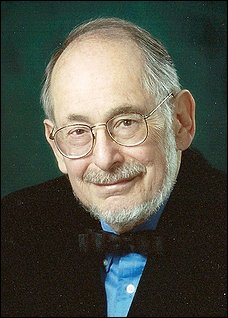 Henry P. David合作论文数Teachers Coll., Columbia U., New York.2
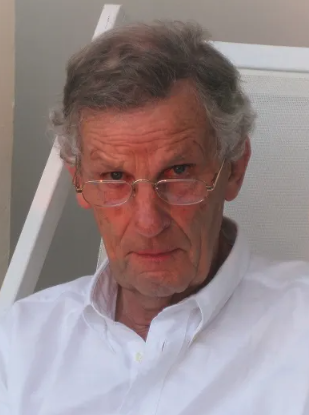 David Baird合作论文数Centre for Reproductive Health, Institute for Regeneration and Repair, The University of Edinburgh2Gerald Dworkin合作论文数UNIVERSITY OF CALIFORNIA2Barron S L合作论文数1
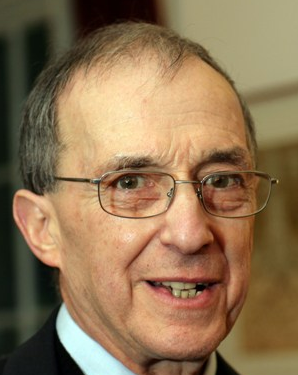 Peter Lachmann合作论文数Department of Veterinary Medicine, University of Cambridge1




