Buoyancy-driven underwater gliders are essential components of the global ocean observing system. While traditional gliders have demonstrated remarkable endurance and operational reliability across a range of scientific missions, their limited energy and payload capacity constrain their use for complex, long-duration, multisensor deployments. The Teledyne Webb Research Sentinel glider represents a generational advance in this platform lineage. With significantly increased battery capacity, expanded buoyancy control, and support for high-power sensors, Sentinel enables persistent, basin-scale ocean monitoring that integrates physical, chemical, and biological observations within a single platform. Here, we present an overview of the Sentinel platform and discuss a set of hypothetical, yet transformative, applications enabled by recent advances in glider technology, including multisensor ecological monitoring and edge-based adaptive sampling. Sentinel offers a critical step toward globally distributed, intelligent ocean observation. Its inaugural global circumnavigation mission will demonstrate both the technical viability and scientific potential of this next-generation glider class.
Slocum gliders are autonomous, cost-effective, long-duration systems that are now a core technology for modern global ocean observing systems. While the Slocum glider can carry many science sensors, there is a persistent challenge integrating complex sensors that have complex operating requirements such as slow equilibration and settlement times. Another technical challenge is the buoyancy engine has historically limited the ability to conduct non-traditional flight patterns (fixed depth flight) that might enable a range of options for optimizing glider applications. Alternative flight behaviors may make it easier for gliders to better accommodate sensors with unique requirements and additionally allow for operations in urbanized waters with complex subsurface obstructions. In this work, we present the use of “hover” missions to sample fixed depth events within the water column using software controls within the Slocum glider software (v10.08). Our goal was to demonstrate hover behavior at a specified depth using autonomous ballast adjustments to provide a detailed picture of various physical, chemical, and biological properties in the water column. This behavior allows for controlled movements around obstacles often found in urbanized waters as well as sampling within tight thermoclines at depth. We present a series of field trials within a deep-water floating seaweed farm as well as in near-coastal waters in the Mid-Atlantic Bight demonstrating the ability to hover at fixed depths and detect localized events not easy to document with traditional glider flight behaviors.
The Middle Atlantic Bight (MAB) of the eastern US differs from other offshore wind (OSW) development sites due to a unique seasonal oceanographic stratification regime. Fisheries there target migratory finfish and sedentary shellfish, the productivity and distribution of which are driven by oceanography with dynamic mesoscale features that can encompass one or more OSW leases. The regulatory environment allows competition among universities and private companies in designing and executing innovative Fisheries Monitoring Plans (FMPs) under federal guidelines but has hindered a comprehensive plan that considers all the wind farms proposed for the MAB under shifting timelines. Different FMPs reflect that OSW development itself is not unified, but FMPs could integrate and share data. Here we present a perspective on an FMP developed as several surveys implementing Before-After-Control-Impact (BACI) and Before-After-Gradient (BAG) designs to meet the challenges of this environment. These anticipate built structures and other nonaligned leases in an "oceanography based" approach. This plan roots analysis in an ecological understanding of the MAB even if methods require resource-by-resource survey. It is also novel in planning around potential sampling impacts by project development, and in anticipating concerns that multiple, independent, or loosely unified campaigns would otherwise bring. It merges extractive and nonextractive methods to support development of survey strategies that anticipate structural hindrance, limit cumulative impacts, and protect sensitive resources. Finally, it fully integrates commercial fisher participation in the design and execution to utilize the sector's extensive knowledge, capable vessels, potential displaced effort, and community trust building in survey results.
To curb the effects of climate change due to fossil fuel burning and in accordance with the Paris Climate Agreement, offshore wind has been put forward as a renewable energy source in the Mid-Atlantic Bight (MAB) on the East Coast, USA. With a collective goal of 51 gigawatts of offshore wind power, the MAB states are at the forefront of this development. The MAB is also an incredibly dynamic ocean region characterized by one of the largest seasonal temperature cycles in the world. This seasonal variability in the MAB is dominated by a distinctly cold, nutrient-dense, “pocket” of bottom water that forms annually known as the Cold Pool. The timing of the annual Cold Pool formation in spring, summer intensification, and fall breakdown can vary interannually. This yearly evolution of the MAB Cold Pool supports ecological services for a variety of commercially and recreationally targeted species. However, recent studies have indicated that the Cold Pool is warming, shrinking below its full extent, and persisting for a shorter period of time, likely due to climate change. Given this significant variability, it is critical to incorporate these dynamics into decisions that impact the coexistence of sustainable fishing and offshore wind. The natural interactions between the seasonal evolution of the Cold Pool and the ecology of commercial fisheries must serve as context to assess changes observed during and after construction of these offshore facilities.In the region identified for rapid offshore wind development along the US East Coast, this research examines the connections between commercially and recreationally relevant species with the seasonal dynamics of the MAB Cold Pool. The summer flounder (Paralichthys dentatus), striped bass (Morone saxatilis), and spiny dogfish (Squalus acanthias) were identified at the recommendation of a variety of fisheries stakeholders as representative commercial and recreational species for this study. The species were selected based on their known association with the annual Cold Pool cycle, and their economic importance to the region. Through this community-centered effort, ecosystem-based research priorities were created to better inform management decisions.The New Jersey Department of Environmental Protection’s Ocean Bottom Trawl Survey contains fisheries and oceanographic data sampled across all seasons for 30 years (1990 to 2019). Using Generalized Additive Models (GAMs), this research assesses whether (1) the nearshore species abundance changes over decades is consistent with decadal changes in seasonal stratification associated with the Cold Pool and (2) the seasonally dependent distribution shifts can be explained by changes in the timing of Cold Pool evolution.Results of this work highlight a mechanistic link between the representative commercial species and their surrounding environment. These results can serve as context for future research studies that will support decisions consistent with coexistent offshore wind and sustainable commercial and recreational fishing.
Ocean acidification, caused by increasing atmospheric carbon dioxide and coastal physical, biological, and chemical processes, is an ongoing threat to carbonate-utilizing organisms living in productive coastal shelves. Bivalves exposed to acidification have shown reduced growth, reproduction, and metabolic processes, with larval stages exhibiting the greatest susceptibility. Here, we compile results from published studies on larval bivalve growth responses to acidification to estimate a relationship between larval growth and seawater aragonite saturation state. We then apply this relationship to a larval dispersal individual-based model for Atlantic sea scallops (Placopecten magellanicus), an economically vital species in the Mid-Atlantic Bight that is historically under-studied in acidification research. To date, there have been no published studies on sea scallop larval response to ocean acidification. Model simulations allowed the identification of potential impacts of acidification on scallop success in the region. Results show that larval sea scallops that are sensitive to ocean acidification had a 17
The U.S. northeast shelf (USNES) has been experiencing rapid ocean warming, which is changing the thermal environment that marine species inhabit. To determine the effect of current and future ocean warming on the distribution of five important USNES fish species (Atlantic cod [Gadus morhua], black sea bass [Centropristis striata], cunner [Tautogolabrus adspersus], spiny dogfish [Squalus acanthias], summer flounder [Paralichthys dentatus]), we applied species-specific physiological parameters from laboratory studies to calculate the Metabolic Index (MI). The MI for each species was calculated across a historical (1972–2019) and contemporary (2010–2019) climatology for each season. Broadly, the oceanic conditions in the winter and spring seasons did not limit metabolically suitable habitat for all five species, while portions of the USNES in the summer and fall seasons were metabolically unsuitable for the cold water species (Atlantic cod, cunner, spiny dogfish). The warmer water species (black sea bass, summer flounder) experienced little metabolically suitable habitat loss, which was restricted to the most southern portion of the distribution. Under a doubling of atmospheric CO2, metabolically suitable habitat is projected to decrease substantially for Atlantic cod, restricting them to the Gulf of Maine. Cunner are projected to experience similar habitat loss as Atlantic cod, with some refugia in the New York Bight, and spiny dogfish may experience habitat loss in the Southern Shelf and portions of Georges Bank. In contrast, black sea bass and summer flounder are projected to experience minimal habitat loss restricted to the southern inshore portion of the USNES. The utility of using MI for co-occurring fish species in the USNES differed, likely driven by species-specific physiology and whether the southern edge of a population occurred within the USNES.
The presence of offshore wind infrastructure in the Northeast U.S. ocean is rapidly increasing to achieve the national goal of 30 gigawatts power by 2030. With varying foundation configurations and grid layouts, construction of offshore wind farms will impact several state and federal surveys that provide invaluable insight to stock management and the impacts of climate change on marine species, habitats, and ecosystems. In addition to the risk of active and derelict gear entanglement from vessels engaged in bottom trawling or dredging with offshore wind infrastructure, alternative non-extractive survey methods (e.g., autonomous underwater vehicles such as ocean gliders) share the risk of entanglement and interacting with infrastructure highlighting the need for careful operational planning and risk mitigation strategies. Our study aims to assess the risk of interaction between ocean gliders and offshore wind turbines within the Wind Energy Areas (WEAs) OCS-A 0498, OCS-A 0499, and OCS-A 0512 using a decade of historic glider track data in a simulated environment of turbine pylons. We utilized 142 historical glider deployments from 2013 to 2023, incorporating an interaction algorithm that accounts for varying buffer zones (0, 2, 4, 20, and 30 meters) beyond monopile foundations to model potential interaction scenarios. It was found that about 1 interaction per deployment occurred across our 142 deployments where no avoidance routines were used. The analysis revealed that risk varies across different WEAs and buffer zones. Simulated interactions were more frequent in larger buffer zones and WEAs that had an increased number of deployments, with a noticeable difference in interaction rates between turbine structures and substations. Specifically, simulated interactions with turbines at depth were more prevalent than surface and substation interactions. While surface interactions are less common, they may pose greater risks due to environmental conditions near the surface (e.g., waves, winds, currents, storms, etc.). Additionally, the infrequent substation interactions could pose a greater risk to the glider due to its foundation type (i.e., piled jacket) which has more underwater structure to interact with. The study highlights a trend where increased time spent in WEAs translates to higher interaction frequencies and reduced time between interactions. This study highlights the baseline interaction rates and thus importance of enhanced operational strategies, vehicle vulnerability awareness, and real-time monitoring to mitigate interaction risks in areas of active offshore wind development.
Pelagic tunicates (salps, pyrosomes) and fishes generate jelly falls and/or fecal pellets that sink roughly 10 times faster than bulk oceanic detritus, but their impacts on biogeochemical cycles in the ocean interior are poorly understood. Using a coupled physical-biogeochemical model, we find that fast-sinking detritus decreased global net primary production and surface export, but increased deep sequestration and transfer efficiency in much of the extratropics and upwelling zones. Fast-sinking detritus generally decreased total suboxic and hypoxic volumes, reducing a "large oxygen minimum zone (OMZ)" bias common in global biogeochemical models. Newly aerobic regions at OMZ edges exhibited reduced transfer efficiencies in contrast with global tendencies. Reductions in water column denitrification resulting from improved OMZs improved simulated nitrate deficits relative to phosphate. The carbon flux to the benthos increased by 11% with fast-sinking detritus from fishes and pelagic tunicates, yet simulated benthic fluxes remained on the lower end of observation-based estimates. Marine ecosystems play a critical role in the global carbon cycle through the food web regulation of air-sea carbon fluxes and the transfer of particulate matter from the upper oceans to depth. Recent evidence has suggested that the detritus from fishes and gelatinous zooplankton (GZ), specifically the pelagic tunicates such as salps and pyrosomes, may have a disproportionate impact on the ocean's biological pump due to them sinking approximately 10 times faster than bulk detritus. These fluxes result in increased sequestration of particulate carbon and nutrients into the deep oceans, but their impact on biogeochemical cycles at depth is poorly understood. Here, we investigated the sensitivity of deep ocean carbon, oxygen, and nutrient cycles to fast-sinking detritus from tunicates and fishes. We found that the fast-sinking detritus decreased surface productivity and export, as well as the size of ocean oxygen minimum zones (OMZs). Also, we examined whether observational evidence of seafloor oxygen consumption could support the increased detrital fluxes (and respiration) at depth, and found that even with the increased oxygen consumption, the modeled values were still below the observations. This suggests that these processes could be realistically incorporated into future generations of Earth System Models. We incorporated fast-sinking detritus from pelagic tunicates and fishes into a modified version of the ocean biogeochemical model COBALT The fast-sinking detritus increased carbon sequestration and transfer efficiency to depth, but decreased surface productivity and export Fast-sinking detritus decreased the size of oxygen minimum zones (OMZs) and water column denitrification, a common model bias
Microplastic (MP) pollution has been widely reported across water matrices including in estuaries, which are important for the understanding of oceanic MPs. Estuaries can greatly alter the fate, transport, size distribution, and abundance of plastic pollution. The aim of this study was to quantify and characterize MP pollution in the Delaware Bay estuary USA, including the size distribution. Samples (N=31) were collected from the mouth of the Delaware River to the coastal ocean including multiple frontal zones across two sampling campaigns (2019 and 2022). MP were extracted from the collected particles using wet peroxide oxidation and density separation with saturated sodium chloride. Particles collected on 500 μm mesh sieves were analyzed via Fourier transform infrared (FTIR) spectroscopy. Across all samples, 327 of the 1015 particles analyzed were MP, and 11 macroplastics were observed. MP concentrations ranged from below detection to 4.12 MP/m3 (mean 0.34 ±0.80 MP/m3). No significant differences were observed between sampling sites; nonetheless, the two highest MP concentrations were observed when sampling along frontal zones with visible debris including macroplastics. Polyethylene (53%) and polypropylene (43%) were the most abundant polymers observed. The majority of the non-plastic particles were classified as particulate natural organic matter (82% of non-plastics). Particles from samples collected during 2022 (N=864) also had color, morphology, and two size dimensions recorded. MP particle size was significantly associated with sampling site, with the coastal ocean sampling site generally having the smallest microplastics. A correlation between total particles and total plastic particles was observed. Aspect ratios for the plastics ranged from one to 40.7, with larger ratios for fibers, with a mean (±standard deviation) of 3.39 ± 4.72 (unitless). These aspect ratios can be used to select shape factors used to estimate the total volume of MP in the studied size range. Overall, these results can help inform fate, transport, and risk assessments related to estuarine plastic pollution.
Climate change is causing persistent, widespread, and significant impacts on marine ecosystems which are predicted to interact and intensify. Overfishing and associated habitat degradation have put many fish populations and marine ecosystems at risk and is making the ocean more vulnerable to climate change and less capable of buffering against its effects. In this Perspective, we review how overfishing is disrupting the important role of marine vertebrates in the ocean carbon cycle, causing disturbance and damage to the carbon-rich seabed, and contributing to rising greenhouse gas emissions through fuel use. We discuss how implementing good fisheries management can reduce or remove many of the impacts associated with overfishing, including fish stock collapse, destruction of seabed habitats, provision of harmful subsidies and accompanying socio-economic impacts. Managing overfishing is one of the most effective strategies in protecting ocean carbon stores and can make an important contribution to climate mitigation and adaptation.
Ocean warming due to climate change can affect the metabolism, performance, and survival of ectothermic marine species. On the US Northeast continental shelf (US NES), waters are warming faster than the global average, leading to elevated mean temperatures and an increased risk of marine heatwave exposure in the region. Thus, it is critical to understand the effects of warming on the region’s living marine resources. Here, we quantified the acute temperature sensitivity of metabolic traits to evaluate their role as possible drivers of acute thermal tolerance and viable habitat in the spiny dogfish shark Squalus acanthias on the US NES. From 10-23°C, the standard metabolic rate increased more rapidly than the maximum metabolic rate, resulting in a reduction in factorial aerobic scope at warmer temperatures. However, the oxygen supply capacity increased with temperature in proportion to maximum metabolic rate, and neither metric declined at the warmest temperatures, suggesting oxygen supply capacity does not limit performance within the tested range. Although behavioral observations revealed overt thermal stress via loss of equilibrium at ≥20°C and estimated lethal temperature at ∼24°C, sharks retained the ability to regulate their resting metabolic rate, achieve maximum activity, and peak absolute aerobic scope at warm temperatures. Results suggest that factors other than oxygen supply or aerobic scope are constraining thermal tolerance in S. acanthias and support the notion that aerobic scope cannot be universally applied to determine optimal or viable metabolic habitat.
Spisula solidissima (Atlantic surfclams) are bottom dwelling bivalves native to the Mid-Atlantic Bight (MAB). They are sensitive to ongoing climate change-induced ocean warming and ocean acidification. Ocean warming has increased bottom temperatures and ocean and coastal acidification has depressed the aragonite saturation state ( $\Omega_{\text{Arag}}$ ), an essential mineral for shell-forming organisms. Ongoing changes in carbonate chemistry may negatively impact the physiology of surfclams which could in turn impact New Jersey surfclam fisheries. A gap in ocean acidification research is access to co-located biological response monitoring. Most literature on organism response is from single-species laboratory studies and may not capture realistic, natural conditions, or variability. Simultaneous measurements of surfclam biological response indicators need to be co-located with carbonate chemistry observations in the field to observe and predict biological impact in situ. The objective of this project was to conduct co-located sampling to determine the correlation between observed carbonate chemistry and biological data from Atlantic surfclams in their natural habitat. A vessel-based survey was performed to collect oceanographic measurements, including carbonate chemistry, and surfclam samples off New Jersey on the Mid-Atlantic shelf. Mean bottom or subsurface oceanographic measurements were used as inputs to $\Omega_{\text{Arag}}$ . A subsample of surfclams at each station were measured for shell length, thickness, and weight. Shell strength was also determined using a tensile strength machine and was defined as the force (kiloNewtons) applied in the middle of the shell at which the shell begins to break. Shell strength was standardized to shell weight for each shell (kN/g). Results showed no significant correlations between shell strength and carbonate chemistry. This could be due to potential acclimation capacity, potential buffering capacity of seawater, and/or potential energy reallocation. The results indicate that shell strength may not be the best metric to determine the impacts on Atlantic surfclams in a highly variable environment. The exposure to low $\text{pH}/\Omega_{\text{Arag}}$ may need to be much longer to see responses in shell strength. The lack of correlation between shell strength and carbonate chemistry does not mean that Atlantic surfclams were not impacted by pH and $\Omega_{\text{Arag}}$ , but other unmeasured physiological metrics may have instead been affected.
Rutgers University's accelerated master's degree program in Operational Oceanography (MOO) was established in 2019 to fulfill the workforce gap of the New Blue Economy (NBE), which includes satisfying renewable energy demands as the global population approaches 9 billion by 2050. The MOO program provides students experiential learning opportunities throughout the entire 12-month curriculum, often intersecting with the various technology and data teams that operate a state-of-art ocean observing network and comprise RU COOL (Rutgers University's Center for Ocean Observing Leadership), an internationally oceanographic center of excellence developing new technologies, research, outreach, and educational paradigms for working in the ocean. Students collaborate as a cohort on hands-on activities and assignments involving operational oceanographic equipment, specifically the large fleet of Slocum gliders and expansive network of High-Frequency Radar, both of which are key data pillars for RU COOL. Students work independently on data analysis, learning to analyze, synthesize, and visualize large datasets of real-time oceanographic data and numerical ocean model output on Rutgers University's High-Performance Computing (HPC) cluster, all using the versatile and transferable Python programming language. These were the tenets with which the program was initialized. In the past 4 years, the MOO program has evolved considerably. The first 2 years saw the students mostly remote due to the COVID-19 global pandemic, with limited experiential learning opportunities either in the lab or in the field. The program was pivoted to a strong focus on data processing during this time, such that the graduates would still be both competitive and capable upon degree completion. As those restrictions lifted in the third year and the program returned to the original intent, focus was redistributed across both tenets. Internalizing both student feedback and performance after each course and year, as well as industry feedback on desired skills, the program curriculum shifted significantly for the fourth year. Students were tasked to collaboratively run two quarterly glider deployments. This included coordination with our glider staff team for preparation, and real-time marine weather-based decision making for the operation and piloting, as well as extensive subsequent data analysis. This unique learning opportunity came with significant student responsibility, but the cohort collaboration and tapered support from the glider staff team ultimately allowed for great student successes. The endeavor realized the student-led glider transect offshore of New Jersey, originally conceptualized at the creation of the program. This element of the ocean observatory of RU COOL now enables applied, operational experience for subsequent cohorts in the MOO program. The program's goal has been to capitalize on the unique ocean observing lab resources and capabilities of RU COOL and Rutgers to meet the NBE workforce needs with the accelerated, experiential learning of a new generation of operational oceanography graduate students. Through the continual evolution of the program towards this goal, all MOO graduates have received employment in an oceanography-related career. The program curriculum continues to refine and adapt with each cohort, both to enhance the applied, experiential learning opportunities and to ensure skill proficiency that continually aligns with industry and government workforce needs. And while these global needs exceed the capacity of the MOO program to solely meet, our program may serve as a model for other universities to begin developing their own NBE pipelines.
In the last decade, the ocean has absorbed a quarter of the Earth's greenhouse gas emissions through the carbon (C) cycle, a naturally occurring process. Aspects of the ocean C cycle are now being incorporated into climate change mitigation and adaptation plans. Currently, too little is known about marine vertebrate C functions for their inclusion in policies. Fortunately, marine vertebrate biology, behavior, and ecology through the lens of C and nutrient cycling and flux is an emerging area of research that is rich in existing data. This review uses literature and trusted data sources to describe marine vertebrate C interactions, provides quantification where possible, and highlights knowledge gaps. Implications of better understanding the integral functions of marine vertebrates in the ocean C cycle include the need for consideration of these functions both in policies on nature-based climate change mitigation and adaptation, and in management of marine vertebrate populations.
Microplastics (MP) are considered emerging contaminants in the water environment, and there is an interest in understanding their entry into the food web. As a growing body of literature demonstrates the ingestion of MP by zooplankton in controlled laboratory studies, few data are available demonstrating in situ observations of MP in zooplankton. A field survey was performed to collect zooplankton in the highly urbanized Hudson-Raritan estuary. Following washing, sorting by species, and enumeration, three dominant species of copepods (Acartia tonsa, Paracalanus crassirostris and Centropages typicus) were digested. MP were filter concentrated and characterized by size, morphology, and color via microscopy and polymer type by micro-FTIR imaging and/or Raman spectroscopy. MP were observed in all extracts performed on the three copepod species with averages ranging from 0.30 to 0.82 MP individual-1. Polyethylene and polypropylene were the dominant polymer types observed and fragments and beads the most commonly observed morphologies for MP. These data were used to estimate the flux of MP through zooplankton based on gut turnover times, which we compare to estimates of MP entering this environment though the local waterways. The estimated fluxes were sufficiently large, indicating that ingestion by zooplankton is a major sink of MP in the size range subject to zooplankton feeding in surface estuarine waters.
Fish reproduction is energetically costly, leading to a suite of energy allocation strategies for maximizing lifetime reproductive potential. Assessing energetic allocation for species that inhabit a wide distributional range can provide insight into different strategies found across individuals and populations. The Northern stock of black sea bass (Centropristis striata) inhabits the U.S. Northeast continental shelf from Cape Hatteras, NC, to the Gulf of Maine, and spawns inshore throughout this distribution from April to October. To assess energy allocation towards spawning, C. striata were collected in four regions across this distribution and throughout their spawning season. By assessing energetic allocation (lipid, energy density and total energy) in muscle, liver and gonad tissues, C. striata were identified as mixed breeders because while they mobilized somatic energy stores towards reproductive development, they also used energy acquired from their diet to sustain reproductive output throughout the spawning season. Unlike male fish, female fish both invested more energy into liver and gonad tissues and exhibited regional differences in energetic values. For both sexes, C. striata in the northern portion of the distribution had lower energetic values both in the somatic stores and towards gonadal development than the fish in the southern portion of the distribution, possibly because of longer migration distance. Overall, the authors found significant spatial variation in energetic constraints that may affect reproductive output and success (recruitment), a relevant result as C. striata are a popular recreational and commercial species throughout this distribution.
Increased atmospheric carbon dioxide (CO2) has led to global climate change and ocean acidification (OA) via the absorption of atmospheric CO2 by the ocean. Coastal shelves are also affected by various processes that influence the acidity of seawater, causing acidity to vary over time and space. These variations in ocean acidity can negatively impact marine species, especially calcifying organisms such as surfclams and sea scallops. In the Mid-Atlantic Bight (MAB), a subsection of the U.S. Northeast Shelf (NES), this variation in acidity generates ecological and economic concerns as the MAB is home to some of the nation’s most productive and profitable estuaries and fisheries. In this study, Rutgers University (southern MAB) and Stony Brook University (northern MAB, Hudson Canyon) deployed two gliders equipped with sensors measur-ing depth, temperature, salinity, pH, dissolved oxygen, and chlorophyll to monitor winter 2021 carbonate chemistry conditions on the shelf as well as in slope waters of the MAB. For both deployments, measured pH and calculated aragonite saturation state (Ωarag) showed opposing patterns, with high pH and low Ωarag in shelf/nearshore and low pH and high Ωarag in slope waters. These trends were attributed to different driving factors whereas pH was more influenced by biological processes (i.e. photo-synthesis) and Ωarag was influenced mostly by thermodynamics and chemical factors (i.e. temperature, total alkalinity). The results of this study underscore the importance of monitoring coastal acidity to understand potential impacts on important species.
Abstract Statistical models built using different data sources and methods can exhibit conflicting patterns. We used the northern stock of black sea bass (Centropristis striata) as a case study to assess the impacts of using different fisheries data sources and laboratory‐derived physiological metrics in the development of thermal habitat models for marine fishes. We constructed thermal habitat models using generalized additive models (GAMs) based on various fisheries datasets as input, including the NOAA Northeast Fisheries Science Center (NEFSC) bottom trawl surveys, various inshore fisheries‐independent trawl surveys (state waters), NEFSC fisheries‐dependent observer data, and laboratory‐based physiological metrics. We compared each model's GAM response curve and coupled them to historical ocean conditions in the U.S. Northeast Shelf using bias‐corrected ocean temperature output from a regional ocean model. Thermal habitat models based on shelf‐wide data (NEFSC fisheries‐dependent observer data and fisheries‐independent spring and fall surveys) explained the most variation in black sea bass presence/absence data at ~15% deviance explained. Models based on a narrower range of sampled thermal habitat from inshore survey data in the Northeast Area Monitoring and Assessment Program (NEAMAP) and the geographically isolated Long Island Sound data performed poorly. All models had similar lower thermal limits around 8.5℃, but thermal optima, when present, ranged from 16.7 to 24.8℃. The GAMs could reliably predict habitat from years excluded from model training, but due to strong seasonal temperature fluctuations in the region, could not be used to predict habitat in seasons excluded from training. We conclude that survey data source can greatly impact development and interpretation of thermal habitat models for marine fishes. We suggest that model development be based on data sources that sample the widest range of ocean temperature and physical habitat throughout multiple seasons when possible, and encourage thorough consideration of how data gaps may influence model uncertainty.
Fishes are the dominant vertebrates in the ocean, yet we know little of their contribution to carbon export flux at regional to global scales. We synthesize the existing information on fish‐based carbon flux in coastal and pelagic waters, identify gaps and challenges in measuring this flux and approaches to address them, and recommend research priorities. Based on our synthesis of passive (fecal pellet sinking) and active (migratory) flux of fishes, we estimated that fishes contribute an average (± standard deviation) of about 16.1% (± 13%) to total carbon flux out of the euphotic zone. Using the mean value of model‐generated global carbon flux estimates, this equates to an annual flux of 1.5 ± 1.2 Pg C yr−1. High variability in estimations of the fish‐based contribution to total carbon flux among previous field studies and reported here highlight significant methodological variations and observational gaps in our present knowledge. Community‐adopted methodological standards, improved and more frequent measurements of biomass and passive and active fluxes of fishes, and stronger linkages between observations and models will decrease uncertainty, increase our confidence in the estimation of fish‐based carbon flux, and enable identification of controlling factors to account for spatial and temporal variability. Better constraints on this key component of the biological pump will provide a baseline for understanding how ongoing climate change and harvest will affect the role fishes play in carbon flux.
 Josh Kohut合作论文数21
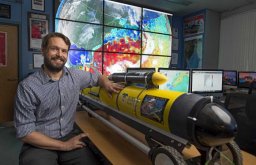 Travis N. Miles合作论文数Department of Marine, Earth & Atmospheric Sciences, North Carolina State University20
 Oscar M. Schofield合作论文数Center for Ocean Observing Leadership, Department of Marine and Coastal Sciences, School of Environmental and Biological Sciences, Rutgers University19
 Scott M. Glenn合作论文数15
 Deborah K. Steinberg合作论文数Department of Biological Sciences, Virginia Institute of Marine Science9
 Emily Slesinger合作论文数6
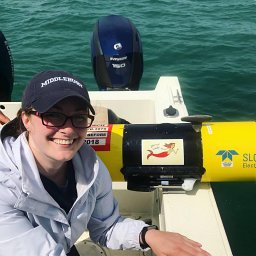 Elizabeth Wright-Fairbanks合作论文数The State University of New Jersey5
 Roarty, H.J.合作论文数rutgers university5
 Brad Seibel合作论文数College of Marine Science, University of South Florida5
 Vincent S. Saba合作论文数College of William and Mary Virginia Institute of Marine Science5
 Kaitlin A. Goldsmith合作论文数4
 Clayton Jones合作论文数4
 Nicholas Beaird合作论文数Rutgers University4
 Hugh Ducklow合作论文数Department of Earth and Environmental Sciences, Columbia University in the City of New York;Lamont-Doherty Earth Observatory, Columbia Climate School, Columbia University in the City of New York4
 Sharon Stammerjohn合作论文数Institute of Arctic and Alpine Research, University of Colorado Boulder4
 Stephanie Henson合作论文数National Oceanography Centre;University of Southampton4Janice McDonnell合作论文数4
 Daphne Munroe合作论文数4
 Angela Martin合作论文数Corresponding author3Nicole Waite合作论文数3
 Nicole Fahrenfeld合作论文数Department of Civil and Environmental Engineering, The State University of New Jersey3
 Yi Xu (许一)合作论文数State Key Laboratory of Estuarine and Coastal Research, East China Normal University3Georgia A. Arbuckle-Keil合作论文数3
 Erica H. Ombres合作论文数3
 Deborah Bronk合作论文数Bigelow Laboratory for Ocean Sciences;College of William & Mary, Virginia Institute of Marine Science3
 Michael Meredith合作论文数British Antarctic Survey;Murray Edwards College, University of Cambridge3Robert J. Chant合作论文数Institute of Marine and Coastal Science, Rutgers University3
 Sarah R Cooley合作论文数Ocean Conservancy3
 Joaquín Tintoré Subirana合作论文数Sistema de Observación Y Prediccion Costero De Las Illes Balears2William Fraser合作论文数2Jennifer Vreeland-Dawson合作论文数2Kruti Desai合作论文数2Roy Watlington合作论文数2
 Leslie N. Wickes合作论文数2
 Joanne O'Callaghan合作论文数2Elizabeth B. Jewett合作论文数2Beth Curry合作论文数2Joleen Heiderich合作论文数2Emily Silva合作论文数2Laura Nazzaro合作论文数2Matthew Poach合作论文数2huh sik合作论文数2Karli Sipps合作论文数2Jackie Motyka合作论文数2Richard Crout合作论文数2
 Lionel Guidi合作论文数2Teri L King合作论文数2
 Carlos Barrera合作论文数2Darcy Dugan合作论文数2




