Flowering time synchronizes reproductive development with favorable environmental conditions to optimize yield. Improved understanding of the genetic control of flowering will help optimize varietal adaptation to future agricultural systems under climate change. Here, we investigate the genetic basis of flowering time in winter wheat (Triticum aestivum L.) using an eight-founder multi-parent advanced generation intercross (MAGIC) population. Flowering time data was collected from field trials across six growing seasons in the United Kingdom, followed by genetic analysis using a combination of linear modelling, simple interval mapping and composite interval mapping, using either single markers or founder haplotype probabilities. We detected 57 quantitative trait loci (QTL) across three growth stages linked to flowering time, of which 17 QTL were identified only when the major photoperiod response locus Ppd-D1 was included as a covariate. Of the 57 loci, ten were identified using all genetic mapping approaches and classified as 'major' QTL, including homoeologous loci on chromosomes 1B and 1D, and 4A and 4B. Additional Earliness per se flowering time QTL were identified, along with growth stage- and year-specific effects. Furthermore, six of the main-effect QTL were found to interact epistatically with Ppd-D1. Finally, we exploited residual heterozygosity in the MAGIC recombinant inbred lines to Mendelize the Earliness per se QTL QFt.niab-5A.03, which was confirmed to modulate flowering time by at least four days. This work provides detailed understanding of the genetic control of phenological variation within varieties relevant to the north-western European wheat genepool, aiding informed manipulation of flowering time in wheat breeding.
Plant breeders have indirectly selected for variation at circadian-associated loci in many of the world's major crops, when breeding to increase yield and improve crop performance. Using an eight-parent Multiparent Advanced Generation Inter-Cross (MAGIC) population, we investigated how variation in circadian clock-associated genes contributes to the regulation of heading date in UK and European winter wheat (Triticum aestivum) varieties. We identified homoeologues of EARLY FLOWERING 3 (ELF3) as candidates for the Earliness per se (Eps) D1 and B1 loci under field conditions. We then confirmed a single-nucleotide polymorphism within the coding region of TaELF3-B1 as a candidate polymorphism underlying the Eps-B1 locus. We found that a reported deletion at the Eps-D1 locus encompassing TaELF3-D1 is, instead, an allele that lies within an introgression region containing an inversion relative to the Chinese Spring D genome. Using Triticum turgidum cv. Kronos carrying loss-of-function alleles of TtELF3, we showed that ELF3 regulates heading, with loss of a single ELF3 homoeologue sufficient to alter heading date. These studies demonstrated that ELF3 forms part of the circadian oscillator; however, the loss of all homoeologues was required to affect circadian rhythms. Similarly, loss of functional LUX ARRHYTHMO (LUX) in T. aestivum, an orthologue of a protein partner of Arabidopsis (Arabidopsis thaliana) ELF3, severely disrupted circadian rhythms. ELF3 and LUX transcripts are not co-expressed at dusk, suggesting that the structure of the wheat circadian oscillator might differ from that of Arabidopsis. Our demonstration that alterations to ELF3 homoeologues can affect heading date separately from effects on the circadian oscillator suggests a role for ELF3 in cereal photoperiodic responses that could be selected for without pleiotropic deleterious alterations to circadian rhythms.
Summary The stomatal complex of grasses consists of two guard cells and two adjacent subsidiary cells that cooperate during stomatal closure. Zymoseptoria tritici , the main causal agent of Septoria tritici blotch in wheat, enters the host via stomata. Here we test the hypothesis that the stomatal complex shows focused sub-cellular responses to invading Z. tritici hyphae. We have combined live-cell transmission light microscopy, immunofluorescence and CRS microscopy to identify cell wall modifications triggered by hyphal invasion. Furthermore, we have used confocal fluorescence microscopy and automated quantitative image analysis to assess whether host cells respond to hyphae through spatial redistribution of organelles. We find that subsidiary cells construct papillae that are accurately aligned with hyphal position even when hyphae are occluded by guard cells. These are distinct from those induced by powdery mildew, with callose restricted to a crust that surrounds content with a high-amplitude Raman signal in the CH-band. Peroxisome populations in subsidiary cells show distributions with modes weakly correlated with hyphal position but do not differ significantly between compatible and incompatible interactions. Our data suggest local changes to cell wall architecture and focal accumulation of organelles in subsidiary cells could play roles in crop defence during host leaf penetration by Z. tritici . Molecular strategies to amplify these responses may provide novel routes for crop protection.
Two homoeologous QTLs for number of spikelets per spike (SPS) were mapped on chromosomes 7AL and 7BL using two wheat MAGIC populations. Sets of lines contrasting for the QTL on 7AL were developed which allowed for the validation and fine mapping of the 7AL QTL and for the identification of a previously described candidate gene, WHEAT ORTHOLOG OF APO1 ( WAPO1 ). Using transgenic overexpression in both a low and a high SPS line, we provide a functional validation for the role of this gene in determining SPS also in hexaploid wheat. We show that the expression levels of this gene positively correlate with SPS in multiple MAGIC founder lines under field conditions as well as in transgenic lines grown in the greenhouse. This work highlights the potential use of WAPO1 in hexaploid wheat for further yield increases. The impact of WAPO1 and SPS on yield depends on other genetic and environmental factors, hence, will require a finely balanced expression level to avoid the development of detrimental pleiotropic phenotypes.
AbstractUsing an eight-parent Multiparent Advanced Generation Inter-Cross (MAGIC) population we investigated how variation at circadian clock-associated genes contributes to the regulation of heading date in UK and European winter wheat varieties. We identified homoeologues ofEARLY FLOWERING3 (ELF3) as candidates for theEarliness per se(Eps)D1andB1 lociin field conditions. We confirmed that a SNP within the coding region ofTaELF3-B1is a candidate polymorphism underlying theEps-B1 locus.We found that a reported deletion at theEps-D1 locusencompassingTaELF3-D1,is instead a novel allele that lies within an introgression region containing an inversion relative to the Chinese Spring D genome. UsingT. turgidum cv. Kronoscarrying loss of function alleles ofTtELF3we show thatELF3does regulate heading by demonstrating that the loss of a singleELF3homoeologue was sufficient to alter heading date. These studies demonstrated thatELF3forms part of the circadian oscillator but loss of all homoeologues was required to affect circadian rhythms. Similarly, loss of functionalLUX ARRHYTHMO(LUX) inT. aestivum, an orthologue of a protein partner of Arabidopsis ELF3, severely disrupted circadian rhythms.ELF3andLUXtranscripts are not co-expressed at dusk suggesting the structure of the wheat circadian oscillator might differ to that of Arabidopsis. Our demonstration that alteration toELF3homoeologues can affect heading date separate from effects on the circadian oscillator suggests a role forELF3in cereal photoperiodic responses that could be selected for, without pleiotropic deleterious alterations to circadian rhythms.
Using an eight-parent Multiparent Advanced Generation Inter-Cross (MAGIC) population we investigated how variation at circadian clock-associated genes contributes to the regulation of heading date in UK and European winter wheat varieties. We identified homoeologues of EARLY FLOWERING 3 ( ELF3 ) as candidates for the Earliness per se ( Eps ) D1 and B1 loci in field conditions. We confirmed that a SNP within the coding region of TaELF3-B1 is a candidate polymorphism underlying the Eps-B1 locus. We found that a reported deletion at the Eps-D1 locus encompassing TaELF3-D1, is instead a novel allele that lies within an introgression region containing an inversion relative to the Chinese Spring D genome. Using T. turgidum cv. Kronos carrying loss of function alleles of TtELF3 we show that ELF3 does regulate heading by demonstrating that the loss of a single ELF3 homoeologue was sufficient to alter heading date. These studies demonstrated that ELF3 forms part of the circadian oscillator but loss of all homoeologues was required to affect circadian rhythms. Similarly, loss of functional LUX ARRHYTHMO ( LUX ) in T. aestivum , an orthologue of a protein partner of Arabidopsis ELF3, severely disrupted circadian rhythms. ELF3 and LUX transcripts are not co-expressed at dusk suggesting the structure of the wheat circadian oscillator might differ to that of Arabidopsis. Our demonstration that alteration to ELF3 homoeologues can affect heading date separate from effects on the circadian oscillator suggests a role for ELF3 in cereal photoperiodic responses that could be selected for, without pleiotropic deleterious alterations to circadian rhythms.### Competing Interest StatementThe authors have declared no competing interest.
The indica ecotypes, IR64, an elite drought-susceptible variety adapted to irrigated ecosystem, and Apo (IR55423-01 or NSIC RC9), a moderate drought-tolerant upland genotype together with their hybrid (IR64 × Apo) were exposed to non- and water-stress conditions. By sequencing (RNA-seq) these genotypes, we were able to map genes diverging in cis and/or trans factors. Under non-stress condition, cis dominantly explains (11.2%) regulatory differences, followed by trans (8.9%). Further analysis showed that water-limiting condition largely affects trans and cis + trans factors. On the molecular level, cis and/or trans regulatory divergence explains their genotypic differences and differential drought response. Between the two parental genotypes, Apo appears to exhibit more photosynthetic efficiency even under water-limiting condition and is ascribed to trans. Statistical analyses showed that regulatory divergence is significantly influenced by environmental conditions. Likewise, the mode of parental expression inheritance which drives heterosis (HET) is significantly affected by environmental conditions indicating the malleability of heterosis to external factors. Further analysis revealed that the HET class, dominance, was significantly enriched under water-stress condition. We also identified allelic imbalance switching in which several genes prefer IR64- (or Apo-) specific allele under non-stress condition but switched to Apo- (or IR64-) specific allele when exposed to water-stress condition.
The influence of wheat (modern wheat, both bread and pasta, their wild ancestors and synthetic hybrids) on the microbiota of their roots and surrounding soil is characterized. We isolated lines of bread wheat by hybridizing diploid (Aegilops tauschii) with tetraploid Triticum durum and crossed it with a modern cultivar of Triticum aestivum. The newly created, synthetic hybrid wheat, which recapitulate the breeding history of wheat through artificial selection, is found to support a microbiome enriched in beneficial Glomeromycetes fungi, but also in, potentially detrimental, Nematoda. We hypothesize that during wheat domestication this plant-microbe interaction diminished, suggesting an evolutionary tradeoff; sacrificing advantageous nutrient acquisition through fungal interactions to minimize interaction with pathogenic fungi. Increased plant selection for Glomeromycetes and Nematoda is correlated with the D genome derived from A. tauschii. Despite differences in their soil microbiota communities, overall wheat plants consistently show a low ratio of eukaryotes to prokaryotes. We propose that this is a mechanism for protection against soil-borne fungal disease and appears to be deeply rooted in the wheat genome. We suggest that the influence of plants on the composition of their associated microbiota is an integral factor, hitherto overlooked, but intrinsic to selection during wheat domestication.
Twoindicainbred rice lines, IR64, a drought-sensitive, and Apo, a moderately drought-tolerant genotype, were exposed to non- (control or unstressed) and water-stress treatments. Leaf samples collected at an early flowering stage were sequenced by RNA-seq. Reads generated were analyzed for differential expression (DE) implementing various models in baySeq to capture differences in genome-wide transcriptional response under contrasting water regimes. IR64, the drought-sensitive variety consistently exhibited a broader transcriptional response while Apo showed relatively modest transcriptional changes under water-stress conditions across all models implemented. Gene ontology (GO) and KEGG pathway analyses of genes revealed that IR64 showed enhancement of functions associated with signal transduction, protein binding and receptor activity. Apo uniquely showed significant enrichment of genes associated with an oxygen binding function and peroxisome pathway. In general, IR64 exhibited more extensive molecular re-programming, presumably, a highly energy-demanding route to deal with the abiotic stress. Several of these differentially expressed genes (DEGs) were found to co-localize with QTL marker regions previously identified to be associated with drought-yield response, thus, are the most promising candidate genes for further studies.
Abstract cis and/or trans regulatory divergence within or between related taxa on a genome-wide scale has been largely unexamined in crops, more so, the effect of stress on cis/trans architecture. In this study, the indica genotypes IR64, an elite drought-susceptible lowland variety, and Apo (IR55423-01 or NSIC RC9), a moderate drought-tolerant upland genotype together with their hybrid (IR64 × Apo) were exposed to non- and water-stress conditions. Evidence of cis and/or trans regulatory differences was tested between these two indica rice genotypes. By sequencing (RNA-seq) the parents and their hybrid, we are able to map genes diverging in cis and/or trans factors between the two genotypes. Under non-stress conditions, cis dominantly explains (11.2%) regulatory differences, followed by trans (8.9%). Further analysis showed that water-limiting conditions largely affect trans and cis + trans factors. Between the two inbred lines, Apo appears to exhibit higher expression fold change of genes enriched in “response to stress” and “photosynthesis” under non- and water-stress conditions. On the molecular level, cis and/or trans regulatory divergence explains their genotypic differences and differential drought response. Parent–hybrid RNA-seq has the potential to identify genes diverging in cis and/or trans factors even between intra-sub-specifically related genotypes. By comparing cis/trans landscape under stressed and unstressed conditions, this approach has the ability to assess the impact of drought on gene expression. Computational analysis and association of several drought-yield QTL markers with cis-diverging genes provide converging evidences suggestive of a potential approach to identify trait-associated candidate genes using hybrids and their parents alone. Key Message cis dominantly explains divergence of two indica rice genotypes, IR64 and Apo under normal conditions while trans and cis + trans regulatory factors are largely affected by drought
We describe the production and characterization of bread wheat with grains that lack small B-type starch granules, have near-normal weight and starch content, and have novel grain and starch physicochemical properties.
List of genes in the hybrids exhibiting significant DE between the two parent-specific alleles at Pâ
Water availability is one of the most important limiting factors in agriculture worldwide, particularly in arid and semiarid regions. Six spring wheat genotypes, i.e. three UK cultivars Cadenza, Paragon, and Xi-19 and three synthetic-derived lines L-22, L-24, and L-38, were grown in a phytotron under well-watered (until 40 days after sowing) and drought conditions. The aim of the study was to evaluate the traits related to photosynthetic capacity (net photosynthesis rate, stomatal conductance, internal CO2 concentration, transpiration rate, carboxylation capacity, instantaneous and intrinsic water-use efficiency) and plant biomass production in the cultivars and synthetic derivatives of wheat genotypes under well-watered and water-limited conditions. Genotypic variations in gas-exchange traits including net photosynthetic rate, carboxylation capacity, instantaneous water-use efficiency, and biomass yield were found amongst genotypes. Drought significantly reduced the total dry matter per plant. The synthetic derivatives L-22 and L-24 showed higher performance of stomata for most of the stomatal aperture characteristics. Total dry matter was positively related to net photosynthetic rate and to instantaneous and intrinsic water-use efficiencies. Finally, net photosynthetic rate was also positively related to stomatal conductance and transpiration rate under both the well-watered and water-limited drought conditions.
Climate change affects agricultural productivity worldwide. Increased prices of food commodities are the initial indication of drastic edible yield loss, which is expected to increase further due to global warming. This situation has compelled plant scientists to develop climate change-resilient crops, which can withstand broad-spectrum stresses such as drought, heat, cold, salinity, flood, submergence and pests, thus helping to deliver increased productivity. Genomics appears to be a promising tool for deciphering the stress responsiveness of crop species with adaptation traits or in wild relatives toward identifying underlying genes, alleles or quantitative trait loci. Molecular breeding approaches have proven helpful in enhancing the stress adaptation of crop plants, and recent advances in high-throughput sequencing and phenotyping platforms have transformed molecular breeding to genomics-assisted breeding (GAB). In view of this, the present review elaborates the progress and prospects of GAB for improving climate change resilience in crops, which is likely to play an ever increasing role in the effort to ensure global food security.
SummaryAgriculture is now facing the ‘perfect storm’ of climate change, increasing costs of fertilizer and rising food demands from a larger and wealthier human population. These factors point to a global food deficit unless the efficiency and resilience of crop production is increased. The intensification of agriculture has focused on improving production under optimized conditions, with significant agronomic inputs. Furthermore, the intensive cultivation of a limited number of crops has drastically narrowed the number of plant species humans rely on. A new agricultural paradigm is required, reducing dependence on high inputs and increasing crop diversity, yield stability and environmental resilience. Genomics offers unprecedented opportunities to increase crop yield, quality and stability of production through advanced breeding strategies, enhancing the resilience of major crops to climate variability, and increasing the productivity and range of minor crops to diversify the food supply. Here we review the state of the art of genomic‐assisted breeding for the most important staples that feed the world, and how to use and adapt such genomic tools to accelerate development of both major and minor crops with desired traits that enhance adaptation to, or mitigate the effects of climate change.
Circadian clocks regulate many aspects of plant physiology and development that contribute to essential agronomic traits. Circadian clocks contain transcriptional feedback loops that are thought to generate circadian timing. There is considerable similarity in the genes that comprise the transcriptional and translational feedback loops of the circadian clock in the plant Kingdom. Functional characterisation of circadian clock genes has been restricted to a few model species. Here we provide a functional characterisation of the Hordeum vulgare (barley) circadian clock genes Hv circadian clock associated 1 (HvCCA1) and Hv photoperiodh1, which are respectively most similar to Arabidopsis thaliana circadian clock associated 1 (AtCCA1) and pseudo response regulator 7 (AtPRR7). This provides insight into the circadian regulation of one of the major crop species of Northern Europe. Through a combination of physiological assays of circadian rhythms in barley and heterologous expression in wild type and mutant strains of A. thaliana we demonstrate that HvCCA1 has a conserved function to AtCCA1. We find that Hv photoperiod H1 has AtPRR7-like functionality in A. thaliana and that the effects of the Hv photoperiod h1 mutation on photoperiodism and circadian rhythms are genetically separable.
The comparative phenotypic analysis of mutants is often hampered by their diverse and poorly characterised genetic backgrounds. To overcome this problem, a suite of recombinant spring barley lines was developed for four starch biosynthesis genes in a common elite background. Rapid breeding progress was made by combining foreground and background selection with the screening of bulked families. A toolkit of perfect co-dominant PCR assays was developed for the four target genes, based on the causative single nucleotide polymorphisms underlying their starch phenotypes. These were used for foreground selection during backcrossing and selfing, and may be applied to bulks of up to ten plants. Screening bulks meant that large numbers of individuals with known family structure were rapidly assessed and that breeding effort was accurately targeted. These markers were also used for quality control during field multiplication and should be readily transferable to any crosses involving these four mutations. Background selection amongst BC1 progeny known to be heterozygous for the target starch alleles identified individuals which were relatively enriched for the recurrent parent across the rest of the genome. These were further advanced and true-breeding recombinants were selected which carry the target starch mutations in a largely recurrent parent background. The resulting set of BC2F5 pre-breeding lines should enable meaningful analysis of the starch phenotypes and facilitate their transfer into commercial breeding programmes.
MAGIC populations represent one of a new generation of crop genetic mapping resources combining high genetic recombination and diversity. We describe the creation and validation of an eight-parent MAGIC population consisting of 1091 F7 lines of winter-sown wheat (Triticum aestivum L.). Analyses based on genotypes from a 90,000-single nucleotide polymorphism (SNP) array find the population to be well-suited as a platform for fine-mapping quantitative trait loci (QTL) and gene isolation. Patterns of linkage disequilibrium (LD) show the population to be highly recombined; genetic marker diversity among the founders was 74% of that captured in a larger set of 64 wheat varieties, and 54% of SNPs segregating among the 64 lines also segregated among the eight founder lines. In contrast, a commonly used reference bi-parental population had only 54% of the diversity of the 64 varieties with 27% of SNPs segregating. We demonstrate the potential of this MAGIC resource by identifying a highly diagnostic marker for the morphological character "awn presence/absence" and independently validate it in an association-mapping panel. These analyses show this large, diverse, and highly recombined MAGIC population to be a powerful resource for the genetic dissection of target traits in wheat, and it is well-placed to efficiently exploit ongoing advances in phenomics and genomics. Genetic marker and trait data, together with instructions for access to seed, are available at http://www.niab.com/MAGIC/.
The effects on barley starch and grain properties of four starch synthesis mutations were studied during the introgression of the mutations from diverse backgrounds into an elite variety. The lys5f (ADPglucose transporter), wax (granule-bound starch synthase), isa1 (debranching enzyme isoamylase 1) and sex6 (starch synthase IIa) mutations were introgressed into NFC Tipple to give mutant and wild-type BC2F4 families with different genomic contributions of the donor parent. Comparison of starch and grain properties between the donor parents, the BC2F4 families and NFC Tipple allowed the effects of the mutations to be distinguished from genetic background effects. The wax and sex6 mutations had marked effects on starch properties regardless of genetic background. The sex6 mutation conditioned low grain weight and starch content, but the wax mutation did not. The lys5 mutation conditioned low grain weight and starch content, but exceptionally high β-glucan contents. The isa1 mutation promotes synthesis of soluble α-glucan (phytoglycogen). Its introgression into NFC Tipple increased grain weight and total α-glucan content relative to the donor parent, but reduced the ratio of phytoglycogen to starch. This study shows that introgression of mutations into a common, commercial background provides new insights that could not be gained from the donor parent.
 Wayne Powell合作论文数Scotland's Rural College13
 Ian M. Mackay合作论文数Child Health Research Centre, Faculty of Medicine, The University of Queensland;Faculty of Health, University of Queensland12
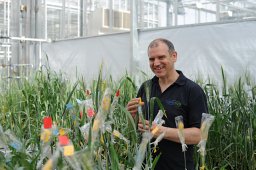 Philip Howell合作论文数11
 Bentley Alison合作论文数The John Bingham Laboratory, NIAB9
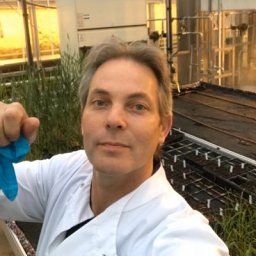 James Cockram合作论文数National Institute of Agricultural Botany7
 Hei Leung合作论文数6Nelzo C. Ereful合作论文数5Howells Rhian合作论文数5Horsnell Richard合作论文数5
 Alex Webb合作论文数Department of Plant Sciences, School of the Biological Sciences, University of Cambridge5Lukas M Wittern合作论文数4Keith A Gardner合作论文数4
 Rene Dreos合作论文数SIB, CH-1015 Lausanne, Switzerland4
 Cristobal Uauy合作论文数John Innes Centre4
 Debora Gasperini合作论文数Department of Molecular Signal Processing, Leibniz Institute of Plant Biochemistry, Weinberg 3, Germany 4
 Peter Hedden合作论文数Department of Plant Biology and Crop Science, Rothamsted Research4Wilhelm Edward P合作论文数4
 Gareth Steed合作论文数Department of Plant Sciences, University of Cambridge4Yu-Li Liu合作论文数4Fiona J. Leigh合作论文数4
 Wendy A Harwood合作论文数Crop Genetics, John Innes Centre4
 Matthew A. Hannah合作论文数Max Planck Institute of Molecular Plant Physiology, Am Mühlenberg 1, 14476 Potsdam, Germany4
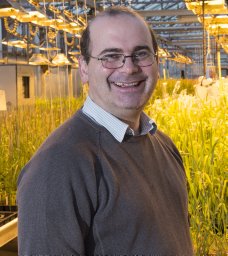 Simon Griffiths合作论文数John Innes Centre;Norwich Research Park;Norwich Research Park, John Innes Centre4Margaret I Boulton合作论文数4Gemma A Rose合作论文数3Dora Cano Ramirez合作论文数3
 Shu-Min Kao合作论文数Acad Sinica, Inst Plant & Microbial Biol, Taipei, Taiwan3Eric Tsai合作论文数3Laura W Taylor合作论文数3Trafford Kay合作论文数3
 Barber Tobias合作论文数3
 Anthony E. Hall合作论文数Department of Botany & Plant Sciences, University of California, Riverside3N. Gosman合作论文数3
 Antonio C. Laurena合作论文数College of Agriculture, University of the Philippines, Los Banos (UPLB),3D. A. Laurie合作论文数2A S Turner合作论文数2Sean Mayes合作论文数2John Foulkes合作论文数2
 Melanie Craze合作论文数2
 Yan Liu合作论文数Washington State Univ, Sch Biol Sci, Pullman, WA 99164 USA2Antonio Costa de Oliveira合作论文数2Sarah Bowden合作论文数The John Bingham Laboratory, NIAB, Huntingdon Road, Cambridge, CB3 0LE, UK.2
 Andrew Paterson合作论文数The Hospital for Sick Children;Divisions of Epidemiology & Biostatistics, Dalla Lana School of Public Health, University of Toronto2
 Robert Henry合作论文数University of Queensland2
 Christine Smart合作论文数School of Integrative Plant Science, College of Agriculture and Life Sciences, Cornell University2
 Alison M. Smith合作论文数University of East Anglia;John Innes Centre2
 Leland J Cseke合作论文数2
 Paul Gepts合作论文数Department of Plant Sciences, College of Agricultural and Environmental Sciences, University of California, Davis2
 Henry T. Nguyen合作论文数Division of Plant Science and Technology, College of Agriculture, Food and Natural Resources, University of Missouri2




