Most biomedical data repositories issue locally-unique accessions numbers, but do not provide globally unique, machine-resolvable, persistent identifiers for their datasets, as required by publishers wishing to implement data citation in accordance with widely accepted principles. Local accessions may however be prefixed with a namespace identifier, providing global uniqueness. Such “compact identifiers” have been widely used in biomedical informatics to support global resource identification with local identifier assignment. We report here on our project to provide robust support for machine-resolvable, persistent compact identifiers in biomedical data citation, by harmonizing the Identifiers.org and N2T.net (Name-To-Thing) meta-resolvers and extending their capabilities. Identifiers.org services hosted at the European Molecular Biology Laboratory - European Bioinformatics Institute (EMBL-EBI), and N2T.net services hosted at the California Digital Library (CDL), can now resolve any given identifier from over 600 source databases to its original source on the Web, using a common registry of prefix-based redirection rules. We believe these services will be of significant help to publishers and others implementing persistent, machine-resolvable citation of research data.
In this paper we present a draft vocabulary for making "persistence statements." These are simple tools for pragmatically addressing the concern that anyone feels upon experiencing a broken web link. Scholars increasingly use scientific and cultural assets in digital form, but choosing which among many objects to cite for the long term can be difficult. There are few well-defined terms to describe the various kinds and qualities of persistence that object repositories and identifier resolvers do or don't provide. Given an object's identifier, one should be able to query a provider to retrieve human- and machine-readable information to help judge the level of service to expect and help gauge whether the identifier is durable enough, as a sort of long-term bet, to include in a citation. The vocabulary should enable providers to articulate persistence policies and set user expectations.
EZID (pronounced easy-eye-dee at ezid.cdlib.org) is an innovative service supporting the creation and management of identifiers, their accompanying metadata, and long-term access to things on the Internet. It is one of the few services that can supply a diversity of identifier and metadata types, and do so at the earliest stages of content development, long before the content is archived or its value is understood. EZID is run by a team within the California Digital Library (CDL), which serves the libraries of the ten campuses of the University of California, partners with national libraries, maintains the ARK identifier scheme, and belongs to global identifier organizations such as DataCite and CrossRef (FIG. 1). Started in 2010, EZID now has over 100 customers on three continents and users on all continents. In fact it is the largest and fastest growing member of the DataCite consortium. The EZID user interface is currently being revised to support multiple languages.
Metadata disorder and unnecessary costs are increasing due to the expanding population of scientific data schemes and standards. Metadata challenges are reviewed; and SeaIce1, a community driven metadata vocabulary application, is introduced as a potential solution. SeaIce functions and development challenges are presented. CAMP-4-DATA participants are called upon to experiment with the SeaIce application and actively participate in a discussion targeting noted metadata challenges.
Author(s): Janee, Greg; Frew, James | Abstract: In 2012 the Data Curation @ UCSB Project surveyed UCSB campus faculty and researchers on the subject of data curation, with the goals of 1) better understanding the scope of the digital curation problem and the curation services that are needed, and 2) characterizing the role that the UCSB Library might play in supporting curation of campus research outputs. The findings argue for the establishment of a campus unit possessing data curation expertise and providing curation-related assistance to campus researchers, and possibly hosting curation services.
Scientists are increasingly being called upon to publish their data as well as their conclusions. Yet computational science often necessarily occurs in exploratory, unstructured environments. Scientists are as likely to use one-off scripts, legacy programs, and volatile collections of data and parametric assumptions as they are to frame their investigations using easily reproducible workflows. The ES3 system can capture the provenance of such unstructured computations and make it available so that the results of such computations can be evaluated in the overall context of their inputs, implementation, and assumptions. Additionally, we find that such provenance can serve as an automatic "checklist" whereby the suitability of data (or other computational artifacts) for publication can be evaluated. We describe a system that, given the request to publish a particular computational artifact, traverses that artifact's provenance and applies rule-based tests to each of the artifact's computational antecedents to determine whether the artifact's provenance is robust enough to justify its publication. Generically, such tests check for proper curation of the artifacts, which specifically can mean such things as: source code checked into a source control system; data accessible from a well-known repository; etc. Minimally, publish requests yield a report on an object's fitness for publication, although such reports can easily drive an automated cleanup process that remedies many of the identified shortcomings.
This paper describes DataONE, a federated data network that is being built to improve access to, and preserve data about, life on Earth and the environment that sustains it. DataONE supports science by: (1) engaging the relevant science, library, data, and policy communities; (2) facilitating easy, secure, and persistent storage of data; and (3) disseminating integrated and user-friendly tools for data discovery, analysis, visualization, and decision-making. The paper provides an overview of the DataONE architecture and community engagement activities. The role of identifiers in DataONE and the policies and procedures involved in data submission, curation, and citation are discussed for one of the affiliated data centers. Finally, the paper highlights EZID, a service that enables digital object producers to easily obtain and manage long-term identifiers for their digital content.
The Earth System Science Server (ES3) system transparently collects provenance information from executing code. Provenance information (ancestors or descendants) for any process or data granule may then be retrieved from a web service, in both textual and graphical formats. We have installed ES3 in a quasi-production environment, wherein multiple Earth satellite data streams are synthesized into daily grids of global ocean color parameters, and the resulting data granules published online. ES3’s non-intrusive nature makes its insertion into such an environment fairly straightforward, but considerations such as collating distributed provenance (from processes spread across computing clusters) and sharing unique identifiers (to link programs and data granules with their separately-maintained provenance) must still be addressed. We present for discussion our preliminary results from assembling such an environment.
Not all transactions care about repeatable reads. They are willing to forego problems arising with phantoms. We’ll call this level “nonrepeatable reads”. (This is called degree 2 isolation also called cursor stability (CS)). CS differs from RR in that read locks are discarded once a tuple has been read. Write locks on tuples, like RR, are held to the end of the transaction. Note that CS executions are not truely serializable (because of the nonrepeatability of reads).
Official statistics provide an indispensable element in the information system of a democratic society, serving the Government, the economy and the public with data about the economic, demographic, social and environmental situation. To this end, official statistics that meet the test of practical utility are to be compiled and made available on an impartial basis by official statistical agencies to honour citizens’ entitlement to public information.
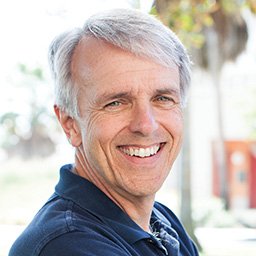 James Frew合作论文数Donald Bren School of Environmental Science and Management, University of California, Santa Barbara, Santa Barbara, CA21
 Ben He合作论文数10
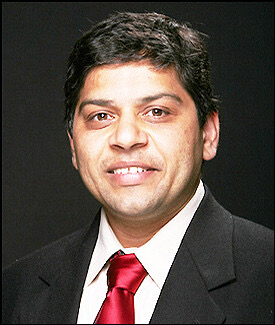 Anirüddhā Gokhālé合作论文数Institute for Software Integrated Systems, Department of Computer Science, Vanderbilt University;School of Engineering, Vanderbilt University;Department of Electrical and Computer Engineering, Vanderbilt University10
 Johannes Gehrke合作论文数Microsoft10Kenichi Wada合作论文数9Josep Domingo-Ferrer合作论文数9
 Radu Sion合作论文数Department of Computer Science, Stony Brook University;Virtalica;Private Machines Inc.9
 Amarnath Gupta合作论文数San Diego Supercomputer Center, University of California San Diego8Reagan Moore合作论文数San Diego Supercomputer Center;Data Intensive Computing 8
 Mirella M. Moro合作论文数Departamento de Ciência da Computação, Instituto de Ciências Exatas, Universidade Federal de Minas Gerais8Edith Cohen合作论文数7Matthias Schäfer合作论文数7Philip B. Gibbons合作论文数7Ying Zhao合作论文数7
 Samuel Madden合作论文数Department of Electrical Engineering and Computer Science, Schwarzman College of Computing, Massachusetts Institute of Technology7Eliseo Clementini合作论文数7Mario Piattini合作论文数7Kalervo Järvelin合作论文数7Marc Gyssens合作论文数7Chris Ding合作论文数7Venkat Srinivasan合作论文数7Carpendale Sheelagh合作论文数7George Karypis合作论文数7Mathias Weske合作论文数7Stéphane Bressan合作论文数7Mary Laarsgard合作论文数7Heng Tao Shen合作论文数7Timothy Roscoe合作论文数7Changqing Li合作论文数7
 Cristina Sirangelo合作论文数Institut de Recherche en Informatique Fondamentale, Université Paris Cité7Dianne Cook合作论文数7
 Kazuo Goda合作论文数7
 Alexander Borgida合作论文数Department of Computer Science, School of Arts and Sciences, Rutgers University7
 Alexandra Poulovassilis合作论文数Department of Computer Science and Information Systems, University of London7
 Christine M. O'Keefe合作论文数Department of Pure;University of Adelaide;Department of Pure, University of Adelaide7
 Peter Bak合作论文数University of Konstanz7
 Jaana Kekäläinen合作论文数School of Information Sciences, University of Tampere7Raghav Kaushik合作论文数7
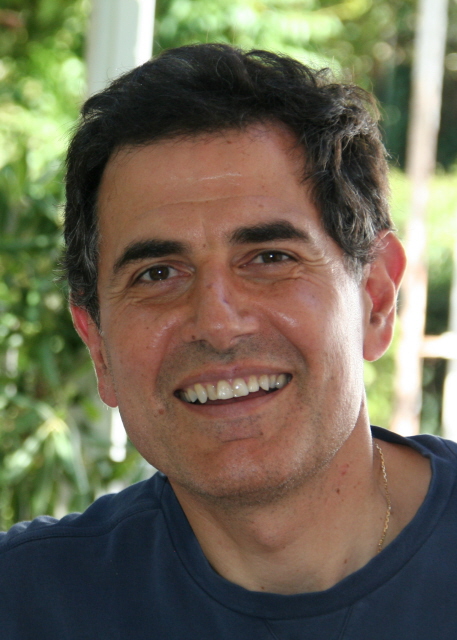 Vassilis J. Tsotras合作论文数Department of Computer Science and Engineering, Bourns College of Engineering, University of California, Riverside;Data Science Center, University of California, Riverside7
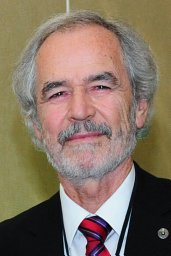 Bernd J. Kramer合作论文数FernUniversitat in Hagen7
 Mikael Berndtsson合作论文数University of Skövde7
 Giambattista Amati合作论文数University of Rome "Tor Vergata"7
 Marta Mattoso合作论文数Department of Computer Science, Federal University of Rio de Janeiro7
 Luc Bouganim合作论文数INRIA Rocquencourt7
 Lucian Popa合作论文数IBM Almaden Research Center7
 Aman Kansal合作论文数Microsoft Research7Rui Zhang (张瑞)合作论文数7
 Johann Eder合作论文数Betriebliche Informationssysteme;Fakult?t f??r Informatik;Knowledge and Business Engineering;Universit?t Wien7
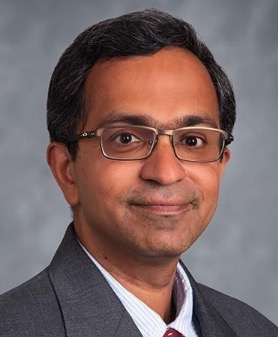 Kamesh Munagala合作论文数Department of Computer Science, Trinity College of Arts & Sciences, Duke University7




