Die Situation der Insekten in der Schweiz sei besorgniserregend, schreiben Forschende im ersten umfassenden Zustandsbericht «Insektenvielfalt in der Schweiz», publiziert vom Forum Biodiversitat der Akademie der Naturwissenschaften Schweiz. Sie haben die verfugbaren Daten der Roten Listen, von Monitoringprogrammen und Studien analysiert. Demnach gingen Vielfalt und Grosse der Insektenbestande vor allem im Mittelland stark zuruck, mittlerweile aber auch im Jura und in den Alpen. Um die teils dramatischen Entwicklungen zu stoppen, schlagen die Autorinnen und Autoren das wissenschaftlich basierte «12-Punkte-Programm Insekten» vor.
Rund 3,5 Milliarden Jahre hat es gedauert, bis sich aus den Urlebewesen eine schier unglaubliche Anzahl von Arten entwickelt hat. Wissenschafterinnen und Wissenschafter schätzen, dass sich heute auf unserem Planeten zwischen 10 und 100 Millionen verschiedene Lebenformen befinden. Die meisten Arten leben in den tropischen Regenwäldern. Aber auch in der Schweiz gibt es äusserst artenreiche Lebensräume. Forschende des Biodiversitätsprojektes haben die Kalkmagerrasen untersucht, um ihre enorme Vielfalt zu ergründen. Dabei haben sie verblüffende Erkenntnisse gewonnen: unter anderem jene, dass die Vielfalt der Pflanzen eng mit Pilzen im Boden zusammenhängt. Vom ungeheuren Reichtum der Natur profitieren Menschen in vielfacher Weise: Sie ernähren sich von Pflanzen und Tieren, sie schlagen Holz zum Bauen und Verfeuern, tragen Kleider aus Naturfasern, gewinnen Medikamente aus Pflanzen.
Bongos (Tragelaphus eurycerus Ogilby) were studied for 8 months in the Dzanga National Park, Central African Republic. Tracks were followed and mapped with a compass and a pedometer to study movement patterns and home range. Natural licks were shown to be central points in the home range of the bongos: they visited the licks recurrently to consume soil, but also to forage on grass and herb species, and for social reasons. Forest areas far from licks were used much less than forest areas close to licks. When a lick was visited, distances between two resting sites were longer than in the forest without lick visits, caused by a direct and straight movement from the denser forest areas toward a lick. The study area of about 150 km2 was presumably occupied by two groups of bongos. One of them seemed to split temporarily into two subgroups. Groups were not larger than 10–20 individuals. Estimated home ranges were at least 49 km2 and 19 km2 for the two groups, respectively. Estimated density in the Dzanga National Park was 0.25 bongos per km2. This study shows the importance of natural licks for the largest social forest antelope, the bongo, and provides information which is important for its future conservation.
We studied the feeding ecology of the bongo ( Tragelaphus eurycerus ) in the Dzanga National Park in the rainforest of the Central African Republic to understand better the trade-off between food selectivity, ranging behaviour and social organization of a large, forest-dwelling, social antelope. Food plants and vegetation types were registered along a 311-km route travelled by bongos. Food availability was determined by identifying and counting the plants in 19 randomly chosen forest plots. Bongos showed pronounced selectivity for 26 out of 100 woody forest species. They predominantly consumed younger leaves, which suggests that high protein and low fibre content influence plant choice. In addition to leaves, bongos also ate fruits of two and flowers of one species. Furthermore, the diet was supplemented by grasses and herbs consumed on large natural licks. Such licks were regularly visited by the bongos. According to Jarman's ecological classification of antelopes, selective browsers are relatively small and live alone or in pairs to avoid competition over food. The bongo's large size and gregariousness should not allow it to survive in the rainforest as a pure selective browser. Our data suggest that the bongo relies on the opportunity to graze in bulk which it finds on the natural licks. We hypothesize that such licks either limit the distribution of bongos in other rainforest areas or allow larger group sizes than in areas without licks.
Geophagy (soil eating) by the forest elephant (Loxodonta africana cyclotis) and other mammal species in the Dzanga National Park, Central African Republic, has led to large treeless licks. The geological and physical properties of these licks were studied and the chemical characteristics and particle sizes of geophagical lick soils were compared with soils from the forest and from licks where evidence of geophagy was absent. Average lick size of 20 licks in the Hokou lick area was 12,900 m(2) (SE = 3,400 m(2)). Licks were situated exclusively in areas of outcropping dolerite intrusions. Physico-chemical analysis of the geophagical lick soil showed significantly higher quantities of sodium, potassium, calcium, magnesium, phosphorus, manganese and clay compared with the other soils. Several samples of the geophagical lick soil had lower nutrient levels than the mean level of forest topsoil, indicating that nutrient supplementation is probably not the only reason for geophagy. The high clay content of the geophagical soil may help absorbing and combating secondary plant compounds. Pronounced geophagy in rainforests may be a sign for poor habitat quality for large mammals living in these ecosystems.
 Bernhard Schmid合作论文数Department of Geography, University of Zurich8
 Daniela Pauli合作论文数4Peter J. Edwards合作论文数4Jörg Schmill合作论文数4
 Bruno Baur合作论文数Department of Environmental Sciences, University of Basel4Yves Gonseth合作论文数3Corinne Klaus-Hügi合作论文数3
 Thibault Lachat合作论文数Swiss Biodiversity Forum, SCNAT3Ivo Widmer合作论文数2Jodok Guntern合作论文数2
 Loïc Pellissier合作论文数Department of Environmental Systems Science, Eidgenössische Technische Hochschule Zürich2
 Florian Altermatt合作论文数Department of Evolutionary Biology and Environmental Studies, University of Zurich;Department of Aquatic Ecology, Swiss Federal Institute of Aquatic Science and Technology;Swiss Academy of Sciences2
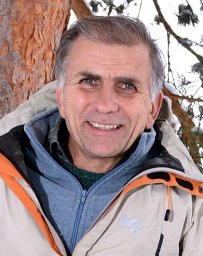 Marco Moretti合作论文数Research Unit Ecosystem Boundaries, Via Belsoggiorno 22, 6500 Bellinzona, Switzerland2
 E. Knop合作论文数Institute of Ecology and Evolution, University of Bern2
 Werner Suter合作论文数1
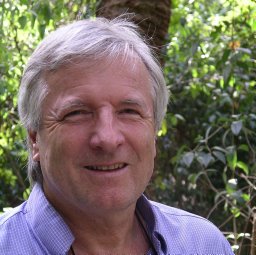 Peter Duelli合作论文数Swiss Federal Research Institute1
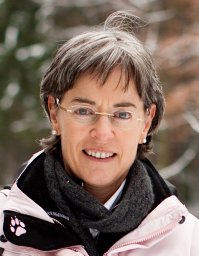 Barbara Koenig合作论文数Department of Evolutionary Biology and Environmental Studies, University of Zurich1
 Roman Graf合作论文数1
 A. Peter合作论文数1
 Jenny Markus合作论文数1
 Christoph Scheidegger合作论文数Swiss Federal Institute for Forest, Snow and Landscape Research WSL;ETH Zurich;University of Berne1Irmi Seidl合作论文数Institut für Umweltwissenschaften1




