Managing and preparing complex data for deep learning, a prevalent approach in large-scale data science can be challenging. Data transfer for model training also presents difficulties, impacting scientific fields like genomics, climate modeling, and astronomy. A large-scale solution like Google Pathways with a distributed execution environment for deep learning models exists but is proprietary. Integrating existing open-source, scalable runtime tools and data frameworks on high-performance computing (HPC) platforms is crucial to address these challenges. Our objective is to establish a smooth and unified method of combining data engineering and deep learning frameworks with diverse execution capabilities that can be deployed on various high-performance computing platforms, including cloud and supercomputers. We aim to support heterogeneous systems with accelerators, where Cylon and other data engineering and deep learning frameworks can utilize heterogeneous execution. To achieve this, we propose Radical-Cylon, a heterogeneous runtime system with a parallel and distributed data framework to execute Cylon as a task of Radical Pilot. We thoroughly explain Radical-Cylon’s design and development and the execution process of Cylon tasks using Radical Pilot. This approach enables the use of heterogeneous MPI-Communicators across multiple nodes. Radical-Cylon achieves better performance than Bare-Metal Cylon with minimal and constant overhead. Radical-Cylon achieves (4 ∼ 15)
Data-intensive applications are becoming commonplace in all science disciplines. They are comprised of a rich set of sub-domains such as data engineering, deep learning, and machine learning. These applications are built around efficient data abstractions and operators that suit the applications of different domains. Often lack of a clear definition of data structures and operators in the field has led to other implementations that do not work well together. The HPTMT architecture that we proposed recently, identifies a set of data structures, operators, and an execution model for creating rich data applications that links all aspects of data engineering and data science together efficiently. This paper elaborates and illustrates this architecture using an end-to-end application with deep learning and data engineering parts working together. Our analysis show that the proposed system architecture is better suited for high performance computing environments compared to the current big data processing systems. Furthermore our proposed system emphasizes the importance of efficient compact data structures such as Apache Arrow tabular data representation defined for high performance. Thus the system integration we proposed scales a sequential computation to a distributed computation retaining optimum performance along with highly usable application programming interface.
In this paper, we summarize our effort to create and utilize a simple framework to coordinate computational analytics tasks with the help of a workflow system. Our design is based on a minimalistic approach while at the same time allowing to access computational resources offered through the owner's computer, HPC computing centers, cloud resources, and distributed systems in general. The access to this framework includes a simple GUI for monitoring and managing the workflow, a REST service, a command line interface, as well as a Python interface. The resulting framework was developed for several examples targeting benchmarks of AI applications on hybrid compute resources and as an educational tool for teaching scientists and students sophisticated concepts to execute computations on resources ranging from a single computer to many thousands of computers as part of on-premise and cloud infrastructure. We demonstrate the usefulness of the tool on a number of examples. The code is available as an open-source project in GitHub and is based on an easy-to-enhance tool called cloudmesh.
The United States science and engineering community faces multiple challenges related to funding and funding policies for science and engineering. A framework is needed to evaluate the impact of scientific facilities and instruments. In this paper, we demonstrate such an activity through our comprehensive work evaluating the scientific impact of XSEDE using the Semantic Scholar Data. In contrast to other studies, our study includes the bibliographic references of all recorded papers related to XSEDE over the entire performance period till March of 2021. This makes this study unique and distinguishes it from our earlier work while using (a) over 180 million papers as a comparison to our peer analysis, (b) include all publications reported, and (c) conduct the study repeatedly over several years.
The COVID-19 pandemic has profound global consequences on health, economic, social, political, and almost every major aspect of human life. Therefore, it is of great importance to model COVID-19 and other pandemics in terms of the broader social contexts in which they take place. We present the architecture of AICov, which provides an integrative deep learning framework for COVID-19 forecasting with population covariates, some of which may serve as putative risk factors. We have integrated multiple different strategies into AICov, including the ability to use deep learning strategies based on LSTM and even modeling. To demonstrate our approach, we have conducted a pilot that integrates population covariates from multiple sources. Thus, AICov not only includes data on COVID-19 cases and deaths but, more importantly, the population's socioeconomic, health and behavioral risk factors at a local level. The compiled data are fed into AICov, and thus we obtain improved prediction by integration of the data to our model as compared to one that only uses case and death data.
Our project is at the interface of Big Data and HPC - High-Performance Big Data computing and this paper describes a collaboration between 7 collaborating Universities at Arizona State, Indiana (lead), Kansas, Rutgers, Stony Brook, Virginia Tech, and Utah. It addresses the intersection of High-performance and Big Data computing with several different application areas or communities driving the requirements for software systems and algorithms. We describe the base architecture, including the HPC-ABDS, High-Performance Computing enhanced Apache Big Data Stack, and an application use case study identifying key features that determine software and algorithm requirements. We summarize middleware including Harp-DAAL collective communication layer, Twister2 Big Data toolkit, and pilot jobs. Then we present the SPIDAL Scalable Parallel Interoperable Data Analytics Library and our work for it in core machine-learning, image processing and the application communities, Network science, Polar Science, Biomolecular Simulations, Pathology, and Spatial systems. We describe basic algorithms and their integration in end-to-end use cases.
The Comet petascale supercomputer was put into production as an XSEDE resource in early 2015 with the goal of serving a much larger user community than HPC systems of similar size. The Comet project set an audacious goal of reaching over 10,000 users in its four years of planned operation. That goal was achieved in less than two years, due in large part to the adoption of policies that favor smaller allocations and science gateways. Here we describe our experiences in operating and supporting Comet, highlight some of the important science that it has enabled, and provide some practical lessons that we have learned by operating a system designed for the long tail of science.
Hardware virtualization has been gaining a significant share of computing time in the last years. Using virtual machines (VMs) for parallel computing is an attractive option for many users. A VM gives users a freedom of choosing an operating system, software stack and security policies, leaving the physical hardware, OS management, and billing to physical cluster administrators. The well-known solutions for cloud computing, both commercial (Amazon Cloud, Google Cloud, Yahoo Cloud, etc.) and open-source (OpenStack, Eucalyptus) provide platforms for running a single VM or a group of VMs. With all the benefits, there are also some drawbacks, which include reduced performance when running code inside of a VM, increased complexity of cluster management, as well as the need to learn new tools and protocols to manage the clusters. At SDSC, we have created a novel framework and infrastructure by providing virtual HPC clusters to projects using the NSF sponsored Comet supercomputer. Managing virtual clusters on Comet is similar to managing a bare-metal cluster in terms of processes and tools that are employed. This is beneficial because such processes and tools are familiar to cluster administrators. Unlike platforms like AWS, Comet's virtualization capability supports installing VMs from ISOs (i.e., a CD-ROM or DVD image) or via an isolated management VLAN (PXE). At the same time, we're helping projects take advantage of VMs by providing an enhanced client tool for interaction with our management system called Cloudmesh client. Cloudmesh client can also be used to manage virtual machines on OpenStack, AWS, and Azure. The article describes our design and approach to running virtual clusters, the tools we developed, and initial user experience.
The important role high-performance computing HPC resources play in science and engineering research, coupled with its high cost capital, power and manpower, short life and oversubscription, requires us to optimize its usage - an outcome that is only possible if adequate analytical data are collected and used to drive systems management at different granularities - job, application, user and system. This paper presents a method for comprehensive job, application and system-level resource use measurement, and analysis and its implementation. The steps in the method are system-wide collection of comprehensive resource use and performance statistics at the job and node levels in a uniform format across all resources, mapping and storage of the resultant job-wise data to a relational database, which enables further implementation and transformation of the data to the formats required by specific statistical and analytical algorithms. Analyses can be carried out at different levels of granularity: job, user, application or system-wide. Measurements are based on a new lightweight job-centric measurement tool 'TACC_Stats', which gathers a comprehensive set of resource use metrics on all compute nodes and data logged by the system scheduler. The data mapping and analysis tools are an extension of the XDMoD project. The method is illustrated with analyses of resource use for the Texas Advanced Computing Center's Lonestar4, Ranger and Stampede supercomputers and the HPC cluster at the Center for Computational Research. The illustrations are focused on resource use at the system, job and application levels and reveal many interesting insights into system usage patterns and also anomalous behavior due to failure/misuse. The method can be applied to any system that runs the TACC_Stats measurement tool and a tool to extract job execution environment data from the system scheduler. Copyright © 2014 John Wiley & Sons, Ltd.
Heterogeneous parallel systems with multi processors and accelerators are becoming ubiquitous due to better cost-performance and energy-efficiency. These heterogeneous processor architectures have different instruction sets and are optimized for either task-latency or throughput purposes. Challenges occur in regard to programmability and performance when running SPMD tasks on heterogeneous devices. In order to meet these challenges, we implemented a parallel runtime system that used to co-process SPMD computation on CPUs and GPUs clusters. Furthermore, we are proposing an analytic model to automatically schedule SPMD tasks on heterogeneous clusters. Our analytic model is derived from the roofline model, and therefore it can be applied to a wider range of SPMD applications and hardware devices. The experimental results of the C-means, GMM, and GEMV show good speedup in practical heterogeneous cluster environments.
Through the development of advanced middleware, Grid computing has evolved to a mature technology that scientists and researchers can leverage to gain knowledge that was previously unobtainable in a wide variety of scientific domains [2]. However, the ability for new scientists to become involved with Grid computing has become challenging due to its complex nature. This high entry barrier in turn limits the use of Grid computing and advanced cyberinfrastructure as it is unable to trickle down to a more general scientific user group. For example, absence of developer teams in smaller research projects requires the scientist to become an expert in Grid computing themselves. In a typical Grid environment there are obstacles that need to be dealt with such as task management, job scheduling, resource monitoring, and organization management, all of which can overwhelm a domain scientist. Many of these utilities can be abstracted to simplify the scientific user’s experience and enable them to perform their research in a more efficient and productive environment. Our solution is Cyberaide Shell [3], an advanced but simple to use system shell which provides access to the powerful cyberinfrastructure available today [4]. We abstract resources, tasks, and application management tools through a scriptable command line interface. Through a service integration mechanism, the shell’s functionality is exposed to a wide variety of frameworks and programming languages to allow for the scientist to leverage the power of Grid computing within their own applications.
The ability to conduct consistent, controlled, and repeatable large-scale experiments in all areas of computer science related to parallel, large-scale, or distributed computing and networking is critical to the future and development of computer science. Yet conducting such experiments is still too often a challenge for researchers, students, and practitioners because of the unavailability of dedicated resources, inability to create controlled experimental conditions, and variability in software. Availability, repeatability, and open sharing of electronic products are all still difficult to achieve. To discuss those challenges and share experiences in their solution, the Workshop on Experimental Support for Computer Science brought together scientists involved in building and operating infrastructures dedicated to sup- porting computer science experiments to discuss challenges and solutions in this space. The workshop was held in November 2011 and was collocated with the SC11 conference in Seattle, Washington. Our objec- tives were to share experiences and knowledge related to supporting large-scale experiments conducted on experimental infrastructures, understand user requirements, and discuss methodologies and opportunities created by emerging technologies. This report ties together the workshop presentations and discussion and the consensus that emerged on the state of the field and directions for moving forward.
In this paper, we briefly outline the current design of a generic image management service for FutureGrid. The service is intended to generate, store, and verify images while interfacing with different localized cloud IaaS image. Additionally, we will also use the service to generate images for traditional bare-metal deployments.
Electronic Health Records (EHRs) have many potential advantages over traditional paper records, such as wide scale access, error checking, and protection from physical damage to a record. As with any medical record, paper or electronic, both the patient's privacy and the document's integrity must be guaranteed. With initiatives such as Integrating the Healthcare Enterprise (IHE), computerized healthcare systems are able to share EHRs on a large scale, while protecting the patient's privacy rights. However, IHE does not yet meet the needs of all healthcare systems, as we will show with the eMOLST project. The eMOLST project delivers software in support of Medical Order for Life Sustaining Treatment (MOLST) forms and uses IHE specifications for cross enterprise document storage and sharing, patient identification, and user authentication and authorization. The Web‐based system provides secure access to electronic MOLST documents regardless of the patient's or healthcare provider's location. The eMOLST project allows a user to have Single Sign On (SSO) access to the system from either the user's associated enterprise, or through a Web portal shared amongst all users across all enterprises. In this paper, we show a security solution to allow SSO from multiple access points for IHE compliant systems. Copyright © 2011 John Wiley & Sons, Ltd.
The Cloud computing becomes an innovative computing paradigm, which aims to provide reliable, customized and QoS guaranteed computing infrastructures for users. This paper presents our early experience of Cloud computing based on the Cumulus project for compute centers. In this paper, we give the Cloud computing definition and Cloud computing functionalities. This paper also introduces the Cumulus project with its various aspects, such as design pattern, infrastructure, and middleware. This paper delivers the state-of-the-art for Cloud computing with theoretical definition and practical experience.
 Lizhe Wang (王力哲)合作论文数China University of Geosciences16
 Geoffrey Fox合作论文数Department of Physics, College of Arts and Sciences, Indiana University;Department of Intelligent Systems Engineering, Indiana University;Community Grid Laboratory, Indiana University;Digital Science Center of Pervasive Technology Institute;School of Engineering and Applied Science, University of Virginia15
 Fugang Wang (王福刚)合作论文数Service Oriented Cyberinfrastructure Laboratory;Rochester Institute of Technology;Service Oriented Cyberinfrastructure Laboratory, Rochester Institute of Technology13
 Andrew J. Younge合作论文数Service Oriented Cyberinfrastructure Laboratory;Rochester Institute of Technology;Service Oriented Cyberinfrastructure Laboratory, Rochester Institute of Technology11
 Kaizar Amin合作论文数Mathematics and Computer Science Division
Argonne National Laboratory10Jarek Gawor合作论文数9
Kaizar Amin合作论文数Mathematics and Computer Science Division
Argonne National Laboratory10Jarek Gawor合作论文数9 Branko Ruscic合作论文数Chemical Sciences and Engineering Division, Argonne National Laboratory8
 Jie Tao合作论文数7
 Ian Foster合作论文数Department of Computer Science, University of Chicago;Data Science and Learning Division, Argonne National Laboratory7Melita L. Morton合作论文数5Xi He合作论文数5
 Marcel Kunze合作论文数5
 Reinhardt Pinzon合作论文数Argonne National Laboratory5Kaizar A. Amin合作论文数Mathematics and Computer Science Division
Argonne National Laboratory5
Reinhardt Pinzon合作论文数Argonne National Laboratory5Kaizar A. Amin合作论文数Mathematics and Computer Science Division
Argonne National Laboratory5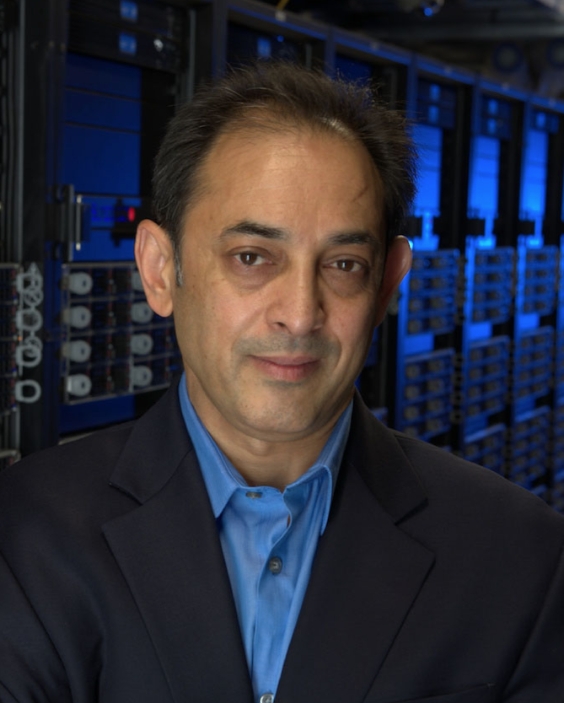 Manish Parashar合作论文数Scientific Computing and Imaging Institute, University of Utah;Kahlert School of Computing, University of Utah;Department of Computer Science, Rutgers University4Sandeep Nijsure合作论文数4
 Omer F. Rana合作论文数School of Computer Science and Informatics, Cardiff University4Deepti Kodeboyina合作论文数3
 Zhenhua Guo (郭真华)合作论文数School of Mathematics, Northwest University3
 Patrick Wagstrom合作论文数IBM TJ Watson Research Center3
 David W. Walker合作论文数School of Computer Science and Informatics, Cardiff University3
 Shantenu Jha合作论文数Rutgers University3Jai Dayal合作论文数Georgia Institute of Technology3Rashid J. Al-Ali合作论文数3Thomas R Furlani合作论文数3
 David Angulo合作论文数DePaul University;School of Computer Science3Nell Rehn合作论文数3
 Joseph A. Insley合作论文数Argonne National Laboratory3michael e russell合作论文数2B. Tieman合作论文数2David Leahy合作论文数2Sandra Bittner合作论文数2Trevor Cooper合作论文数2
 Niranda Perera合作论文数SICE, Indiana University, Bloomington, IN, USA2
 Javier Diaz Montes合作论文数Rutgers University2
 Mihály Kállay合作论文数Spectroscopy Laboratory, Department of Physical Chemistry and Materials Science, Budapest University of Technology and Economics2
 John F. Stanton合作论文数Department of Chemistry, Liberal Arts and Sciences, University of Florida2
 Sriram Krishnan合作论文数Siemens Medical Solutions2
 Attila G. Császár合作论文数Institute of Chemistry, Eötvös University;Laboratory of Molecular Structure and Dynamics, Eötvös University;Department of Physics and Astronomy, University College London2
 Matthew D. Jones合作论文数Center for Computational Research, SUNY at Buffalo2
 Carl F Kesselman合作论文数Daniel J Epstein Department of Industrial and Systems Engineering, Viterbi School of Engineering, University of Southern California;Biomedical Data Center, Information Sciences Institute, University of Southern California2
 Armin R. Mikler合作论文数University of North Texas2Hans-Christian Hoppe合作论文数2
 Rick Wagner合作论文数San Diego Supercomputer Center2
 Mahidhar Tatineni合作论文数2Ryan J. Gentner合作论文数2
 Philipp Wieder合作论文数Research Centre Jülich Central Institute for Applied Mathematics2Marcus Thiebaux合作论文数Electronic Visualization Laboratory,University of Illinois at Chicago2Amin Ghadersohi合作论文数2




