Extracorporeal liver cross-circulation (ELC) using genetically modified pig livers may address an unmet need for temporary liver support in patients with acute or acute-on-chronic liver failure. This study used the ELC platform to evaluate early immune responses and assess xenogeneic liver physiological support in a human decedent model. Four human decedents underwent ELC using pig livers with a triple glycan knockout; insertion of seven human transgenes and inactivation of pig endogenous retroviruses. Intravenous methylprednisolone was administered for immunosuppression. In the case of decedents 1-3, ELC was performed for 72-84 h with the native livers of the decedents remaining in situ. In the case of decedent 4, hepatectomy was performed, followed by 48 h of xenogeneic liver support exclusively using ELC. Biopsies of xenogeneic livers demonstrated preserved parenchymal architecture, mild immune infiltration and IgM deposition. Xenogeneic livers produced bile and supplemented native hepatocellular function. In decedent 4, xenogeneic liver-only support after hepatectomy maintained hemodynamic stability, normal pH, lactate, ammonia, international normalized ratio and sustained metabolic function. This study shows that ELC is feasible using xenogeneic livers with minimal immunosuppression and can provide effective liver support.
INTRODUCTION:Factors associated with decline of hepatic function and increase in portal-systemic shunting, which herald clinical outcome in persons with compensated cirrhosis, are poorly characterized. We used cholate challenge to evaluate the associations of liver disease etiology, concomitant diabetes, and maintenance drug therapy, with the degree of hepatic dysfunction and portal-systemic shunting.METHODS:In the SHUNT-V study, there were 255 subjects with compensated (Child-Pugh class A) cirrhosis who underwent cholate challenge, involving oral administration of [2,2,4,4-2H] cholate and measurement of its serum concentrations at 20 and 60 minutes. Test outputs included a disease severity index (DSI) to assess global liver function and SHUNT% to assess portal systemic shunting.RESULTS:Eighty-seven percent of subjects were overweight, 65% were obese, 48% had metabolic dysfunction-associated steatotic liver disease (MASLD)/metabolic dysfunction-associated steatohepatitis (MASH), 51% had type 2 diabetes mellitus, 49% were taking anti-diabetic drugs, and 45% were taking lipid-lowering drugs. Laboratory values and clinical scores of MASLD/MASH subjects were similar to subjects with other etiologies for liver disease. In univariable regression, MASLD/MASH, diabetes mellitus, metformin, and statins were associated with lower DSI and SHUNT%. In multivariable regression, lower DSI was attributable to statins (P = 0.0354) and metformin (P = 0.0561). The combined use of lipid-lowering and anti-diabetic drugs, compared with no use, was associated with 19% reduction in DSI.CONCLUSION:Concomitant use of statins alone or in combination with metformin was independently associated with preserved hepatic function (DSI) and reduced portal-systemic shunting (SHUNT%).
Current standard liver assessments rely on static laboratory values that reflect advanced disease or liver injury rather than overall hepatic health. This limitation highlights the need for dynamic measures of liver function to support accurate risk stratification, therapeutic monitoring, and clinical trial design. Quantitative liver function tests address this gap by providing physiologically based measures of hepatic clearance. Among these, cholate clearance is uniquely suited to assess hepatocellular function and portal-systemic shunting-key determinants of disease severity and prognosis. The oral cholate challenge test (OCCT), HepQuant DuO, is a simple, noninvasive method for quantifying cholate clearance using stable isotope-labeled cholate and liquid chromatography-tandem mass spectrometry analysis. This review highlights the test's analytical and clinical validation across the spectrum of chronic liver disease. The test's output parameters, Disease Severity Index, SHUNT%, and hepatic reserve, correlate with portal hypertension, varices, and risk for clinical outcomes. Applications for guiding endoscopic screening, predicting decompensation, and monitoring treatment response are highlighted. Comparative analyses show that the OCCT parameters outperform conventional laboratory tests of liver function and may complement anatomic or physical measurements, such as histology, magnetic resonance imaging, or elastography. Additional data supports its role as a sensitive biomarker and reasonably likely surrogate endpoint for drug trials of chronic liver disease. The OCCT addresses critical gaps in chronic liver disease and drug development and has the potential to transform the assessment of the patient with chronic liver disease.
Endoscopic surveillance for patients with compensated advanced chronic liver disease (cACLD) is currently guided by the presence or size of esophageal varices. Current guidelines recommend repeat endoscopy every 2-3 years for patients with no varices and every 1-2 years for those with small varices, but these intervals are based largely on expert opinion rather than objective risk stratification. We evaluated the Disease Severity Index (DSI) from the oral cholate challenge test as a predictor of clinical outcomes in 195 patients from the Hepatitis C Anti-viral Long-term Treatment against Cirrhosis (HALT-C) Trial (ClinicalTrials.gov, NCT00006164) with cACLD with no or small esophageal varices. Subjects were stratified into four clinical risk categories based on DSI and platelet count: DSI ≤18.3 (low risk), DSI ≤24 with platelet count >135 nL-1 (low-to-moderate risk), DSI ≤24 with platelet count ≤135 nL-1 (moderate-to-high risk), and DSI >24 (high risk). Kaplan-Meier analysis demonstrated a stepwise increase in adverse outcomes (variceal hemorrhage, ascites, encephalopathy, Child-Pugh progression, transplant, and death) across these categories. In multivariable logistic regression, DSI was a highly significant predictor of clinical outcome (P<0.001), while categories of no or small esophageal varices was not (P=0.07). Based on these findings, we recommend integrating DSI into surveillance strategies to guide the timing of repeat endoscopy: later endoscopy (2-3 years) for lower-risk patients and earlier endoscopy (1-2 years) for higher-risk patients. We recommend repeat DSI testing every 2-3 years for low risk, 1.5-2 years for low-to-moderate risk, 1-1.5 years for moderate-to-higher risk, and <1 year for highest risk. These results suggest that DSI is a robust, noninvasive tool for refining timing of repeat endoscopy and optimizing resource utilization in cACLD, regardless of disease etiology.
Porcine livers have the potential to support liver function via extracorporeal liver cross-circulation (ELC) until recovery or transplantation. To assess the functional integrity of both native human and porcine livers during ELC, we used the clearance of intravenously administered 13C-cholate to probe effective hepatic perfusion in 4 decedents maintained on ELC for 72 to 102 hours. Genetically modified porcine livers (EGEN-5784) were perfused using the OrganOx metra-ELC device. Hepatic filtration rate was calculated for the native human liver and the EGEN-5784 liver in ELC. During ELC, total hepatic filtration rate increased substantially compared with pre-ELC values, exceeded the upper limit of the normal range, and remained stable throughout the ELC period. Simultaneous measurement of cholate clearance in human and porcine livers during ELC provides real-time assessment of each organ's functional contribution and may inform decisions regarding optimal ELC duration, timing of disconnection, and necessity of liver transplantation.
Background/Objectives: Compensated advanced chronic liver disease (cACLD) affects millions and carries risk for portal hypertension, large varices, and clinical decompensation. The HepQuant DuO® test provides a blood-based assessment of liver function and physiology, generating a disease severity index (DSI) validated for risk stratification. A retrospective, real-world, observational analysis was conducted to evaluate the utility of HepQuant DuO's DSI cutpoint (18.3) in guiding endoscopy and clinical management decisions for patients with cACLD in the United States. Methods: De-identified data from 87 cases with cACLD were extracted from physician-provided Statements of Medical Necessity documenting the reasons for the HepQuant DuO test. The primary endpoint was concordance of endoscopy decisions with DSI ≤ 18.3 (avoid) or >18.3 (proceed). The secondary endpoint was concordance of clinical management intensity with the same cutpoint. Results: Among the 55 cases analyzed for endoscopy decisions, overall concordance with DSI 18.3 was 93% (p < 0.001 by Fisher's exact test): 96% of cases with DSI ≤ 18.3 avoided endoscopy, and 90% with DSI > 18.3 underwent endoscopy. For the 45 cases assessing management intensity, overall concordance was 89% (p < 0.001): 90% of cases with DSI ≤ 18.3 had reduced follow-up, and 89% with DSI > 18.3 had intensified management. The cohort exhibited broad functional heterogeneity not captured by standard labs or elastography. Conclusions: HepQuant DuO's DSI cutpoint 18.3 demonstrated strong concordance with real-world clinical decisions, supporting its utility for risk stratification, optimizing endoscopy use, and tailoring management in cACLD.
Background and aims:In this study of metabolic dysfunction-associated steatohepatitis (MASH)-related Child-Pugh A cirrhosis (MASH cirrhosis), we used the cholate challenge test to quantify baseline disease severity and the subsequent impact of resmetirom treatment. Methods:Thirty-two subjects enrolled in the Phase 3 open-label MAESTRO-NAFLD-1 trial with MASH cirrhosis underwent baseline dual cholate shunt testing, and 25 had subsequent retesting at 28 and 48 weeks. Blood was sampled from 0 to 90 minutes, serum concentrations measured, and parameters of function (disease severity index [DSI]), portal-systemic shunting (SHUNT%), and clinical risk (RISK ACE) were calculated. Responders were defined by > 2-point decrease in DSI, stable subjects by a ΔDSI within ±2, and nonresponders by > 2-point increase. Results:Baseline DSI (22 ± 7) and SHUNT% (36% ± 16%) were consistent with significant functional impairment and portal-systemic shunting. Responder rates were 14% by 28 weeks and 38% by 48 weeks (P = .0254). After 28 weeks, 87% of subjects were either stable or showed improvement. After 48 weeks, 83% of subjects were either stable or showed improvement, with a significant reduction in mean RISK ACE from baseline (-4.0%, P = .041). Subjects with the greatest hepatic impairment (n = 12, baseline DSI >23) showed the greatest reduction in RISK ACE (-7.5%, P = .053). Conclusion:MASH cirrhosis is characterized by a broad spectrum of hepatic impairment and portal-systemic shunting. DSI, SHUNT%, and RISK ACE may provide early estimates of potential clinical benefit with resmetirom treatment. MAESTRO-NAFLD-1 was registered at ClinicalTrials.gov (NCT04197479).
BACKGROUND:Liver health is currently evaluated using nonspecific blood tests, fibrosis surrogates, and invasive procedures, none of which directly measure liver function and physiology. The validated HepQuant SHUNT test quantifies liver function and physiology and is linked to clinical outcomes. Herein we present the reliability of a simplified version, the dual-sample oral cholate challenge (HepQuant DuO) test. METHODS:Samples from the SHUNT-V study representing various liver disease etiologies were used in experiments to assess test reliability. We compared the HepQuant DuO test analyte measurements relative to the previously validated HepQuant SHUNT test. Precision and imprecision (%CV) of analyte measurements and HepQuant DuO test parameters were evaluated over four days, with two runs per day and three replicates per run, using two-way nested hierarchical ANOVA. Analytical specificity was evaluated in samples spiked with endogenous 12C-cholic acid. RESULTS:All samples met the prespecified method comparison acceptance criteria with a mean bias of 2.6 %, demonstrating equivalency between the analytical methods of HepQuant DuO and SHUNT. Total imprecision across all HepQuant DuO test parameters, for both 13C- and d4-cholate, ranged from 0.6 % to 2.1 %. Samples spiked with high concentrations of 12C-cholic acid demonstrated lack of interference with a percent change relative to controls of 3.2 % or less. CONCLUSIONS:The studies described herein established the reliability of the HepQuant DuO test in terms of precision, analytical specificity, and agreement with the validated HepQuant SHUNT test. Reportable ranges and reference intervals are also described.
ABSTRACT Background and Aims Rencofilstat inhibits cyclophilin to reduce hepatic inflammation and fibrosis, which, in turn, could improve liver function and reduce portal‐systemic shunting. Since HepQuant quantifies liver function and portal‐systemic shunting, it was used to measure the hepatic effects of rencofilstat treatment of MASH with advanced fibrosis. Methods Seventy subjects with suspected ≥ F3 MASH, defined from liver biopsy or AGILE 3+ ≥ 0.53, were randomised to rencofilstat 75 mg/d ( n = 24), 150 mg/d ( n = 23) or 225 mg/d ( n = 23), and tested by HepQuant at baseline, 60 and 120 days. The DuO version included oral dosing of d4‐cholate and two blood samples (20 and 60 min). DuO's disease severity index (DSI) and portal‐systemic shunting fraction (SHUNT%) were evaluated for changes from baseline at 60 and 120 days of rencofilstat treatment. Results Across all subjects, there was a significant decrease in SHUNT% both at Day 60 (−1.67%, p = 0.0156) and Day 120 (−1.55%, p = 0.0441). In the 225 mg rencofilstat arm, 56% of subjects (10/18) were responders by Day 120 ( p = 0.0549), and their DSIs improved with a mean change of −1.61 ( p = 0.0190). Across all treatment arms, subjects with DSI > 18.3 at baseline had the greatest improvement with treatment (ΔDSI = −2.59, p = 0.0053). Conclusion Although further studies are warranted, the decreases in DSI and SHUNT% suggest that rencofilstat 225 mg/d improves hepatic function and portal‐systemic shunting. HepQuant DuO is simple to administer, well‐tolerated and a useful tool for detecting the hepatic effects of treatment. Trial Registration The study was registered at ClinicalTrials.gov , NCT05461105
Current noninvasive liver tests measure fibrosis, inflammation, or steatosis and do not measure function. The HepQuant platform of noninvasive tests uniquely assesses both liver function and physiology through the hepatic uptake of stable isotopes of cholate. However, the prototypical HepQuant SHUNT test (SHUNT V1.0) is cumbersome to administer, requiring intravenous and oral administration of cholate and six peripheral venous blood samples over 90 min. To alleviate the burden of test administration, we explored whether an oral only (DuO) version, and other simplified versions, of the test could provide reproducible measurements of liver function. DuO requires only oral dosing and two blood samples over 60 min. The simplified SHUNT test versions were SHUNT V1.1 (oral and IV dosing but four blood samples) and SHUNT V2.0 (oral and IV dosing but only two blood samples over 60 min). In this paper, we describe the reproducibility of DuO and the simplified SHUNT tests relative to that of SHUNT V1.0; equivalency is described in a separate paper. Data from two studies comprising 236 SHUNT tests in 94 subjects were analyzed retrospectively by each method. All simplified methods were highly reproducible across test parameters with intraclass correlation coefficients >0.93 for test parameters Disease Severity Index (DSI) and Hepatic Reserve. DuO and SHUNT V2.0 improved reproducibility in measuring portal-systemic shunting (SHUNT%). These simplified tests, particularly DuO and SHUNT V2.0, are easier to administer and less invasive, thus, having the potential to be more widely accepted by care providers administering the test and by patients receiving the test.
 Igal Kam合作论文数75
 Mitchell L. Shiffman合作论文数Liver Institute of Virginia, Bon Secours Mercy Health;Eastern Virginia Medical School57
 Michael Wachs合作论文数Transplant Surgery, University of Colorado Health Sciences Center56
 John Mchutchison合作论文数Tune Therapeutics56James F. Trotter合作论文数Department of Medicine, University of Colorado55Helmke S合作论文数47
 Anna Lok (駱淑芳)合作论文数Department of Internal Medicine, Medical School, University of Michigan46
 Eric Lawitz合作论文数Department of Medicine, University of Texas Health Science Center in San Antonio;Transplant Center, University of Texas Health Science Center in San Antonio;Texas Liver Institute, University of Texas Health Science Center in San Antonio45
 Roshan Shrestha合作论文数From the Departments of *Medicine and †Surgery, University of North Carolina School of Medicine40
 David R. Nelson合作论文数Division of Gastroenterology, Hepatology & Nutrition, Department of Medicine, College of Medicine, University of Florida39
 Timothy R. Morgan合作论文数Division of Gastroenterology, Department of Medicine, School of Medicine, University of California, Irvine37
 William Lee合作论文数Division of Digestive and Liver Diseases, Department of Internal Medicine, University of Texas Southwestern Medical Center37
 Adrian M. Di Bisceglie合作论文数Division of Gastroenterology and Hepatology, Saint Louis University;HighTide Therapeutics, Inc.37
 K. Rajender (Raj) Reddy合作论文数Department of Medicine, Perelman School of Medicine, University of Pennsylvania;Division of Gastroenterology, University of Pennsylvania35
 Mark Sulkowski合作论文数Division of Infectious Diseases, Johns Hopkins Bayview Medical Center;Johns Hopkins University School of Medicine35Thomas Bak合作论文数35
 Marc Ghany合作论文数Liver Diseases Branch, National Institute of Diabetes and Digestive and Kidney Diseases, National Institutes of Health34Elizabeth C. Wright合作论文数National Institute of Diabetes and Digestive and Kidney Diseases, National Institutes of Health34Marcelo Kugelmas合作论文数33
 Michael P. McRae合作论文数32C Mckinley合作论文数31
 Stefan Zeuzem合作论文数J W Goethe University Hospital31
 Jules L Dienstag合作论文数Massachusetts General Hospital;Harvard Medical School;Mass General Research Institute31James E. Everhart合作论文数Division of Digestive Diseases and Nutrition, National Institute of Diabetes and Digestive and Kidney Diseases30
 Herbert L. Bonkovsky合作论文数University of North Carolina at Charlotte30Thomas E Trouillot合作论文数29T Steinberg合作论文数28Shannon Lauriski合作论文数27Paul J. Pockros合作论文数26
 Karen L Lindsay合作论文数Department of Pediatrics, School of Medicine, University of California26Ira M. Jacobson合作论文数26
 Fiona Mcphee合作论文数Department of Virus Research, Max Planck Institute for Biochemistry, D-8033 Martinsried, Federal Republic of Germany26
 Norah Terrault合作论文数Division of Gastrointestinal and Liver Diseases, Keck School of Medicine, University of Southern California25
 Christophe Hézode合作论文数Gilead Sciences25R Showalter合作论文数24
 Michael W. Fried合作论文数Center for Gastrointestinal Biology and Disease, School of Medicine, The University of North Carolina;Division of Gastroenterology and Hepatology, Department of Medicine, The University of North Carolina;Target RWE Health Evidence Solutions24James R. Burton合作论文数22
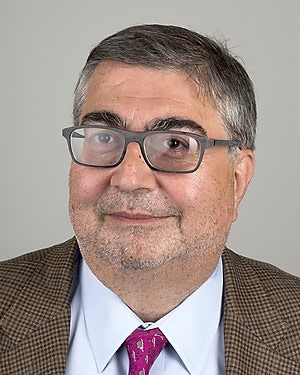 Nezam H. Afdha合作论文数Division of Gastroenterology, Beth Israel Deaconess Medical Center;Liver Center, Beth Israel Deaconess Medical Center;Harvard Medical School22
 Morishima Chihiro合作论文数Department of Laboratory Medicine & Pathology, University of Washington22
 Stanislas Pol合作论文数Université Paris Sorbonne;Liver Department, Cochin Hospital22Mitchell L Shiffman合作论文数21
 Andrew Joseph Muir合作论文数Division of Gastroenterology, Department of Medicine, School of Medicine, Duke University;Duke Clinical Research Institute, Duke University20
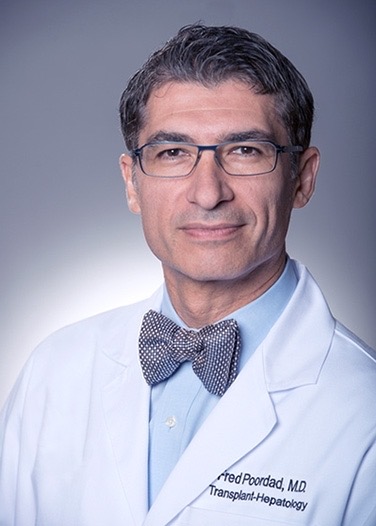 Fred Poordad合作论文数Hepatology University Transplant Center, The University of Texas Health Science Center at San Antonio;Cedars Sinai Medical Center, Department of Hepatology and Liver Transplantation, The University of Texas Health Science Center at San Antonio;Department of Medicine, The University of Texas Health Science Center at San Antonio20Maribel Rodriguez-Torres合作论文数20
 Robert S. Brown合作论文数Joan and Sanford I. Weill Department of Medicine, Weill Cornell Medicine, Cornell University19
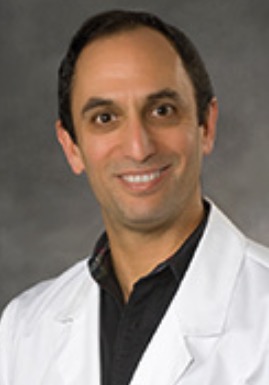 Richard K. Sterling合作论文数Department of Medicine, School of Medicine, Virginia Commonwealth University;Department of Internal Medicine, School of Medicine, Virginia Commonwealth University19
 Vinod K. Rustgi合作论文数Department of Medicine, Rutgers Robert Wood Johnson Medical School19
 Raymond Chung合作论文数Mass General Research Institute, Massachusetts General Hospital;Harvard Medical School17Denning Jill合作论文数17




