Syncmers represent a novel class of methods for selecting k-mers that exhibit robustness against mutations in flanking sequences and demonstrate superior conservation in mutated sequences. Nevertheless, syncmers may generate a higher frequency of repetitive seed matches compared to alternative techniques, such as minimizers, which can result in increased computational time. In this article, we introduce weighted minimizer sampling, which integrates weighted minimizer sampling and syncmer sampling to enhance the sensitivity and accuracy of long-read mapping. We modified two state-of-the-art long-read mappers, Minimap2 and Winnowmap, by substituting the sketching sampling methods with weighted minimizer sampling. We assessed their sensitivity and accuracy using simulated and real datasets. The experimental results indicate that weighted minimizer sampling significantly improves the sensitivity and accuracy of long-read mapping. The source code is available at GitHub: https://github.com/hexinkaoan/weighted-syncmer.
Sequence alignment is a critical step in many critical genomic studies, such as variant calling, quantitative transcriptome analysis (RNA-seq), and metagenomic sequence classification. However, the alignment performance is largely affected by repetitive sequences in the reference genome, which extensively exist in species from bacteria to mammals. Aligning repeating sequences might lead to tremendous candidate locations, bringing about a challenging computational burden. Thus, most alignment tools prefer to simply discard highly repetitive seeds, but this may cause the true alignment to be missed. Using maximal approximate matches (MAMs) as seeds is an option, but MEMs seeds may fail due to sequencing errors or genomic variations in MEMs seeds. Here, we propose a novel sequence alignment algorithm, named MAM, which can efficiently align short DNA sequences. MAM first builds a modified Burrows-Wheeler transform (BWT) structure of a reference genome to accelerate approximate seed matching. Then, MAM uses maximal approximate matches (MAMs) seeds to reduce the candidate locations. Finally, MAM applies an affine-gap-penalty dynamic programming to extend MAMs seeds. Experimental results on simulated and real sequencing datasets show that MAM achieves better performance in speed than other state-of-the-art alignment tools. The source code is available at https://github.com/weiquan/mam.
Sequence alignment is one of the most important problems in bioinformatics. However, the existing alignment tools may result in a large number of candidate locations which degradate alignment performance. Recent researches discard the high repetitive seeds for improving the alignment speed, which influences alignment accuracy. To this end, we propose a novel fuzzy index (fBWT), which is available at https://github.com/weiquan/appr_bwt. It allows approximate search and extending the length of seeds to reduce the candidate locations and accelerate the sequence alignment. The performance of our tool was compared with BWA using 150bp and 250bp length datasets. The result shows the number of misaligned reads (the correct position is not included in the high-score candidate position set) of the current mainstream tool is 5-10 times higher than it. The efficiency between the presented and the existing tools are also compared. Under the above conditions, the alignment time of the presented tool is very close. However, the alignment speed of fBWT is much faster than BWA under the requirement of similar alignment accuracy.
Actual hybridization is performed on a global identity scenario. However, searching for sequences similar to a given sequence in a large data set is very challenging. This is especially true for global alignment. A local alignment algorithm BLAST or semi-global algorithm Myers' bit-vector algorithm is used to instead in most cases. We introduce a novel global alignment method in this paper. It computes the same alignment as a certain dynamic programming algorithm, while executing over 60 times faster on appropriate data. Its high accuracy and speed makes it a better choice for the alignment of probe design.
DNA sequencing technology has seen rapid development in recent years, and both the sequencing throughput and read lengths are growing. Besides, new properties such as paired-end sequencing are emerging. Therefore, it is of great value to develop a sequence alignment algorithm for this new type of DNA data. In this paper, an alignment algorithm is proposed. Instead of the Smith-Waterman algorithm, a local alignment algorithm oriented to sparse mutation is used to accelerate seed extension. Besides, instead of aligning short reads one by one, this software puts all reads with similar seeds together to accelerate seed location. This paper uses human genome reference sequences and short sequencing data from GenBank (40 times coverage) to evaluate our algorithm. And we compare our work with Bowtie2 in terms of speed and accuracy. The results show our algorithm has significant advantages in alignment speed and space overhead with large scale data.
Background Despite the large volume of genome sequencing data produced by next-generation sequencing technologies and the highly sophisticated software dedicated to handling these types of data, gaps are commonly found in draft genome assemblies. The existence of gaps compromises our ability to take full advantage of the genome data. This study aims to identify a practical approach for biologists to complete their own genome assemblies using commonly available tools and resources. Results A pipeline was developed to assemble complete genomes primarily from the next generation sequencing (NGS) data. The input of the pipeline is paired-end Illumina sequence reads, and the output is a high quality complete genome sequence. The pipeline alternates the employment of computational and biological methods in seven steps. It combines the strengths of de novo assembly, reference-based assembly, customized programming, public databases utilization, and wet lab experimentation. The application of the pipeline is demonstrated by the completion of a bacterial genome, Thermotoga sp. strain RQ7, a hydrogen-producing strain. Conclusions The developed pipeline provides an example of effective integration of computational and biological principles. It highlights the complementary roles that in silico and wet lab methodologies play in bioinformatical studies. The constituting principles and methods are applicable to similar studies on both prokaryotic and eukaryotic genomes.
BACKGROUND:Because of the short read length of high throughput sequencing data, assembly errors are introduced in genome assembly, which may have adverse impact to the downstream data analysis. Several tools have been developed to eliminate these errors by either 1) comparing the assembled sequences with some similar reference genome, or 2) analyzing paired-end reads aligned to the assembled sequences and determining inconsistent features alone mis-assembled sequences. However, the former approach cannot distinguish real structural variations between the target genome and the reference genome while the latter approach could have many false positive detections (correctly assembled sequence being considered as mis-assembled sequence).RESULTS:We present misFinder, a tool that aims to identify the assembly errors with high accuracy in an unbiased way and correct these errors at their mis-assembled positions to improve the assembly accuracy for downstream analysis. It combines the information of reference (or close related reference) genome and aligned paired-end reads to the assembled sequence. Assembly errors and correct assemblies corresponding to structural variations can be detected by comparing the genome reference and assembled sequence. Different types of assembly errors can then be distinguished from the mis-assembled sequence by analyzing the aligned paired-end reads using multiple features derived from coverage and consistence of insert distance to obtain high confident error calls.CONCLUSIONS:We tested the performance of misFinder on both simulated and real paired-end reads data, and misFinder gave accurate error calls with only very few miscalls. And, we further compared misFinder with QUAST and REAPR. misFinder outperformed QUAST and REAPR by 1) identified more true positive mis-assemblies with very few false positives and false negatives, and 2) distinguished the correct assemblies corresponding to structural variations from mis-assembled sequence. misFinder can be freely downloaded from https://github.com/hitbio/misFinder.
Since the read lengths of high throughput sequencing (HTS) technologies are short, de novo assembly which plays significant roles in many applications remains a great challenge. Most of the state-of-the-art approaches base on de Bruijn graph strategy and overlap-layout strategy. However, these approaches which depend on k-mers or read overlaps do not fully utilize information of paired-end and single-end reads when resolving branches. Since they treat all single-end reads with overlapped length larger than a fix threshold equally, they fail to use the more confident long overlapped reads for assembling and mix up with the relative short overlapped reads. Moreover, these approaches have not been special designed for handling tandem repeats (repeats occur adjacently in the genome) and they usually break down the contigs near the tandem repeats. We present PERGA (Paired-End Reads Guided Assembler), a novel sequence-reads-guided de novo assembly approach, which adopts greedy-like prediction strategy for assembling reads to contigs and scaffolds using paired-end reads and different read overlap size ranging from Omax to Omin to resolve the gaps and branches. By constructing a decision model using machine learning approach based on branch features, PERGA can determine the correct extension in 99.7% of cases. When the correct extension cannot be determined, PERGA will try to extend the contig by all feasible extensions and determine the correct extension by using look-ahead approach. Many difficult-resolved branches are due to tandem repeats which are close in the genome. PERGA detects such different copies of the repeats to resolve the branches to make the extension much longer and more accurate. We evaluated PERGA on both Illumina real and simulated datasets ranging from small bacterial genomes to large human chromosome, and it constructed longer and more accurate contigs and scaffolds than other state-of-the-art assemblers. PERGA can be freely downloaded at https://github.com/hitbio/PERGA.
Discovering genetic basis of diseases is an important goal and a challenging problem in bioinformatics research. Inspired by network-based global inference approach, Semi-global inference method is proposed to capture the complex associations between phenotypes and genes. The proposed method integrates phenotype similarities and protein-protein interactions, and it establishes the profile vectors of phenotypes and proteins. Then the relevance between each candidate gene and the target phenotype is evaluated. Candidate genes are then ranked according to relevance mark and genes that are potentially associated with target disease are identified based on this ranking. The model selects nodes in integrated phenotype-protein network for inference, by exploiting Phenotype Similarity Threshold (PST), which throws lights on selection of similar phenotypes for gene prediction problem. Different vector relevance metrics for computing the relevance marks of candidate genes are discussed. The performance of the model is evaluated on Online Mendelian Inheritance in Man (OMIM) data sets and experimental evaluation shows high performance of proposed Semi-global method outperforms existing global inference methods.
There are many problems in security of Internet of Things (IOT) crying out for solutions, such as RFID tag security, wireless security, network transmission security, privacy protection, information processing security. This article is based on the existing researches of network security technology. And it provides a new approach for researchers in certain IOT application and design, through analyzing and summarizing the security of ITO from various angles.
A Multi-document Rhetorical Structure (MRS) is proposed for multi-document automatic summarization task. In this structure, interrelationship between text units, including the correlation between units calculated by hierarchical topic tree, the rhetorical relationship and temporal relationship, were represented at different levels of granularity. MRS simplified traditional multi-document representation in cross structure theory and supplement change and distribution information of events topics which cannot be obtained in information fusion theory. Concretely, a series of algorithms including building MRS, multi-document information fusion based MRS and summarization generation are proposed. The capability of concurrently fuse multiple knowledge sources of MRS strategies is testified by sets of experiments and shows good result.
A concept of is proposed for multi-document automatic summarization task, which used multi-layer topic tree structure to represent the text set. Each node in the topic tree represent specific topic and contains multiple similar sentences in the text set. The structure may describe accurately the similarity between sentences at different levels of granularity. Therefore it can reflect the real content of the text set than single layer topic set. And can be used to find the important sentences in the important topic which can compose the summary of the text set. Concretely, a series of algorithms including building tree, key sentences extraction based on tree and summarization generation are proposed. The capability of summarization system is testified by sets of experiments and shows good result.
We analyzed the contents and structure of current electronics medical records, and proposed a definition of Five-Tuples pattern and another more fine-grained definition of two-turples pattern and semantic clas- ses. On this foundation, we proposed a series of algorithms including patterns generalization, patterns automatic extraction and medical information extraction. The experiments with 312 actual medical records show that the system performs well both in the precision and recall. And because of the functionality of self-learning, the system will be more outstanding with an increase in the training corpus.
Automatically acquiring medical knowledge become very important with the rapidly growth of medical information, which mainly in form of medical record. However, the nature language characteristic of current medical records causes the difficulty to automatically process these information by now. So it has important practical applications to transform the content of MRs automatically into structural data. In this paper, we firstly analysed the contents and structure of current electronics medical records, and proposed the definition of the Five-Tuples pattern and more fine-grained definition: two-turples pattern and the semantic classes. On this foundation, we proposed a series of algorithms including the patterns generalization, patterns automatic extraction and information extraction. Experiments showed that the component performs well both in the precision ratio and recall ratio. And for the characteristic of self-learning, the system's overall performance will be even more outstanding with an increase in the training corpus.
In order to resolve a series of problems including representation, extraction and temporal semantic computation of Chinese text temporal information, a temporal information processing system which can be applicable to various natural languages processing mission is proposed. After analysed Chinese sentences temporal elements and component of temporal phrase, adopting a concept of temporal expression, the phrase expressing temporal information were separated into several sub-constituents which have unitary semantic and can be identified easily. On this basis, the methods of extracting, comprehending computation of temporal information based on the rule were researched. The result of experiment showed that this method can identify the temporal information accurately and calculate the temporal values accurately.
A concept of hierarchical topic is proposed for multi-document automatic summarization task, which used multi-layer topic tree structure to represent the text set. Each node in the topic tree represent specific topic and contains multiple similar sentences in the text set. The hierarchical topic structure may describe accurately the similarity between sentences at different levels of granularity. Therefore it can reflect the real content of the text set than single layer topic set. And can be used to find the important sentences in the important topic which can compose the summary of the text set. Concretely, a series of algorithms including building hierarchical topic tree, key sentences extraction based on hierarchical topic tree and summarization generation are proposed. The capability of summarization system is testified by sets of experiments and shows good result.
This paper presents a new way for keyword spotting in degraded imaged document. Two prevalent word indexing, OCR and word shape coding, are combined compactly based on the recognition confidence evaluation. The basic procedures are as follows. First, OCR candidates are used for OCR indexing. Second, a new stoke feature and convex-concave feature of word are adopted for word shape coding. Furthermore, an intelligent indexing based on recognition confidence is introduced, which is adaptive to image quality. Finally, an inexact matching is used for word spotting. A collection from NLM, including 1553 scanned imaged documents, is used to evaluate our method. The results confirm the validity of our method.
Identification of salient patterns for the classification of gene expression profiles is a useful step in examining the biological significance and correlation of genes with disease states. We propose a clustering-based approach in which feature selection is first carried out to identify influential genes and then salient patterns are determined to characterize each of the different classes. The proposed method has been tested with the complicated colon tumor data and the experimental results are evaluated in comparison with the published ones.
In many NLP applications, text topic identification is a common problem. Traditional topic identification method always generated a single-layered topic structure which is usually inaccurate topic division even if generated manually by the human experts. This paper proposed a concept of hierarchical topic which used multi-layer topic tree structure to represent the text or text set. Secondly, this paper proposed an iterative text units clustering method to recognize automatically the hierarchical topic of the text set. In this method, text clustering processing paused when each topic in the text set were correctly divided into multiple sub-topics, and such processing continued until a hierarchical topic tree had been built. A difficult problem of this method was how to automatically determine multiple pause threshold values and was resolved by the minimized clustering entropy method in this paper. The results of our experiments demonstrated the effectiveness of the method.
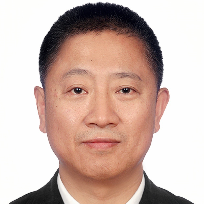 Yadong Wang (王亚东)合作论文数School of Computer Science and Technology, Harbin Institute of Technology;School of Medicine and Health, Harbin Institute of Technology14
 Yongdong Xu (徐永东)合作论文数College of computer science and technology, Harbin Institute of Technology12
 Junheng Huang (黄俊恒)合作论文数7
 Dongjie Zhu (朱东杰)合作论文数School of Computer Science and Technology, Harbin Institute of Technology, Weihai5
 Bo Liu合作论文数4
 Feng YE (叶风)合作论文数3
 Zhiming Xu (徐志明)合作论文数School of Software, Harbin Institute of Technology3
 Xiao Zhu合作论文数3Yu Du合作论文数2Wei Quan合作论文数2
 Wang Kai合作论文数2Lanfeng Zhou合作论文数2
 S. M. Yiu (姚兆明)合作论文数Department of Computer Science, Faculty of Engineering, The University of Hong Kong2
 Henry Leung合作论文数Department of Electrical and Computer Engineering, Schulich School of Engineering, University of Calgary2
 Bin Chen (陈彬)合作论文数College of Computer Science and Technology, Harbin Institute of Technology, Weihai2
 Yong Xia (夏勇)合作论文数School of Computer Science and Technology, Harbin Institute of Technology, Weihai2
 Yang Liu (刘杨)合作论文数School of Computer Science and Technology, Harbin Institute of Technology, Weihai2
 Yushan Sun (孙玉山)合作论文数College of Shipbuilding Engineering, Harbin Engineering University2
 Francis Y.L. Chin合作论文数Department of Computer Science, The University of Hong Kong;DeepTranslate Limited2
 Xizhao Wang (王熙照)合作论文数College of Computer Science and Software Engineering, Shenzhen University;Big Data Institute, Shenzhen University1Rutika Puranik合作论文数1Minggen Cui合作论文数1Zhaohui Xu合作论文数1Zhang Ting-Bin合作论文数1
 Rongjie Wang合作论文数1
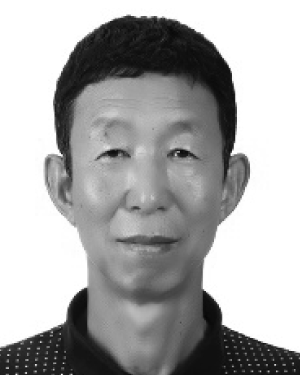 Keun Ho Ryu合作论文数1Xia Yong合作论文数1Shi-jun REN (任世军)合作论文数1Xiao-fei XU (徐晓飞)合作论文数1yadong wang (王亚东)合作论文数1Yucui Dong合作论文数1
 Yu Bai (白钰)合作论文数Alibaba Group1Wenhao Shu合作论文数1
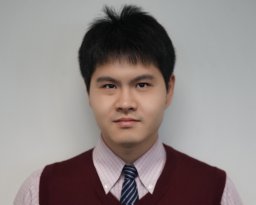 Yukun Zeng合作论文数Department of Computer Science and Engineering, Texas A&M University1
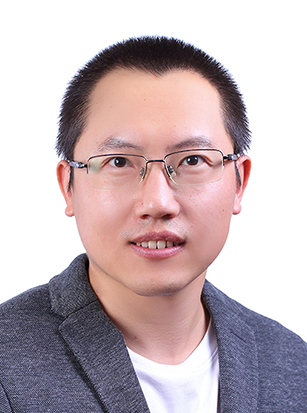 Dengfeng Guan合作论文数Institute of Zoology, Chinese Academy of Sciences, Beijing, 100101, China.1Gaoyang Li合作论文数1Rui Zhang合作论文数1Xiaodong Zhang合作论文数Harbin Institute of Technology, Harbin, China1Fang Xu合作论文数1
 Wenjing Han合作论文数SRC Beijing, Samsung R&D Inst China Beijing, Beijing, Peoples R China1XiaoLin Qiao (乔晓林)合作论文数1
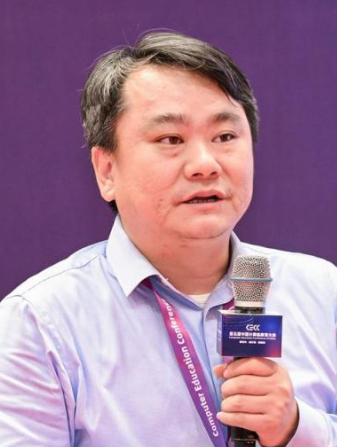 Weigang Zhang (张维刚)合作论文数School of Computer Science and Technology, Harbin Institute of Technology1
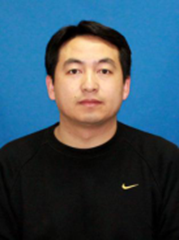 Guohui Zhou (周国辉)合作论文数Harbin Normal University1JunHen Huang合作论文数1Qiuming Ju合作论文数1Han Jingping合作论文数1




