In this study, we explore economies of scale for IT infrastructure and application services. An in-depth appreciation of economies of scale is imperative for an adequate understanding of the impact of IT investments. Our findings indicate that even low IT spending organizations can make a difference by devoting at least 60% of their total IT budget on IT infrastructure in order to foster economies of scale and extract strategic benefits.
In this paper a particular approach to value-assessment for information and communication technology ICT-based services is explored. The core of the paper is a large-scale case study that provides evidence of how proposed value mechanisms work in practice. The mechanisms that are described in this paper are grounded in bringing together different views on the definition of a service, in particular when dealing with administrative processes. The notion of a value-leak is introduced, as an indicator that points to services where the erosion of value can be reduced or stopped. Value-leaks go beyond process deficiencies, and in the case study it becomes clear how efficiency considerations, emotions, effectiveness, caring, hospitality, and so on play an important role in value-leaks. A key research question is the detection of potential value-leaks in services. In this paper, service science for ICT-based services follows the rigor of information science by introducing the notion of service imperfections. Next, two research propositions are put forward, expressing the relation between value-leaks and imperfections on the one hand, and value-leaks and non-normal form process models on the other hand. The case study provides a concrete project in the social ecosystem of a large-scale municipality. What emerged initially as a simple cost-cutting exercise resulted at the end in a redesigned customer contact handling process, whereby both the customers and the employees were satisfied, and realizing also the cost reductions in a creative way by investigating the value-leaks.
Formal Concept Analysis (FCA) is a mathematical technique that has been extensively applied to Boolean data in knowledge discovery, information retrieval, web mining, etc. applications. During the past years, the research on extending FCA theory to cope with imprecise and incomplete information made significant progress. In this paper, we give a systematic overview of the more than 120 papers published between 2003 and 2011 on FCA with fuzzy attributes and rough FCA. We applied traditional FCA as a text-mining instrument to 1072 papers mentioning FCA in the abstract. These papers were formatted in pdf files and using a thesaurus with terms referring to research topics, we transformed them into concept lattices. These lattices were used to analyze and explore the most prominent research topics within the FCA with fuzzy attributes and rough FCA research communities. FCA turned out to be an ideal metatechnique for representing large volumes of unstructured texts.Keywords: formal concept analysis (FCA)rough setsfuzzy attributesknowledge discovery in databasestext miningexploratory data analysisinformation retrievalsystematic literature overview AcknowledgmentsWe would like to thank Paul Elzinga for his help in processing of huge amount of text data for building the lattice diagrams. We express our gratitude to Prof. Radim Belohlavek for his valuable comments and remarks. We are thankful to Prof. Dominik Slezak for his patience and willingness to constantly stimulate us during the research. The study was implemented in the framework of the Basic Research Program at the National Research University Higher School of Economics in the period 2012–2013 and in the Laboratory of Intelligent Systems and Structural Analysis. This work was also partially supported by the Russian Foundation for Basic Research, project No. 13-07-0050413 and 13-07-00504.
Research on variability in software artefacts is something which is already studied extensively in research. The visualisation of variability is one aspect of this research, and results like e.g. feature diagrams are well-known and well-spread. When it concerns the origin of the variability within the phase of requirements engineering, research is much scarcer. A visualisation technique for both representing the origin and the amount of variability in requirements is not readily available in research. This paper provides a way to represent the origin of variability in requirements with the aid of a technique called formal concept analysis (FCA). Additionally the support that FCA can provide for variability related decisions during (early) requirements engineering is also depicted in this paper. Proof of the usability of FCA for the visualization, and documentation, of variability is shown with the aid of a real-life case study. FCA is also applied in the real-life case study to check the compatibility of FCA as a visualization method to support variability decision making during requirements engineering.
•Complete overview of FCA literature describing models for knowledge discovery.•Complete overview of FCA literature describing applications in knowledge discovery.•Structured visualization of literature using concept lattices.
While research on the visualization and documentation of variability in software artefacts by means of e.g. feature diagrams is well established, most of these documentation methods in the field of variability management assume the presence of variability as a given fact. The decision whether variability within the requirements should actually give rise to variability in the envisaged software artefact is often taken unconsciously and as a result techniques to visualize and document the amount, the structure and the impact of requirements evolution on variability are scarce. This paper provides a real life proof of concept that formal concept analysis (FCA) can be used for the visualization and documentation of variability re- lated decisions during (early) requirements engineering. FCA is used in a real-life case study to check the usability of FCA as a visualization method to support variability management during requirements engineering. The real-life case study also provides initial proof that useful documentation can be obtained by representing the requirements in a FCA concept lattice.
Process improvement programs rely heavily on various techniques for the identification of deficiencies in the processes and for the explanation of their root causes, in order to formulate adequate remediating actions. Six-sigma and Lean Management approaches are useful statistical techniques in this context. In the practical application of such techniques, the process analyst is often restricted by the semantic expressiveness of the process analysis models. Many popular process modeling techniques also suffer from limitations in the adequate representation of probabilistic behavior in processes. The latter is important, for example, for detecting the impact of exceptions and variations in processes. In this paper additional techniques are proposed based on Formal Concept Analysis (FCA). This is primarily based on the semantic richness of FCA-schema's, which are algebraic lattices. It is shown how many-to-many transitions in processes can easily be identified in an FCA-based Process representation. These transitions are not only the expression of potential Value Leaks as they also lead to explanations of their root causes. The techniques described in this paper are not a replacement, but rather an augmentation for Six-sigma and Lean Management approaches. In the paper several examples that are known in the Process Mining literature are presented and discussed. The techniques that are proposed are scalable and extend easily to large scale examples.
Background: Key success factors for significantly improving patient satisfaction on breast cancer care are not well known. Data obtained over a period of 6 years in a breast cancer clinic provide a portrait of the evolution of patient satisfaction on quality of care.
Economies of scale can be seen as some kind of "holy grail" in state of the art literature on the development of sets of related software systems. Software product line methods are often mentioned in this context, due to the variability management aspects they propose, in order to deal with sets of related software systems. They realize the sought-after reusability. Both variability management and software product lines already have a strong presence in theoretical research, but in real-life software product line projects trying to obtain economies of scale still tend to fall short of target. The objective of this paper is to study this gap between theory and reality through a case study in order to see why such gap exists, and to find a way to bridge this gap. Through analysis of the causes of failure identified by the stakeholders in the case study, the underlying problem, which is found to be located in the requirements engineering phase, is crystallized. The identification of a framework describing the problems will provide practitioners with a better focus for future endeavors in the field of software product lines, so that economies of scale can be achieved.
Churning of the customer base is always a top issue in Banking. It is directly related to recurrent revenue, and the ever increasing acquisition costs for new customers. In a first approach, this issue is related to both the quality of service (which is mainly in the front-office, say the contact center) and the speed of service, which is mainly in the back-office. Many studies published to date on this required manual data collection. This creates in general two concerns: worker behavior may change under observation, and manual data collection is expensive and often error prone. In this paper it is shown by means of a case study for a Multi-National Bank (with 5000 employees in the back office) how automated Business Process Discovery, which is an advanced type of process mining, makes it possible to handle the above concerns. The automated data collection and the analysis, in terms of Hidden Markov Models, are key elements. Several results regarding the quality and speed of service have been obtained. Most interesting was the discovery of deeper root causes for customer attrition. Once the deficiencies in the processes are identified, appropriate process improvements can be designed and simulated based on the models emerging from process discovery. In this case study, significant quality and speed improvements as well as customer churn reductions have been obtained.
Formal Concept Analysis (FCA) is an unsupervised clustering technique and many scientific papers are devoted to applying FCA in Information Retrieval (IR) research. We collected 103 papers published between 2003-2009 which mention FCA and information retrieval in the abstract, title or keywords. Using a prototype of our FCA-based toolset CORDIET, we converted the pdf-files containing the papers to plain text, indexed them with Lucene using a thesaurus containing terms related to FCA research and then created the concept lattice shown in this paper. We visualized, analyzed and explored the literature with concept lattices and discovered multiple interesting research streams in IR of which we give an extensive overview. The core contributions of this paper are the innovative application of FCA to the text mining of scientific papers and the survey of the FCA-based IR research.
The topic of recommender systems is rapidly gaining interest in the user-behaviour modeling research domain. Over the years, various recommender algorithms based on different mathematical models have been introduced in the literature. Researchers interested in proposing a new recommender model or modifying an existing algorithm should take into account a variety of key performance indicators, such as execution time, recall and precision. Till date and to the best of our knowledge, no general cross-validation scheme to evaluate the performance of recommender algorithms has been developed. To fill this gap we propose an extension of conventional cross-validation. Besides splitting the initial data into training and test subsets, we also split the attribute description of the dataset into a hidden and visible part. We then discuss how such a splitting scheme can be applied in practice. Empirical validation is performed on traditional user-based and item-based recommender algorithms which were applied to the MovieLens dataset.
Concept Relation Discovery and Innovation Enabling Technology (CORDIET), is a toolbox for gaining new knowledge from unstructured text data. At the core of CORDIET is the C-K theory which captures the essential elements of innovation. The tool uses Formal Concept Analysis (FCA), Emergent Self Organizing Maps (ESOM) and Hidden Markov Models (HMM) as main artifacts in the analysis process. The user can define temporal, text mining and compound attributes. The text mining attributes are used to analyze the unstructured text in documents, the temporal attributes use these document's timestamps for analysis. The compound attributes are XML rules based on text mining and temporal attributes. The user can cluster objects with object-cluster rules and can chop the data in pieces with segmentation rules. The artifacts are optimized for efficient data analysis; object labels in the FCA lattice and ESOM map contain an URL on which the user can click to open the selected document.
Our economies are rapidly evolving toward being primarily service-driven, with information and communication as fundamental drivers for the service deployment. Strategic choices are increasingly driven by other parameters than the traditional goods-driven industrial type of economies. In this paper, the major drivers for making strategic choices in a competitive service economy are examined. It is shown how the competition in services based on information and communication technology (ICT) is competence-based. Competition aims at bringing additional value through services, but may also deploy specific techniques to stop value from leaking in particular business processes. Value creation and prevention of value leaks cannot just rely on the traditional material-based techniques, which are grounded in the strong tangible nature of the traditional economies. Today ICT-based services involve creative combinations of technologies, resources, and assets to answer as well as anticipate the growing demand for flexible solutions that create sustained added value. In this paper, the particular role of imperfections in service systems is explored, extending the well-known theories of information imperfections. Imperfections are not always solved but are sometimes even maintained in favor of sustained competitive advantage. Various ways to realize service rent are discussed with extensive examples. The concluding part of the paper points to some crucial service configuration issues, including the need for a sufficient degree of corporate-wide standardized service components and interfaces to address the growing demand for agility in competence-driven markets.
In this paper, we propose an expert system for iterative requirements engineering using Formal Concept Analysis. The requirements engineering approach is grounded in the theoretical framework of C-K theory. An essential result of this approach is that we obtain normalized class models. Compared to traditional UML class models, these normalized models are free of ambiguities such as many-to-many, optional-to-optional or reflexive associations which cause amongst others problems at design time. FCA has the benefit of providing a partial ordering of the objects in the conceptual model based on the use cases in which they participate. The four operators of the C-K design square give a clear structure to the requirements engineering process: elaboration, verification, modification and validation. In each of these steps the FCA lattice visualization plays a pivotal role. We empirically show how the strategy works by applying it to a set of case studies and a modeling experiment in which 20 students took part. (c) 2012 Elsevier Ltd. All rights reserved.
In this paper we propose the software system CORDIET-Healthcare which we are currently developing in collaboration with the Katholieke Universiteit Leuven, Moscow Higher School of Economics and the GZA-hospital group located in Antwerp. The main aim of this system is to offer healthcare management staff a user-friendly and powerful data analysis environment. Using state of the art techniques from computer science and mathematics we show how CORDIET-Healthcare can be used to gain insight in existing care processes and reveal actionable knowledge which can be used to improve the current way of working.
In this paper we introduce a novel human-centered data mining software system which was designed to gain intelligence from unstructured textual data. The architecture takes its roots in several case studies which were a collaboration between the Amsterdam-Amstelland Police, GasthuisZusters Antwerpen (GZA) hospitals and KU Leuven. It is currently being implemented by bachelor and master students of Moscow Higher School of Economics. At the core of the system are concept lattices which can be used to interactively explore the data. They are combined with several other complementary statistical data analysis techniques such as Emergent Self Organizing Maps and Hidden Markov Models.
In this paper we compare the usability of ESOM and MDS as text exploration instruments in police investigations. We combine them with traditional classification instruments such as the SVM and Naive Bayes. We perform a case of real-life data mining using a dataset consisting of police reports describing a wide range of violent incidents that occurred during the year 2007 in the Amsterdam-Amstelland police region (The Netherlands). We compare the possibilities offered by the ESOM and MDS for iteratively enriching our feature set, discovering confusing situations, faulty case labelings and significantly improving the classification accuracy. The results of our research are currently operational in the Amsterdam-Amstelland police region for upgrading the employed domestic violence definition, for improving the training of police officers and for developing a highly accurate and comprehensible case triage model.
According to state of the art literature, software product lines are an effective way to achieve economies of scale through reusability while coping with the problem of variability in related software systems. Fundamentals of variability management and product lines have been available in the software engineering research field for several decades. Nevertheless, projects to cope with variability in practice tend to fall short of target. The reason for this gap between sound theories and poor practice, common in multiple software engineering subfields, remains unclear. Therefore, an empirical study was conducted in a large-scale software dependent multinational. The results of this case study show a number of factors that impact successful variability practice. These factors can be abstracted into general hypotheses useful for bridging the gap between theory and practice. Based on the sources of discrepancy, this research suggests a practical way to overcome the obstacles on the road towards successful variability management.
Since the fall of the Iron curtain starting in 1989 in Hungary, millions of Central and Eastern European girls and women have been forced to work in the European sex industry (estimated 175,000 to 200,000 yearly1). In this paper, we present our work with the Amsterdam-Amstelland (Netherlands) police to find suspects and victims of human trafficking and forced prostitution. 266,157 suspicious activity reports were filed by police officers between 2005 and 2009 that contain their observations made during a police patrol, motor vehicle inspection, etc. We used FCA to filter out interesting persons for further investigation and used the temporal variant of FCA to create a visual profile of these persons, their evolution over time and their social environment. We exposed multiple cases of forced prostitution where sufficient indications were available to obtain the permission from the Public Prosecutor to use special investigation techniques. This resulted in a confirmation of their involvement in human trafficking and forced prostitution resulting in actual arrestments being made.
 Stijn Viaene合作论文数62
 Monique Snoeck合作论文数Katholieke Universiteit Leuven56
 Jonas Poelmans合作论文数Faculty of Business and Economics, K.U. Leuven28
 Geert Poels合作论文数Dept. of Business Informatics and Operations Management, Faculty of Economics and Business Administration, Ghent University22
 Bart Baesens合作论文数Department of Decision Sciences and Information Management, KU Leuven;BlueCourses;University of Southampton16Paul Elzinga合作论文数16
 Jan Vanthienen合作论文数Department of Decision Sciences and Information Management, Research Center Information Systems, KU Leuven;Faculty of Economics and Business, KU Leuven;ERCISERCIS15
 Manu De Backer合作论文数The Master Labs12
 Jacques Vandenbulcke合作论文数Faculty of Economics and Business, Katholieke Universiteit Leuven11
 Wilfried Lemahieu合作论文数Department of Applied Economic Sciences;Katholieke Universiteit Leuven;Department of Applied Economic Sciences, Katholieke Universiteit Leuven10
 Rik Maes合作论文数8Bjorn Cumps合作论文数8
 Edward Peters合作论文数7
 Dirk Van Den Poel合作论文数Ghent University7
 Frank G. Goethals合作论文数7
 Sergei Kuznetsov合作论文数School of Data Analysis and Artificial Intelligence, Faculty of Computer Science, HSE University;International Laboratory for Intelligent Systems and Structural Analysis, Faculty of Computer Science, HSE University7Herlinde Leemans合作论文数6Tom Huysegoms合作论文数5
 Dmitry I. Ignatov合作论文数National Research University Higher School of Economics5Cindy Michiels合作论文数5
 Tony Van Gestel合作论文数Credit Risk Modelling, Dexia Group5antoon goderis合作论文数4
 Bart De Moor合作论文数Department of Electrical Engineering, KU Leuven4
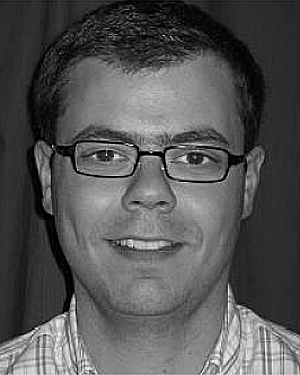 Raf Haesen合作论文数4Antony Bryant合作论文数Leeds Metropolitan University4Jurgen Vanhoenacker合作论文数4Richard a Derrig合作论文数4Marc M. Van Hulle合作论文数Campus Gasthuisberg;Laboratorium voor Neurofysiologie4Frank Stumpe合作论文数3
 David Martens合作论文数Departement Milieu- en Technologiemanagement3Gerda Verheyden合作论文数3
 Alexey Neznanov合作论文数State University3
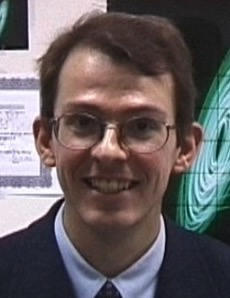 Johan Suykens合作论文数Department of Electrical Engineering, Faculty of Architecture, KU Leuven;Faculty of Engineering Science, KU Leuven3
 Richard A. Derrig合作论文数3Maurice Verhelst合作论文数3
 Herman Van der Mussele合作论文数3Cecilia Mercado合作论文数2JAK Suykens合作论文数2
 Stephan Poelmans合作论文数Hogeschool-Universiteit Brussel2Christopher Raymond Houck合作论文数2
 Reinhilde Veugelers合作论文数Department of Management, Strategy and Innovation, Faculty of Economics and Business, KU Leuven1E. De Vries合作论文数1
 B. De Moor合作论文数KU Leuven1
 Joos Vandewalle (Joseph)合作论文数Faculty of Engineering Science, Katholieke Universiteit Leuven;Departement Elektrotechniek, Katholieke Universiteit Leuven1
 Mercedes Ayuso合作论文数RISC-IREA Research Group;Department of Econometrics;University of Barcelona;RISC-IREA Research Group, University of Barcelona1Gerhard (Geert) Wets合作论文数School of Transportation Sciences, Universiteit Hasselt;Instituut voor Mobiliteit, Universiteit Hasselt;School voor Mobiliteitswetenschappen, Universiteit Hasselt1B. Cumps合作论文数1
 Eric Burger合作论文数Center for Public Administration and Policy, School of Public and International Affairs, Virginia Polytechnic Institute and State University1




