In view of the shortage of the means for water environment monitoring,a monitoring method using four-rotor drones is proposed.The drone can fly above the water to obtain aerial videos,and also hover and ski over the water with the camera and monitoring sensors submerged underwater for real-time monitoring.An attitude controller based on robust compensation and a position controller based on PID method are designed.With the constructed prototype drone,hovering and water skiing tests were conducted.A waterproof camera and other sensors combined with wireless modules were used to realize real-time monitoring of the underwater environment.
This paper used DIDSON to get information of underwater fish and carried out the real-time multiple-target tracking, particularly the targets were dense. Analysis of fishery resources was also done through the data post-processing. Real-time data processing mainly included DIDSON image building/enhancement/filter, target detection and multiple-target tracking. Nearest neighbor clustering algorithm combined with Extended Kalman Filter was applied to the multiple-target tracking. Data post-processing mainly implemented the statistics of fish duration, swimming speed, swimming direction, trajectory length, which will provide strong technical support for the fishery resources assessment.
Ocean has always intrigued mankind. Presently, ocean inspection, monitoring and exploitation has been achieved with the development of ocean technology. The seafloor observatory network, a mature and all-weather fixed observatory platform, makes it possible to monitor ocean environment in long term and in real time, while its range of observation is limited by cable. A compact Autonomous Underwater Vehicle (AUV) namely "Xuanwu-1" was designed for mobile observatory, which can charge and transfer data by non-contract power supply and data transfer system via docking station, setting up at the Zhejiang University seafloor observatory node. The combination of the two improves the underwater continuous operation time and data transmission efficiency of a typical AUV. This paper uncovers and introduces solutions for the design and implementation of "Xuanwu-1" under limited conditions. One major effort is the overall design of this AUV, including mechanical design and control system design. Through the use of mathematical modeling and simulation, "Xuanwu-1" realized several typical motions under ideal conditions. The implementation of this AUV is time-consuming and finally it was tested under lab conditions. As the first generation of "Xuanwu" series, this open-frame compact AUV is used for oceanographic surveys from close to the surface of the sea. In the near future, this AUV can dock with the integrated docking system and to be the complement of cabled seafloor observatory network. With time, the AUV design will have to change in order to optimize its performance as the engineering technology progress.
Underwater vehicle controller design proves difficult for time varying, nonlinear dynamics, coupled model and uncertain flow. Also it is hard to construct the nonlinear coupled uncertain model. Fortunately, we find a simple method to deal with that problem. Variable universe fuzzy control algorithm is superior in model-independent and nonlinear control. Also it is a simple and universal method. It indeed suits for AUV controller design. In this paper, variable universe fuzzy controller, control system and nonlinear dynamic model of AUV are presented. Then we test that controller in simulation to examine its performance.
This system is an underwater integrated navigation system based on Attitude Heading Reference System (AHRS)/Global Positioning System (GPS)/ Doppler Velocity Log (DVL). It is built on STM32F103 equipped with the uCOS-II system, which has perfect real-time character, low cost and high-performance. The present hardware includes singer board computer, AHRS, DVL, depth gauge, and GPS receiver. Kalman filter is applied in the sensors data process and dead-reckoning algorithm of navigation system. This paper describes hardware and software design as well as results of simulation. The performance analysis is carried out based on the position and velocity errors. It shows that the system is viable and can be used in the "XUANWU" Autonomous Underwater Vehicle (AUV).
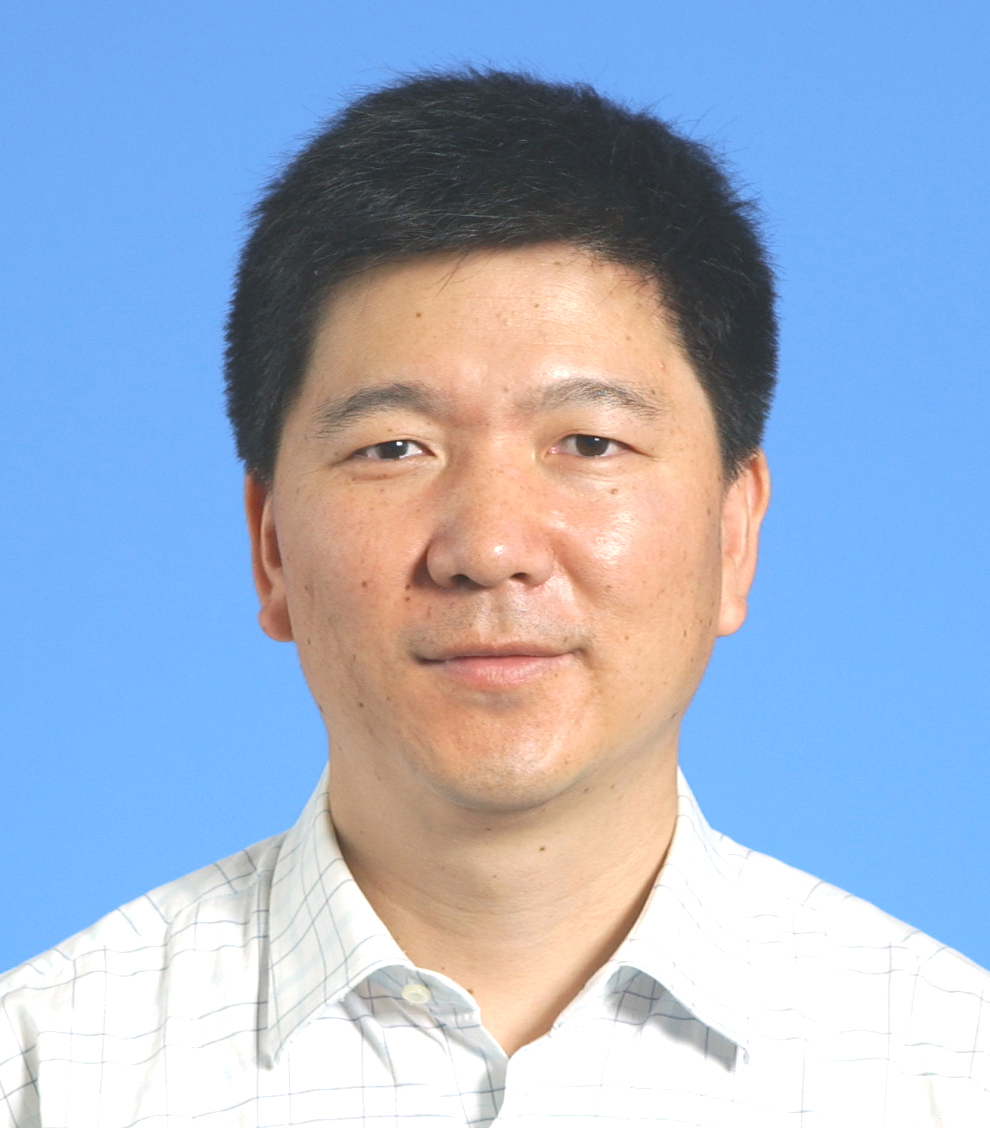 Jun Han (韩军)合作论文数浙江大学海洋学院5
 Jianyong Wu (吴建永)合作论文数The First Affiliated Hospital, Zhejiang University School of Medicine5
 Yixing Ying合作论文数3Danxiang Jing合作论文数2
 Guanyu Wang (王冠宇)合作论文数School of Medicine, The Chinese University of Hong Kong, Shenzhen2
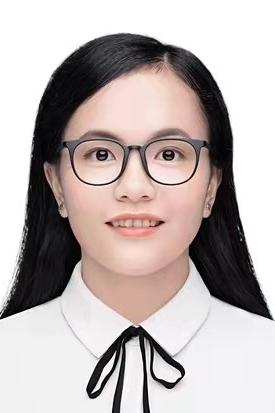 Hanyun Zhou (周晗昀)合作论文数College of Information Engineering, Zhejiang University of Technology1Yixing Yin合作论文数1Xiaoding Wang合作论文数1




