The current project measures personality across cultures, for the first time using a forced-choice (or idiographic) assessment instrument - the California Adult Q-set (CAQ). Correlations among the average personality profiles across 13 countries (total N = 2,370) ranged from r = .69 to r = .98. The most similar averaged personality profiles were between USA/Canada; the least similar were South Korea/Russia/Poland and China/Russia. The Czech Republic had the most homogeneous personality descriptions and South Korea had the least. In further analyses, country differences in CAQ-derived Big Five scores were compared to results obtained from previous research using nomothetic Likert scales (i.e., the NEO; the BFI). The Big Five templates produced generally similar findings to previous research comparing the Big Five across countries using Likert-type methods.
While a large body of research has investigated cultural differences in behavior, this typical study assesses a single behavioral outcome, in a single context, compared across two countries. The current study compared a broad array of behaviors across 21 countries ( N = 5,522). Participants described their behavior at 7:00 p.m. the previous evening using the 68 items of the Riverside Behavioral Q-sort (RBQ). Correlations between average patterns of behavior in each country ranged from r = .69 to r = .97 and, in general, described a positive and relaxed activity. The most similar patterns were United States/Canada and least similar were Japan/United Arab Emirates (UAE). Similarities in behavior within countries were largest in Spain and smallest in the UAE. Further analyses correlated average RBQ item placements in each country with, among others, country-level value dimensions, personality traits, self-esteem levels, economic output, and population. Extroversion, openness, neuroticism, conscientiousness, self-esteem, happiness, and tolerant attitudes yielded more significant correlations than expected by chance.
The purpose of this research is to quantitatively compare everyday situational experience around the world. Local collaborators recruited 5,447 members of college communities in 20 countries, who provided data via a Web site in 14 languages. Using the 89 items of the Riverside Situational Q-sort (RSQ), participants described the situation they experienced the previous evening at 7:00 p.m. Correlations among the average situational profiles of each country ranged from r = .73 to r=.95; the typical situation was described as largely pleasant. Most similar were the United States/Canada; least similar were South Korea/Denmark. Japan had the most homogenous situational experience; South Korea, the least. The 15 RSQ items varying the most across countries described relatively negative aspects of situational experience; the 15 least varying items were more positive. Further analyses correlated RSQ items with national scores on six value dimensions, the Big Five traits, economic output, and population. Individualism, Neuroticism, Openness, and Gross Domestic Product yielded more significant correlations than expected by chance. Psychological research traditionally has paid more attention to the assessment of persons than of situations, a discrepancy that extends to cross-cultural psychology. The present study demonstrates how cultures vary in situational experience in psychologically meaningful ways.
The study of psychologically salient features of situations is a natural product of the confluence of personality and social psychology. Social psychology historically has focused on situational variables via experimental manipulation, while personality psychology has developed an array of tools for psychometric assessment, using correlational methods. Combine the two approaches, and the result is a number of modern research programs aiming to assess the psychologically meaningful aspects of situations. However, until recently the growing network of research on situations has barely begun exploring and comparing situations across cultures. Like the rest of psychology, as the study of situations accelerates, it also needs to extend its reach around the world. This chapter will examine how situational assessment has been conducted both within and across cultures, and some of the methodological and conceptual issues that surround the cross-cultural assessment of situations. Situation Assessment Every evening, someone in Italy is making pizza with a romantic partner; in Estonia, someone is taking a sauna with family members; in Canada, someone is drinking beer at a pig roast, and in Japan, someone is singing karaoke with colleagues after work. At the same time, people in all of these countries are watching TV, surfing the Internet, or eating dinner with family or friends 1 . All around the world, people experience a wide variety of situations, some of
Taxonomies of person characteristics are well developed, whereas taxonomies of psychologically important situation characteristics are underdeveloped. A working model of situation perception implies the existence of taxonomizable dimensions of psychologically meaningful, important, and consequential situation characteristics tied to situation cues, goal affordances, and behavior. Such dimensions are developed and demonstrated in a multi-method set of 6 studies. First, the "Situational Eight DIAMONDS" dimensions Duty, Intellect, Adversity, Mating, pOsitivity, Negativity, Deception, and Sociality (Study 1) are established from the Riverside Situational Q-Sort (Sherman, Nave, & Funder, 2010, 2012, 2013; Wagerman & Funder, 2009). Second, their rater agreement (Study 2) and associations with situation cues and goal/trait affordances (Studies 3 and 4) are examined. Finally, the usefulness of these dimensions is demonstrated by examining their predictive power of behavior (Study 5), particularly vis-à-vis measures of personality and situations (Study 6). Together, we provide extensive and compelling evidence that the DIAMONDS taxonomy is useful for organizing major dimensions of situation characteristics. We discuss the DIAMONDS taxonomy in the context of previous taxonomic approaches and sketch future research directions.
While the person-situation debate was largely based on a misunderstanding of the magnitude of the correlations that characterize relations between personality traits and behavior, it drew much-needed attention to the importance of situations. However, few attempts have been made to understand the important elements of situations in relation to behavior. Current work developing the Riverside Situational Q-sort (RSQ) aims to provide a useful way to conceptualize and measure the behaviorally important attributes of situations. A current project is applying this method cross-culturally. New data from the US and Japan show that behavioral correlates of two elements of the situation—the presence of a member of the opposite sex and the experience of being criticized by others—have largely similar behavioral correlates between genders and across cultures. These analyses illustrate how the RSQ illuminates the connections between situations and behavior. Future research will extend such analyses to more situational attributes and other cultures around the world.
Asian American parents espouse higher academic expectations relative to parents from other ethnic groups, yet these high expectations predict greater self-doubt in children who fall short of expectations. In the present study, 69 Asian American and 33 Latino undergraduate students discussed their parents' expectations, how supportive they felt their parents were with their choice of major and school performance, and their feelings about their own academic performance. Differences between both groups emerged: Asian students perceived more pressure to do well academically than Latino students did. Asian students with more pressuring parents also expected them to be the most upset if they were to earn a C, saw them as less supportive, and ultimately felt less satisfied with their academic performance. In contrast, Latino students with more pressuring parents expected them to be upset (but not to the same degree as Asian parents), yet still felt more supported and satisfied with their academic performance. High parental expectations may impose self-critical evaluation of performance among Asians, while they foster more parental support among Latinos.
 David Funder合作论文数Department of Psychology, University of California, Riverside13
 Elysia Todd合作论文数6
 David Gallardo-Pujol合作论文数Faculty of Psychology, University of Barcelona5
 John F. Rauthmann合作论文数Humboldt-Universität zu Berlin5
 Matthias Ziegler合作论文数Humboldt University5
 Jungsoon Moon合作论文数3Shizuka Kawamoto合作论文数3
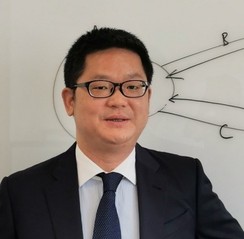 Yu Yang (杨宇)合作论文数School of Entrepreneurship and Management, ShanghaiTech University3Martina Hrebickova合作论文数3
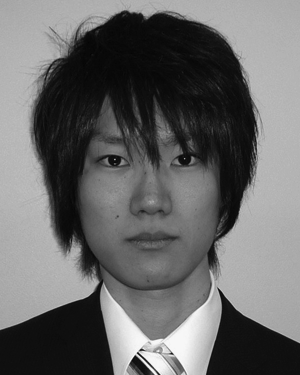 Tatsuya Sato合作论文数3
 Yee Shiun Ryan Hong合作论文数Department of Political Science, Faculty of Arts and Social Sciences, National University of Singapore3Izdebski Paweł合作论文数3
 Sylvie Graf合作论文数3
 Francois De Kock合作论文数3Ivanova Christina合作论文数3Bronin Igor合作论文数3Jaechang Bae合作论文数3
 Joey T. Cheng合作论文数Department of Psychology, University of British Columbia3
 Lars Penke合作论文数Centre for Cognitive Ageing and Cognitive Epidemiology;Department of Psychology;Centre for Cognitive Ageing and Cognitive Epidemiology|Department of Psychology3
 Christopher S Nave合作论文数3
 Jessica L. Tracy合作论文数Department of Psychology, Faculty of Arts, The University of British Columbia;Emotion & Self Lab, The University of British Columbia3
 Ryne A. Sherman合作论文数Department of Psychology, University of California-Riverside3
 Piotr Szarota合作论文数Institute of Psychology, Polish Academy of Sciences3
 Peter Halama合作论文数3
 Jerry Rudmann合作论文数2Gyuseog Q. Han合作论文数2Liisalotte Elme合作论文数2
 Gwendolyn Gardiner合作论文数Bielefeld Univ2
 Erica Baranski合作论文数Calif State Univ East Bay2
 Brock Bastian合作论文数Melbourne School of Psychological Sciences, Faculty of Medicine, Dentistry and Health Sciences, The University of Melbourne2
 Giulio Costantini合作论文数2Lundmann Lars合作论文数2Jones Ashley Bell合作论文数2
 Marcel van Aken合作论文数Department of Developmental Psychology, Faculty of Social and Behavioral Sciences, Utrecht University2
 Jaap Denissen合作论文数Utrecht University2
 Laura P. Naumann合作论文数Institute of Personality and Social Research, University of California Berkeley2
 Anu Realo合作论文数Department of Psychology, University of Warwick;Institute of Psychology, Faculty of Social Sciences, University of Tartu2
 Jon E. Grahe合作论文数2
 Marco Perugini合作论文数Dipartimento di Psicologia, University Milano-Bicocca2
 Aveyard Mark E合作论文数Department of International Studies, American University of Sharjah1
 Clara Kulich合作论文数1Fabio Lorenzi-Cioldi合作论文数University of Geneva;Purdue University;University of Geneva, Purdue University1




