This essay is a sustained attempt to bring new light to some of the perennial problems in philosophy of mind surrounding phenomenal consciousness and introspection through developing an account of sensory and phenomenal concepts. Building on the information-theoretic framework of Dretske (1981), we present an informational psychosemantics as it applies to what we call sensory concepts, concepts that apply, roughly, to so-called secondary qualities of objects. We show that these concepts have a special informational character and semantic structure that closely tie them to the brain states realizing conscious qualitative experiences. We then develop an account of introspection which exploits this special nature of sensory concepts. The result is a new class of concepts, which, following recent terminology, we call phenomenal concepts: these concepts refer to phenomenal experience itself and are the vehicles used in introspection. On our account, the connection between sensory and phenomenal concepts is very tight: it consists in different semantic uses of the same cognitive structures underlying the sensory concepts, such as the concept of red. Contrary to widespread opinion, we show that information theory contains all the resources to satisfy internalist intuitions about phenomenal consciousness, while not offending externalist ones. A consequence of this account is that it explains and predicts the so-called conceivability arguments against physicalism on the basis of the special nature of sensory and phenomenal concepts. Thus we not only show why physicalism is not threatened by such arguments, but also demonstrate its strength in virtue of its ability to predict and explain away such arguments in a principled way. However, we take the main contribution of this work to be what it provides in addition to a response to those conceivability arguments, namely, a substantive account of the interface between sensory and conceptual systems and the mechanisms of introspection as based on the special nature of the information flow between them.
Islamic but secular, ambivalent about its Ottoman past, and anxious for membership in the European Union, Turkey seems to be easily cast - in terms of its geographical and cultural situatedness - as a bridge between the East and the West. However, Relocating the Fault Lines asserts that contemporary Turkey can no longer be defined by such a simple framework. In recent decades, Turkish economy, society, and culture have undergone intense changes affected by influences other than Western modernity. Issues of national identity are being transformed by such phenomena as the rise of political Islam, integration into a global economy, ethnic conflict, and women's struggles for autonomy. This special issue of SAQ explores how these redefinitions are occurring in the areas of art, literature, and popular culture as well as economy and politics. The essays examine the preoccupation of modern Turkish literature and popular culture with notions of imitation and authenticity, as well as the ways in which the country's secularization serves to promote an official Islam. Contributors: Hulya Adak, Meltem Ahska, Ayse Gul Altnay, Tanl Bora, Ayse Bugra, Umit Cizre, Menderes Cnar, Andrew Davison, Tuna Erdem, Suna Ertugrul, Kathy Ewing, Erdag Goknar, Nurdan Gulalp, Sibel Irzk, Orhan Kocak, Bruce Kuniholm, Jale Parla, Nukhet Sirman, Levent Soysal, and Necmi Zeka.
Etude du debat conceptuel sur la conscience opposant les arguments anti-materialistes de la concevabilite a la reponse perspectiviste du materialisme. Examinant la dimension dialectique du debat a travers l'argument de la connaissance de Jackson, l'A. rend possible une approche naturaliste generale des concepts phenomenaux.
This essay is a sustained information-theoretic attempt to bring new light on some of the perennial problems in the philosophy of mind surrounding phenomenal consciousness and introspection. Following Dretske (1981), we present and develop an informational psychosemantics as it applies to what we call sensory concepts , concepts that apply, roughly, to so-called secondary qualities of objects. We show that these concepts have a special informational character and semantic structure that closely tie them to the brain states realizing conscious qualitative experiences. We then develop an account of introspection which exploits this special nature of sensory concepts. The result is a new class of concepts, which, following recent terminology, we call phenomenal concepts : these concepts refer to phenomenal experience itself and are the vehicles used in introspection. On our account, the connection between sensory and phenomenal concepts is very tight: it consists in different semantic uses of the same cognitive structures underlying the sensory concepts, like RED. Contrary to widespread opinion, we show that information theory contains all the resources to satisfy internalist intuitions about phenomenal consciousness, while not offending externalist ones. A consequence of this account is that it explains and predicts the so-called conceivability arguments against physicalism on the basis of the special nature of sensory and phenomenal concepts. Thus we not only show why physicalism is not threatened by such arguments, but also demonstrate its strength in virtue of its ability to predict and explain away such arguments in a principled way. However, we take the main contribution of this work to be what it provides in addition to a response to those conceivability arguments, namely, a substantive account of the interface between sensory and conceptual systems and the mechanisms of introspection as based on the special nature of the information flow between them.
This essay is a sustained information-theoretic attempt to bring new light on some of the perennial problems in the philosophy of mind surrounding phenomenal consciousness and introspection. Following Dretske (1981), we present and develop an informational psychosemantics as it applies to what we call sensory concepts, concepts that apply, roughly, to so-called secondary qualities of objects. We show that these concepts have a special informational character and semantic structure that closely tie them to the brain states realizing conscious qualitative experiences. We then develop an account of introspection utilizing this special nature of sensory concepts. The result is a principled naturalistic account of a class of concepts used in the introspection of experiences, which, following recent terminology, we call phenomenal concepts. Contrary to widespread opinion, we show that information theory contains all the resources to satisfy internalist intuitions about phenomenal consciousness, while not offending externalist ones. A consequence of this account is that it explains and predicts the so-called conceivability arguments against physicalism on the basis of the special nature of sensory and phenomenal concepts. Thus we not only show why physicalism is not threatened by such arguments, but also demonstrate its strength in virtue of its ability to predict and explain away such arguments in a principled way. However, we take the main contribution of this work not so much as a response to conceivability arguments as a substantive account of the interface between sensory and conceptual systems, and the mechanisms of introspection as based on the special nature of the information flow between them.
Three fundamental questions concerning minds are presented. These are about consciousness, intentionality and intelligence. After we present the fundamental framework that has shaped both the philosophy of mind and the Artificial Intelligence research in the last forty years or so regarding the last two questions, we turn to consciousness, whose study still seems evasive to both communities. After briefly illustrating why and how phenomenal consciousness is puzzling, a theoretical diagnosis of the problem is proposed and a framework is presented, within which further research would yield a solution. The diagnosis is that the puzzle stems from a peculiar dual epistemic access to phenomenal aspects (qualia) of our conscious experiences. An account of concept formation is presented such that both the phenomenal concepts (like the concepts RED and SWEET) and the introspective concepts (like the concepts EXPERIENCING RED and TASTING SWEET) are acquired from a firstperson perspective as opposed to the third-person one (the standard concept formation strategy about objective features). We explain the first-person perspective in information-theoretic and computational terms: Nature (the Art whereby God hath made and governes the World) is by the Art of man, as in many other things, so in this also imitated, that it can make an Artificial Animal. For seeing life is but a motion of Limbs, the beginning whereof is in some principall part within; why may we not say, that all Automata (Engines that move themselves by springs and wheels as doth a watch) have an artificiall life? For what is the Heart, but a Spring; and the Nerves but so many Strings; and the Joynts, but so many Wheeles, giving motion to the whole Body, such as was intended by the Artificer? Art goes yet further, imitating that Rationall and most excellent worke of Nature, Man. (Hobbes 1651, p. 81) So declared Thomas Hobbes in 1651 in the Introduction to his well-known work, Leviathan, published one year after Réne Descartes' death. Descartes was also interested in mechanical explanations of bodily processes and organic life. In fact, on the basis of his neuroanatomical and physiological studies, as well as philosophical arguments, Descartes had already argued that human and animal bodies could be mechanically understood as complicated and intricately designed machines (Descartes 1664). What differentiated Descartes from Hobbes lay in his belief that human beings, unlike non-human animals, were not merely bodies; they were unions of material bodies and immaterial souls. The immaterial soul was necessary for Descartes to explain the peculiar capacities and activities of the human mind. As such, materialist mechanical explanations could never be sufficient to account for the whole human being.
Part 1 Stream of consciousness: the stream of consciousness, William James the Cartesian theatre and filling the stream of consciousness, Daniel C. Dennett the robust phenomenology of the stream of consciousness, Owen Flanagan. Part 2 Consciousness, science and methodology: prospects for a unified theory of consciousness or, what dreams are made of, Owen Flanagan consciousness, folk psychology and cognitive science, Alvin I. Goldman can neurobiology teach us anything about consciousness?, Patricia Smith Churchland time and the observer -the where and when of consciousness in the brain, Daniel C. Dennett and Marcel Kinsbourne begging the question against phenomenal consciousness, Ned Block time for more alternatives, Robert Van Gulick. Part 3 The psychology and neuropsychology of consciousness: contrastive phenomenology - a thoroughly empirical approach to consciousness, Bernard J. Baars visual perception and visual awareness after brain damage - a tutorial overview, Martha J. Farah understanding consciousness - clues from unilateral neglect and related disorders, Edoardo Bisiach modularity and consciousness, Tim Shallice towards a neurobiological theory of consciousness, Francis Crick and Christof Koch. Part 4 Consciousness and content: consciousness and content, Colin McGinn externalism and experience, Martin Davies a representational theory of pains and their phenomenal character, Michael Tye sensation and the content of experience - a distinction, Christopher Peacocke. Part 5 Function of consciousness: conscious inessentialism and the epiphenomenalist suspicion, Owen Flanagan on a confusion about a function of consciousness, Ned Block the path not taken, Daniel C. Dennett availability - the cognitive basis of experience?, David J. Chalmers fallacies or analyses?, Jennifer Church two kinds of consciousness, Tyler Burge understanding the phenomenal mind - are we all just armadillos?, part 2 - the absent qualia argument, Robert Van Gulick. Part 6 Metaphysics of consciousness: the identity thesis, Saul A. Kripke reductionism and the irreducibility of consciousness, John R. Searle a question about consciousness, Georges Rey finding the mind in the neural world, Frank Jackson breaking the hold - silicon brains, conscious robots and other minds, John R. Searle the first-person perspective, Sydney Shoemaker. Part 7 Subjectivity and explanatory gap: what is it like to be a bat?, Thomas Nagel can we solve the mind-body problem?, Colin McGinn on leaving out what it's like, Joseph Levine. Part 8 The knowledge argument: understanding the phenomenal mind - are we all just armadillos?, part 1 - phenomenal knowledge and explanatory gaps, Robert Van Gulick what Mary didn't know, Frank Jackson knowing qualia - a reply to Jackson, Paul M. Churchland what experience teaches, David Lewis phenomenal states, Brian Loar. Part 9 Qualia: quining qualia, Daniel C. Dennett the inverted spectrum, Sydney Shoemkaer the intrinsic qualit
We argue that Block's charge of fallacy remains ungrounded so long as the existence of P-consciousness, as Block construes it, is independently established. This, in turn, depends on establishing the existence of “phenomenal properties” that are essentially not representational, cognitive, or functional. We argue that Block leaves this fundamental thesis unsubstantiated. We conclude by suggesting that phenomenal consciousness can be accounted for in terms of a hybrid set of representational and functional properties.
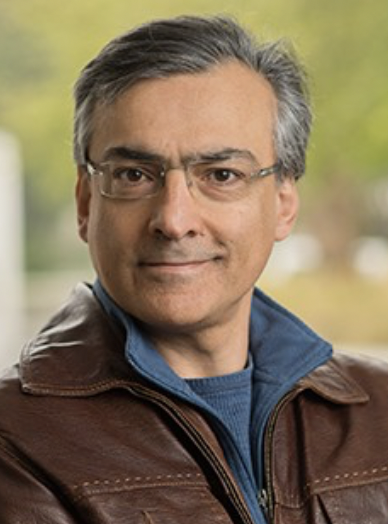 Murat Aydede合作论文数Department of Philosophy, Faculty of Arts, The University of British Columbia7
 Owen Flanagan合作论文数Department of Philosophy, Trinity College of Arts & Sciences, Duke University4
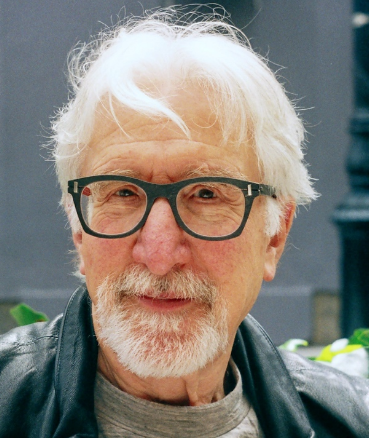 Ned Block合作论文数Department of Philosophy, College of Arts & Science, New York University2
 Gurol Irzik合作论文数Philosophy Department;Bogazici University;Philosophy Department, Bogazici University2
 B Mangan合作论文数1
 David Rosenthal合作论文数City University of New York;Cognitive Science;University of New York1Patrick T. W. Hudson合作论文数1A. G. Kurvink合作论文数1
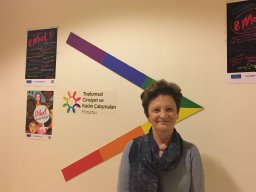 Sibel Irzik合作论文数Philosophy Dept .;Dept, English;Bogazici University1A. H. C. Van Der Heijden合作论文数1Odile Jacob合作论文数1
 Alva Noë合作论文数Department of Philosophy, University of California, Berkeley1
 Tyler Burge合作论文数The University of California Los Angeles1N. Block. O. Flanagan合作论文数1
 Valerie Gray Hardcastle合作论文数Department of Philosophy, Virginia Polytechnic Institute1




