Security-sensitive applications, such as patient health monitoring and credit card transactions, are increasingly utilizing wireless communication systems, RFIDs, wireless sensor networks, and other wireless communication systems. The use of interference-emitting jammers to protect these sensitive communications has been recently explored in the literature, and has shown high potential. In this paper we consider optimization problems relating to the temporal distributions of jammers' activity, and the suitable coding regimes used for communication. Solving the joint problem optimally enables comprehensive security in space, at a low power consumption and low communication overhead. The joint optimization of jamming in space and time is driven by a new framework that uses the bit-error probability as a measure of communication quality. Under this framework, we show how to guarantee information-theoretic security within a geographic region, and with increased flexibility to tailor the coding regime to the problem's geometry. We present efficient algorithms for different settings, and provide simulations for various scenarios using the bit-error probability functions. These simulations demonstrate the efficiency of the scheme. We believe that our scheme can lead to practical, economical and scalable solutions for providing another layer of protection of sensitive data, in cases where encryption schemes are limited or impractical.
Object tracking applications are gaining popularity and will soon utilize energy harvesting low-power wireless nodes where power is mostly consumed for neighbor discovery. Such applications require the design and experimentation with low-power neighbor discovery protocols. We demonstrate the Panda protocol [4, 5] implementation using commercial off-the-shelf energy harvesting devices, based on the TI eZ430-RF2500-SEH prototype. The prototypes harvest indoor light energy to perform power-aware neighbor discovery, while maintaining a power budget. A custom-designed online monitoring system interactively demonstrates the network dynamics, including the energy storage levels of the devices, the neighbor discovery events, and aggregate discovery statistics.
Object tracking applications are gaining popularity and will soon utilize Energy Harvesting (EH) low-power nodes that will consume power mostly for Neighbor Discovery (ND) (i.e., identifying nodes within communication range). Although ND protocols were developed for sensor networks, the challenges posed by emerging EH low-power transceivers were not addressed. Therefore, we design an ND protocol tailored for the characteristics of a representative EH prototype: the TI eZ430-RF2500-SEH. We present a generalized model of ND accounting for unique prototype characteristics (i.e., energy costs for transmission/reception, and transceiver state switching times/costs). Then, we present the Power Aware Neighbor Discovery Asynchronously (Panda) protocol in which nodes transition between the sleep, receive, and transmit states. We analyze Panda and select its parameters to maximize the ND rate subject to a homogeneous power budget. We also present Panda-D, designed for non-homogeneous EH nodes. We perform extensive testbed evaluations using the prototypes and study various design tradeoffs. We demonstrate a small difference (less then 2%) between experimental and analytical results, thereby confirming the modeling assumptions. Moreover, we show that Panda improves the ND rate by up to 3x compared to related protocols. Finally, we show that Panda-D operates well under non-homogeneous power harvesting.
In distributed storage networks, ensuring data availability in the presence of hardware faults is an important requirement. Typically, redundancy schemes such as replication and erasure coding are used to ensure this. In case of hardware failures, these networks may be disconnected into multiple components, each of which may require access to the data. In addition, the placement of redundant information must also be optimized as it is ever-changing and requires constant updating. We study the problem of selecting a set of nodes in networks of this kind so that data availability is maintained in the face of geographically correlated failures. We model failure events of arbitrary shapes as the union of disks or line segments in the plane and present approximation algorithms for the problem of selecting a minimum number of redundant information locations (such as replicas or coded file segments) so that data recovery is guaranteed at every node in the face of any failure event. Using tools from computational geometry, our algorithms are efficient and provide good guarantees.
Cascading failure of a power transmission system are initiated by an exogenous event that disable a set of elements (e.g., lines) followed by a sequence of interrelated failures (or more precisely, trips) of overloaded elements caused by the combination of physics of power flows in the changed system topology, and controls. Should this sequence accelerate it can lead to a large system failure with significant loss of load. In previous work we have analyzed deterministic algorithms that in an online fashion (i.e., responding to observed data) selectively shed load so as to minimize the amount of lost load at termination of the cascade. In this work we present a rigorous methodology for incorporating noise and model errors, based on the Sample Average Approximation methodology for stochastic optimization.
Advanced wireless technologies such as multiple-input-multiple-output (MIMO) require each mobile station (MS) to send a lot of feedback to the base station. This periodic feedback consumes much of the uplink bandwidth. This expensive bandwidth is very often viewed as a major obstacle to the deployment of MIMO and other advanced closed-loop wireless technologies. This paper is the first to propose a framework for efficient allocation of periodic feedback channels to the nodes of a wireless network. Several relevant optimization problems are defined and efficient algorithms for solving them are presented. A scheme for deciding when the base station (BS) should invoke each algorithm is also proposed and shown through simulations to perform very well.
Due to the current trend towards smaller cells, an increasing number of users of cellular networks reside at the edge between two cells; these users typically receive poor service as a result of the relatively weak signal and strong interference. Coordinated Multi-Point (CoMP) with Joint Transmission (JT) is a cellular networking technique allowing multiple Base Stations (BSs) to jointly transmit to a single user. This improves the users' reception quality and facilitates better service to cell-edge users. We consider a CoMP-enabled network, comprised of multiple BSs interconnected via a backhaul network. We formulate the OFDMA Joint Scheduling (OJS) problem of determining a subframe schedule and deciding if and how to use JT in order to maximize some utility function. We show that the OJS problem is NP-hard. We develop optimal and approximation algorithms for specific and general topologies, respectively. We consider a time dimension and study a queueing model with packet arrivals in which the service rates for each subframe are obtained by solving the OJS problem. We prove that when the problem is formulated with a specific utility function and solved optimally in each subframe, the resulting scheduling policy is throughput-optimal. Via extensive simulations we show that the bulk of the gains from CoMP with JT can be achieved with low capacity backhaul. Moreover, our algorithms distribute the network resources evenly, increasing the inter-cell users' throughput at only a slight cost to the intra-cell users. This is the first step towards a rigorous, network-level understanding of the impact of cross-layer scheduling algorithms on CoMP networks.
Wireless communication systems, such as RFIDs and wireless sensor networks, are increasingly being used in security-sensitive applications, e.g. credit card transactions or monitoring patient health in hospitals. Wireless jamming by transmitting artificial noise, which is traditionally used as an offensive technique for disrupting communication, has recently been explored as a means of protecting sensitive communication from eavesdroppers. In this paper, we consider location optimization problems related to the placement and power consumption of such friendly jammers in order to protect the privacy of wireless communications constrained within a geographic region. Under our model, we show that the problem of placing a minimum number of fixed-power jammers is NP-Hard, and we provide a PTAS ((1 + ε)-approximation scheme) for the same, where ε is a tunable parameter between 0 and 1.
Numerous energy harvesting wireless devices that will serve as building blocks for the Internet of Things (IoT) are currently under development. However, there is still only limited understanding of the properties of various energy sources and their impact on energy harvesting adaptive algorithms. Hence, we focus on characterizing the kinetic (motion) energy that can be harvested by a wireless node with an IoT form factor and on developing energy allocation algorithms for such nodes. In this paper, we describe methods for estimating harvested energy from acceleration traces. To characterize the energy availability associated with specific human activities (e.g., relaxing, walking, cycling), we analyze a motion dataset with over 40 participants. Based on acceleration measurements that we collected for over 200 hours, we study energy generation processes associated with day-long human routines. We also briefly summarize our experiments with moving objects. We develop energy allocation algorithms that take into account practical IoT node design considerations, and evaluate the algorithms using the collected measurements. Our observations provide insights into the design of motion energy harvesters, IoT nodes, and energy harvesting adaptive algorithms.
LTE Advanced and other 4G cellular standards allow relay nodes (RNs) to be deployed as a substitute for base stations (BSs). Unlike a BS, an RN is not directly connected to the backbone. Rather, each RN is associated with a donor BS, to which it is connected through the OFDMA wireless link. A very important task in the operation of a wireless network is packet scheduling. In a network with RNs, such scheduling decisions must be made in each cell not only for the BS, but also for the RNs. Because the scheduler in a network with RNs must take into account the transmission resources of the BS and the RNs, it needs to find a feasible schedule that does not exceed the resources of a multidimensional resource pool. This makes the scheduling problem computationally harder than in a network without RNs. In this paper, we define and study the packet-level scheduling problem for a network with RNs. This problem is not only NP-hard, but also admits no efficient polynomial-time approximation scheme. To solve it, we propose an efficient algorithm with a performance guarantee and a simple water-filling heuristic. To the best of our knowledge, our algorithm is the first packet-level scheduling algorithm that provides a performance guarantee for a network with RNs. Using simulations, we evaluate our new algorithms and show that they perform very well.
Numerous energy harvesting wireless devices that will serve as building blocks for the Internet of Things (IoT) are currently under development. However, there is still only limited understanding of the properties of various energy sources and their impact on energy harvesting adaptive algorithms. Hence, we focus on characterizing the kinetic (motion) energy that can be harvested by a wireless node with an IoT form factor and on developing energy allocation algorithms for such nodes. In this paper, we describe methods for estimating harvested energy from acceleration traces. To characterize the energy availability associated with specific human activities (e.g., relaxing, walking, cycling), we analyze a motion dataset with over 40 participants. Based on acceleration measurements that we collected for over 200 hours, we study energy generation processes associated with day-long human routines. We also briefly summarize our experiments with moving objects. We develop energy allocation algorithms that take into account practical IoT node design considerations, and evaluate the algorithms using the collected measurements. Our observations provide insights into the design of motion energy harvesters, IoT nodes, and energy harvesting adaptive algorithms.
Introduction In a cascading failure of a power transmission system, an initial event that disables a possibly small subset of the grid conspires with the laws of physics to set off a sequence of additional outages that, in the worst case, accelerates until a large subset of the network is inoperative, resulting in a significant loss of served power. The mechanics of the process can be summarized as follows: each time a component of the system fails, a new set of power flows takes hold in the remaining network, following the laws of physics and automatic control actions. Should the new flows, for example, exceed the rating of a given line, then that line will likely fail in the near future. In an adverse scenario this gives rise to a vicious cycle which constitutes the cascade (see e.g., [4, 7]). To protect against a cascade, [6] discusses the design of a robust power transmission system. Control strategies for stopping an ongoing cascade are discussed in [7, 8, 11]. The work in this abstract builds on the model in [5] by incorporating stochastics; in particular, we model real-time measurement errors. We consider algorithms that shed load (demand) and curtail supply (generation) as a function of observations taken in real time, with the goal of arresting the cascade with a minimum of demand lost. As a novel contribution, we explicitly model “noise” that would naturally arise in the collection of real-time data. That task relies on a system termed SCADA (“Supervisory control and data acquisition”) which is physically different from the power transmission system. Under normal operation some of this data is estimated using one of several possible state estimators (see e.g., [9, 12]); in the event of a dangerous cascade, it is quite likely that the measurements conveyed by this system would become susceptible to errors, delays, or loss due to rapidly changing conditions, transients, and possibly even failure of the measurement equipment. Building on work in [5] we focus on control algorithms that are computed soon after the onset of the cascade, and we assume an initially slow-moving cascade so that at the start of the process there is sufficient time (e.g., minutes) to compute an appropriate control algorithm; once computed, the control will be applied as the cascade unfolds. In devising a load-shedding schedule to respond to a potential cascade, one must decide when, where, and by how much demand is to be shed. Our method can be viewed as a data-driven approach for computing such actions – it is data-driven because it relies on the knowledge of the initial event, and on the real-time measurements performed to apply the control. Moreover our algorithm seeks to handle measurement error – we explicitly assume that measurements can be incorrect, and yet we look for a control that minimizes lost demand subject to (effectively) a norm constraint on the errors. To this effect, in this abstract we rely on a method akin to the Sample Average Approximation Method [10] to generate, a priori, an appropriate sample of measurement error sequences, and to optimize a control over that set of sequences.
In modern broadband cellular networks, the omnidirectional antenna at each cell is replaced by three or six directional antennas, one in every sector. While every sector can run its own scheduling algorithm, bandwidth utilization can be significantly increased if a joint scheduler makes these decisions for all the sectors. This gives rise to a new problem, referred to as "joint scheduling," addressed in this paper for the first time. The problem is proven to be NP-hard, but we propose efficient algorithms with a worst-case performance guarantee for solving it. We then show that the proposed algorithms indeed substantially increase the network throughput.
In an OFDMA network, the modulation and coding scheme (MCS) of the messages sent to the mobile stations (MSs) varies according to channel condition. To determine the appropriate MCS level, the base station (BS) allocates to every active MS a CQI (Channel Quality Information) channel. The CQI bandwidth is a scarce resource whose allocation must be adjusted to the actual needs of the MSs. However, allocations and deallocations of CQI channels require expensive signaling messages between the BS and the MSs, and therefore should be minimized. In this paper we propose a framework for the management of the CQI bandwidth by the BS. We identify three related optimization problems and propose efficient algorithms for solving them.
In this paper we define and address a new problem that arises when a base station in a broadband wireless network wishes to multicast information to a large group of nodes and to guarantee some level of reliability using Application layer FEC codes. Every data block to be multicast is translated into a sequence of K + n packets, from which every receiver must receive at least K in order to correctly decode the block. The new problem is to determine which PHY layer MCS (Modulation and Coding Scheme) the base station should use for each packet. We present several variants of this problem, which differ in the number of ARQ (Automatic Repeat reQuest) rounds during which the delivery of a data block must be completed. Most of these variants are shown to be NP-hard. However, we present optimal solutions for practical instances, where the number of MCSs is small, and efficient approximations and heuristics for the general case of each variant.
 Gil Zussman合作论文数Wireless and Mobile Networking Lab, Columbia University;Department of Electrical Engineering, Fu Foundation School of Engineering and Applied Science, Columbia University7
 Reuven Cohen合作论文数Department of Mathematics, Faculty of Exact Sciences, Bar-Ilan University4
 Alon Efrat合作论文数Department of Computer Science, College of Science, The University of Arizona3
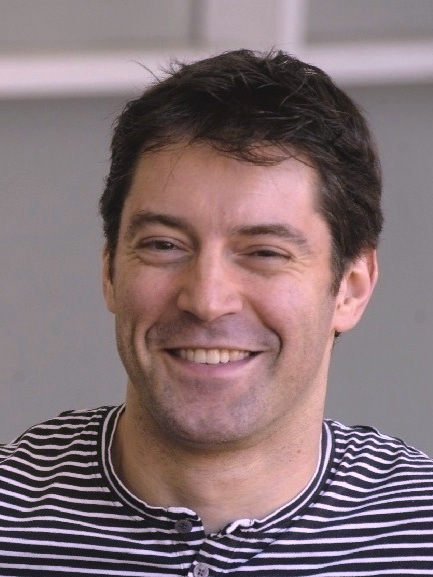 Dan Rubenstein合作论文数Department of Computer Science, Columbia University3
 Swaminathan Sankararaman合作论文数Duke University3
 Robert Margolies合作论文数Columbia University New York3
 john s dunn合作论文数2
 Mina Cong合作论文数2
 Maria Gorlatova合作论文数Department of Electrical & Computer Engineering, Pratt School of Engineering, Duke University2
 Ioannis (John) Kymissis合作论文数Department of Electrical Engineering, The Fu Foundation School of Engineering and Applied Science, Columbia University;Lelantos;Lumiode, Inc.2
 Joseph Mitchell合作论文数Department of Applied Mathematics & Statistics, College of Engineering and Applied Sciences, Stony Brook University2
 Yuval Cassuto合作论文数Dept Elect Engn, Technion Israel Inst Technol2
 Daniel Bienstock合作论文数Department of Industrial Engineering and Operations Research, Columbia University2
 Michael Segal合作论文数Department of Communication Systems Engineering, School of Electrical and Computer Engineering, Ben-Gurion University of the Negev2
 Saahil Jain合作论文数stanford University1
 Liran Katzir合作论文数Google Research1Rom Pinchasi合作论文数Mathematics Department, Technion—Israel Institute of Technology1
 Peter M. Van De Ven合作论文数Thomas J. Watson Research Center, IBM1Yair Allouche合作论文数Ben-Gurion University of the Negev1
 Esther M. Arkin合作论文数Department of Applied Mathematics and Statistics;State University of New York1
 Berk Birand合作论文数Worcester Polytechnic Institute1




