The problem of road or lane perception is a crucial enabler for advanced driver assistance systems. As such, it has been an active field of research for the past two decades with considerable progress made in the past few years. The problem was confronted under various scenarios, with different task definitions, leading to usage of diverse sensing modalities and approaches. In this paper we survey the approaches and the algorithmic techniques devised for the various modalities over the last 5 years. We present a generic break down of the problem into its functional building blocks and elaborate the wide range of proposed methods within this scheme. For each functional block, we describe the possible implementations suggested and analyze their underlying assumptions. While impressive advancements were demonstrated at limited scenarios, inspection into the needs of next generation systems reveals significant gaps. We identify these gaps and suggest research directions that may bridge them.
We discuss the unique requirements of automotive active safety systems which drive the challenging specifications of next-generation automotive short range radar sensors. Sensor level performance, vehicle integration, worldwide regulation, cost, and reliability are highlighted, along with possible paths towards achieving future performance metrics.
The residual non uniformity of IR detectors is of major concern in the implementation of innovative IR systems. Several algorithms were developed during the last decade in order to solve this problem. One of these algorithms, "Scene based non uniformity correction" (SBNUC), is based on the notion that for a moving thermal imager, close by pixels get over time similar distributions of scene radiation. Following this assumption, differences between the time collected histograms of pixels are due to non uniformity and can thus be corrected. However, pixels which are not in the closest proximity of each other need in general more time for their histograms to match. Moreover, depending on the imager motion characteristics, there can be additional temporal and spatial limitations. An efficient SBNUC algorithm must take the exact limitations into consideration. In this work the SBNUC spatial-temporal relations are investigated using the spatial frequency domain representation. This representation provides an effective point of view since distances in the image are naturally translated into different spatial frequencies. We show that a way to implement this correction by a recursive time filter incorporates spatial frequency dependence into the correction speed, allowing the spatial-temporal relation to be engineered easily into the correction process. Using several characteristic imager motion models we analyze the effect of the motion on the spatialtemporal relations and demonstrate how an optimal SBNUC process can be designed, for each motion model.
In system performance analysis, most often Signal to Noise Ratio (SNR) and system resolution (via MTF) are analyzed separately. In this paper we advocate the use of a joint measure, namely, the Noise Equivalent Reflectance Difference (NERD) as a function of the Spatial Resolution (SR). We demonstrate that the NERD vs. SR captures most of the essential properties of the system's performances and is therefore a useful tool in system evaluation. We demonstrate how various tradeoffs affect the NERD vs. SR curve in some not so trivial way.
Aiming at night time spaceborne imaging, we compare the expected performances of a low-light-level visible sensor with a conventional IR sensor. The low-light-level visible sensor, an electron multiplier CCD (EMCCD), is a close to ideal photon counting device, with possibly negligible dark current noise and negligible readout noise. This fact, along with the significant improvement of diffraction (about an order of magnitude), suggests an interesting competition between the two technologies. In essence, this is a tradeoff between noise and optical performances (favoring the visible channel) and basic target radiance (favoring IR). Other factors such as reliability and cost can also play an important role.While we consider two different spectral ranges with different imaging content, we are able to conduct a cautious theoretical comparison based on standard targets in various lighting conditions. We show that for a given set of system parameters, even when lighting conditions are favorable, i.e. a night with a full moon, the low-light-level visible channel performances are inferior to those of an IR channel. We also comment on the significance of the system working point regarding performances under varying condition.
New physics contributions to ${B}_{s}\\mathrm{\\text{\\ensuremath{-}}}{\\overline{B}}_{s}$ mixing can be parametrized by the size (${r}_{s}^{2}$) and the phase ($2{\\ensuremath{\\theta}}_{s}$) of the total mixing amplitude relative to the standard model amplitude. The phase has so far been unconstrained. We first use the D0 measurement of the semileptonic $CP$ asymmetry ${A}_{\\mathrm{SL}}$ to obtain the first constraint on the semileptonic $CP$ asymmetry in ${B}_{s}$ decays, ${A}_{\\mathrm{SL}}^{s}=\\ensuremath{-}0.008\\ifmmode\\pm\\else\\textpm\\fi{}0.011$. Then we combine recent measurements by the CDF and D0 Collaborations---the mass difference ($\\ensuremath{\\Delta}{M}_{s}$), the width difference ($\\ensuremath{\\Delta}{\\ensuremath{\\Gamma}}_{s}$), and ${A}_{\\mathrm{SL}}^{s}$---to constrain $2{\\ensuremath{\\theta}}_{s}$. The errors on $\\ensuremath{\\Delta}{\\ensuremath{\\Gamma}}_{s}$ and ${A}_{\\mathrm{SL}}^{s}$ should still be reduced to have a sensitive probe of the phase, yet the central values are such that the regions around $2{\\ensuremath{\\theta}}_{s}\\ensuremath{\\sim}3\\ensuremath{\\pi}/2$ and, in particular, $2{\\ensuremath{\\theta}}_{s}\\ensuremath{\\sim}\\ensuremath{\\pi}/2$, are disfavored.
The fourth generation can give the correct trend of K0, π0K0<sin 21, as indicated by data, and the effect, being largely leading order, is robust against hadronic uncertainties. The effect on η'K0, however, is diluted away by hadronic effects, and η'K0 sin 21 is expected. The near maximal arg V*t'sVt'b90° that is needed could resolve the unequal direct CP violation seen in B→K+π− and K+π0 modes, and is consistent with b→sl+l− and Bs mixing constraints.
New physics contributions to Bs-Bs mixing can be parametrized by the size (rs2) and the phase (2thetas) of the total mixing amplitude relative to the standard model amplitude. The phase has so far been unconstrained. We first use the D0 measurement of the semileptonic CP asymmetry ASL to obtain the first constraint on the semileptonic CP asymmetry in Bs decays, ASLs=-0.008+/-0.011. Then we combine recent measurements by the CDF and D0 Collaborations--the mass difference (DeltaMs), the width difference (DeltaGammas), and ASL;s--to constrain 2thetas. The errors on DeltaGammas and ASL;s should still be reduced to have a sensitive probe of the phase, yet the central values are such that the regions around 2thetas approximately 3pi/2 and, in particular, 2thetas approximately pi/2, are disfavored.
The fourth generation can give the correct trend of S-Phi K0, S-pi 0K0 < sin 2 phi(1), as indicated by data, and the effect, being largely leading order, is robust against hadronic uncertainties. The effect on S-eta ' K0, however, is diluted away by hadronic effects, and S eta ' K0 similar or equal to sin 2 phi(1) is expected. The near maximal arg (Vt ' sVt ' b)-V-* <= 90 degrees that is needed could resolve the unequal direct CP violation seen in B -> K+pi(-) and K+pi(0) modes, and is consistent with b -> sl(+)l(-) and B-s mixing constraints.
 Andrea Soddu合作论文数4
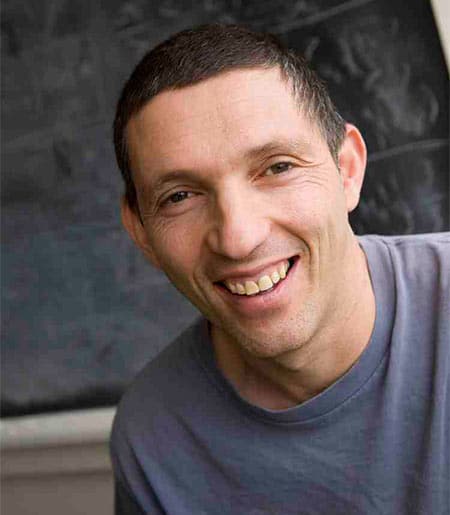 Yuval Grossman合作论文数Departments of Physics, The College of Arts & Sciences, Cornell University4
 Yossi Nir合作论文数Department of Particle Physics & Astrophysics, Weizmann Institute of Science4
 George Wei-Shu Hou (侯維恕)合作论文数Department of Physics, National Taiwan University4
 Makiko Nagashima合作论文数4Guy Engelhard合作论文数3Yosef Nir合作论文数2michael berger合作论文数2
 Ronen Lerner合作论文数Advanced Technical Center Israel, General Motors R&D2Meira Citroen合作论文数2
 Dan Levi合作论文数General Motors Advanced Technical Center2Aharon Bar Hillel合作论文数Intel Research Israel2eli tzirkelhancock合作论文数1jeremy a salinger合作论文数1
 Ran Gazit合作论文数The Lautenberg Center for General and Tumor Immunology, Hadassah Medical School1Murad, M.合作论文数1
 Omer Tsimhoni合作论文数University of Michigan1
 Jonathan L. Rosner合作论文数Physics Department, University of Chicago;Enrico Fermi Institute, University of Chicago1
 Michael Gronau合作论文数Department of Physics, Technion - Israel Institute of Technology1
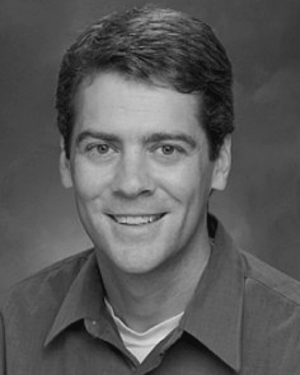 Joseph S Colburn合作论文数1Gerhard Buchalla合作论文数1
 Gudrun Hiller合作论文数Department of Physics, Technische Universitat Dortmund1Yael Shadmi合作论文数1
 Sourov Roy合作论文数Helsinki Institute of Physics;University of Helsinki;Helsinki Institute of Physics, University of Helsinki1
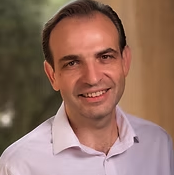 Igal Bilik合作论文数Department of Electrical & Computer Engineering, School of Electrical and Computer Engineering, Ben Gurion University of the Negev1
 Thomas Seder合作论文数1
 Kevin Geary合作论文数Department of Surgery, University of Rochester Rochester1Avshalom Suissa合作论文数1
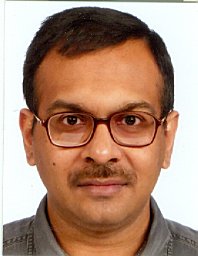 Subhendu Rakshit合作论文数Department of Physics;University of Calcutta;Department of Physics, University of Calcutta1
 Charles A. Green合作论文数1




