Nouvellement inscrit comme étudiant à la Faculté des sciences sociales, j’appris l’existence d’un sociologue canadien-français qui nous avait précédés de plus d’un demi-siècle, Léon Gérin. C’est grâce à Jean-Charles Falardeau que je lus et connus ses recherches. Elles me révélaient la grande variété des familles paysannes du Québec. Elles m’apprenaient du même coup les exigences de la méthodologie scientifique dans la recherche qualitative. La lecture des oeuvres de Léon Gérin fut à l’origine de mon engagement en sociologie.
Les rapports entre la sociologie, les sociologues et les institutions d’enseignement supérieur, tout comme avec d’autres instances de pouvoir, ont été variés et complexes. La sociologie de l’institutionnalisation de la sociologie sert ainsi de fenêtre à la sociologie de la société d’accueil. Au Québec, la sociologie apparaît d’abord en dehors de toute institution, notamment avec l’oeuvre de Léon Gérin. Elle s’est ensuite institutionnalisée, dans un premier temps à l’Université McGill, sous l’égide d’hommes d’affaires. Dans les universités francophones, ce sont d’abord des membres du clergé qui ont ouvert la voie à l’enseignement des sciences sociales et de la sociologie, avant que celle-ci devienne autonome. Elle a par la suite connu une période de prestige, suivie d’une période de crise qui engage à réfléchir aujourd’hui sur les défis que fait surgir l’avenir de la discipline.
L’objectif de ce texte est de montrer en quoi la politique québécoise d’intégration des membres des groupes ethnoculturels minoritaires est problématique dans le cadre du statut politique actuel du Québec. Elle est en partie court-circuitée par l’approche privilégiée par le gouvernement fédéral qui fait la promotion du caractère bilingue et multiculturel du Canada. Sont ainsi créés de nombreux obstacles à l’endroit de la politique québécoise d’intégration et de la valorisation de la langue française, pilier de la culture publique commune. L’approche québécoise entre en contradiction avec la représentation de la « nation » qui est mise de l’avant par le Canada, empêchant la consolidation de la citoyenneté québécoise et d’un sentiment d’appartenance à la société nationale québécoise.
OBJECTIVE:To explore the conceptions that family medicine residents from 3 countries have of the roles and responsibilities of family physicians in order to gain a better understanding of challenges that might transcend the specific contexts of different health care systems.DESIGN:Qualitative study using focus groups.SETTING:Resident training programs in France, Belgium, and Canada.PARTICIPANTS:A total of 57 residents in the last year of training.METHOD:Ten focus groups were conducted in 3 countries: 2 in France, 3 in Belgium, and 5 in Canada. All focus groups were held in different cities, with residents registered in different universities in France and Canada and with residents from the same university in Belgium. The study was informed by Abbott's conceptual framework on the system of professions. Each 90-minute focus group was moderated by the same researchers. The transcripts were analyzed according to the immersion-crystallization method.MAIN FINDINGS:Respondents shared common conceptions of the family physician's role: continuity of care and patient advocacy were seen as the foundations of the discipline. Respondents also shared a sense of discomfort about how accessible they were expected to be for patients and about the scope of family practice. They saw family medicine as flexible and reported that they strove for balance between their professional and personal life goals. All respondents strongly believed that their profession was undervalued by the medical schools where they trained.CONCLUSION:This exploratory study suggests that there are more similarities than differences in the understanding that future family physicians from different countries have of their discipline and of their careers. We observed a tension between a desire to develop a "new general practice" and the more traditional vision of the discipline. The culture in academic settings appears to contribute to the persistent low appeal of being a primary care physician.
Background: Collaboration between physicians in different specialties is often taken for granted. However, poor interactions between family physicians and specialists contribute significantly to the observed discontinuity between primary and specialty care. The objective of this study was to explore how collaboration between family physicians and specialists was conceptualised as a competency and experienced in residency training curricula of four faculties of medicine in Canada.Methods: This is a multiple-case study based on Abbott's theory of professions. Programs targeted were family medicine, general psychiatry, radiology, and internal medicine. The content of the programs' objectives was analyzed. Associate deans of postgraduate studies, program directors, educators, and residents were interviewed individually or in focus groups (47 residents and 45 faculty members).Results: The training objectives related to family physicians-specialists collaboration were phrased in very general terms and lacked specificity. Obstacles to effective collaboration were aggregated under themes of professional responsibility and questioned expertise. Both trainees and trainers reported increasing distances between specialty and general medicine in three key fields of the professional system: the workplace arena, the training setting, and the production of academic knowledge.Conclusion: The challenges of developing collaborating skills between generalists and specialist physicians are comparable in many ways to those encountered in inter-professional collaboration and should be given more consideration than they currently receive if we want to improve coordination between primary and specialty care.
INTRODUCTION:Retention of general practitioners (GPs) is crucial to ensure appropriate primary care. However, some recently qualified GPs feel unprepared for practice, which may lead them to leave the profession or restrict their scope of practice. The development of self-efficacy beliefs during vocational training may be an important factor in this phenomenon.METHODS:Five focus groups with a total of 28 GP trainees and recent graduates were conducted in Belgium and France. Initial analysis using the immersion-crystallisation method was followed by analysis using Bandura's self-efficacy framework.RESULTS:Participants described beginning their training with low self-efficacy beliefs. Most participants described how they overcame stressful situations. Some, however, seemed to be developing avoidance strategies. Successfully resolving patient problems, sharing experiences with peers and receiving positive feedback from supervisors, colleagues and patients were conducive to the development of positive self-efficacy beliefs.DISCUSSION:Although low self-efficacy beliefs are natural at the beginning of training, participants seemed to develop in two ways, either overcoming their fears or avoiding them. Identifying the pattern of trainees' responses to allow tailoring of interventions should be investigated by those who run training programs. Interventions could include reassurance, peer interaction and an appropriate degree of autonomy.
Guy Rocher’s text « L'idéologie du changement comme facteur de mutation sociale », first published in Le Québec en mutation, Montréal, Éditions Hurtubise HML Ltée, 1973, pp. 207-221.
With increasingly fewer family physicians in many countries and students less interested in primary care careers, generalists are becoming an endangered species. This situation is a major health care resource management challenge. In a rapidly changing health care environment, family medicine is struggling for a clear identity -- a matter which is crucial to health system restructuring because it affects the roles and functioning of other professions in the system. The objective of our study was to explore representations of roles and responsibilities of family physicians held by future family and specialist physicians and their clinical teachers in four Canadian medical school faculties of medicine, using both focus groups and individual interviews. In addition to family medicine, we targeted residency programs in general psychiatry, radiology and internal medicine -- three areas that interface significantly between primary care and specialized medicine. In each faculty, respondents included the vice-dean of postgraduate studies; the director of each relevant program; educators in the program; residents in each specialty in their last year of training. Findings are centred around three major themes: (1) the definition of family medicine; (2) family medicine as an endangered species, and (3) the generation gap between young family physicians and their educators. The sustained physician-patient relationship is considered a core characteristic of family medicine that is much valued by patients and physicians -- both generalists and specialists -- as something to be preserved in any model of collaboration to be developed. Overall, two divergent directions emerge: preserving all the professions' traditional functions while adapting to changing contexts, or concentrating on areas of expertise and moving towards creating "specialist" general practitioners, in response to a rapidly expanding scope of practice, and to the high value attributed to specialization by society and the professional system.
 Marie-Dominique Beaulieu合作论文数7Laurier Boucher合作论文数7Marc Rioux合作论文数5
 Valérie Dory合作论文数Undergrad Med Educ, McGill Univ4
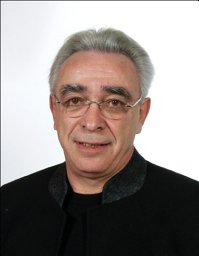 Denis Pouchain合作论文数General Practice Department, UFR Créteil4
 Dominique Pestiaux合作论文数4Louise Samson合作论文数3
 Bernard Gay合作论文数3Francois Rocher合作论文数3Micheline Labelle合作论文数3Andrée Lajoie合作论文数2
 Claudio Del Grande合作论文数2Franciszek Draus合作论文数2henry quillinan合作论文数1pierre w belanger合作论文数1Josiane Lavallée合作论文数1denis vaugeois合作论文数1Denise Angers合作论文数1jacques lacoursiere合作论文数1Laurent Lamontagne合作论文数1Michel Sarra-Bournet合作论文数1edward t pryor合作论文数1julie guyot合作论文数1jeanpaul bernard合作论文数1Marc Chevrier合作论文数1jeanmarie fecteau合作论文数1Michel Seymour合作论文数1eric bedard合作论文数1michael j sheridan合作论文数1
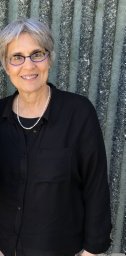 Lucia Ferretti合作论文数Univ Quebec Trois Rivieres1robert comeau合作论文数1Richard Janda合作论文数1louis rousseau合作论文数1p white合作论文数1
 Martin Pâquet合作论文数laval university1Micheline Dumont合作论文数1
 Dana Hamplova合作论文数Institute of Sociology, the Czech Academy of Sciences1
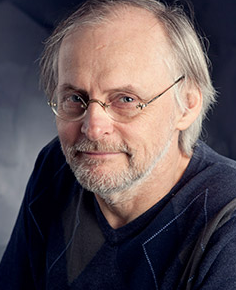 Yves Gingras合作论文数Department of Sociology, Faculty of Social Science, Université du Québec à Montréal;Department of History, Université du Québec à Montréal;Observatoire des Sciences et des Technologies1
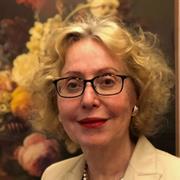 Monica Boyd合作论文数Department of Sociology, Faculty of Arts and Science, University of Toronto1
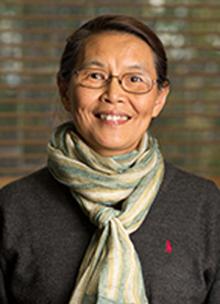 Xin Meng (孟昕)合作论文数Research School of Economics, College of Business and Economics, Australian National University1
 Daniel T. Lichter合作论文数Department of Policy Analysis and Management, College of Human Ecology, Cornell University1
 Miri Song合作论文数School of Social Policy, Sociology, and Social Research, University of Kent.1
 Gustave Goldmann合作论文数1
 Jan-Willem J. Lammers合作论文数Department of Pulmonary Diseases, University Medical Center Utrecht1H Ono合作论文数1
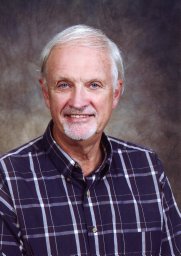 Jacques Rouillard合作论文数ESIM1Robert G Gregory合作论文数australian national university1Jessie M. Tzeng合作论文数1
 Jacques Beauchemin合作论文数1




