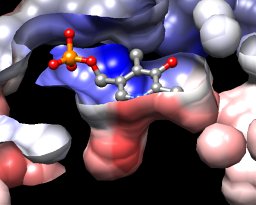
DNA methylation regulates gene expression in normal and malignant cells. The possibility to reactivate epigenetically silenced genes has generated considerable interest in the development of DNA methyltransferase inhibitors. Here, we provide a detailed characterization of RG108, a novel small molecule that effectively blocked DNA methyltransferases in vitro and did not cause covalent enzyme trapping in human cell lines. Incubation of cells with low micromolar concentrations of the compound resulted in significant demethylation of genomic DNA without any detectable toxicity. Intriguingly, RG108 caused demethylation and reactivation of tumor suppressor genes, but it did not affect the methylation of centromeric satellite sequences. These results establish RG108 as a DNA methyltransferase inhibitor with fundamentally novel characteristics that will be particularly useful for the experimental modulation of epigenetic gene regulation.
Tumor targeting of glycoconjugated antineoplastic agents is a strategy currently under investigation for cancer chemotherapy. We have synthesized the glucosides and galactosides of the clinically established drug hydroxyurea and of mesylglycol, the reactive moiety of the anticancer drug busulfan. Glycosides of hydroxyurea were obtained by carbamoylation of hydroxylamine glycosides. The glycosides of mesylglycol were synthesized by mesylation of protected glycol glycosides. All compounds were characterized by detailed 1H and 13C NMR analysis.
We investigated the separation and detection of the 5'-monophosphates of 2'-deoxynucleosides selectively conjugated with 4,4-difluoro-5,7-dimethyl-4-bora-3a,4a-diaza-s-indacene-3-propionyl ethylene diamine hydrochloride (BODIPY FL EDA) at the 5'-phosphate group using capillary electrophoresis with laser-induced fluorescence detection (CE-LIF). BODIPY conjugates of the four common deoxynucleoside-5'-monophosphates (2'-deoxyguanosine-5'-monophosphate, 2'-deoxyadenosine-5'-monophosphate, 2'-deoxycytidine-5'-monophosphate, and thymidine-5'-monophosphate) were prepared and subjected to CE-LIF to serve as standard compounds for peak assignment and to develop separation conditions for the analysis of DNA. BODIPY conjugates were detected and resolved by CE-LIF after digestion of DNA or an oligonucleotide to 5'-monophosphates by nuclease P1 (NP 1) and fluorescence labeling without further purification step. Comparative analyses of calf-thymus DNA digested either with micrococcal nuclease/spleen phosphodiesterase to 3'-monophosphates or with NP 1 to 5'-monophosphates showed that both versions of the fluorescence postlabeling assay were equally efficient and sensitive. Moreover, using the same assay, 2'-deoxyuridine and 2'-deoxy-5methylcytidine were identified in bisulfite treated DNA after NP 1 digestion indicating that fluorescence postlabeling of 2'-deoxyribonucleoside-5'-monophosphates with BODIPY FL EDA and detection by CE-LIF has the potential to determine DNA damage and genomic DNA methylation.
The synthesis of a new ortho-carborane derivative, tetracarboranylketone 4, is reported here. Ketone 4 was prepared from a tetraalkynylated ketone by the addition of decaborane. The keto group was then easily modified to yield the glycosides 17alpha and 18beta, which contain glucose or galactose, respectively, and the nucleotide 13b. In addition to ketone 4, which is acyclic, cyclic ketone 8 was also synthesised. X-ray diffraction analysis of compound 4 indicated the presence of two toluene guest molecules per molecule of the host compound. Furthermore, compound 4 displays a rather low cytotoxicity. These novel products can be used as building blocks to create a new class of biomolecules containing high-density carborane clusters. Such molecules may constitute powerful tools for applications like Boron Neutron Capture Therapy or Energy-Filtering Transmission Electron Microscopy.
An analytical method to determine the genome‐wide DNA methylation in only 100 ng DNA is presented. The analysis is based on DNA isolation and hydrolysis followed by derivatization of the 2'‐desoxyribonucleoside‐3'‐monophosphates with a fluorescence dye (4,4‐difluoro‐5,7‐dimethyl‐4‐bora‐3a,4a‐diaza‐ s ‐indacene‐3‐propionyl ethylene diamine hydrochloride, Bodipy FL EDA). The separation of the derivatives was carried out by micellar electrokinetic chromatography, and laser‐induced fluorescence was used for detection. To calculate the methylation level, the derivatization factor and the quantum yields of the Bodipy conjugates of 2'‐desoxycytidine‐3'‐monophosphate (dCMP) and 2'‐desoxy‐5‐methylcytidine‐3'‐monophosphate (5m‐dCMP) were determined by measurement of methylated Lambda DNA. The assignment was made by cochromatography with the synthesized and characterized standard compound 5m‐dCMP. After optimization of the method it was possible to determine the methylation level in 100‐ng DNA samples with a standard deviation of less than 5%.
Increased excretion of ethylated DNA bases has been reported in the urine of cigarette smokers. To study DNA ethylation in the target organs of smokers, an immunoenriched (32)P-postlabeling assay for O(4)-ethylthymidine (O(4)-etT) was developed. O(4)-etT-3'-monophosphate (O(4)-etT-3'P) was synthesized, purified, and characterized by LC-MS, ESI-MS, and NMR. DNA was enzymatically digested to 2'-deoxynucleoside-3'-monophosphate followed by immunoprecipitation of O(4)-etT-3'P using specific monoclonal antibodies. The immunoconjugate was washed by filtration, and O(4)-etT-3'P was recovered by ethanol treatment. The enriched O(4)-etT-3'P was labeled with [gamma-(32)P]ATP in the presence of T4-polynucleotide kinase at pH 6.8 to yield its 5'-labeled monophosphate and was subsequently resolved on RP-HPLC and detected with online detection of radioactivity. Adduct recovery was >80%, and the detection limit was approximately 500 amol. To further validate the method, O(4)-etT levels were determined in calf thymus DNA treated with N-ethyl-N-nitrosourea, and a dose-dependent formation of O(4)-etT was observed. Furthermore, O(4)-etT was found to be present in the cells obtained from the lower respiratory tract by sputum induction of two out of four smokers but not in three nonsmokers. O(4)-etT is a poorly repaired promutagenic DNA lesion; thus, it could be of potential use for biomonitoring smoking-related DNA damage. Our improved assay was found to be sufficiently sensitive and specific to detect O(4)-etT in surrogate cells from cigarette smoke exposed humans.
A series of potential inhibitors of the human DNA repair protein O(6)-methylguanine-DNA methyltransferase (MGMT) were synthesized, characterized in detail by NMR, and tested for their ability to deplete MGMT activity in vitro. The new compounds, omega-[O(6)-R-guan-9-yl]-(CH(2))(n)-beta-d-glucosides with R = benzyl or 4-bromothenyl and omega = n = 2, 4,. 12, were compared with the established inhibitors O(6)-benzylguanine (O(6)-BG), 8-aza-O(6)-benzylguanine (8-aza-BG), and O(6)-(4-bromothenyl)guanine (4-BTG), which exhibit in an in vitro assay IC(50) values of 0.62, 0.038, and 0.009 microM, respectively. Potential advantages of the glucosides are improved water solubility and selective uptake in tumor cells. The 4-BTG glucosides with n = 2, 4, 6 show moderate inhibition with an IC(50) of ca. 0.5 microM, while glucosides derived from BG and 8-aza-BG showed significantly poorer inhibition compared to the parent compounds. The 4-BTG glucosides with n = 8, 10, 12 were effective inhibitors with IC(50) values of ca. 0.03 microM. To understand this behavior, extensive molecular modeling studies were performed using the published crystal structure of MGMT (PDB entry: ). The inhibitor molecules were docked into the BG binding pocket, and molecular dynamics simulations with explicit water molecules were carried out. Stabilization energies for the interactions of specific regions of the inhibitor and individual amino acid residues were calculated. The alkyl spacer is located in a cleft along helix 6 of MGMT. With increasing spacer length there is increasing interaction with several amino acid residues which play an important role in the proposed nucleotide flipping mechanism required for DNA repair.
DNA adducts are regarded as individual internal dosimeters for the exposure to chemical carcinogens. To date, the most sensitive method for DNA adduct analysis is the radioactive 32P-postlabeling method, which allows the detection of one adduct in 1010 unmodified nucleotides in μg amounts of DNA. However, this technique suffers from disadvantages such as working with radioactive phosphorus and time-consuming chromatographic separation procedures. In addition, the simultaneous detection of adducts from different classes of carcinogens in a DNA sample is difficult. In order to overcome these drawbacks, we are developing a new detection method, comprising fluorescence labeling of DNA adducts, capillary electrophoretic (CE) separation, and on-line detection by monitoring laser-induced fluorescence (LIF). So far, we have evaluated the separation power and the detection limit of CE with fluorescently labeled standard compounds such as unmodified nucleotides or alkylated thymidines. For this purpose, we developed a universal method for labeling 5′-OH-mononucleosid-3′-dicyanoethyl-phosphates with fluorescent dyes based on the phosphoramidite technology for DNA synthesis. The separation of N3-methylated, N3-, O2- and O4-butylated thymidines from the unmodified nucleotide within a few minutes recommends CE-LIF as a powerful method for DNA adduct analysis.
Several agents with anticarcinogenic potential such as diethyldithiocarbamate (DDTC), lactose-DDTC, proline-dithiocarbamate (PDTC), its dimer proline-thiuramdisulfide (PTDS) and 4-carboxy-piperazine-TDS (4-pip-TDS) were investigated for their influence on the metabolism and the detoxication of aflatoxin B1 (AFB1) in vitro and in vivo. Aflatoxins are a group of mycotoxins produced by aspergillus species and are among the most important risk factors for hepatocellular carcinoma in certain areas of the world. AFB1 metabolism measured by the formation of tris-diol adducts showed that the thiuramdisulfides 4-carboxy-piperazine-TDS and PTDS were better inhibitors in vitro than the corresponding dithiocarbamates. Ex vivo studies in rats showed that dithiocarbamates (DTCs) including sugar linked lactose-DDTC decreased the formation of tris-diol adducts. Among the dithiocarbamates administered, DDTC showed a 40% inhibition whereas the other compounds showed only marginal effects. In vivo experiments on the formation of glutathione-adducts derived from AFB1-endo- and exo-epoxides showed that lactose-DDTC enhanced the formation of AFB1-GSH adducts, whereas PDTC, 4-pip-TDS, PTDS and DDTC displayed inhibitory effects. We conclude that DTCs may be promising agents in the chemoprevention of liver carcinogenesis caused by AFB1.
Several agents with anticarcinogenic potential such as diethyldithiocarbamate (DDTC), lactose-DDTC, proline-dithiocarbamate (PDTC), its dimer proline-thiurandisulfide (PTDS) and 4-carboxy-piperazine-TDS (4-pip-TDS) were investigated for their influence on the metabolism and the detoxication of aflatoxin B-1 (AFB(1)) in vitro and in vivo. Aflatoxins are a group of mycotoxins produced by aspergillus species and are among the most important risk factors for hepatocellular carcinoma in certain areas of the world. AFB(1) metabolism measured by the formation of tris-diol adducts showed that the thiuramdisulfides 4-carboxy-piperazine-TDS and PTDS were better inhibitors in vitro than the corresponding dithiocarbamates. Ex vivo studies in rats showed that dithiocarbamates (DTCs) including sugar linked lactose-DDTC decreased the formation of tris-diol adducts. Among the dithiocarbamates administered DDTC showed a 40 % inhibition whereas the other compounds showed only marginal effects. In vivo experiments on the formation of glutathione-adducts derived from AFB(1)-endo- and exo-epoxides showed that lactose-DDTC enhanced the formation of AFB(1)-GSH adducts, whereas PDTC, 4-pip-TDS, PTDS and DDTC displayed inhibitory effects. We conclude that DTCs may be promising agents in the chemoprevention of liver carcinogenesis caused by AFB(1).
 Manfred Wiessler合作论文数11Eva Frei合作论文数2U. V. Gopalaswamy合作论文数2
 Oliver J. Schmitz合作论文数University of Duisburg-Essen2Barbara Bertram合作论文数2N FRANK合作论文数2christof granzow合作论文数1Michael G. Cornelius合作论文数1Jost Reinhard合作论文数1Peter Lorenz合作论文数1R. Garcia Boy合作论文数1
 Guy Bouvier合作论文数1B Kaina合作论文数1Jörg D Hoheisel合作论文数1Fleischhacker Heinz合作论文数1
 R.W.L. Godschalk合作论文数Department of Pharmacology & Toxicology, School of Nutrition and Translational Research, Maastricht University;Metabolism Faculty of Health, Medicine and Life Sciences, Maastricht University1Dauber Marc合作论文数1Jacob Anette合作论文数1Jagadeesan Nair合作论文数1Claus-Wilhelm Von Der Lieth合作论文数1
 Helmut Bartsch合作论文数Division of Toxicology and Cancer Risk Factors, German Cancer Research Center, Heidelberg University1D Stach合作论文数1Heinz H. Schmeiser合作论文数1Uta Eichhorn合作论文数1Michael F. Trendelenburg合作论文数1
 Michaela Wirtz合作论文数Cognis GmbH, Düsseldorf, Germany1Birgit Schmauser合作论文数1Helmut Tröster合作论文数1Bernd L. Sorg合作论文数1
 Frank Lyko合作论文数Division of Epigenetics, German Cancer Research Center;Department of Epigenetics, University of Heidelberg;Faculty of Medicine, University of Heidelberg1Tanja Musch合作论文数1Bodo Brueckner合作论文数1
 Pawel Siedlecki合作论文数Institute of Biochemistry and Biophysics, Polish Academy of Sciences;Institute of Experimental Plant Biology, University of Warsaw;Institute of Biochemistry and Biophysics, University of Warsaw1Piotr Zielenkiewicz合作论文数1Marco Marcello合作论文数1Stefan Raddatz合作论文数1Christian C. T. Wörth合作论文数1




