BACKGROUND:Inference of haplotypes, or the sequence of alleles along the same chromosomes, is a fundamental problem in genetics and is a key component for many analyses including admixture mapping, identifying regions of identity by descent and imputation. Haplotype phasing based on sequencing reads has attracted lots of attentions. Diploid haplotype phasing where the two haplotypes are complimentary have been studied extensively. In this work, we focused on Polyploid haplotype phasing where we aim to phase more than two haplotypes at the same time from sequencing data. The problem is much more complicated as the search space becomes much larger and the haplotypes do not need to be complimentary any more.RESULTS:We proposed two algorithms, (1) Poly-Harsh, a Gibbs Sampling based algorithm which alternatively samples haplotypes and the read assignments to minimize the mismatches between the reads and the phased haplotypes, (2) An efficient algorithm to concatenate haplotype blocks into contiguous haplotypes.CONCLUSIONS:Our experiments showed that our method is able to improve the quality of the phased haplotypes over the state-of-the-art methods. To our knowledge, our algorithm for haplotype blocks concatenation is the first algorithm that leverages the shared information across multiple individuals to construct contiguous haplotypes. Our experiments showed that it is both efficient and effective.
During the past decades, many spectral clustering algorithms have been proposed. However, their high computational complexities hinder their applications on large-scale data. Moreover, most of them use a two-step approach to obtain the optimal solution, which may deviate from the solution by directly solving the original problem. In this paper, we propose a new optimization algorithm, namely Direct Normalized Cut (DNC), to directly optimize the normalized cut model. DNC has a quadratic time complexity, which is a significant reduction comparing with the cubic time complexity of the traditional spectral clustering. To cope with large-scale data, a Fast Normalized Cut (FNC) method with linear time and space complexities is proposed by extending DNC with an anchor-based strategy. In the new method, we first seek a set of anchors and then construct a representative similarity matrix by computing distances between the anchors and the whole data set. To find high quality anchors that best represent the whole data set, we propose a Balanced k-means (BKM) to partition a data set into balanced clusters and use the cluster centers as anchors. Then DNC is used to obtain the final clustering result from the representative similarity matrix. A series of experiments were conducted on both synthetic data and real-world data sets, and the experimental results show the superior performance of BKM, DNC and FNC.
Reconstruction of family trees, or pedigree reconstruction, for a group of individuals is a fundamental problem in genetics. The problem is known to be NP-hard even for datasets known to only contain siblings. Some recent methods have been developed to accurately and efficiently reconstruct pedigrees. These methods, however, still consider relatively simple pedigrees, for example, they are not able to handle half-sibling situations where a pair of individuals only share one parent. In this work, we propose an efficient method, IPED2, based on our previous work, which specifically targets reconstruction of complicated pedigrees that include half-siblings. We note that the presence of half-siblings makes the reconstruction problem significantly more challenging which is why previous methods exclude the possibility of half-siblings. We proposed a novel model as well as an efficient graph algorithm and experiments show that our algorithm achieves relatively accurate reconstruction. To our knowledge, this is the first method that is able to handle pedigree reconstruction from genotype data when half-sibling exists in any generation of the pedigree.
Quantitative genetic trait prediction based on high-density genotyping arrays plays an important role for plant and animal breeding, as well as genetic epidemiology such as complex diseases. The prediction can be very helpful to develop breeding strategies and is crucial to translate the findings in genetics to precision medicine. Epistasis, the phenomena where the SNPs interact with each other, has been studied extensively in Genome Wide Association Studies (GWAS) but received relatively less attention for quantitative genetic trait prediction. As the number of possible interactions is generally extremely large, even pairwise interactions is very challenging. To our knowledge, there is no solid solution yet to utilize epistasis to improve genetic trait prediction. In this work, we studied the multi-locus epistasis problem where the interactions with more than two SNPs are considered. We developed an effcient algorithm MUSE to improve the genetic trait prediction with the help of multi-locus epistasis. MUSE is sampling-based and we proposed a few different sampling strategies. Our experiments on real data showed that MUSE is not only effcient but also effective to improve the genetic trait prediction. MUSE also achieved very significant improvements on a real plant data set as well as a real human data set.
Whole genome prediction of complex phenotypic traits using high-density genotyping arrays has attracted a lot of attention, as it is relevant to the fields of plant and animal breeding and genetic epidemiology. Since the number of genotypes is generally much bigger than the number of samples, predictive models suffer from the curse of dimensionality. The curse of dimensionality problem not only affects the computational efficiency of a particular genomic selection method, but can also lead to a poor performance, mainly due to possible overfitting, or un-informative features. In this work, we propose a novel transductive feature selection method, called MINT, which is based on the MRMR (Max-Relevance and Min-Redundancy) criterion. We apply MINT on genetic trait prediction problems and show that, in general, MINT is a better feature selection method than the state-of-the-art inductive method MRMR.
Although genome-wide association studies (GWASs) have discovered numerous novel genetic variants associated with many complex traits and diseases, those genetic variants typically explain only a small fraction of phenotypic variance. Factors that account for phenotypic variance include environmental factors and gene-by-environment interactions (GEIs). Recently, several studies have conducted genome-wide gene-by-environment association analyses and demonstrated important roles of GEIs in complex traits. One of the main challenges in these association studies is to control effects of population structure that may cause spurious associations. Many studies have analyzed how population structure influences statistics of genetic variants and developed several statistical approaches to correct for population structure. However, the impact of population structure on GEI statistics in GWASs has not been extensively studied and nor have there been methods designed to correct for population structure on GEI statistics. In this paper, we show both analytically and empirically that population structure may cause spurious GEIs and use both simulation and two GWAS datasets to support our finding. We propose a statistical approach based on mixed models to account for population structure on GEI statistics. We find that our approach effectively controls population structure on statistics for GEIs as well as for genetic variants.
Given a set of biallelic molecular markers, such as SNPs, with genotype values encoded numerically on a collection of plant, animal or human samples, the goal of genetic trait prediction is to predict the quantitative trait values by simultaneously modeling all marker effects. Genetic trait prediction is usually represented as linear regression models. In many cases, for the same set of samples and markers, multiple traits are observed. Some of these traits might be correlated with each other. Therefore, modeling all the multiple traits together may improve the prediction accuracy. In this work, we view the multitrait prediction problem from a machine learning angle: as either a multitask learning problem or a multiple output regression problem, depending on whether different traits share the same genotype matrix or not. We then adapted multitask learning algorithms and multiple output regression algorithms to solve the multitrait prediction problem. We proposed a few strategies to improve the least square error of the prediction from these algorithms. Our experiments show that modeling multiple traits together could improve the prediction accuracy for correlated traits. Availability and implementation: The programs we used are either public or directly from the referred authors, such as MALSAR ( http://www.public.asu.edu/~jye02/Software/MALSAR/ ) package. The Avocado data set has not been published yet and is available upon request. Contact: dhe@us.ibm.com
Given a set of biallelic molecular markers, such as SNPs, with genotype values encoded numerically on a collection of plant, animal or human samples, the goal of genetic trait prediction is to predict the quantitative trait values by simultaneously modeling all marker effects. Genetic trait prediction is usually represented as linear regression models which require quantitative encodings for the genotypes. There are lots of work on the prediction algorithms, but none of the existing work investigated the effects of the encodings on the genetic trait prediction problem. In this work, we view the genetic trait prediction problem from a novel angle: a multiple regression on categorical data problem, which requires encoding the categorical data into numerical data. We evaluate various encoding mechanisms and investigate by theory how different encodings affect the performance of the genetic trait prediction algorithms. To our knowledge, this is the first analysis on different encoding mechanisms for genetic trait prediction problem. We further proposed two novel encoding methods and we show that they are able to generate numerical features with higher predictive power. Our experiments show that our methods are superior to the other encoding methods for both single marker model and epistasis model.
Accurate prediction of complex traits based on whole-genome data is a computational problem of paramount importance, particularly to plant and animal breeders. However, the number of genetic markers is typically orders of magnitude larger than the number of samples (p >> n), amongst other challenges. We assessed the effectiveness of a diverse set of state-of-the-art methods on publicly accessible real data. The most surprising finding was that approaches with feature selection performed better than others on average, in contrast to the expectation in the community that variable selection is mostly ineffective, i.e. that it does not improve accuracy of prediction, in spite of p >> n. We observed superior performance despite a somewhat simplistic approach to variable selection, possibly suggesting an inherent robustness. This bodes well in general since the variable selection methods usually improve interpretability without loss of prediction power. Apart from identifying a set of benchmark data sets (including one simulated data), we also discuss the performance analysis for each data set in terms of the input characteristics.
Motivation: Given a set of biallelic molecular markers, such as SNPs, with genotype values on a collection of plant, animal or human samples, the goal of quantitative genetic trait prediction is to predict the quantitative trait values by simultaneously modeling all marker effects. Quantitative genetic trait prediction is usually represented as linear regression models which require quantitative encodings for the genotypes: the three distinct genotype values, corresponding to one heterozygous and two homozygous alleles, are usually coded as integers, and manipulated algebraically in the model. Further, epistasis between multiple markers is modeled as multiplication between the markers: it is unclear that the regression model continues to be effective under this. In this work we investigate the effects of encodings to the quantitative genetic trait prediction problem.Results: We first showed that different encodings lead to different prediction accuracies, in many test cases. We then proposed a data-driven encoding strategy, where we encode the genotypes according to their distribution in the phenotypes and we allow each marker to have different encodings. We show in our experiments that this encoding strategy is able to improve the performance of the genetic trait prediction method and it is more helpful for the oligogenic traits, whose values rely on a relatively small set of markers. To the best of our knowledge, this is the first paper that discusses the effects of encodings to the genetic trait prediction problem.
Whole genome prediction of complex phenotypic traits using high-density genotyping arrays has attracted a great deal of attention, as it is very relevant to plant and animal breeding. More effective breeding strategies can be developed based on a more accurate prediction. Most of the existing work considers an additive model on single markers, or genotypes only. In this work, we studied the problem of epistasis detection for genetic trait prediction, where different alleles, or genes, can interact with each other. We have developed a novel method MINED to detect significant pairwise epistasis effects that contribute most to prediction performance. A dynamic thresholding and a sampling strategy allow very efficient detection, and it is generally 20 to 30 times faster than an exhaustive search. In our experiments on real plant data sets, MINED is able to capture the pairwise epistasis effects that improve the prediction. We show it achieves better prediction accuracy than the state-of-the-art methods. To our knowledge, MINED is the first algorithm to detect epistasis in the genetic trait prediction problem. We further proposed a constrained version of MINED that converts the epistasis detection problem into a Weighted Maximum Independent Set problem. We show that Constrained-MINED is able to improve the prediction accuracy even more.
Given the genotype values of a set of biallelic molecular markers, such as Single Nucleotide Polymorphisms (SNPs), on a collection of plant, animal or human samples, quantitative genetic traits, such as weight, height, fruit size etc. of these samples can be predicted effectively. Quantitative genetic traits prediction has received great attention given that it helps breeding companies to develop more effective breeding strategies. Although lots of work have been proposed for the prediction task, relatively less attention has been paid on the effects of encodings of the genotypes values. Quantitative genetic trait prediction is usually presented as a linear regression model. In the regression model, genotypes need to be encoded numerically according to their types: one heterozygous type and two homozygous types. A traditional encoding encodes the two homozygous types as 0 and 2 respectively and the heterozygous type as 1. In this work, we evaluated five existing genetic encoding models as well as two recently proposed encoding methods which consider the genetic trait prediction problem as a multiple regression on categorical data problem. We also discussed the scenario of epistasis, where multiple markers could interact with each other. We evaluated the performance of five statistically-intuitive encoding strategies and eight biologically-oriented encoding strategies as well as the extensions of the previously mentioned two encoding methods. We showed that overall the two recent encoding methods achieve better prediction accuracy for both single marker scenario and epistasis scenario.
In 2006 Chen et al. introduced an interesting text pattern matching problem with unique features. A pattern is described by a sequence of letters (literals) separated by a number of wildcards. For each pair of consecutive literals in the pattern description, a local length constraint specifies the minimum and maximum number of wildcards. Also, the pattern must occur in the text within a window for which the minimum and maximum lengths are specified by the global length constraint. Text letters are exclusively assigned to occurrences (the one-off condition). The objective is to find the maximum number of occurrences of the pattern in the text with all the constraints. For the problem (in this paper we call it Problem 1), there is a polynomial time online algorithm which does not guarantee an optimal solution. There are also polynomial time heuristic algorithms for the problem, and for some of its restricted cases. It is not known if Problem 1 is NP-hard. In this work, for two special cases of Problem 1, we give reductions to the maximum flow problem which can be solved in polynomial time.
Reconstruction of family trees, or pedigree reconstruction, for a group of individuals is a fundamental problem in genetics. Some recent methods have been developed to reconstruct pedigrees using genotype data only. These methods are accurate and efficient for simple pedigrees which contain only siblings, where two individuals share the same pair of parents. A most recent method IPED2 is able to handle complicated pedigrees with half-sibling relationships, where two individuals share only one parent. However, the method is shown to miss many true positive half-sibling relationships as it removes all suspicious half-sibling relationships during the parent construction process. In this work, we propose a novel method IPED2X, which deploys a more robust algorithm for parent construction in the pedigrees by considering more possible operations rather than simple deletion. We convert the parent construction problem into a graph labeling problem and propose a more effective labeling algorithm. We show in our experiments that IPED2X is more powerful on capturing the true half-sibling relationships, which further leads to better reconstruction accuracy.
In this study, we model how biomedical topics influence one another, given they are organized in a topic hierarchy, medical subject headings, in which the edges capture a parent-child/subsumption relationship among topics. This information enables studying influence of topics from a semantic perspective, which might be very important in analyzing topic evolution and is missing from the current literature. We first define a burst-based action for topics, which models upward momentum in popularity (or “elevated occurrences” of the topics), and use it to define two types of influence: accumulation influence and propagation influence. We then propose a model of influence between topics, and develop an efficient algorithm (TIPS) to identify influential topics. Experiments show that our model is successful at identifying influential topics and the algorithm is very efficient.
Previous chapter Next chapter Full AccessProceedings Proceedings of the 2014 SIAM International Conference on Data Mining (SDM)Transductive HSIC LassoDan He, Irina Rish, and Laxmi ParidaDan He, Irina Rish, and Laxmi Paridapp.154 - 162Chapter DOI:https://doi.org/10.1137/1.9781611973440.18PDFBibTexSections ToolsAdd to favoritesExport CitationTrack CitationsEmail SectionsAboutAbstract Sparse regression methods such as l1-regularized linear regression, or Lasso [18], are commonly used for analysis of high-dimensional, small-sample datasets, due to their good generalization and feature-selection properties. However, predictive accuracy of sparse regression can be further improved by incorporating more realistic data-modeling assumptions (e.g., non-linearity) and by fully exploiting all available data, as suggested by the transductive approach [6], which makes instance-specific predictions based on both labeled (training) data and unlabeled (test) data, instead of learning a single fixed model from training data. Based on these ideas, we develop a novel method, called Transductive HSIC Lasso, that incorporates transduction into a nonlinear sparse regression approach known as HSIC Lasso [19]. Unlike the existing transductive Lasso algorithm of [1], our approach does not rely on imputation, i.e., on estimation of unknown labels using a predictor built on training data; the latter may sometimes result in poor overall performance due to unreliable label estimates. Instead, our method exploits the structure of the HSIC Lasso, which maximizes the relevance between the selected features and the label, while minimizing the redundancy between the selected features; transduction is achieved by including unlabeled samples into the redundancy computation. Our experiments demonstrate advantages of the proposed method over the state-of-the-art approaches, both on simulated and real-life data, such as prediction of phenotypic traits from genomic data, and prediction of subject's pain level from his/her functional MRI data. Previous chapter Next chapter RelatedDetails Published:2014eISBN:978-1-61197-344-0 https://doi.org/10.1137/1.9781611973440Book Series Name:ProceedingsBook Code:PRDT14Book Pages:1-1086Key words:Transduction, Lasso, HSIC, Nonlinear, Feature Selection
The development of high-throughput genomic technologies has impacted many areas of genetic research. While many applications of these technologies focus on the discovery of genes involved in disease from population samples, applications of genomic technologies to an individual’s genome or personal genomics have recently gained much interest. One such application is the identification of relatives from genetic data. In this application, genetic information from a set of individuals is collected in a database, and each pair of individuals is compared in order to identify genetic relatives. An inherent issue that arises in the identification of relatives is privacy. In this article, we propose a method for identifying genetic relatives without compromising privacy by taking advantage of novel cryptographic techniques customized for secure and private comparison of genetic information. We demonstrate the utility of these techniques by allowing a pair of individuals to discover whether or not they are related without compromising their genetic information or revealing it to a third party. The idea is that individuals only share enough special-purpose cryptographically protected information with each other to identify whether or not they are relatives, but not enough to expose any information about their genomes. We show in HapMap and 1000 Genomes data that our method can recover first- and second-order genetic relationships and, through simulations, show that our method can identify relationships as distant as third cousins while preserving privacy.
 Laxmi Parida合作论文数T. J. Watson Research Center, IBM Research19
 Eleazar Eskin合作论文数Department of Computational Medicine, University of California, Los Angeles;Department of Computer Science, University of California, Los Angeles;Department of Human Genetics, University of California, Los Angeles17
 Xindong Wu (吴信东)合作论文数School of Computer Science and Information Engineering, Hefei University of Technology;Key Laboratory of Knowledge Engineering with Big Data, Ministry of Education of China, Hefei University of Technology9
 Abdullah Arslan合作论文数University of Vermont
Department of Computer Science9
Abdullah Arslan合作论文数University of Vermont
Department of Computer Science9 David Haws合作论文数1st year Graduate Student at U.C. Davis department of Mathematics7
 Zhanyong Wang (王占勇)合作论文数5
 Irina Rish合作论文数Mila – Quebec Artificial Intelligence Institute;Department of Computer Science, Université de Montréal;Department of Operations Research, Université de Montréal5
 Xingquan (Hill) Zhu合作论文数Department of Electrical Engineering and Computer Science, College of Engineering and Computer Science, Florida Atlantic University4
 D. S. Parker合作论文数3Furlotte Nicholas A合作论文数Department of Computer Science, Immunology &Molecular Genetic, University of California, Los Angeles3
 Farhad Hormozdiari合作论文数Dept Comp Sci, Univ Calif Los Angeles3
 Buhm Han合作论文数Department of Biomedical Sciences, College of Medicine, Seoul National University3
 Douglass Stott Parker合作论文数Samueli School of Engineering, University of California, Los Angeles3P. Kunwar合作论文数2Mengling Qi合作论文数2
 Jae Hoon Sul合作论文数Molecular Biology Institute, University of California, Los Angeles2
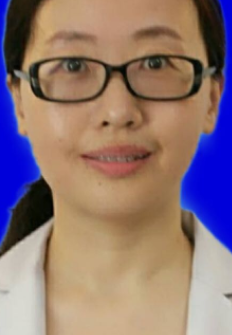 Huiying Zhao (赵慧英)合作论文数中山大学孙逸仙纪念医院基础与转化医学研究中心2
 Peter B. Gilbert合作论文数Statistical Data Management Center of the HIV Vaccine Trials Network, Fred Hutchinson Cancer Research Center;Department of Biostatistics, School of Public Health, University of Washington2Yu He合作论文数2
 David Cooper合作论文数Institute of Medical Genetics, School of Medicine, Cardiff University2
 Chengqi Zhang (张成奇)合作论文数Academy for Artificial Intelligence, The Hong Kong Polytechnic University;Department of Data Science and Artificial Intelligence, Faculty of Computer and Mathematical Sciences, The Hong Kong Polytechnic University;The Hong Kong Polytechnic University Shenzhen Research Institute2
 Tomer Hertz合作论文数Department of Immunology, Microbiology and Genetics, Ben-Gurion University of the Negev2
 Wenyun Yang合作论文数JD.com2
 Bogdan Pasaniuc合作论文数Harvard School of Public Health, Harvard University2A. C. H. Ling合作论文数Department of Computer Science
University of Vermont2Michael Bilow合作论文数1Fei-Yi Liu合作论文数1Jinguo Ye合作论文数1Yuanhao Yang合作论文数Mater Research Institute, The University of Queensland1
Bogdan Pasaniuc合作论文数Harvard School of Public Health, Harvard University2A. C. H. Ling合作论文数Department of Computer Science
University of Vermont2Michael Bilow合作论文数1Fei-Yi Liu合作论文数1Jinguo Ye合作论文数1Yuanhao Yang合作论文数Mater Research Institute, The University of Queensland1 Oyetunji Enoch Ogundijo合作论文数1Nick Furlotte合作论文数1Huasong Zhang合作论文数1
 Haoyang Zhang合作论文数1Ying Shao合作论文数1Subrata Saha合作论文数1Cong Fan合作论文数1Weijun Hong合作论文数Shenzhen University, Shenzhen, China1
 Noah Zaitlen合作论文数Departments of Computational Medicine and Neurology, David Geffen School of Medicine, University of California, Los Angeles1JiuXing Wu (吴九兴)合作论文数1
 Kostem Emrah合作论文数Dept Comp Sci, Univ Calif Los Angeles1
 Jong Wha J. Joo合作论文数1
 RGF (Richard) Visser合作论文数Wageningen University & Research1Horton Helen合作论文数1
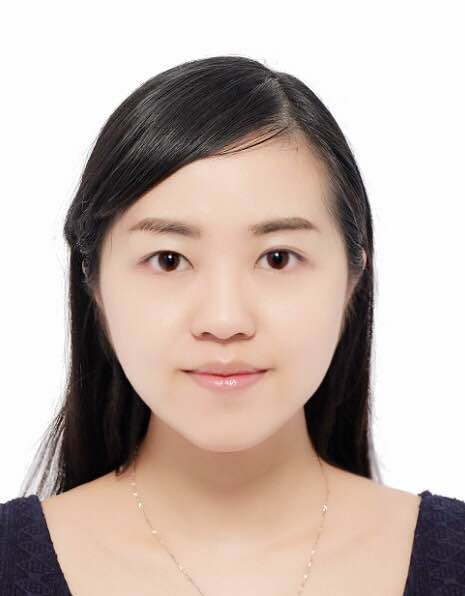 Min Yang (杨敏)合作论文数Shenzhen Key Laboratory for High-Performance Data Mining, Shenzhen Institute of Advanced Technology, Chinese Academy of Sciences;University of Chinese Academy of Sciences;Large Language Models Center, Faculty of Computer Science and Artificial Intelligence, Shenzhen University of Advanced Technology1
 Gangqiao Yang (杨钢桥)合作论文数College of Public Administration, Huazhong Agricultural University1
 Simon Teyssedre合作论文数1
 Amit Sahai合作论文数Department of Computer Science, University of California, Los Angeles1
 Michael J. Welch合作论文数Department of Radiology, Washington University School of Medicine in St. Louis;Department of Biomedical Engineering, James McKelvey School of Engineering, Washington University School of Medicine in St. Louis1




