Recent developments in laser-excited photoemission electron microscopy (laser-PEEM) advance the visualization of electronic nematicity and nematic domain structures in iron-based superconductors. In FeSe and BaFe2(As0.87P0.13)2 superconductors, it has been reported that the thickness of the electronic nematic domain walls is unexpectedly long, leading to the formation of mesoscopic nematicity wave [T. Shimojima et al., Science 373, 1122 (2021)]. This finding demonstrates that the nematic coherence length xi nem can be decoupled from the lattice domain wall. Here, we report that the electronic domain wall thickness shows a distinct variation in related materials: it is similarly long in FeSe0.9S0.1 whereas it is much shorter in undoped BaFe2As2. We find a correlation between the thick domain walls and the nonFermi liquid properties of normal-state resistivity above the nematic transition temperature. This suggests that the nematic coherence length can be enhanced by underlying spin-orbital fluctuations responsible for the anomalous transport properties.
Even before its role in electroweak symmetry breaking, the Anderson-Higgs mechanism was introduced to explain the Meissner effect in superconductors. Spontaneous symmetry-breaking yields massless phase modes representing the low-energy excitations of the Mexican-Hat potential. Only in superconductors the phase mode is shifted towards higher energies owing to the gauge field of the charged condensate. This results in a low-energy excitation spectrum governed by the Higgs mode. Consequently, the Meissner effect signifies a macroscopic quantum condensate in which a photon acquires mass, representing a one-to-one analogy to high-energy physics. We report on the direct observation of the Higgs particle in the high-temperature superconductor Bi-2212 by developing an innovative technique to study its symmetries and energies after a "soft quench" of the Mexican-Hat potential. Population inversion of the metastable Higgs particle induced by an initial laser pulse allows identifying the polarization-dependent Higgs modes as an additional anti-Stokes Raman-scattering signal. Within Ginzburg-Landau theory, the Higgs-mode energy is connected to the Cooper-pair coherence length. Within a BCS weak-coupling model we develop a quantitative and coherent description of single-particle and two-particle channels. This opens the avenue for Higgs Spectroscopy in quantum condensates and provides a unique pathway to control and explore Higgs physics.
A major unsolved puzzle in cuprate superconductivity is that, despite accumulated evidence of more conventional normal state properties over the last 30 years, the superconducting $T_c$ of the overdoped cuprates seems to be still controlled by phase coherence rather than the Cooper pair formation. So far, a microscopic understanding of this unexpected behavior is lacking. Here we report angle-resolved photoemission, magnetic and thermodynamic evidence that Cooper pairs form at temperatures more than 30% above $T_c$ in overdoped metallic Bi$_2$Sr$_2$CaCu$_2$O$_{8+\delta}$ (Bi-2212). More importantly, our data lead to a microscopic understanding where the phase fluctuation is enhanced by the flat dispersion near the Brillouin zone boundary. This proposal is tested by a sign-problem free quantum Monte Carlo simulation. Such a microscopic mechanism is likely to find applications in other flat band superconductors, such as twisted bilayer-bilayer graphene and NdNiO$_2$
The nature of the pseudogap and its relationship with superconductivity are one of the central issues of cuprate superconductors. Recently, a possible scenario has been proposed that the pseudogap state is a distinct phase characterized by spontaneous rotational symmetry breaking called "nematicity" based on transport and magnetic susceptibility measurements, where the symmetry breaking was observed below the pseudogap temperature T^*. Here, we report a temperature-dependent ARPES study of nematicity in slightly overdoped Bi_1.7Pb_0.5Sr_1.9CaCu_2O_8+δ triggered by a uniaxial strain applied along one of the Cu-O bond directions. While the nematicity was enhanced in the pseudogap state as in the previous studies, it was suppressed in the superconducting state. These results indicate that the pseudogap state is characterized by spontaneous rotational symmetry breaking and that the nematicity may compete with superconductivity. These new experimental insights may provide clues for the nature of the pseudogap and its relation to the superconductivity.
Electronic nematicity, a correlated state that spontaneously breaks rotational symmetry, is observed in several layered quantum materials. In contrast to their liquid-crystal counterparts, the nematic director cannot usually point in an arbitrary direction (XY nematics), but is locked by the crystal to discrete directions (Ising nematics),resulting in strongly anisotropic fluctuations above the transition. Here, we report on the observation of nearly isotropic XY-nematic fluctuations, via elastoresistance measurements, in hole-doped Ba_1-xRb_xFe_2As_2 iron-based superconductors. While for x=0 the nematic director points along the in-plane diagonals of the tetragonal lattice, for x=1 it points along the horizontal and vertical axes. Remarkably, for intermediate doping, the susceptibilities of these two symmetry-irreducible nematic channels display comparable Curie-Weiss behavior, thus revealing a nearly XY-nematic state. This opens a new route to assess this elusive electronic quantum liquid-crystalline state, which is a candidate to host unique phenomena not present in the Ising-nematic case.
We investigated transient optical responses in an optimally-doped high-Tc superconductor La2-xSrxCuO4 (x=0.15) by using 800-nm optical pump and terahertz probe spectroscopy. With increasing the photoexcitation intensities, the Josephson plasma resonance shows a gradual redshift, indicating the suppression of superconductivity by the photoexcitation. With further increasing the photoexcitation intensities, a new longitudinal mode in the loss function spectrum appears and grows from the high energy side, accompanied by a new transverse mode as manifested in the conductivity spectrum. The observed spectra are described by the multilayer model with alternating interlayer Josephson couplings. The new longitudinal and transverse modes sustain much longer than several hundred picoseconds after the photoexcitation, indicating that the new metastable phase with possessing alternating interlayer Josephson couplings is induced by the strong photoexcitation.
In complex materials various interactions have important roles in determining electronic properties. Angle-resolved photoelectron spectroscopy (ARPES) is used to study these processes by resolving the complex single-particle self-energy and quantifying how quantum interactions modify bare electronic states. Here we employ a combined theoretical and experimental treatment of femtosecond time-resolved ARPES and show how population dynamics measured using time-resolved ARPES can be used to separate electron–boson interactions from electron–electron interactions. We demonstrate a quantitative analysis of a well-defined electron–boson interaction in the unoccupied spectrum of the cuprate Bi2Sr2CaCu2O8-x characterized by an excited population decay time that maps directly to a discrete component of the equilibrium self-energy not readily isolated by static ARPES experiments [1].
High transition temperature superconductors in cuprates exhibit the charge-density-wave fluctuations and the ferromagnetic time-reversal-symmetry-breaking fluctuation in the polar Kerr rotation experiments. We demonstrate that they share the same root of origin, and the underlying mechanism also leads to the pseudogap formation. The pseudogap formation, the charge-density-wave fluctuation, and the time-reversal-symmetry-breaking fluctuation are the consequent phenomena of the correlation. They are the basic notions in strongly correlated electron systems.
 Akira Iyo (伊豫彰)合作论文数National Institute of Advanced Industrial Science and Technology28
 Satoshi Uchida (内田聡)合作论文数Research Center for Advanced Science and Technology, Division of Energy Environment, University of Tokyo16Shigeyuki Ishida合作论文数15
 K. Kihou合作论文数National Institute of Advanced Industrial Science and Technology13
 Zhi-Xun Shen (沈志勋)合作论文数Stanford Institute for Materials & Energy Sciences, Stanford University;Departments of Physics and Applied Physics, Stanford University12Naoki Motoyama合作论文数10
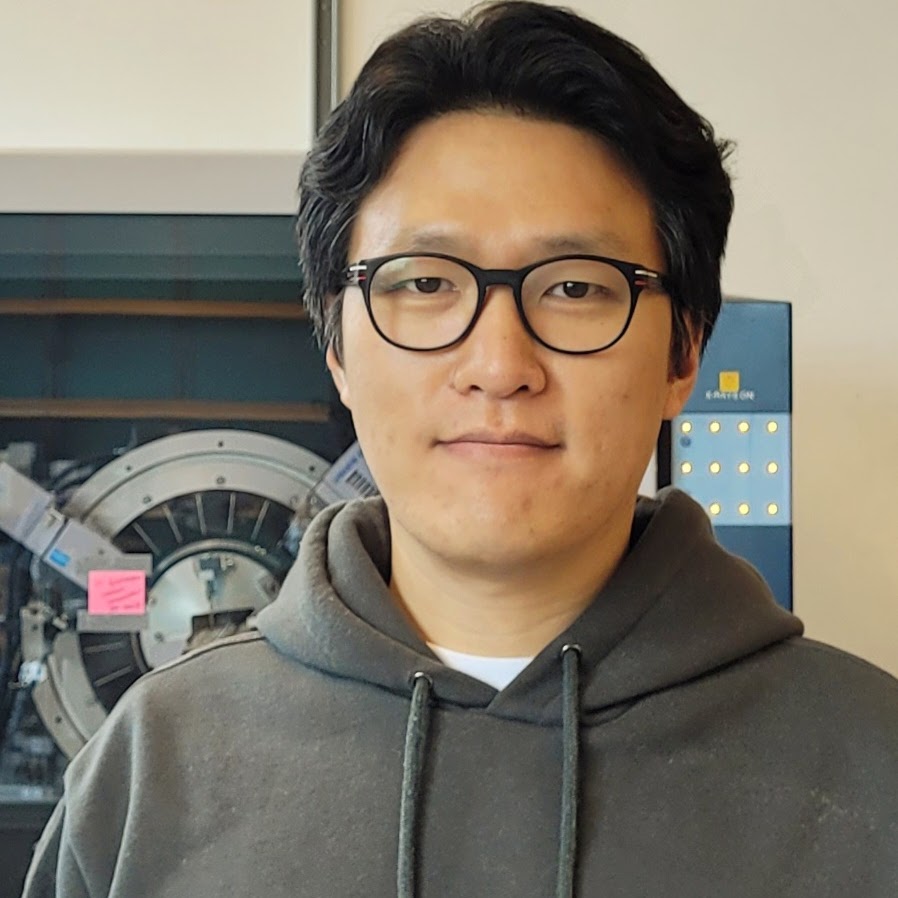 Dongjoon Song合作论文数Faculty of Science, The University of British Columbia;Stewart Blusson Quantum Matter Institute, University of British Columbia9
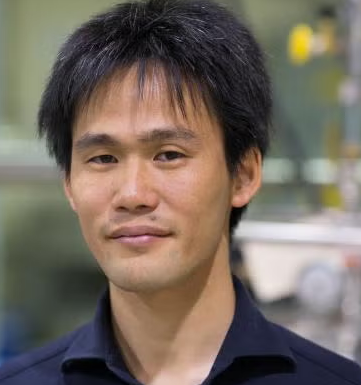 Makoto Hashimoto合作论文数SLAC National Accelerator Laboratory;Stanford Institute for Materials and Energy Sciences, Stanford University9Shin-Ichi Uchida合作论文数8Hideto Fukazawa合作论文数8
 Nao Takeshita (竹下直)合作论文数National Institute of Advanced Industrial Science and Technology7
 Motoyuki Ishikado合作论文数CROSS-Tokai7
 Donghui Lu合作论文数SLAC National Accelerator Laboratory, Stanford University7
 Ruihua He (何睿华)合作论文数Advanced Surface Analysis & Physics Laboratory, School of Science, Westlake University6T. Kakeshita合作论文数5
 Yoshiyuki Yoshida合作论文数Nanoelectronics Research Institute, National Institute of Advanced Industrial Science and Technology;Sangyo Gijutsu Sogo Kenkyujo Tsukuba5
 Walid Malaeb合作论文数School of Arts and Sciences, Lebanese American University;Beirut Arab University5
 Thomas Devereaux合作论文数Stanford University;SLAC National Accelerator Laboratory5
 Shinichi Shamoto合作论文数4Yasuhide Tomioka合作论文数4Hijiri Kito合作论文数4Kiho Kunihiro合作论文数3
 sudi chen合作论文数SLAC Natl Accelerator Lab, SIMES, Menlo Pk, CA 94025 USA3K. Katsumata合作论文数3Chul-Ho Lee合作论文数3
 Andrea Damascelli合作论文数Department of Physics & Astronomy, The University of British Columbia Vancouver Campus3
 Yu He合作论文数Department of Applied Physics, Yale University3
 Alessandra Lanzara合作论文数Department of Physics, University of California, Berkeley;Materials Sciences Division, Lawrence Berkeley National Laboratory;Quantum Advanced Detection LLC3
 J. C. Seamus Davis合作论文数Department of Physics, University of Oxford;Wadham College, University of Oxford;Department of Physics, The College of Arts and Sciences, Cornell University;University College Cork3Martin Knupfer合作论文数Leibniz-Institut für Festkörper- und Werkstoffforschung Dresden, Department Electronic and Optical Properties, IFW Dresden/TU Bergakademie Freiberg3
 Jan Zaanen合作论文数Instituut-Lorentz for Theoretical Physics, Leiden University3
 Yuji Matsuda (松田祐司)合作论文数Department of Physics, Kyoto University3Yoh Kohori合作论文数3
 Jörg Fink合作论文数Leibniz Institute for Solid State and Materials Research Dresden3
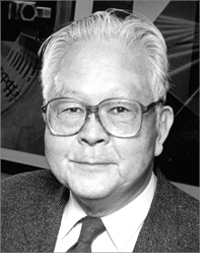 Gen Shirane (白根元)合作论文数Brookhaven National Laboratory3
 Shinichiro Ideta (出田真一郎)合作论文数Research Institute for Synchrotron Radiation Science, Graduate School of Advanced Science and Engineering, School of Science, Hiroshima University;Hiroshima Synchrotron Radiation Center, Hiroshima University3
 Kohji Kishio (岸尾光二)合作论文数Department of Applied Chemistry, Graduate School of Engineering, The University of Tokyo3
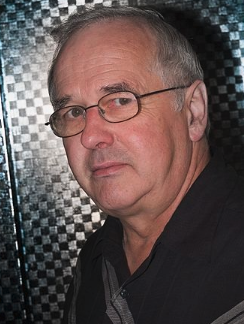 George A. Sawatzky合作论文数Department of Physics & Astronomy, University of British Columbia3
 Genda Gu合作论文数Condensed Matter Physics and Materials Science Department, Brookhaven National Laboratory3
 M.S. (Mark) Golden合作论文数Faculteit der Natuurwetenschappen, Wiskunde en Informatica, University of Amsterdam;Van der Waals-Zeeman Instituut, University of Amsterdam3
 Taku Saito合作论文数3
 Zahid Hussain合作论文数Department of Material Physics, Materials Sciences Division, Lawrence Berkeley National Laboratory3
 Takasada Shibauchi (芝内孝禎)合作论文数Department of Advanced Materials Science, Graduate School of Frontier Sciences, The University of Tokyo;Department of Applied Physics, School of Engineering, The University of Tokyo3Kozo Okazaki合作论文数Optical Spectroscopy Laboratory
Department of Physics, Nagoya University3
Takasada Shibauchi (芝内孝禎)合作论文数Department of Advanced Materials Science, Graduate School of Frontier Sciences, The University of Tokyo;Department of Applied Physics, School of Engineering, The University of Tokyo3Kozo Okazaki合作论文数Optical Spectroscopy Laboratory
Department of Physics, Nagoya University3 Hiraku Ogino (荻野拓)合作论文数National Institute of Advanced Industrial Science and Technology3D. Kubota合作论文数3L. Chaix合作论文数2
 Isabella Avigo合作论文数2




