The dipole strength of the nuclide Ge-76 was studied in photon-scattering experiments using bremsstrahlung produced with electron beams of energies of 7.8 and 12.3 MeV delivered by the electron linear accelerator of high brilliance and high brightness (ELBE). We identified 210 levels up to an excitation energy of 9.4 MeV and assigned spin J = 1 to most of them. The quasicontinuum of unresolved transitions was included in the analysis of the spectra and the intensities of branching transitions were estimated on the basis of simulations of statistical gamma-ray cascades. The photoabsorption cross section up to the neutron-separation energy was determined and is compared with predictions of the statistical reaction model. The derived photon strength function is compared with results of experiments using other reactions.
Measurements of inclusive charged-hadron transverse-momentum and pseudorapidity distributions are presented for proton-proton collisions at \(\sqrt{s} = 0.9 \) and 2.36 TeV. The data were collected with the CMS detector during the LHC commissioning in December 2009. For non-single-diffractive interactions, the average charged-hadron transverse momentum is measured to be 0.46 ± 0.01 (stat.) ± 0.01 (syst.) GeV/c at 0.9 TeV and 0.50 ± 0.01 (stat.) ± 0.01 (syst.) GeV/c at 2.36 TeV, for pseudorapidities between --2.4 and +2.4. At these energies, the measured pseudorapidity densities in the central region, dN ch/dη||η|<0.5, are 3:48 ± 0:02 (stat.) ± 0.13 (syst.) and 4:47 ± 0:04 (stat.) ± 0.16 (syst.), respectively. The results at 0.9 TeV are in agreement with previous measurements and confirm the expectation of near equal hadron production in \( \overline p p \) and pp collisions. The results at 2.36 TeV represent the highest-energy measurements at a particle collider to date.
This report presents the capabilities of the CMS experiment to explore the rich heavy-ion physics programme offered by the CERN Large Hadron Collider (LHC). The collisions of lead nuclei at energies , will probe quark and gluon matter at unprecedented values of energy density. The prime goal of this research is to study the fundamental theory of the strong interaction ? Quantum Chromodynamics (QCD) ? in extreme conditions of temperature, density and parton momentum fraction (low-x).This report covers in detail the potential of CMS to carry out a series of representative Pb-Pb measurements. These include bulk observables, (charged hadron multiplicity, low pT inclusive hadron identified spectra and elliptic flow) which provide information on the collective properties of the system, as well as perturbative probes such as quarkonia, heavy-quarks, jets and high pT hadrons which yield tomographic information of the hottest and densest phases of the reaction.
In the framework of the European FP6's BioCare project, we develop a novel, time-based, photo-detector readout technique to increase sensitivity and timing precision for molecular imaging in PET and CT. The project aims to employ Avalanche Photo Diode (APD) arrays with state of the art, high speed, front end amplifiers and discrimination circuits developed for the Large Hadron Collider (LHC) physics program at CERN, suitable to detect and process photons in a combined one-unit PET/CT detection head. In the so-called time-based approach our efforts focus on the system's timing performance with sub-nanosecond time-jitter and -walk, and yet also provide information on photon energy without resorting to analog to digital conversion. The bandwidth of the electronic circuitry is compatible with the scintillator's intrinsic light response (e.g. les40ns in LSO) and hence allows high rate CT operation in single-photon counting mode. Based on commercial LSO crystals and Hamamatsu S8550 APD arrays, we show the system performance in terms of timing- and energy resolution as well as its rate behavior (SPICE, simulating a high intensity X-ray beam). If proven viable, this technique may lead to the construction of a compact, radiation tolerant, and cost effective PET/CT detection head in one unit.
Track information from the central detector in the UA1 experiment at the CERN proton-antiproton collider (√s = 540 GeV) is used to determine the charged particle multiplicity distribution for the pseudorapidity range ∣η∣ < 1.3. The mean value for this multiplicity per unit of η is 3.9 ± 0.3 for events having at least one track in this range. Data from the central electromagnetic and hadron calorimeters are used to examine the correlation between the transverse energy measured in the collisions and the multiplicity in the central region.
Drug Prescribing for Patients with Chronic Kidney Disease in General Practice: a Cross-Sectional Study
daft das Kind in eine Mi~dchenschule gehSrt, doch ist die MSglichkeit zu erwagen, daft das Kind beim Spielen seine Kameradinnen defloriert. ~'erd. Winkler (Wien). ~176 Stojalowski, Kazimierz, und J6zef D~bski: Zur Frage des wahren Zwittertums beim Menschcn. I)olski Przegl. chit. 12, 485--517 u. franz. Zusara~:~enfassung 517--518 (1933) [Polniseh]. Vcrff. heben hervor, daft in allen bis jetzt~ beobachteten FMlen yon wahrem Zwittertum die Geschlechtsdriisen sich als beidergeschlechtlich erwiesen (Ovariotestis oder Testovarium). Bei einem 22j~hrigen Gyn/~komasten, der wegen Hernia inguin, dextra incarcerata yon den Verff, operiert wurde, land sich im Bruchsack ein Ovariotestis, das histologisch als solches festgestellt wurde, Im ovarialen Tell desselben fund m~n Graafsche Follikel, im Hoden~nteiI typische Spermatogonien, I~riispermatiden, Spermatiden und Zellen mit langgzogenem, dem Spermatozoidenkopf ahnliehen Kern. Im I-Iodensack land sich liirks ein gut ausgebildeter Hoden, weleher normalen Samen produzierte. Neben dem Ovariotestis stellte man Uterus bieornis und beide Tuben fest. ~ufterlieh machte dies Individuum den Eindruck eines hypospadischen Mannes, dessen psychisches Selbstgeffihl vollkommen m/~nnlich war. Wachholz.
 S. Sala合作论文数5J. Colás合作论文数5
 Michele Arneodo合作论文数Università del Piemonte Orientale5B. Aubert合作论文数5A. Honma合作论文数5
 Stefan Schael合作论文数I. Physics Institute and JARA-FAME, RWTH Aachen University5
 Vincent Vuillemin合作论文数4C. Bacci合作论文数4Pierre Jarron合作论文数4P. Eerola合作论文数4A. Ostapchuk合作论文数4M. -N. Minard合作论文数4sergey semenov合作论文数4
 Nicolas Ellis合作论文数European Organization for Nuclear Research4Alessandro Marchioro合作论文数European Laboratory for Particle Physics, CERN4
 Ioannis Papadopoulos合作论文数HEP Laboratory, Physics Departmment, University of Ioannina;CERN4Wolfgang Funk合作论文数4
 Nicolo Cartiglia合作论文数University of California, Santa Cruz;Istituto Nazionale Fisica Nucleare Torino4
 Achim Stahl合作论文数III. Physikalisches Institut B, RWTH Aachen University4T. Hansl-Kozanecka合作论文数4
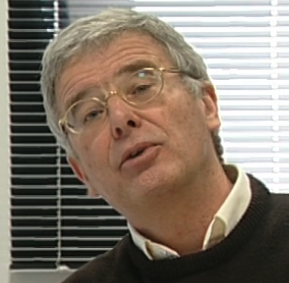 Michel Della Negra合作论文数European Organization for Nuclear Research;Imperial College London4
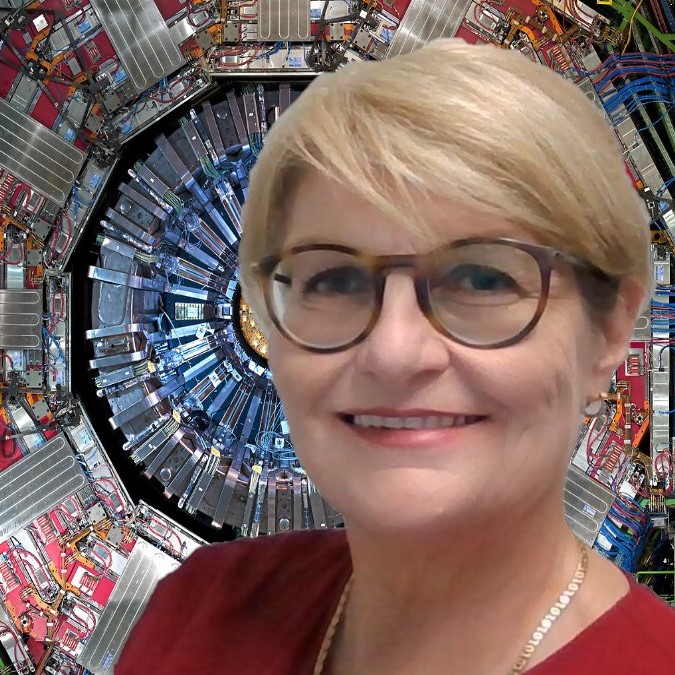 Marta Felcini合作论文数School of Physics, University College Dublin;CERN4M. O'Neill合作论文数3P. Katsas合作论文数3J.C. Chevaleyre合作论文数3c fabjan合作论文数3A. Tsirou合作论文数3G. Herten合作论文数3S. Marcellini合作论文数3O. Pooth合作论文数3D. Creanza合作论文数3L Silvestris合作论文数3G. Poulard合作论文数3J. C. Hewlett合作论文数3w burris合作论文数3h plothowbesch合作论文数3R. Kolpin合作论文数3A. Sobala合作论文数3H. Reithler合作论文数3K. Hoepfner合作论文数3S. Lauxtermann合作论文数3J. Fuss合作论文数3E. Neuheimer合作论文数3R.R. Mekhdiev合作论文数3h schuijlenburg合作论文数3J. Schaapman合作论文数3H.J. Rzaev合作论文数3
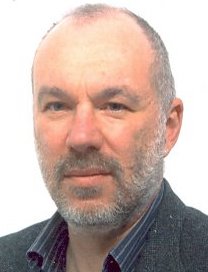 Franco Ligabue合作论文数Scuola Normale Superiore di Pisa3N. Bouhemaid合作论文数3




