The centrality dependence of the mean charged-particle multiplicity as a function of pseudorapidity is measured in approximately 1 mu b(-1) of proton-lead collisions at a nucleon-nucleon centre-of-mass energy of root s(NN) = 5.02 TeV using the ATLAS detector at the Large Hadron Collider. Charged particles with absolute pseudorapidity less than 2.7 are reconstructed using the ATLAS pixel detector. The p + Pb collision centrality is characterised by the total transverse energy measured in the Pb-going direction of the forward calorimeter. The charged-particle pseudorapidity distributions are found to vary strongly with centrality, with an increasing asymmetry between the proton-going and Pb-going directions as the collisions become more central. Three different estimations of the number of nucleons participating in the p + Pb collision have been carried out using the Glauber model as well as two Glauber-Gribov inspired extensions to the Glauber model. Charged-particle multiplicities per participant pair are found to vary differently for these three models, highlighting the importance of including colour fluctuations in nucleon-nucleon collisions in the modelling of the initial state of p + Pb collisions.
The production rates of prompt and non-prompt [Formula: see text] and [Formula: see text] mesons in their dimuon decay modes are measured using 2.1 and 11.4 fb[Formula: see text] of data collected with the ATLAS experiment at the Large Hadron Collider, in proton-proton collisions at [Formula: see text] and 8 respectively. Production cross-sections for prompt as well as non-prompt sources, ratios of [Formula: see text] to [Formula: see text] production, and the fractions of non-prompt production for [Formula: see text] and [Formula: see text] are measured as a function of meson transverse momentum and rapidity. The measurements are compared to theoretical predictions.
The ATLAS experiment has performed extensive searches for the electroweak production of charginos, neutralinos and staus. This article summarizes and extends the search for electroweak supersymmetry with new analyses targeting scenarios not covered by previously published searches. New searches use vector-boson fusion production, initial-state radiation jets, and low-momentum lepton final states, as well as multivariate analysis techniques to improve the sensitivity to scenarios with small mass splittings and low-production cross-sections. Results are based on 20 fb$^{-1}$ of proton-proton collision data at $\sqrt{s}$=8 TeV recorded with the ATLAS experiment at the Large Hadron Collider. No significant excess beyond Standard Model expectations is observed. The new and existing searches are combined and interpreted in terms of 95% confidence-level exclusion limits in simplified models, where a single production process and decay mode is assumed, as well as within phenomenological supersymmetric models.
The centrality dependence of the mean chargedparticle multiplicity as a function of pseudorapidity is measured in approximately 1 μb−¹ of proton–lead collisions at a nucleon–nucleon centre-of-mass energy of √sNN=5.02 TeV using the ATLAS detector at the Large Hadron Collider. Charged particles with absolute pseudorapidity less than 2.7 are reconstructed using the ATLAS pixel detector. The p + Pb collision centrality is characterised by the total transverse energy measured in the Pb-going direction of the forward calorimeter. The charged-particle pseudorapidity distributions are found to vary strongly with centrality, with an increasing asymmetry between the proton-going and Pb-going directions as the collisions become more central. Three different estimations of the number of nucleons participating in the p+Pb collision have been carried out using the Glauber model as well as two Glauber–Gribov inspired extensions to theGlauber model. Charged-particle multiplicities per participant pair are found to vary differently for these three models, highlighting the importance of including colour fluctuations in nucleon–nucleon collisions in the modelling of the initial state of p + Pb collisions.
A search for the flavour-changing neutral-current decay [Formula: see text] is presented. Data collected by the ATLAS detector during 2012 from proton-proton collisions at the Large Hadron Collider at a centre-of-mass energy of [Formula: see text] TeV, corresponding to an integrated luminosity of 20.3 fb[Formula: see text], are analysed. Top-quark pair-production events with one top quark decaying through the [Formula: see text] ([Formula: see text]) channel and the other through the dominant Standard Model mode [Formula: see text] are considered as signal. Only the decays of the Z boson to charged leptons and leptonic W boson decays are used. No evidence for a signal is found and an observed (expected) upper limit on the [Formula: see text] branching ratio of [Formula: see text] ([Formula: see text]) is set at the 95 % confidence level.
A search is performed for top-quark pairs (t t) produced together with a photon (γ) with transverse energy greater than 20 GeV using a sample of t t candidate events in final states with jets, missing transverse momentum, and one isolated electron or muon. The data set used corresponds to an integrated luminosity of 4.59 fb− 1 of proton-proton collisions at a center-of-mass energy of 7 TeV recorded by the ATLAS detector at the CERN Large Hadron Collider. In total, 140 and 222 t t γ candidate events are observed in the electron and muon channels, to be compared to the expectation of 79±26 and 120±39 non-t t γ background events, respectively. The production of t t γ events is observed with a significance of 5.3 standard deviations away from the null hypothesis. The t t γ production cross section times the branching ratio (BR) of the single-lepton decay channel is measured in a fiducial kinematic region within the …
A search for a new resonance decaying to a W or Z boson and a Higgs boson in the [Formula: see text] final states is performed using 20.3 fb[Formula: see text] of pp collision data recorded at [Formula: see text] 8 TeV with the ATLAS detector at the Large Hadron Collider. The search is conducted by examining the WH / ZH invariant mass distribution for a localized excess. No significant deviation from the Standard Model background prediction is observed. The results are interpreted in terms of constraints on the Minimal Walking Technicolor model and on a simplified approach based on a phenomenological Lagrangian of Heavy Vector Triplets.
Measurements of the total and differential cross sections of Higgs boson production are performed using 20.3 fb$^{-1}$ of $pp$ collisions produced by the Large Hadron Collider at a center-of-mass energy of $\sqrt{s} = 8$ TeV and recorded by the ATLAS detector. Cross sections are obtained from measured $H \rightarrow \gamma \gamma$ and $H \rightarrow ZZ ^{*}\rightarrow 4\ell$ event yields, which are combined accounting for detector efficiencies, fiducial acceptances and branching fractions. Differential cross sections are reported as a function of Higgs boson transverse momentum, Higgs boson rapidity, number of jets in the event, and transverse momentum of the leading jet. The total production cross section is determined to be $\sigma_{pp \to H} = 33.0 \pm 5.3 \, ({\rm stat}) \pm 1.6 \, ({\rm sys}) \mathrm{pb}$. The measurements are compared to state-of-the-art predictions.
We give results concerning the production of charm and beauty hadrons in 1rinteractions in thin metal targets at Js = 26 GeV. In order to select events containing heavy quarks we used the combined information of the CERN n' spectrometer and of a high-resolution silicon detector that allowed direct observation of the decay vertices of short-lived hadrons. In the 20% of our data sample analysed so far we have 81 events where the decay vertices of two charmed hadrons are detected. These double-charm events, for which the purity (85%) has been estimated directly from the data, have been used to study the azimuthal-angle correlation between pairs of charmed hadrons. Results are compared with QCD predictions. The same data sample is used to search for the production of beauty particles. Preliminary indications are that the number of events found is compatible with published measurements of the beauty cross-section.
Double-differential three-jet production crosssections are measured in proton–proton collisions at a centreof-mass energy of
A bstract The production of a W boson decaying to eν or μν in association with a W or Z boson decaying to two jets is studied using 4. 6 fb− 1 of proton-proton collision data at s= 7 s= 7 TeV recorded with the ATLAS detector at the LHC. The combined WW+ WZ cross section is measured with a significance of 3.4 σ and is found to be 68±7 (stat.)±19 (syst.) pb, in agreement with the Standard Model expectation of 61. 1±2. 2 pb. The distribution of the transverse momentum of the dijet system is used to set limits on anomalous contributions to the triple gauge coupling vertices and on parameters of an effective-field-theory model.
Measurements of inclusive jet production are performed in pp and Pb+Pb collisions at √(s)NN=2.76 TeV with the ATLAS detector at the LHC, corresponding to integrated luminosities of 4.0 and 0.14 nb(-1), respectively. The jets are identified with the anti-k(t) algorithm with R=0.4, and the spectra are measured over the kinematic range of jet transverse momentum 32<p(T)<500 GeV and absolute rapidity |y|<2.1 and as a function of collision centrality. The nuclear modification factor R(AA) is evaluated, and jets are found to be suppressed by approximately a factor of 2 in central collisions compared to pp collisions. The R(AA) shows a slight increase with p(T) and no significant variation with rapidity.
The production of a Z boson in association with a J/ψ meson in proton–proton collisions probes the production mechanisms of quarkonium and heavy flavour in association with vector bosons, and allows studies of multiple parton scattering. Using 20.3 fb-1 of data collected with the ATLAS experiment at the LHC in pp collisions at√ s= 8TeV, the first measurement of associated Z+ J/ψ production is presented for both prompt and non-prompt J/ψ production, with both signatures having a significance in excess of 5σ. The inclusive production cross-sections for Z boson production (analysed in μ+ μ-or e+ e-decay modes) in association with prompt and non-prompt J/ψ (→ μ+ μ-) are measured relative to the inclusive production rate of Z bosons in the same fiducial volume to be (36.8±6.7±2.5)× 10-7 and (65.8±9.2±4.2)× 10-7 respectively. Normalised differential production cross-section ratios are also determined as a function of the Jψ transverse momentum. As a result, the fraction of signal events arising from single and double parton scattering is estimated, and a lower limit of 5.3 (3.7) mb at 68 (95)% confidence level is placed on the effective more»
Using a data sample of 106 million $\psi(3686)$ events collected with the BESIII detector operated at the BEPCII storage ring, we study for the first time the decay $\chi_{cJ}\to\phi K^{0}_S K^{\pm}\pi^{\mp}$ and $\chi_{cJ}\to\phi K^{+} K^{-}\pi^{0}$ in the E1 radiative transition $\psi(3686)\to\gamma\chi_{cJ}$. The decays are dominated by the three-body decay $\chi_{cJ}\to \phi K^*(892)\bar{K}$. We measure branching fractions for this reaction via the neutral and charged $K^*(892)$ and find them consistent with each other within the expectation of isospin symmetry. In the $K\bar{K}\pi$ invariant mass distribution a structure near the $K^*(892)\bar{K}$ mass threshold is observed, and the corresponding mass and width are measured to be $1412\pm4(\mathrm{stat.})\pm8(\mathrm{sys.}) \mathrm{MeV}/c^2$ and $\Gamma$ = $84\pm12(\mathrm{stat.})\pm40(\mathrm{sys.}) \mathrm{MeV}$, respectively. The observed state favors an assignment to the $h_1(1380)$, considering its possible $J^{PC}$ and comparing its mass, width and decay mode to those reported in the Particle Data Group.
A search for Higgs boson pair production [Formula: see text] is performed with 19.5 fb[Formula: see text] of proton-proton collision data at [Formula: see text] TeV, which were recorded by the ATLAS detector at the Large Hadron Collider in 2012. The decay products of each Higgs boson are reconstructed as a high-momentum [Formula: see text] system with either a pair of small-radius jets or a single large-radius jet, the latter exploiting jet substructure techniques and associated b-tagged track-jets. No evidence for resonant or non-resonant Higgs boson pair production is observed. The data are interpreted in the context of the Randall-Sundrum model with a warped extra dimension as well as the two-Higgs-doublet model. An upper limit on the cross-section for [Formula: see text] of 3.2 (2.3) fb is set for a Kaluza-Klein graviton [Formula: see text] mass of 1.0 (1.5) TeV, at the 95 % confidence level. The search for non-resonant Standard Model hh production sets an observed 95 % confidence level upper limit on the production cross-section [Formula: see text] of 202 fb, compared to a Standard Model prediction of [Formula: see text] fb.
 Giovanni Carboni合作论文数Università degli Studi di Roma Tor Vergata345
 Mario Antonelli合作论文数Laboratori Nazionali di Frascati LNF, Istituto Nazionale di Fisica Nucleare280
 A. Aloisio合作论文数252Francesco Lacava合作论文数Dipartimento di Fisica, Università La Sapienza246
 Cesare Bini合作论文数Dipartimento di Fisica, Facoltà di Scienze Matematiche, Fisiche e Naturali, Sapienza Università di Roma236
 Giulio Aielli合作论文数Dipartimento di Fisica, Università degli studi di Tor Vergata;CERN223
 Fabio Anulli合作论文数Istituto Nazionale di Fisica Nucleare216
 Antonio Amorim合作论文数215Paolo Bagnaia合作论文数215
 Georges Azuelos合作论文数Department of Physics, Faculty of Arts and Science, Université de Montréal;TRIUMF214g chiefari合作论文数213Francis Anghinolfi合作论文数CERN213H. Abramowicz合作论文数212
 Attilio Andreazza合作论文数Dipartimento di Fisica, Università degli studi di Milano;Laboratorio di Trattamento Numerico dei Dati Sperimentali, Università degli studi di Milano;Istituto Nazionale di Fisica Nucleare212Guramy G Arabidze合作论文数Department of Physics and Astronomy, Michigan State University212
 Calin Alexa合作论文数Horia Hulubei National Institute of Physics and Nuclear Engineering212K Amako合作论文数211
 Nir Amram合作论文数ZoomInfo211
 Christos Anastopoulos合作论文数School of Mathematical and Physical Sciences, University of Sheffield211M. Aleksa合作论文数European Laboratory for Particle Physics (CERN), CH-1211 Geneva 23, Switzerland211
 Elżbieta Banaś合作论文数Division of Particle and Astroparticle Physics, Institute of Nuclear Physics, Polish Academy of Sciences;Department of Diffractive Processes, Institute of Nuclear Physics, Polish Academy of Sciences;CERN211
 Georges Aad合作论文数Aix-Marseille University211Henri Bachacou合作论文数DSM/IRFU (Institut de Recherches sur les Lois Fondamentales de l’Univers), CEA Saclay (Commissariat a l’Energie Atomique), Gif-sur-Yvette, France211
 Steve Ahlen合作论文数Physics Department, College of Arts and Sciences, Boston University210J Abdallah合作论文数210A. Artamonov合作论文数CERN Geneva Switzerland210S. Albrand合作论文数Laboratoire de Physique Subatomique et de Cosmologie, Université Joseph Fourier and CNRS/IN2P3 and Institut National Polytechnique de Grenoble, Grenoble, France210C Amelung合作论文数209
 Theo Alexopoulos合作论文数Department of Physics, School of Applied Mathematical & Physical Sciences, National Technical University of Athens;Hellenic Open University209
 Gianluca Alimonti合作论文数Istituto Nazionale di Fisica Nucleare;University of Milan209
 Tim Adye合作论文数Particle Physics Department, Rutherford Appleton Laboratory209
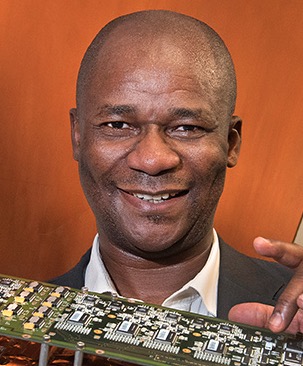 Ketevi Assamagan合作论文数Physics Department, Brookhaven National Laboratory209
 Gideon Alexander合作论文数School of Physics and Astronomy, Tel-Aviv University209
 Aaron Richard Angerami合作论文数Lawrence Livermore National Laboratory209O. Arnaez合作论文数208Henso Abreu合作论文数Institut National de Physique Nucléaire et de Physique des Particules208T Bain合作论文数207m aurousseau合作论文数207s adomeit合作论文数207J. Antos合作论文数207Nuno Anjos合作论文数207
 Timothy R Andeen合作论文数Department of Physics, College of Natural Sciences, The University of Texas at Austin207
 Jean-François Arguin合作论文数Département De Physique, Faculté Des Arts Et Des Sciences, Université de Montréal207
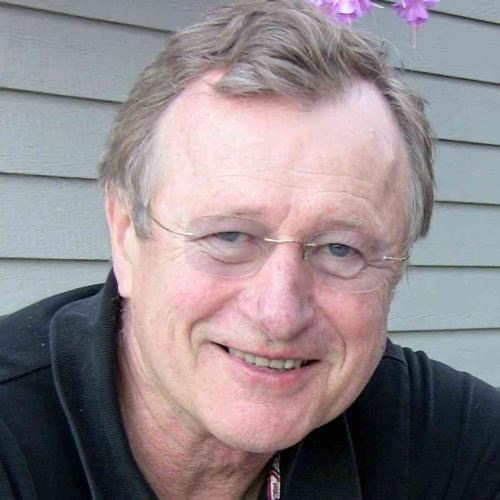 Maris Arvids Abolins合作论文数College of Natural Science, Michigan State University206K. Augsten合作论文数206
 Muhammad Alhroob合作论文数Department of Physics, University of Warwick206Giacomo Artoni合作论文数Department of Physics, University of Oxford206
 Abdinov Ovsat Bahram Oglu合作论文数Azerbaijan National Academy of Science205
 Konstantinos Bachas合作论文数Physics Department, University of Thessaly205




