Tyrosine kinase inhibitors (TKIs) benefit advanced non-small cell lung cancer (NSCLC) patients that harbor epidermal growth factor receptor (EGFR) mutations, but resistance invariably develops. Preclinical work demonstrated re-sensitization to EGFR-TKIs in cells with acquired resistance, and increased sensitivity of EGFR-mutant cells to erlotinib and hydroxychloroquine (HCQ) combination. We examine the safety and efficacy of HCQ with gefitinib in an Asian cohort of NSCLC patients. We enrolled stage IIIB/IV lung adenocarcinomas with sensitizing EGFR mutations. In the early phase of the study, non-smokers with unknown EGFR status were allowed. In the phase I lead-in study (Nov 2008-Jan 2010), maximum tolerable dose (MTD) of HCQ and gefitinib was ascertained via a 3+3 dose escalation schema. In the phase II single-arm study (March 2010-May 2016), all patients were treated with gefitinib 250mg om and MTD (600mg om) of HCQ, and stratified into TKI-naïve and TKI-treated cohorts. In the TKI-treated cohort, patients must have prior response to gefitinib for more than 12 weeks and developed resistance. Primary end point (PEP) in the TKI-naïve cohort was objective response rates (ORR) and progression-free survival (PFS). In the TKI-treated cohort, PEP was ORR, and to determine if combination treatment can re-sensitize acquired resistance to EGFR TKIs. 75 patients were treated. EGFR mutations were identified in 77.3%. In the phase I cohort (n=13), MTD of HCQ was 600mg. HCQ-gefitinib combination was well tolerated. Common adverse events were rash and diarrhea, mainly from gefitinib. There was no dose-limiting toxicity. In TKI-naïve cohort (n=37) of the phase II study, ORR was 75.8% (95% CI 57.7-88.9). Median PFS was 9.4 months (95% CI 6.8-12.0). Four patients who were non-evaluable had early toxicities, including pneumonitis and hepatitis flare. In the TKI-treated cohort (n=25), 52% had received 2 or more lines of prior treatment. Disease control rate with TKI re-challenge was 50% (95% CI 21.9-70.9), ORR was 4.2% (95% CI 0.1-21.1). Median PFS was 2.4 months, and median overall survival was 9.9 months (95% CI 5.7-14.0). Three patients achieved a progression-free interval of more than 7 months after re-challenge (7.6; 11.2; 15.9 months). Combination of HCQ-gefitinib is safe. In the TKI-naïve cohort, combination treatment did not improve PFS over reported average of 10 months for 1st-generation EGFR TKIs. However, in the TKI-treated cohort, re-responses and disease control to 1st-generation EGFR TKIs were seen, suggesting either a re-treatment effect or disease stabilization with addition of HCQ in acquired EGFR resistance.
Category: Genotype PharmGKB Submission Numbers: PS113737, PS115406, PS114503, PS200420, PS201057, PS115245 Date of Submission: May 19, 2003 Project: Pharmacogenetics of Anticancer Agents, St. Jude Children's Research Hospital HGNC Symbol
PURPOSE:To explain the variability of docetaxel pharmacokinetics through study of CYP3A phenotype and genotype, and MDR1 genotype.PATIENTS AND METHODS:We studied the pharmacokinetics and pharmacodynamics of docetaxel in patients in whom it was indicated and who had not received known CYP3A4 substrates. Midazolam was administered intravenously to these patients at least 2 days before docetaxel treatment, and systemic clearances of both drugs were correlated. Patients were characterized for polymorphisms in the CYP3A4 promoter region, CYP3A5, and the C3435T polymorphism of MDR1.RESULTS:Thirty-two patients were enrolled, of whom 31 had full pharmacokinetic data sets. Docetaxel clearance correlated with midazolam clearance, body-surface area, serum albumin, and performance status. Docetaxel and midazolam clearances were normally distributed. In multiple linear regression analyses, midazolam clearance and performance status were the only significant covariates of docetaxel clearance, and the area under the curve of docetaxel, serum levels of alpha-1-acid glycoprotein, and ALT were significant predictors of nadir neutrophil count. No polymorphisms were detected in the 5' regulatory region of CYP3A4. Nine patients of 25 studied were homozygous for the CYP3A5*3 genotype, and had lower mean clearance of midazolam but not docetaxel. The T/T genotype at the C3435T of MDR1, which is associated with reduced P-glycoprotein function, was found in eight of 27 patients.CONCLUSION:Midazolam may be used as a probe drug for CYP3A activity to predict docetaxel clearances, hence reducing interindividual variability. Homozygotes for CYP3A5*3 and C3435T of MDR1 are common in our population, and their effects on pharmacokinetics of relevant substrates should be studied further.
Docetaxel has a response rate of greater than 30% in first-line treatment of Western patients with advanced non-small cell lung cancer (NSCLC). The goal of this open-label. phase II study was to evaluate the activity and safety profile of docetaxel in Asian patients with inoperable untreated stage III NSCLC. Docetaxel was given at 100 mg/m2 as a 1-h infusion every 3 weeks. Prophylactic dexamethasone was given to reduce hypersensitivity reactions and edema. Thirty-five patients were enrolled in the study. The response rate was 34% (95% CI, 19%-50%) according to intent-to-treat analysis. No complete response was observed. Twenty-four patients (69%) had grade 3 or 4 neutropenia in cycle 1, and febrile neutropenia was seen in 12 patients. Six patients (17%) experienced mild fluid retention. Docetaxel is an active agent in first-line treatment of Asian patients with locally advanced NSCLC, with the main toxicity being neutropenia. Fluid retention was a minor problem in this study.
 Goh Boon Cher合作论文数Department of Biomedical Engineering, National University of Singapore5
 Erin Schuetz合作论文数St. Jude Children's Research Hospital2
 Lamba Jatinder K合作论文数2Lim Robert合作论文数2Ong Ai Bee合作论文数2
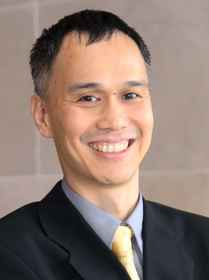 Ross Soo合作论文数Department of Haematology-Oncology, National University Cancer Institute2
 Lingzhi Wang合作论文数Department of Pharmacology, Yong Loo Lin School of Medicine, National University of Singapore;Cancer Science Institute of Singapore, National University of Singapore2Tan Min Chin合作论文数2
 Jiayi Guo合作论文数Anhui University of Technology, Anhui University of Technology2P.J. Voon合作论文数1D. Gale合作论文数1A S C Wong合作论文数1Ro Bash合作论文数1Soo-Chin Lee合作论文数1Fg Behm合作论文数1S Kishi合作论文数1
 Muhammed Murtaza合作论文数Division of Surgical Oncology, Department of Surgery, University of Wisconsin-Madison1
 Joey Sze Yun Lim合作论文数Cancer Science Institute of Singapore, National University of Singapore1Lu Fan合作论文数1A. Pang合作论文数1A. Wong合作论文数1Y. Huang合作论文数1Hu Suk Lee合作论文数1Patrick Maurel合作论文数1
 Tim Forshew合作论文数Res Triangle Pk, Inivata1
 Sundar Raghav合作论文数Yong Loo Lin School of Medicine, National University of Singapore1
 Susana C. Raimondi合作论文数Cytogenetics Laboratory, St. Jude Children's Research Hospital1
 Mary V. Relling合作论文数Department of Pharmacy and Pharmaceutical Sciences, St. Jude Children's Research Hospital1
 Ann Daly合作论文数Translational and Clinical Research Institute, Medical School, Newcastle University;Faculty of Medical Sciences, Newcastle University1
 Raman Venkataramanan合作论文数Department of Pharmaceutical Sciences, School of Pharmacy, University of Pittsburgh1Tan Chee Seng合作论文数1Camitta B M合作论文数1Kuehl P M合作论文数1Hall Stephen D合作论文数1Schuetz John D合作论文数1
 Stephen Strom合作论文数Department of Laboratory Medicine, Karolinska Institutet1Kumarakulasinghe Nesaretnam Barr合作论文数National University Cancer Institute, National University Health System1yuehua lin合作论文数1
 Ching-Hon Pui (裴正康)合作论文数Leukemia/Lymphoma Division, Department of Oncology, St. Jude Children's Research Hospital1Tsui Dana W Y合作论文数1Lehnert M合作论文数1
 Paul B. Watkins合作论文数Institute for Drug Safety Sciences, Eshelman School of Pharmacy, The University of North Carolina at Chapel Hill;Schools of Medicine, The University of North Carolina at Chapel Hill;Division of Pharmacotherapy and Experimental Therapeutics, The University of North Carolina at Chapel Hill;Gillings School of Global Public Health, The University of North Carolina at Chapel Hill1
 Kenneth Thummel合作论文数Department of Pharmaceutics, School of Pharmacy, University of Washington1
 Gary L. Rosner合作论文数Division of Biostatististics and Bioinformatics, Department of Oncology, Johns Hopkins University;Sidney Kimmel Comprehensive Cancer Center, Johns Hopkins University1Javier G. Blanco合作论文数1
 Edwin H. Cook Jr.合作论文数Institute for Juvenile Research, University of Illinois at Chicago;Department of Psychiatry, College of Medicine, University of Illinois at Chicago;Division of Child and Adolescent Psychiatry, University of Illinois Hospital & Health Sciences System1John El Wong合作论文数1Joseph Wee合作论文数1Eu Tiong Chua合作论文数1




