AbstractSilver(I) and gold(I) cations (II) or (IV) (prepared in situ) react with hydrido Pt complexes (I) or (VI) in THF or Et2O to give the title complexes (III) or (V).
AbstractDie Titelkomplexe (II) werden wie aufgezeichnet durch Umsetzung des Chlorid‐verbrückten Diphosphin‐Dimeren (I) sowie der aus dem Ethylen‐Dimeren dargestellten Diphosphin‐Dimeren in situ mit Pentahydrido‐bis‐[trialkylphosphin]‐Ir synthetisiert.
ADVERTISEMENT RETURN TO ISSUEPREVArticleNEXTNew cationic rhodium(I)-iridium(III) complexes with bridging hydride and chloride ligands. Synthesis and x-ray crystal structure of [(diphos)Rh(.mu.-H)(.mu.-Cl)IrCl(PEt3)3]BF4 and [(diphos)Rh(.mu.-H)(.mu.-Cl)IrH(PEt3)3]BF4Hans Lehner, Dominique Matt, Antonio Togni, Rene Thouvenot, Luigi M. Venanzi, and Alberto AlbinatiCite this: Inorg. Chem. 1984, 23, 25, 4254–4261Publication Date (Print):December 1, 1984Publication History Published online1 May 2002Published inissue 1 December 1984https://pubs.acs.org/doi/10.1021/ic00193a031https://doi.org/10.1021/ic00193a031research-articleACS PublicationsRequest reuse permissionsArticle Views200Altmetric-Citations18LEARN ABOUT THESE METRICSArticle Views are the COUNTER-compliant sum of full text article downloads since November 2008 (both PDF and HTML) across all institutions and individuals. These metrics are regularly updated to reflect usage leading up to the last few days.Citations are the number of other articles citing this article, calculated by Crossref and updated daily. Find more information about Crossref citation counts.The Altmetric Attention Score is a quantitative measure of the attention that a research article has received online. Clicking on the donut icon will load a page at altmetric.com with additional details about the score and the social media presence for the given article. Find more information on the Altmetric Attention Score and how the score is calculated. Share Add toView InAdd Full Text with ReferenceAdd Description ExportRISCitationCitation and abstractCitation and referencesMore Options Share onFacebookTwitterWechatLinked InRedditEmail Other access optionsGet e-AlertscloseSupporting Info (1)»Supporting Information Supporting Information Get e-Alerts
Bei einem neuen Typ von Austauschreaktionen an Monohydridoplatin‐Komplexen trans‐PtH(Cl)L2 (L = Phosphan) wird H⊕ durch Au2L2 ersetzt. 1 ist die erste Verbindung mit PtAu‐Bindungen. Die PtAu2‐Einheit bildet ein gleichschenkliges Dreieck.magnified image
In a novel type of exchange reactions at monohydridoplatinum complexes trans-PtH(Cl)L2 (L=phosphane), H⊕ is replaced by Au2L2. 1 is the first compound containing PtAu bonds. The PtAu2 unit forms an isosceles triangle.
ADVERTISEMENT RETURN TO ISSUEPREVArticleNEXTStable gold hydride complexesH. Lehner, D. Matt, P. S. Pregosin, L. M. Venanzi, and A. AlbinatiCite this: J. Am. Chem. Soc. 1982, 104, 24, 6825–6827Publication Date (Print):December 1, 1982Publication History Published online1 May 2002Published inissue 1 December 1982https://pubs.acs.org/doi/10.1021/ja00388a079https://doi.org/10.1021/ja00388a079research-articleACS PublicationsRequest reuse permissionsArticle Views515Altmetric-Citations49LEARN ABOUT THESE METRICSArticle Views are the COUNTER-compliant sum of full text article downloads since November 2008 (both PDF and HTML) across all institutions and individuals. These metrics are regularly updated to reflect usage leading up to the last few days.Citations are the number of other articles citing this article, calculated by Crossref and updated daily. Find more information about Crossref citation counts.The Altmetric Attention Score is a quantitative measure of the attention that a research article has received online. Clicking on the donut icon will load a page at altmetric.com with additional details about the score and the social media presence for the given article. Find more information on the Altmetric Attention Score and how the score is calculated. Share Add toView InAdd Full Text with ReferenceAdd Description ExportRISCitationCitation and abstractCitation and referencesMore Options Share onFacebookTwitterWechatLinked InRedditEmail Other access optionsGet e-AlertscloseSupporting Info (1)»Supporting Information Supporting Information Get e-Alerts
COMPOUNDS C-237 Tetranuclear complexes are found also ln (It), but their structure is now different: t;.m couples of dimeTs ~P~ut?)(C0) 2 Ru-(CH 3 coo) 2 -Ru(~o) 2 are centrosymmetrically JOlnea together by oxygen brldges formed by acetate groups.So there are two kinds of Ru atoms having different ligand enviro~~ent, and two kinds of acetate groups differing because in one of them one oxygen atom coordinates to tva metal atoms.il.s found in (I) both acetate groups ch~late a couple of bonded metal atoms, Ru-Ru = 2.682(2) A. Coordination around one Ru is quite similar to that found in (I), «hile around the other Ru the bridging carboxylate oxygen replaces the phosphorus ligand.09.
[IrH5(PEt3)2] reacts with [(PR3)2Rh(μ2-Cl)2(PR3)2] (PR3 = PEt3 or 2 PR3 = Ph2PCH2CH2PPh2) to give the hydrido-bridged binuclear species [(PR3)2Rh(μ2-H)(μ2-Cl)IrH2(PR3)2] which show catalytic activity in alkene hydrogenation.
Von einem Festungsbau der jüngeren Steinzeit dürfte bis vor etwa einem Jahrzehnt noch nicht die Rede gewesen sein, ja er wurde bis daliin sogar als etwas Unerhörtes, Unmögliches angesehen. Es ist sehr charakteristisch, dass der wahrscheinlich erste Entdecker einer neolithischen Befestigung ihren neolithischen Ursprung selbst bestreitet. Der Pfarrer Mauritius Wosinsky in Budapest hat schon in den Jahren 1888—1891 ein prähistorisches Schanzwerk bei Lengyel in Ungarn in einer sehr eingehenden Publikation bekannt gemacht.) Dieses Schanzwerk, auf das wir zurückkommen werden, und das eine grosse Menge neolithischer und allerdings auch bronzezeitlicher Wohnstätten und Gräber umschliesst, kann nach Wosinskys bestimmtester Annahme nicht neolithisch sein, weil es unmöglich sei, „dass so riesige Schanzarbeiten mit den primitiven Werkzeugen der Steinzeit bewältigt worden seien" (III 222). Dieser vorsichtige Standpunkt gereicht dein Autor gewiss nicht zur Unehre. Dass er aber trotzdem irrig ist, haben die westdeutschen Funde des letzten Dezenniums erwiesen. Nachdem im Jahre 1899 soeben die steinzeitliche befestigte Ansiedlung auf dem Michelsberg bei Untergrombach in Baden publiziert war,) förderten die Ausgrabungen des Bonner Provinzialmuseums, damals unter Nissens und Koenens Leitung, jene ungeheure Erdfestung bei Urmitz zutage, welche zunächst als die magnae munitiones von Caesars Bheinbrücke angesehen wurde,) sich dann aber bei der Weiteruntersuchung als neolithisch erwies.) In den letzten drei Jahren gelang es uns, wieder ein neolithisches Erdwerk bei Mayen in der Eifel zu entdecken, das jetzt ebenfalls bereits soweit untersucht ist, dass über die hauptsächlichsten
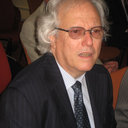 Alberto Albinati合作论文数Department of Chemistry, University of Milan8
 Luigi M. Venanzi合作论文数7
 Dominique Matt合作论文数Strasbourg Chemistry Institute6
 Pierre Braunstein合作论文数Université de Strasbourg3Antonio Tiripicchio合作论文数2
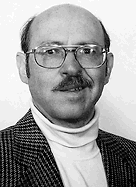 Paul Pregosin合作论文数Department of Chemistry and Applied Biosciences, ETH Zürich2Alfredo Musco合作论文数2Marisa Tiripicchio-Camellini合作论文数2Lm Venanzi合作论文数1Michael Ohlmeyer合作论文数1
 Antonio Togni合作论文数Department of Chemistry and Applied Biosciences, ETH Zurich;Laboratory of Inorganic Chemistry, ETH Zurich;Swiss Federal Institute of Technology, ETH Zurich1Janser Philipp合作论文数1
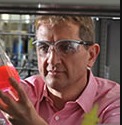 Kevin Burgess合作论文数Department of Chemistry, Texas A&M University1
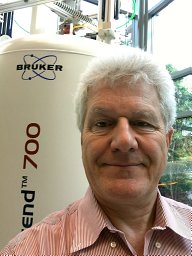 Clemens Anklin合作论文数Bruker BioSpin Corp.1Martin K. Wolfer合作论文数1Rene Thouvenot合作论文数1




