Transparency is recognized as a vital feature for understanding and predicting robot behavior. Another feature that affects interaction with robots is their anthropomorphism. The relationship between these remains under-explored but is postulated to be negative. We present a pilot study investigating the effects of robot transparency in human-robot interactions, where the robot has an anthropomorphic appearance. We asked participants to evaluate and interact with the humanoid robot Pepper to examine whether visualizing the robot's goals and behavior affects perceived intelligence, anthropomorphism, and robot agency. Our preliminary findings suggest that users may attribute higher ratings of agency when interacting with a robot visualizing its goals. In this late-breaking report, we propose our experiment on the interplay between transparency and anthropomorphism in human-robot interaction and summarize insights from our preliminary pilot study.
In this extended abstract, the authors report the ongoing work on a new mobile app for beekeepers. It is very important for beekeepers especially for those who are in search of new locations for their beehives to know the current situation in the immediate vicinity. This work presents a mobile application suitable for beekeepers to view weather and air quality data and, in particular, what people in the nearby area have annotated.
The interdisciplinary EU project HIVEOPOLIS aims to develop a new generation of intelligent beehive which might help bees in coping with adverse environmental factors. As a part of the HIVEOPOLIS project, this extended abstract reports on our ongoing work on the simulation of a decision-making process based on interactions between HIVEOPOLIS units and bee colonies which are not equipped with HIVEOPOLIS systems using the Mesa simulation framework.
In a time marked by ecological decay and by the perspective of a severe backlash of this ecosystem decay and climate devastation onto human society, bold moves that employ novel technology to counteract this decline are required.We present a novel concept of employing Artificial Life technology, in the form of cybernetically enhanced bio-hybrid superorganisms as a countermeasure and as a contingency plan.We describe our general conceptual paradigm, consisting of three interacting action plans, namely: (1) Organismic Augmentation; (2) Bio-Hybrid Socialization and (3) Ecosystem Hacking, which together compose a method to create a novel agent for ecosystem stabilization.We demonstrate, through early results from the research project HIVEOPOLIS, a specific way how classic Artificial Life technologies can create such a living, ecologically active and technologically-augmented superorganism that operates outside in the field.These technologies range from cellular automata and biomimetic robots to novel and sustainable biocompatible materials.Aiming at having a real-world impact on the society that relies on our biosphere is an important aspect in Artificial Life research and is fundamental to our methodology to create a physically embodied and useful form of Artificial Life.
To a certain extent, humans and many other biological agents are able to anticipate the consequences of their actions and adapt their decisions based on available information on current and future states of their environment. The same principle can be applied to enable decision-making in artificial agents. In order to decide on an action, an agent could envision the consequences for each of the actions and then choose the one promising the best outcome. This anticipatory scheme can enable fast decisions in highly dynamic and complex situations, which has been demonstrated in humanoid robots playing soccer. We extend this principle to the scenario of bio-hybrid beehives augmented with robotic actuators, which allow to influence the foraging locations of the bees. We investigate how a bio-hybrid beehive can make decisions and direct the bees in a way which would benefit the the whole ecosystem enabling sustainable beekeeping. We explore the general principles of anticipation and discuss connections to cognitive science and developmental robotics. We present an implementation of a simulator for the behavior of the augmented beehive and present preliminary results demonstrating the feasibility of the anticipatory approach.
Anticipation is a skill that enables complex decision making in humans and other biological agents. We review different implementations of anticipatory behavior in robots and give an overview on an...
The ability to localize and track acoustic events is a fundamental prerequisite for equipping machines with the ability to be aware of and engage with humans in their surrounding environment. However, in realistic scenarios, audio signals are adversely affected by reverberation, noise, interference, and periods of speech inactivity. In dynamic scenarios, where the sources and microphone platforms may be moving, the signals are additionally affected by variations in the source-sensor geometries. In practice, approaches to sound source localization and tracking are often impeded by missing estimates of active sources, estimation errors, as well as false estimates. The aim of the LOCAlization and TrAcking (LOCATA) Challenge is an open-access framework for the objective evaluation and benchmarking of broad classes of algorithms for sound source localization and tracking. This article provides a review of relevant localization and tracking algorithms and, within the context of the existing literature, a detailed evaluation and dissemination of the LOCATA submissions. The evaluation highlights achievements in the field, open challenges, and identifies potential future directions.
This repository contains the final release of the development and evaluation datasets for the LOCATA Challenge. The challenge of sound source localization in realistic environments has attracted widespread attention in the Audio and Acoustic Signal Processing (AASP) community in recent years. Source localization approaches in the literature address the estimation of positional information about acoustic sources using a pair of microphones, microphone arrays, or networks with distributed acoustic sensors. The IEEE AASP Challenge on acoustic source LOCalization And TrAcking (LOCATA) aimed at providing researchers in source localization and tracking with a framework to objectively benchmark results against competing algorithms using a common, publicly released data corpus that encompasses a range of realistic scenarios in an enclosed acoustic environment. Four different microphone arrays were used for the recordings, namely: Planar array with 15 channels (DICIT array) containing uniform linear sub-arrays Spherical array with 32 channels (Eigenmike) Pseudo-spherical array with 12-channels (robot head) Hearing aid dummies on a dummy head (2-channel per hearing aid). An optical tracking system (OptiTrack) was used to record the positions and orientations of talker, loudspeakers and microphone arrays. Moreover, the emitted source signals were recorded to determine voice activity periods in the recorded signals for each source separately. The ground truth values are compared to the estimated values submitted by the participants using several criteria to evaluate the accuracy of the estimated directions of arrival and track-to-source association. The datasets encompass the following six, increasingly challenging, scenarios: Task 1: Localization of a single, static loudspeaker using static microphones arrays Task 2: Multi-source localization of static loudspeakers using static microphone arrays Task 3: Localization of a single, moving talker using static microphone arrays Task 4: Localization of multiple, moving talkers using static microphone arrays Task 5: Localization of a single, moving talker using moving microphone arrays Task 6: Multi-source localization of moving talkers using moving microphone arrays. The development and evaluation datasets in this repository contain the following data: Close-talking speech signals for human talkers, recorded use DPA microphones Distant-talking recordings using four microphone arrays: Spherical Eigenmike (32 channels) Pseudo-spherical prototype NAO robot (12 channels) Planar DICIT array (15 channels) Hearing aids installed in a head-torso simulator (4 channels) Ground-truth annotations of all source and microphone positions, obtained using an OptiTrack system of infrared cameras. The ground-truth positions are provided at the frame rate of the optical tracking system The following software is provided with the data: Matlab code to read the datasets: github.com/cevers/sap_locata_io Matlab code for performance evaluation of localization and tracking algorithms: github.com/cevers/sap_locata_eval For further information, see: C. Evers, H. W. Löllmann, H. Mellmann, A. Schmidt, H. Barfuss, P. A. Naylor, W. Kellermann "The LOCATA Challenge: Acoustic Source Localization and Tracking," in IEEE/ACM Transactions on Audio, Speech, and Language Processing, vol. 28, pp. 1620-1643, 2020, doi: 10.1109/TASLP.2020.2990485 Documentation: https://www.locata.lms.tf.fau.de/files/2020/01/Documentation_LOCATA_final_release_V1.pdf
Conducting games in RoboCup incurs high cost in terms of effort, time, and money. The scientific outcome, however, is quite limited and often not very conclusive. Especially, analyzing and drawing conclusions about the performance of complex processes like decision making of an individual robot or the behavior on the team level poses a considerable challenge. Collecting more data during the competition games will help to analyze the performance of algorithms, identify errors and areas for improvement, and make more significant statements regarding the performance of the robots. In this work we investigate the possibilities for collection of the large scale RoboCup data and its analysis. We present a system for automatic recording of synchronized videos of RoboCup games and an application for exploration and annotation of large sets of RoboCup-related data. We also present data sets collected during the competitions in 2018 and an algorithm for visual detection and tracking of robots in the RoboCup videos. A first empirical evaluation shows promising results and demonstrates how such data can be integrated and used to validate robot’s behavior.
Sound source localization and tracking algorithms provide estimates of the positional information about active sound sources in acoustic environments. Despite substantial advances and significant interest in the research community, a comprehensive benchmarking campaign of the various approaches using a common database of audio recordings has, to date, not been performed. The aim of the IEEE-AASP Challenge on sound source localization and tracking (LOCATA) is to objectively benchmark state-of-the-art localization and tracking algorithms using an open-access data corpus of recordings for scenarios typically encountered in audio and acoustic signal processing applications. The challenge tasks range from the localization of a single source with a static microphone array to tracking of multiple moving sources with a moving microphone array. This paper provides an overview of the challenge tasks, describes the performance measures used for evaluation of the LOCATA Challenge, and presents baseline results for the development dataset.
Algorithms for acoustic source localization and tracking are essential for a wide range of applications such as personal assistants, smart homes, tele-conferencing systems, hearing aids, or autonomous systems. Numerous algorithms have been proposed for this purpose which, however, are not evaluated and compared against each other by using a common database so far. The IEEE-AASP Challenge on sound source localization and tracking (LOCATA) provides a novel, comprehensive data corpus for the objective benchmarking of state-of-the-art algorithms on sound source localization and tracking. The data corpus comprises six tasks ranging from the localization of a single static sound source with a static microphone array to the tracking of multiple moving speakers with a moving microphone array. It contains real-world multichannel audio recordings, obtained by hearing aids, microphones integrated in a robot head, a planar and a spherical microphone array in an enclosed acoustic environment, as well as positional information about the involved arrays and sound sources represented by moving human talkers or static loudspeakers.
This document describes the LOCATA Challenge, its tasks, corpus data, and the provided MATLAB software. 1 LOCATA Challenge Description This section provides an overview about the goals and tasks of the LOCATA Challenge. Further information, updates and details about the schedule can be found on the LOCATA website www.locata-challenge.org. 1.1 Aims & Motivation The challenge of sound source localization and tracking in realistic environments has attracted widespread attention in the Audio and Acoustic Signal Processing (AASP) community in recent years. Source localization approaches in the literature address the estimation of positional information about acoustic sources using a pair of microphones, microphone arrays, or networks with distributed acoustic sensors. However, despite the substantial interest in sound source localization and tracking approaches, a comprehensive, objective benchmarking campaign of state-of-the-art algorithms has not been conducted up to now.
This paper introduces a method for making fast decisions in a highly dynamic situation, based on forward simulation. This approach is inspired by the decision problem within the RoboCup domain. In this environment, selecting the right action is often a challenging task. The outcome of a particular action may depend on a wide variety of environmental factors, such as the robot’s position on the field or the location of obstacles. In addition, the perception is often heterogeneous, uncertain, and incomplete. In this context, we investigate forward simulation as a versatile and extensible yet simple mechanism for inference of decisions. The outcome of each possible action is simulated based on the estimated state of the situation. The simulation of a single action is split into a number of simple deterministic simulations – samples – based on the uncertainties of the estimated state and of the action model. Each of the samples is then evaluated separately, and the evaluations are combined and compared with those of other actions to inform the overall decision. This allows us to effectively combine heterogeneous perceptual data, calculate a stable decision, and reason about its uncertainty. This approach is implemented for the kick selection task in the RoboCup SPL environment and is actively used in competitions. We present analysis of real game data showing significant improvement over our previous methods.
—Information about objects and their positions in an environment are necessary requirements for most tasks of a mobile autonomous robot, in particular regarding the control of behavior and navigation. This presents a specialchallenge for robots with a limited view angle. Autonomously soccer playing robots in the dynamic environment of the RoboCup Standard Platform League are exposed to these difficulties. Most approaches aggregate all available information in one holistic model in order to localize robots. In case of inconsistent perceptions the model either turns noisy or creates and tracks an addiotional hypothesis. To improve the localization – and thus the behavior control – local models have received only little attention so far. In this work the implementation of a local goal model is presented and analyzed. A multi-hypothesis particle filter is used to cope with ambiguity of goal post percepts as well as to process incomplete and uncertain sensor information. Additionally, a percept buffer supports the initialization and also facilitates the handling of sparse false measurements. On the basis of this local goal model inconsistencies can be explicitly modeled, which may be used to stabilize the location of a robot.
The ability to grasp objects of different size and shape is one of the most important skills of a humanoid robot. Human grasping integrates a lot of different senses. In particular, the tactile sensing is very important for a stable grasping motion. When we lift a box without knowing what is inside, we do it carefully using our tactile and proprioceptive senses to estimate the weight and thus, the force necessary to hold and to lift this box. In this paper we present an adaptive controlling mechanism which enables a robot to grasp objects of different weights. Thereby, we only use the proprioceptive sensors like positions and electric current at the joints and force sensors at the end-effectors providing the robot with tactile feedback. We implemented and tested our approach on a humanoid robot.
Strategic positioning is a decisive part of the team play within a soccer game. In most solutions the positioning techniques are treated as a constituent of a complete team play strategy. In a comprehensive overview we discuss the team play and positioning methods used within RoboCup and extract the essential requirements for player positioning. In this work, we propose an approach for strategic positioning allowing for flexible formulation of arbitrary strategies. Based on the conditions of a specific strategy, the field is subdivided in regions by a Voronoi tessellation and each region is assigned a weight. Those weights influence the calculation of the optimal robot position as well as the path. A team play strategy can be expressed by the choice of the tessellation as well as the choice of the weights. This provides a powerful abstraction layer simplifying the design of the actual play strategy. We also present an implementation of an example strategy based on this approach and analyze the performance of our approach in simulation.
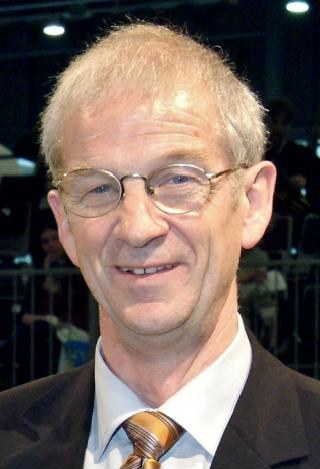 Hans-Dieter Burkhard合作论文数Department of Computer Science, Faculty of Mathematics and Natural Sciences, Humboldt-Universität zu Berlin10
 Benjamin Schlotter合作论文数Humboldt University of Berlin6
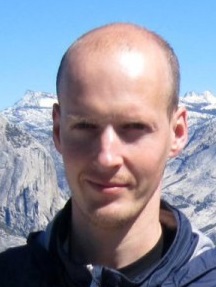 Daniel Göhring合作论文数Computer Science Department,Freie Universitat Berlin6
 Verena V. Hafner合作论文数Researcher in Computer Science, AI and Robotics6Thomas Krause合作论文数5
 Marcus M. Scheunemann合作论文数Adapt Syst Res Grp, Univ Hertfordshire5
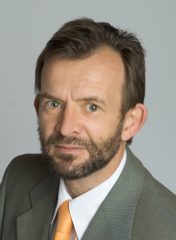 Walter Kellermann合作论文数Department Elektrotechnik-Elektronik-Informationstechnik, Technische Fakultät, Friedrich-Alexander-Universität5
 Patrick Naylor合作论文数Department of Electrical and Electronic Engineering, Faculty of Engineering, Imperial College London5
 Heinrich W. Löllmann合作论文数Institute of Communication Systems and Data Processing, RWTH Aachen University5
 Christine Evers合作论文数School of Electronics and Computer Science, Faculty of Engineering and Physical Sciences, University of Southampton5
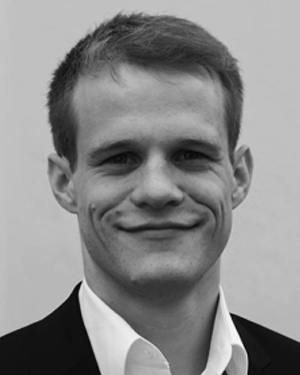 Hendrik Barfuss合作论文数5Volha Taliaronak合作论文数3Florian Holzhauer合作论文数3
 Yuan Xu合作论文数3
 Alexander Lennart Schmidt合作论文数Hotelschool The Hague3Steffen Kaden合作论文数2Armands Kviesis合作论文数2
 Aleksejs Zacepins合作论文数Fac. of Inf. Technol., Latvia Univ. of Agric.;c;Fac. of Inf. Technol., Latvia Univ. of Agric.2
 Vitalijs Komasilovs合作论文数2Oliver Welter合作论文数2Kataryna Gerasymova合作论文数2Matthias Jüngel合作论文数Künstliche Intelligenz, Humboldt-Universität zu Berlin2Olvija Komasilova合作论文数1Oliver Stadie合作论文数1Valerin Stokanic合作论文数1
 Asya Ilgun合作论文数1Sarah Schönwetter-Fuchs合作论文数1Lea Musiolek合作论文数Adapt Syst Grp, Humboldt Univ1
 Polina Arbuzova合作论文数Bernstein Center for Computational Neuroscience, Humboldt-Universität zu Berlin1
 Martin Stefanec合作论文数Institute of Biology, University of Graz1David M Dormagen合作论文数5Department of Mathematics and Computer Science, Freie Universitat Berlin1Daniel Hofstadler合作论文数Karl Franzens Univ Graz, Dept Zool, Artificial Life Lab, Graz, Austria1
 Dimosthenis Kontogiorgos合作论文数Royal Institute of Technology1
 Francesco Mondada合作论文数School of Engineering, École Polytechnique Fédérale de Lausanne1
 Jean-Louis Deneubourg合作论文数Faculté des Sciences, Université Libre de Bruxelles1Nikolajs Bumanis合作论文数1
 Giuseppe Cotugno合作论文数1
 Becher Matthias A合作论文数Environment &Sustainability Institute, University of Exeter;Rothamsted Research West Common;Environment & Sustainability Institute, University of Exeter1
 Jennifer Haensel合作论文数Department of Psychology, University of Sheffield1
 Thomas Schmickl合作论文数Artificial Life Lab, Institute of Biology, Karl-Franzens University Graz1Alexander Borisov合作论文数1
 Joanna Bryson合作论文数The Hertie School of Governance1
 Ronald Thenius合作论文数Artificial Life Laboratory of the Department of Zoology, Karl-Franzens University Graz1Martina Szopek合作论文数Artificial Life Lab of the Department of Zoology, University of Graz1
 Stamatios C. Nicolis合作论文数Department of Zoology, Universit of Oxford1Bassant Mohamed El Bagoury合作论文数1
 Michael Spranger合作论文数Sony Research;SonyAI;Sony Computer Science Laboratories Inc.;ICSL, Bellsystem24, Inc1
 Rob Mills合作论文数University of Southampton1




