Introduction. The propagation of light in photonic lattices has attracted a lot of interest in recent years. It is possible to engineer photonic lattice configurations such that the flow of light may be predicted, giving rise to possible applications. The discrete coupling or tunneling process between periodically arranged potential wells is a fundamental topic that has been extensively investigated [1]. In optics, arrays of weakly coupled waveguides and resonators are excellent examples of such systems, where the coupling dynamics can be directly observed and investigated [2–5]. The similarities between wave optics and quantum mechanics lead to judiciously established analogies in photonic structures [6, 7], since the electric field and the wave function obey the same equation: the paraxial equation and Schrödinger equation. For instance, and of particular interest, when the refractive index is constant but different in each waveguide, the dynamics of the light in the photonic lattice exhibits Bloch oscillations [8], and even more, as long as the optical potential is periodic (complex or real), the dynamics of an atom within a crystalline lattice can be mapped to these types of evanescent structures [9–11]. Significantly, when a two-level atom interacts with two counterpropagating light fields (standing field), that is, a periodic optical potential, it is well-known that atomic Bragg diffraction obeys systems of differential equations [12–16] resembling the ones obtained in classical light propagation in photonic lattices [17–19]; in fact, although they are time dependent, sets of unitary (similarity) transformations (see below) may lead to differential equations commonly obtained for light propagating in in-homogeneous media [5] making both systems analogous. In this Letter, we show that an infinite array having a square law distribution for the transversal refraction index can be a platform to emulate the Bragg diffraction processes. To increase the index of refraction in a lattice, as the one shown in Fig. 1, may be a difficult task, as the coupling has to grow quadratically; therefore, ways of simulating such waveguide array may be of interest. The purpose of the present contribution is to introduce a photonic lattice where light propagation models Bragg
In this work we construct an approximate time evolution operator for a system composed by two coupled Jaynes-Cummings Hamiltonians. We express the full time evolution operator as a product of exponentials and we analyze the validity of our approximations contrasting our analytical results with those obtained by purely numerical methods.
A supersymmetric theory in the temporal domain is constructed for bi-spinor fields satisfying the Dirac equation. It is shown that using the Dirac matrices basis, it is possible to construct a simple time-domain supersymmetry for fermion fields with time-dependent mass. This theory is equivalent to a bosonic supersymmetric theory in the time-domain. Solutions are presented, and it is shown that they produce probability oscillations between its spinor mass states. This theory is applied to the two-neutrino oscillation problem, showing that the flavour state oscillations emerge from the supersymmetry originated by the time-dependence of the unique mass of the neutrino. It is shown that the usual result for the two-neutrino oscillation problem is recovered in the short-time limit of this theory. Finally, it is discussed that this time-domain fermionic supersymmetric theory cannot be obtained in the Majorana matrices basis, thus giving hints on the Dirac fermion nature of neutrinos.
The dynamical analysis of vibrational systems of masses interconnected by restitution elements each with a single degree of freedom, and different configurations between masses and spring constants, is presented. Finite circular and linear arrays are studied using classical arguments, and their proper solution is given using methods often found in quantum optical systems. We further study some more complicated arrays where the solutions are given by using Lie algebras.
We present the derivation of the normalization constant for the perturbation matrix method recently proposed. The method is tested on the problem of a binary waveguide array for which an exact and an approximate solution are known. In our analysis, we show that to third order the normalized matrix method approximate solution gives results coinciding with the exact known solution.
We show that it is possible to add or subtract many photons from a cavity field by interacting it resonantly with a two-level atom. The atom, after entangling with the field inside the cavity and exiting it, may be measured in one of the Schmidt states, producing a multiphoton process (in the sense that can add or annihilate more photons than a single transition allows), i.e., adding or subtracting several photons from the cavity field.
The creation of non-classical states of light is an interesting problem, that we solve sending atoms through an optical cavity. We show that it is possible to add or subtract many photons from a cavity field by interacting it resonantly with a two-level atom. The atom, after entangling with the field inside the cavity and exiting it, may be measured in one of the Schmidt states, producing a multiphoton process (in the sense that can add or annihilate more photons than a single transition allows), i.e. adding or subtracting several photons from the cavity field. By plotting the quadratures and the Husimi Q-function, we also show that the non-classical state produced by such measurements is a squeezed state.
在曲照军等的文章中[1]作者声称他们能够解决腔场影响原子问题。在此我们显示出既然他们用于得到相互作用表象的哈密顿的变换不完备所以他们没有解决该问题。
Based on operator algebras commonly used in quantum mechanics some properties of special functions such as Hermite and Laguerre polynomials and Bessel functions are derived.
The coherent transport of quantum states between distant qubits is one of the key milestones towards the realisation of large-scale quantum computers. For static qubits, this state transfer is often envisioned to be carried out only by the internal dynamics of the system, which has the great advantage that detrimental influences of the environment are minimised. A chain of spin-1/2-qubits with ferromagnetic coupling has been suggested as an implementation of a coherent transport which is perfect in theory. In this scheme, a precise engineering of the coupling strengths between adjacent spins is crucial. To date, such a quantum state transfer has only been achieved for the modest system size of three qubits, employing nuclear magnetic resonance. However, this concept is by no means restricted to spin chains; it is therefore possible to resort to another physical platform, such as optics, to investigate the capabilities of the transferring Hamiltonian. Results show that 84% fidelity of transfer across the 19 waveguides used in the study was achieved. The errors in the presented scheme are mostly induced by imperfections in the fabrication and excitation, whereas full coherence is always maintained.These results demonstrate the feasibility of state transfer schemes on static qubits and highlight how these ideas can be implemented in the domain of optics.
A new class of entangled states, similar to N00N states is introduced. We call these states M00N states as the excitations shared in both subsystems do not need to be equal. The generation proposed here does not need conditional measurements, and therefore is achieved in a deterministic manner.
We present a review of the mathematical methods that are used to theoretically study classical propagation and quantum transport in arrays of coupled photonic waveguides. We focus on analyzing two types of binary photonic lattices: those where either self-energies or couplings alternate. For didactic reasons, we split the analysis into classical propagation and quantum transport, but all methods can be implemented, mutatis mutandis, in a given case. On the classical side, we use coupled mode theory and present an operator approach to the Floquet–Bloch theory in order to study the propagation of a classical electromagnetic field in two particular infinite binary lattices. On the quantum side, we study the transport of photons in equivalent finite and infinite binary lattices by coupled mode theory and linear algebra methods involving orthogonal polynomials. Curiously, the dynamics of finite size binary lattices can be expressed as the roots and functions of Fibonacci polynomials.
We show how NOON states may be generated in ion traps. We use the individual interaction of light with each of two vibrational modes of the ion to entangle them. This allows us to generate NOON states with N=8.
A classical realization of the atom-field interaction Hamiltonian, based on the transport of light in engineered optical waveguide lattices, is theoretically proposed. The optical lattice enables direct visualization of atom-field dynamics in Fock space.
We show that in the trapped ion-laser interaction all the regimes may be considered analytically. We may solve not only for different laser intensities, but also away from resonance and from the Lamb-Dicke regime. It is found a dispersive Hamiltonian for the high intensity regime, that, being diagonal, its evolution operator may be easily calculated.
We show how NOON states may be generated in ion traps. We use the individual interactions of light with each of the two vibrational modes of the ion to entangle them. This allows us to generate NOON states with N = 8.
We develop an alternative approach to the time independent perturbation theory in non-relativistic quantum mechanics. The method developed has the advantage to provide in one operation the correction to the energy and to the wave function; additionally we can analyze the time evolution of the system for any initial condition, which may be bothersome in the standard method. To verify our results, we apply our method to the harmonic oscillator perturbed by a quadratic potential. An alternative form of the Dyson series, in matrix form instead of integral form, is also obtained.
The dispersive interaction between a two-level atom and a quantized field is studied. We consider besides a time dependent linear amplification and dissipative processes. In order to solve the master equation for this system, we use superoperator techniques.
 Soto-Eguibar F合作论文数9A Vidiella-Barranco合作论文数8
 Jose A. Roversi合作论文数Instituto de Física;Universidade Estadual de Campinas;Instituto de Física, Universidade Estadual de Campinas8
 Peter Knight合作论文数Department of Physics, Faculty of Natural Sciences, Imperial College London7L. M. Arevalo Aguilar合作论文数7
 B. M. Rodríguez-Lara合作论文数Universidad Politécnica de Pachuca7r juarezamaro合作论文数6S. M. Dutra合作论文数6J. M. Vargas-Martínez合作论文数5
 Antonio Vidiella-Barranco合作论文数Universidade Estadual de Campinas5
 Vladimir Buzek合作论文数Research Center for Quantum Information, Institute of Physics, Slovak Academy of Sciences5A. Zúñiga-Segundo合作论文数5F. Soto-Eguibar合作论文数4D. Rodríguez-Méndez合作论文数4
 S. Chavez-Cerda合作论文数4
 Paolo Tombesi合作论文数Dipartimento di Fisica, Università di Camerino4
 O. Aguilar-Loreto合作论文数Centro de Investigaciones en Optica;Coordinacion de Optica;Centro de Investigaciones en Optica, Coordinacion de Optica4
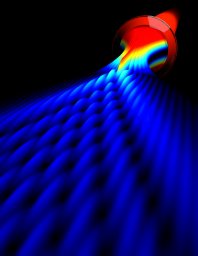 Armando Perez-Leija合作论文数Max Born Inst4J. R. Moya-Cessa合作论文数3
 M. Fernandez-Guasti合作论文数Lab Opt Cuant, Univ Autonoma Metropolitana Iztapalapa3
 Demetrios Christodoulides合作论文数School of Engineering, University of Southern California;CREOL, the College of Optics and Photonics, University of Central Florida3A. Zuniga-Segundo合作论文数2I. Ramos-Prieto合作论文数2Jorge A. Anaya-Contreras合作论文数2
 Roberto León Montiel合作论文数Department of Matter Structure, Instituto de Ciencias Nucleares, Universidad Nacional Autonoma de Mexico2
 Werner Vogel合作论文数Institut fur Physik, Universitat Rostock2J. Sanchez-Mondragon合作论文数INAOE2
 Victor Arrizon合作论文数Instituto Nacional de Astrofisica, Optica y Electronica2R. Mar-Sarao合作论文数2
 Camilo A Arancibia-Bulnes合作论文数Centro de Investigación en Energía, Universidad Nacional Autónoma de México2Luis R. Berrielvaldos合作论文数2P. Barberis-Blostein合作论文数1Mf Guasti合作论文数1E.A. Martí-Panameño合作论文数1Lm Arevaloaguilar合作论文数1
 Suren A. Chilingaryan合作论文数1
 B. M. Villegas-Martínez合作论文数Instituto Nacional de Astrofísica, Óptica y Electrónica1
 Alejandro R. Urzúa合作论文数Instituto Nacional de Astrofísica, Óptica y Electrónica1Iran Ramos-Prieto合作论文数Inst Ciencias Fis, Univ Nacl Autonoma Mexico1Martinez-Carranza J合作论文数1
 Uriostegui Kenan合作论文数1
 Alexander Szameit合作论文数Institute for Physics, University of Rostock1
 Stefano Mancini合作论文数Scuola di Scienze e Tecnologie, Universita Di Camerino1
 Barry M. Garraway合作论文数School of Mathematical and Physical Sciences, University of Sussex1
 Gershon Kurizki合作论文数Department of Chemical and Biological Physics, Weizmann Institute of Science1
 Stefan Nolte合作论文数Institute of Applied Physics, Friedrich Schiller Universität Jena;Abbe Center of Photonics, Friedrich Schiller Universität Jena;Fraunhofer Institute for Applied Optics and Precision Engineering1
 Astrid Lambrecht合作论文数Institute of Physics, CNRS;RWTH Aachen University;Forschungszentrum Jülich1
 Igor Kudryavtsev合作论文数Moscow State University1J. L. Escudero-Jiménez合作论文数1




