A suite of nickel, cobalt, iron, copper, and zinc containing sulfides are assayed for the promotion of a model carbon fixation reaction with relevance to local reducing environments of the early Earth. The assay tests the promotion of hydrocarboxylation (the Koch reaction) wherein a carboxylic acid is synthesized via carbonyl insertion at a metal-sulfide-bound alkyl group. The experimental conditions are chosen for optimal assay, i.e., high reactant concentrations and pressures (200 MPa) to enhance chemisorption, and high temperature (250°C) to enhance reaction kinetics. All of the metal sulfides studied, with the exception CuS, promote hydrocarboxylation. Two other significant reactions involve the catalytic reduction of CO to form a surface-bound methyl group, detected after nucleophilic attack by nonane thiol to form methyl nonyl sulfide, and the formation of dinonyl sulfide via a similar reaction. Estimation of the catalytic turnover frequencies for each of the metal sulfides with respect to each of the primary reactions reveals that NiS, Ni3S2, and CoS perform comparably to commonly employed industrial catalysts. A positive correlation between the yield of primary product to NiS and Ni3S2 surface areas provides strong evidence that the reactions are surface catalytic in these cases. The sulfides FeS and Fe(1−x)S are unique in that they exhibit evidence of extensive dissolution, thus, complicating interpretation regarding heterogeneous vs. homogeneous catalysis. With the exception of CuS, each of the metal sulfides promotes reactions that mimic key intermediate steps manifest in the mechanistic details of an important autotrophic enzyme, acetyl-CoA synthase. The relatively high temperatures chosen for assaying purposes, however, are incompatible with the accumulation of thioesters. The results of this study support the hypothesis that transition metal sulfides may have provided useful catalytic functionality for geochemical carbon fixation in a prebiotic world (at least intially) devoid of peptide-based enzymes.
Three lines of experimental research suggest that high pressure may have played a significant role in the origin of life. Discoveries of abundant life in high-pressure environments, including deep oceans, hydrothermal vents, and crustal rocks, point to the adaptation of life to a variety of aqueous habitats. Cultures of microbes at high pressure display both barotolerant and barophilic behaviour. And studies of high-pressure hydrothermal organic synthesis reveal unexpectedly facile reaction mechanisms for the production of a variety of requisite biomolecules.
T SHE FIELD OF GEOLOGY is undergoing major transformations as the science is being integrated into other fields. There are so many exciting developments in the science itself that only a few examples of new opportunities can be presented here; however, the trends in social issues (particularly environmental concerns), education, funding, and governmental involvement are alarming and are having even greater impact on the field of geology. The bridging programs of geology with physics, chemistry, biology, and mathematics have been formalized into the disciplines of geophysics (Frobel, 1834), geochemistry (Schonbein, 1838), geobiology (Folquer, 1939; Teilhard de Chardin, 1943), and geomath (Butler, 1941).2 (The late Preston Cloud, member of the American Philosophical Society, preferred the title Professor of Biogeology when he joined the faculty of UCLA in 1965.) Even these fields have been integrated; biogeochemistry, for example, has incorporated the new disciplines in astrobiology, biomineralogy, and pedogenesis (soil formation).
Recent theories have proposed that life arose from primitive hydrothermal environments employing chemical reactions analogous to the reductive citrate cycle (RCC) as the primary pathway for carbon fixation. This chemistry is presumed to have developed as a natural consequence of the intrinsic geochemistry of the young, prebiotic, Earth. There has been no experimental evidence, however, demonstrating that there exists a natural pathway into such a cycle. Toward this end, the results of hydrothermal experiments involving citric acid are used as a method of deducing such a pathway. Homocatalytic reactions observed in the citric acid-H2O experiments encompass many of the reactions found in modem metabolic systems, i.e., hydration-dehydration, retro-Aldol, decarboxylation, hydrogenation, and isomerization reactions. Three principal decomposition pathways operate to degrade citric acid under thermal and aquathermal conditions. It is concluded that the acid catalyzed beta gamma decarboxylation pathway, leading ultimately to propene and CO2, may provide the most promise for reaction network reversal under natural hydrothermal conditions. Increased pressure is shown to accelerate the principal decarboxylation reactions under strictly hydrothermal conditions. The effect of forcing the pH via the addition of NaOH reveals that the decarboxylation pathway operates even up to intermediate pH levels. The potential for network reversal (the conversion of propene and CO2 up to a tricarboxylic acid) is demonstrated via the Koch (hydrocarboxylation) reaction promoted heterocatalytically with NiS in the presence of a source of CO. Specifically, an olefin (1-nonene) is converted to a monocarboxylic acid; methacrylic acid is converted to the dicarboxylic acid, methylsuccinic acid; and the dicarboxylic acid, itaconic acid, is converted into the tricarboxylic acid, hydroaconitic acid. A number of interesting sulfur-containing products are also formed that may provide for additional reaction. The intrinsic catalytic qualities of FeS and NiS are also explored in the absence of CO. It was shown that the addition of NiS has a minimal effect in the product distribution, whereas the addition of FeS leads to the formation of hydrogenated and sulfur-containing products (thioethers). These results point to a simple hydrothermal redox pathway for citric acid synthesis that may have provided a geochemical ignition point for the reductive citrate cycle. Copyright (C) 2001 Elsevier Science Ltd.
Experiments exploring the potential catalytic role of iron sulfide at 250 degrees C and elevated pressures (50, 100, and 200 megapascals) revealed a facile, pressure-enhanced synthesis of organometallic phases formed through the reaction of alkyl thiols and carbon monoxide with iron sulfide. A suite of organometallic compounds were characterized with ultraviolet-visible and Raman spectroscopy. The natural synthesis of such compounds is anticipated in present-day and ancient environments wherever reduced hydrothermal fluids pass through iron sulfide-containing crust. Here, pyruvic acid was synthesized in the presence of such organometallic phases. These compounds could have provided the prebiotic Earth with critical biochemical functionality.
Melting determinations on spectrographic grade RbCl by differential thermal analysis in an internally‐heated, gas‐media apparatus gave the following constants for the Simon equation, P − Po = A[(T/To)c−1] (bars, Kelvin). For RbClI=L, Po = 1, To = 993.45, A = 8122, c = 5.02, sd = 0.5 K. For RbClII = L, Po = 7750, To = 1131.15, A = 5061, c = 6.40, sd = 1.0 K. The solid‐solid transition RbClI=II determined by DTA is described by P = 4490 + T/0.35. The best‐fit triple point lies on a liquidus cusp at 1134 K, 7790 b. The results for melting are 3–7 K higher than earlier results. The new determinations are useful in the calibration of experimental apparatus at moderate pressure. They confirm that temperature calibration cannot explain divergent liquidus determinations for the system Ab‐H2O.
The phase diagram of the binary system hydrogen‐water has been studied up to 30 GPa and 450 K. In this system, two new clathrate hydrate phases have recently been found, giving rise to at least five three‐phase lines and two quadruple points. Furthermore, several instances of metastability or slow transformations of phases have been identified. The phase behavior of the low‐pressure clathrate is in qualitative agreement with expectations based on simple thermodynamic arguments, whereas the high‐pressure clathrate is stable to unexpectedly high pressures.
This chapter contains sections titled: Introduction The Magnificent Scheme The Advisory Committee The Committee of Eight Grants in Geophysics Multiple Nucleation The Unique Philosophy The Promotion A Timeless Blueprint
 Robert M. Hazen合作论文数Earth and Planets Laboratory, Carnegie Institution for Science;George Mason University11
 George Cody合作论文数Earth and Planets Laboratory, Carnegie Institution for Science;Geophysical Laboratory, Carnegie Institution of Washington10
 Jay A. Brandes合作论文数Skidaway Institute of Oceanography8
 Nabil Z Boctor合作论文数6Nabil Z. Boctor合作论文数4
 Timothy R. Filley合作论文数Department of Earth, Atmospheric, and Planetary Sciences, College of Science, Purdue University3
 Bjorn O. Mysen合作论文数Earth and Planets Laboratory, Carnegie Institution for Science;Geophysical Laboratory, Carnegie Institution of Washington2Hans P Eugster合作论文数2alok kumar sharma合作论文数1I. Kushiro合作论文数1Jh Scott合作论文数1Dw Deamer合作论文数1judy scott合作论文数1
 Anurag Sharma合作论文数Faculty of Information Sciences and Engineering, University of Canberra1
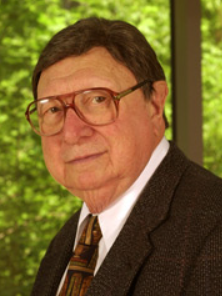 Harold J. Morowitz合作论文数Krasnow Institute for Advanced Study, George Mason University1
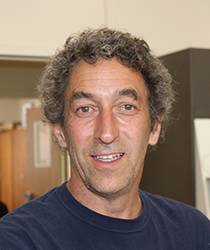 Zachary D. Sharp (Zachary Sharp)合作论文数Center for Stable Isotopes, University of New Mexico;Department of Earth & Planetary Sciences, University of New Mexico1Gunnar Kullerud合作论文数1BJ GILETTI合作论文数1Th. G. Sahama合作论文数1




