A new genus and species of tiphiid wasps, Burmatiphia mandibulata gen. et sp. nov., is described and illustrated based on a new specimen from the lowermost Cenomanian Burmese amber as forming a distinct subfamily Burmatiphiinae subfam. nov. The new taxon is characteristic of a combination of striking plesiomorphies (metasomal sterna 1 and 2 forming even surface, female metasomal apical tergum and sternum unmodified with narrow orifice for sting, and female mid and hind tibiae lacking digging adaptation) and synapomorphies (single mid and hind tibial spurs, long and sharp tibial spines, scape with long radix, possibly reduced costal space in fore wing). Burmatiphia gen nov. supposedly hunted for prey within underground tunnels.
Myanmarina as a small genus has received attention since 2017 as well as the new family Myanmarinidae of basal apocritan wasps was erected by Zhang & Rasnitsyn. Myanmarina diversa sp. nov is the sixth myanmarinid wasp, is described and illustrated from mid-Cretaceous Kachin amber. The new species is characterized by male antenna with 13 antennomeres and mid femur with posterior apical tooth. We also provide the comparison of characters among six Myanmarina species and discuss their possible biology.
Burmoxyela lii gen. et sp. nov. is described and illustrated based on a male collected from mid-Cretaceous Kachin (Burmese) amber. Pinguixyela gen. nov. is described for Syspastoxyela pinguis Wang, Shih, Ren & Gao, 2019, and Syspastoxyela simpla Wang, Shih, Ren & Gao, 2019 is transferred to the genus Striaexyela Zheng et al., 2019 as Striaexyela simpla (Wang, Shih, Ren & Gao, 2019), comb. nov., both from Kachin amber. This results in 5 genera and 6 species comprising the family thus far. A key to genera and species of Syspastoxyelidae is provided. The family is consideded as the most basal branch of Hymenoptera sister to Xyelidae. Biologically Syspastoxyelidae are hypothesized to develop within male cones of conifer trees and to feed on pollen grains both as adult and immature. Our discovery supports the hypothesis that the mid-Cretaceous Kachin biota was highly endemic. (c) 2021 Elsevier Ltd. All rights reserved.
 Yan Zheng合作论文数Institute of Geology and Paleontology, Linyi University, Shuangling Road, Linyi, 276000, China3
 Alexandr P. Rasnitsyn合作论文数3
 Qi Zhang合作论文数2De Zhuo合作论文数2
 Jun Chen (陈骏)合作论文数School of Sustainable Energy and Resources, Nanjing University;School of Earth Sciences and Engineering, Nanjing University2
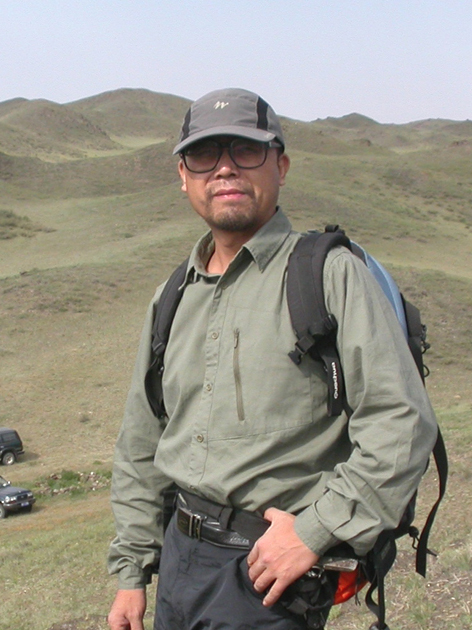 Haichun Zhang (张海春)合作论文数Nanjing Institute of Geology and Palaeontology, Chinese Academy of Sciences2
 Han Wang合作论文数1Haiguang Zhang合作论文数1




