ABSTRACT Aim: This study aims to explore -624 T→C polymorphism on CGRP gene in migraine patients, and the relation between this polymorphism and migraine attacks. Materials and methods: The study registered a total of 101 migraine patients, 17 with aura and 84 without aura and 80 healthy volunteers. CGRP -624 T→C polymorphism in migraine patients and the control group was evaluated using PCR-RFLP method. Results: Although no significant difference could be found between genotype and allele frequencies of CGRP -624T→C polymorphism in the patient and control groups (p>O.O5). In addition, a statistically significant positive correlation was established between the severity of headache and C allele of this gene in migraine patients (p<0.05). Conclusion: The fact that C allele of CGRP gene is at a higher rate in those with severe migraine attacks suggests that this allele can render neuroinflammation more marked by increasing the amount of CGRP. However, how CGRP -624T→C polymorphism influences the expressian level of the gene is not known for sure yet.
Depression is a common mental disorder characterized by the mood of deep sadness. Recent studies have demonstrated that microRNAs and ion channels have significant roles in the etiopathogenesis of depression. Therefore, we investigated the effects of the TREK1 ion channel inhibitor anandamide and the TRPC3/6 inhibitor norgestimate on microRNA expression and antidepressant effect in the mouse chronic mild stress (CMS) model of depression. Male BALB/c mice were divided into groups as control, CMS, CMS+sertraline, CMS+anandamide, CMS+sertraline+anandamide, CMS+norgestimate and CMS+sertraline+norgestimate. Forced swim test (FST) and Sucrose Preference Test (SPT) were utilized to assess depression levels. Anandamide and norgestimate were administered subcutaneously (5mg/kg/day), and sertraline was applied intraperitoneally (10mg/kg/day) for two days during FST. miRNA and ion channel gene expression levels in the prefrontal cortex were assessed with qRT-PCR. qRT-PCR results demonstrated that there was a significant increase in miR-9-5p, miR-128-1-5p, and miR-382-5p, and a significant decrease in miR-16-5p, miR-129-5p, and miR-219a-5p in the CMS group compared with the control group. Generally, anandamide and norgestimate significantly increased all miRNA expression. It was also determined that anandamide and norgestimate had an antidepressant action in FST when used alone and especially when used in conjunction with sertraline. Based on the study results, it could be argued that an increase in miR-9-5p and miR-128-1-5p, consistent with the literature, could play significant roles in the etiopathogenesis of depression. The antidepressant action of anandamide and norgesimate in FST showed for the first time that these inhibitors could be used as in conjuction with sertraline in depression treatment.
Rheumatoid arthritis (RA) is a major cause of adult chronic inflammatory arthritis and an autoimmune disease of unknown etiology in which the inflammatory pathology involves T cell activation. Genetic mutations in the Mediterranean fever (MEFV) gene, encoding pyrin, influence the severity of RA, but the underlying mechanisms are not completely understood. In this study, we investigated whether the full-length MEFV gene (MEFV-fl) and the exon 2-deleted splice isoform (MEFV-d2) expression are associated with or responsible for the clinical conditions of RA. This study include 47 patients with RA and 47 age- and gender-matched healthy controls. Quantitative real-time polymerase chain reaction analysis was performed to examine transcriptional changes in MEFV gene expression from peripheral blood samples. Reverse transcription-polymerase chain reaction of peripheral blood cells revealed the downregulation of MEFV-fl mRNA in non-treated patients compared with healthy controls and treated patients. MEFV-d2 expression was not different between groups. This is the first study to investigate the expression of MEFV transcript in RA. Deregulation of the MEFV gene is likely to result in uncontrolled inflammation as observed in RA. Therefore, downregulation of MEFV-fl may be involved in the pathogenesis of early-stage RA and treatment and may ameliorate MEFV-fl expression.
BACKGROUND:A protein tyrosine phosphatase non-receptor type 22 (PTPN22) C1858T gene polymorphism has been reported to be associated with both Type 2 diabetes mellitus (T2DM) and Hashimoto's thyroiditis (HT) separately. However, no study has been conducted to explore the C1858T polymorphism in T2DM and HT coexistent cases up to now.AIMS:The study aimed to determine whether a relationship exists or not between the PTPN22 C1858T polymorphism and this coexistent patient group.STUDY DESIGN:Case-control study.METHODS:Peripheral blood samples from 135 T2DM patients, 102 patients with coexistent T2DM+HT, 71 HT patients and 135 healthy controls were collected into ethylenediaminetetraacetic acid (EDTA) anticoagulant tubes and genomic DNA was extracted. The PTPN22 C1858T polymorphism was analyzed using polymerase chain reaction (PCR) restriction fragment length polymorphism (RFLP) methods.RESULTS:Statistically significant differences were not observed between the patient and control groups. This study demonstrated a statistically significant association between both the CT genotype and the T allele in the female patient group with coexistent T2DM+HT (CT genotype: p=0.04; T allele: p=0.045) with a statistically significant association between the CT genotype and the mean values of body mass index (BMI) and free T3 levels (FT3) (BMI: p=0.044 and FT3: p=0.021) that was detected in the patient group with coexistent T2DM+HT. The minor genotype TT was observed in none of the groups in this study. The CT genotype frequency was [number (frequency): 5 (3.8%), 7 (6.86%), 5 (7.04%), 3 (2.22%), while the T allele frequency was 5 (1.86%), 7 (3.44%), 5 (3.53%) and 3 (1.12%)] in the T2DM, T2DM+HT, HT and control groups, respectively.CONCLUSION:Our data suggest that the PTPN22 1858T allele and the CT genotype are associated with increased risk in female patients for coexistent T2DM+HT. The CT genotype was associated with high mean BMI and free T3 values in the patient group with coexistent T2DM+HT. These results demonstrate that T allele carriers were more often in the T2DM+HT group than in the T2DM group. Therefore, the combination of T2DM and HT with female gender may have higher T allele carriage in comparison to the T2DM only and male groups.
Introduction: Some studies of prostate cancer (PCa) have reported the presence of human papillomavirus (HPV) DNA. Polymorphisms in IL-10 gene can influence inflammation and immune response and may be related to the risk of prostate cancer. The capacity for IL-10 production varies according to the genetic composition of the IL-10 locus. We aimed to elucidate the relation between HPV infection and IL-10 polymorphism for the development of prostate cancer. We examined 108 formalin-fixed specimens for the existence of HPVs DNA and IL- 10 - 1082 genotype distribution.Materials and Methods: The DNA are extracted from archival prostate tissues of totally 108 patients, 40 of whom with adenocarcinoma and 68 with benign prostatic hyperplasia (BPH). Genotypes of IL- 10 - 1082 single nucleotide polymorphism (SNP) were performed using allele specific polymerase chain reaction (ARMS). HPV detection was performed by using conventional HPV primers.Results: HPVs DNA was detected in 15 of 68 BPH specimens (22%) and in 16 of 40 prostate PCa specimens (40%). Distribution of IL- 10 - 1082 genotype was not statistically different between PCa and BPH using chi-square (p> 0.05). There was not any association between HPVs DNA positivity and IL- 10 - 1082 genotypes.Conclusion: The results suggest that the HPVs DNA positivity might be involved in the etiology of a minority of prostate cancers. As result, we consider that future investigations are needed to provide conclusive evidence on the role of this pathogen and genes in the prostate cancer.
Toll-like receptors (TLRs) play an important role in the induction and regulation of the innate immune system or adaptive immune responses. Genetic variations within human TLRs have been reported to be associated with a range of immune-related diseases. This study was conducted to investigate the frequencies of TLR3 rs3775290, TLR9 rs187084, and TLR10 rs4129009 polymorphisms and to detect between polymorphisms and autoantibody positive as RF, collagen type II, anti-RNP, and anti-CCP in patient group. We performed a case–control study of 100 rheumatoid arthritis (RA) cases and 100 healthy controls matched on age, sex, and residence. All polymorphisms in TLRs were determined by polymerase chain reaction-based restriction fragment length polymorphism. Serum autoantibody level was measured using quantitative ELISA. SNPs were genotyped in all samples. Our results showed that TT genotype for SNP 1237 T/C increased the RA risk significantly (p < 0.05). No statistically significant differences were found in the TLR3 and TLR10 genotypes or allele distribution between RA patients and control individuals. No associations were noted with autoantibody production and TLR3, TLR9, and TLR10 polymorphisms genotypes (p > 0.05). Our study suggests that a single nucleotide polymorphism (rs187084) in TLR9 gene may be a susceptibility factor for RA in Turkish population. Further studies are required to explore the role of TLRs gene polymorphisms in the risk of RA, especially in ethnically different populations to confirm our results.
Amac: Sizofreni, psikoz, bilissel fonksiyon bozukluklari ve negatif semptomlarla seyreden kompleks bir hastaliktir. Etyoloji, bir cok vakada bilinmemektedir. Sizofreni patogenezinde serbest radikal-antioksidan sisteminde dengenin oksidanlarin lehine bozulmasi suclanmaktadir. Bu calismamizda glutatyon peroksidazin en onemli alt grubu olan glutatyon peroksidaz 1 (GPX1) enzimini kodlayan gendeki pro197leu polimorfizminin sizofreni etyopatogenezindeki rolunu aydinlatmayi hedefledik. Gerec ve yontem: Calismamiza 100 hasta (54 erkek ve 46 kadin) ve 100 saglikli gonullu dahil edildi. PCR/RFLP yontemi calisma metodu olarak secildi. Bulgular: GPX1 genindeki pro197 ve leu197 allellerinin sikliklari (p=0,318) ve pro/pro, pro/leu, leu/leu genotiplerinin dagilimlari (p=0.402) kontrol ve sizofreni gruplarinda benzer bulundu. Ayrica genotip dagilimlari acisindan kadinlar ve erkekler arasinda anlamli bir iliski bulunamadi (p=0,225). Sonuc: GPX1 genindeki pro197leu polimorfizminin calisilan Turk toplumunda sizofreniye yatkinlik olusturmadigi tespit edildi
Familial Mediterranean Fever (FMF) is an autoinflammatory periodic disorder. We aim to identify the distribution and the frequency of the Mediterranean Fever (MEFV) gene mutations in the east of Anatolia in Turkey and perform a genotype/phenotype correlation in the patients’ cohort. The study was carried out on 415 clinically diagnosed Turkish FMF patients and 103 healthy controls. The tested individuals were screened for the most common twelve MEFV mutations. The most important features were the predominance of the M694V and E148Q mutations in patient group and the earlier of onset of the disease in M694V mutation carriers compared with the carriers of other mutations (P=0.00). We discuss the high frequency of E148Q mutations in patient group compared with controls, genetic counseling in intermarriage families and the variations in mutation frequency according to regions of Turkey.
There is no report investigating the human leukocyte antigen system (HLA) class I alleles and haplotypes in the patients with primary spontaneous pneumothorax (PSP) without any familial history in the literature. We investigated the association of these alleles and haplotypes, and the occurrence of the PSP in Turkish patients. Materials and methods: The study group consisted of 20 patients diagnosed as PSP (without any familial history), and 20 healthy volunteers as control group. All the participants were Turkish male nonsmokers. Their genomic DNAs were extracted from venous samples, and the HLA class I alleles and haplotypes were analysed. Results: The HLA Bw4 allele was significantly increased in the study group (80% vs. 60%, P = 0.05). The frequencies of the HLA Cw7, and B18 alleles were higher in the study group (35% vs. 15%, and 20% vs. 0%, respectively, P > 0.05), and there was a high ratio of the Cw7 homozygotism (30% vs. 10%, P > 0.05). Conclusion: HLA Bw4, B18, and Cw7 alleles may play a genetic role in the development of the nonfamilial PSP in the Turkish population, but further accumulation of the cases are necessary to clarify whether the HLA-typing can confirm the development of a nonfamilial PSP.
OBJECTIVES: The cause of recurrent early pregnancy wastage is often unknown. Cytogenetic studies have an important role in the evaluation of couples with repeated miscarriages and poor obstetric history. STUDY DESIGN: To estimate the prevalence of chromosomal abnormalities and polymorphic variants, we performed G-banded chromosome analysis on 470 couples with 2 or more spontaneous abortions or bad obstetric history, the east of Turkey from 1998 to 2008. RESULTS: Major chromosomal aberrations and polymorphic variants were found in 2.12% and 2.34%, respectively. Complex chromosomal rearragements it was detected in one female patient. CONCLUSION: Our study suggest that chromosomal abnormality incidence in patients with fetal deaths/abnormality is much higher than in the patients with first trimester or second trimester recurrent abortion. Prenatal diagnosis should be offered to couples wiht balanced chromosomal carrier and in vitro fertilization to couples with complex chromosomal rearragements in the case of future pregnancies.
Amac: Erkek infertilitesi cocuk sahibi olamayan ciftlerin yarisindan sorumludur. Kromozomal abnormaliteler fertil erkeklerle karsilastirildiginda infertil erkeklerde daha siktir. Kromozomal anomalilerin spermotogenezde basarisizliga neden olarak erkek infertilitesine neden oldugu bilinmektedir. Calismada sperm anomalisi gosteren infertil erkeklerde major kromozomal anomalilerin tipleri ve sikliginin arastirilmasi amaclanmistir. Gerec ve Yontem: Toplam 214 (138 azospermik, 76 oligospermik) infertil erkek bireye sitogenetik inceleme yapildi. Tum hastalarin periferik kan lenfositlerinin kromozomal analizleri sdandart yontemlere gore yapildi. Bulgular: Toplam 214 infertil erkegin 24 (%11.2)’unde klinifelter sendromu (16/24; %7.5), XYY sendromu (1/24; %0.5), XX erkek sendromu (1/24; %0.5), 45,X, mar (Y) (1/24; %0.5), 46,XX, inv(Y)(p11q11) (1/24; %0.5), 46,XY, der(1)t(1;5)(p33;qter) (1/24; %0.5), 46,XY, t(15;15) (1/24; %0.5) ve 46,XY,t(14;21) (1/24; %0.5) kromozomal anomalileri tespit edildi. Sonuclar: Bu calisma infertil erkeklerde kromozomal anomalilerin sikligi %11.2 oldugunu gostermektedir. Bu genetik bozukluklarin yeni nesillere aktarilmasindaki potansiyel risk infertil erkeklerin ICSI’dan once taranmasi icin bir sebep olusturmaktadir. Ayrica, genetik tarama ve danismanin infertil hastalara rutin olarak yapilmasi gerekmektedir. Anahtar Kelimeler: Infertilite, Kromozom,Sitogenetik, Azospermi, Oligospermi
Objective: In a half of all childless partnerships the infertility is caused by the male. Chromosomal abnormalities are more prevalent in infertile men compared to fertile men. Chromosomal abnormalities are known to be associated with spermatogenetic failure. The present study investigates the frequency and types of major chromosomal abnormalities by using standard cytogenetic methods in infertile men with sperm anomalies. Materials and Methods: A total of 214 infertile males (138 were azoospermic, 76 oligospermic) were studied for the cytogenetic evaluation. Chromosomal analysis of peripheral blood lymphocytes was performed according to standard protocols. Results: Of the 214 infertile men, 24 (11.2%) had a chromosomal abnormality in the form of a Klinefelter syndrome/variant (16/24; 7.5%), XYY syndrome (1/24; 0.5%), XX male syndrome (1/24; 0.5%), 45,X, mar(Y) (1/24; 0.5%), 46,XX, inv(Y)(p11q11) (1/24; 0.5%), 46,XY, der(1)t(1;5)(p33;qter) (1/24; 0.5%), 46,XY, t(15;15) (1/24; 0.5%) or 46,XY,t(14;21) (1/24; 0.5%). Conclusions: This study shows that chromosomal anomalies were found in 11.2% of the infertile men. The potential risk of transmitting these genetic disorders to offspring provides a rationale for screening infertile men prior to intra cytoplasmic sperm injection (ICSI). In addition, genetic screening and counseling should be offered to infertile patients routinely.
Infertility is defined as the inability to conceive a child after one year of regular unprotected intercourse; it is a major health problem affecting about 10-15% of all couples. Infertility is due to a male factor in approximately 50% of cases. The human Y chromosome contains genes necessary for gonadal differentiation into a testis and genes for complete spermatogenesis. We examined the frequency and type of both chromosomal abnormalities and Y chromosome microdeletions in 90 patients with severe male factor infertility and 75 fertile control men. Thirty of the infertile patients had nonobstructive azoospermia, 30 had oligozoospermia and 30 had normozoospermia. Five of 30 were azoospermic, four of 30 were oligozoospermic and two of 30 were normozoospermic with Y chromosome microdeletions. The AZFc locus was the most frequently deleted region (64%). Ten cases with azoospermia, four cases with oligozoospermia and four cases with normozoospermia had chromosomal abnormalities. The 75 men with proven fertility were genetically normal. We conclude that various chromosomal abnormalities and deletions of the Y chromosome can cause infertility; therefore, genetic screening is indicated for infertile patients.
Human chromosome 9 with a pericentric inversion involving the qh region is considered normal. It has probably evolved through breakage and reunion and is retained through mendelian inheritance without any apparent phenotypic consequences. The incidence is reported to be about 1% to 1.65% in the general population. Despite being categorized as a minor chromosomal rearrangement, which does not correlate with abnormal phenotypes, many reports in the literature raised conflicting views regarding the association with subfertility and recurrent abortions, abnormal clinical conditions, as well as chromosomal abnormalities due to the possession of this inversion. We studied the incidence and clinical significance of 41 (1.42%) cases with inv(9) retrospectively from 2876 peripheral blood karyotypes collected over a 6-year period in the Department of Medical Biology and Genetic, Medical Faculty, Firat University. The significance of the inv(9) and the genetic counseling process was discussed in view of the literature.
BACKGROUND:Recurrent spontaneous abortion is defined as at least three consecutive pregnancy losses, occurring in 10% of all pregnancies. In the etiology of recurrent spontaneous abortion, a wide variety of abnormalities, such as anatomic, endocrinologic, and genetic abnormalities, has been reported. The aim of this study was to compare karyotyping results of couples with recurrent spontaneous abortions. This may contribute to elucidating the genetic basis of this condition and warn physicians of the cytogenetic abnormalities in cases with recurrent spontaneous abortions.MATERIAL/METHODS:The cytogenetic results of patients with at least two abortions referred to Firat (Euphrates) University, College of Medicine, Department of Medical Biology and Genetics in the six-year period between 2000-2005 were reviewed retrospectively.RESULTS:Of a total of 421 couples (842 patients), 23 men (2.73%) and 8 women (0.95%) had abnormal karyotypes. Balanced and unbalanced karyotypes and polymorphisms had rates of 1.06%, 0.71%, and 1.9%, respectively, the total rate being 3.68%.CONCLUSIONS:These data show that cytogenetic evaluation is necessary for an accurate approach to elucidating the causes of recurrent spontaneous abortion, and physicians should also be careful of the diversity of chromosomal abnormalities that play important roles in the etiology of recurrent spontaneous abortion.
 Huseyin Yuce合作论文数School of Medicine, Firat University23
 Ebru Onalan Etem合作论文数11
 Omer Akyol合作论文数Turgut Ozal Medical Center, Inonu University11Deniz Erol合作论文数9
 Gülay Güleç Ceylan合作论文数Department of Medical Genetics, Yildirim Beyazit University8Ebru Etem合作论文数8Deveci Derya合作论文数Department of Medical Biology and Genetics, Firat University School of Medicine7
 Halit Canatan合作论文数Faculty of Medicine, Kuwait University7
 Ibrahim Tekedereli合作论文数6
 Haluk Akin合作论文数University of Central Florida6Mustafa Nuray Namli合作论文数Elazig Psychiatry and Neurology State Hospital5
 Sadik Sogut合作论文数Faculty of Medicine, Mustafa Kemal University4
 H. Ramazan Yilmaz合作论文数School of Medicine, Suleyman Demirel University4
 Huseyin Ozyurt合作论文数Department of Biochemistry, Gaziosmanpasa University Medical School4Kara Murat合作论文数3
 Ulku Ozbey合作论文数3
 Husnu Celik合作论文数Medicine School Division of Gynecologic Oncology, Firat University3Yasemin Askin合作论文数2Bilgin Güratefl合作论文数2
 Suleyman Salih Zoroglu合作论文数Department of Psychiatry, Gaziantep University Medical School2Hamdi Tutkun合作论文数Department of Psychiatry, Gaziantep University Medical School2
 Medaim Yanik合作论文数Department of Psychiatry, Harran University Medical School2
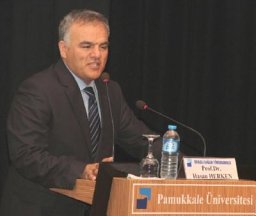 Hasan Herken合作论文数Department of Psychiatry, Gaziantep University Medical School2Fethi Hanay合作论文数2D. Erol合作论文数2Nusret Akpolat合作论文数2
 Murat Kara合作论文数Department of Thoracic Surgery;University of Kirikkale;School of Medicine;School of Medicine, University of Kirikkale2Bulent Mungen合作论文数Faculty of Medicine, Firat University2HA Savas合作论文数1
 Omer T Yalcin合作论文数1Uelkue Oezbey合作论文数1hanifi ozercan合作论文数1N Tomac合作论文数1Funda Bulut Arikan合作论文数Dept Physiol, Kirikkale Univ1Ugurcan Keskin合作论文数1N Aksoy合作论文数1
 Ahmet Tektemur合作论文数Faculty of Medicine, Firat University1Tuncer Tug合作论文数1
 Akin eraslan Balci合作论文数1Berilgen M Said合作论文数1Ceylan Cavit合作论文数Department of Urology Clinic of Turkiye, Yuksek Ihtisas Training and Research Hospital1Cakmak Muharrem合作论文数1Servet Yolbas合作论文数Faculty of Medicine, Firat University1
 Ozdemir Fethi Ahmet合作论文数Faculty of Sciences, Bartin University1Keskin Lezan合作论文数1Doğan Halil合作论文数1
 Ilay Buran Kavuran合作论文数1Ozel S合作论文数1
 Suleyman Serdar Koca合作论文数Faculty of Medicine Elazig, Fırat University1




