Leaf diseases on tea plants affect the quality of tea. This issue must be overcome since preparing tea drinks requires high-quality tea leaves. Various automatic models for identifying disease in tea leaves have been developed; however, their performance is typically low since the extracted features are not selective enough. This work presents a classification model for tea leaf disease that distinguishes six leaf classes: algal spot, brown, blight, grey blight, helopeltis, red spot, and healthy. Deep learning using a convolutional neural network (CNN) builds an effective model for detecting tea leaf illness. The Kaggle public dataset contains 5,980 tea leaf images on a white background. Pre-processing was performed to reduce computing time, which involved shrinking and normalizing the image prior to augmentation. Augmentation techniques included rotation, shear, flip horizontal, and flip vertical. The CNN model was used to classify tea leaf disease using the MobileNetV2 backbone, Adam optimizer, and rectified linear unit (ReLU) activation function with 224×224 input data. The proposed model attained the highest performance, as evidenced by the accuracy value 0.9455.
Several countries have traditional textiles as a piece of their cultural heritage. Indonesia has a traditional textile called batik. Central Java is one of the regions producing batik known for its variety of distinctive themes. It has unique designs and several motifs that emphasize the beauty of historic sites. Since the diversity of central java batik motifs and the lack of knowledge from the surrounding community, only a select group of people, especially the batik craftsmen themselves, can recognize these motifs. Consequently, the method to identify the batik according to the primary ornament pattern is required. Therefore, this study proposes a computer vision-based method for classifying batik patterns. The proposed method required discriminating appropriate features to produce optimal results. The discriminating features were constructed based on color, shape, and texture. Those features were derived using the method of Color Moments, Area Based Invariant Moments, Gray Level Co-occurrence Matrix (GLCM), and Local Binary Pattern (LBP). This study’s proposed hybrid features were formed based on the most discriminating and appropriate features. These were yielded by the Correlation-based feature selection (CFS) method. The hybrid features were then fed into several classifiers to determine the batik pattern. The pattern consists of ten classes: Asem Arang, Asem Sinom, Asem Warak, Blekok, Blekok Warak, Gambang Semarangan, Kembang Sepatu, Semarangan, Tugu Muda, and Warak Beras Utah. Based on the experimental results, the most optimal predicted class of the batik pattern was generated using the Artificial Neural Network (ANN) classifier. It was indicated by achieving an accuracy value of 99.76% based on the 3,000 images (each class consists of 300 images) with cross-validation using a k-fold value of 10. This study has proved that the hybrid features incorporated with ANN can be selected as a suitable model to classify the batik patterns.
Indonesian Arabica coffee beans undergo meticulous cultivation by local farmers and are subjected to various processing methods, including wet-hulled, honey, natural, and washed. Indonesia has cultivated and produced the most renowned Arabica coffees in six distinct regions. The several types of arabica coffee beans, mostly found in Indonesia, have similar sizes and shapes, making them hard to distinguish. Naturally, aroma, flavor, sweetness, roasting, and other factors vary when ingested. Thus, computer vision technology must classify Arabica coffee beans to improve coffee bean identification without consuming them first. The proposed method consists of several main processes: data acquisition, ROI detection, pre-processing, segmentation, feature extraction, and classification. Feature extraction is applied based on color, shape, and texture features, followed by implementing several machine-learning methods. The dataset was divided into training and testing sets using cross-validation with K-Fold values of 5 and 10. Performance evaluation was performed using three parameters: precision, recall, and accuracy. The Artificial Neural Network (ANN) method achieved the best results, achieving 99.75% accuracy on K-Fold 5 & 10.
Penelitian ini memiliki latar belakang bahwa pendidikan yang berlangsung di Indonesia belum sepenuhnya sukses dalam mewujudkan generasi unggul dan berkarakter yang kian hari semakin merosot. Pendidikan membutuhkan sumber rujukan atau model yang dijadikan contoh bagi akademisi pendidikan dalam memperbaiki dan membentuk karakter bangsa yang mulia. Peneliti. Alternatif Pendidikan karakter bangsa ini dapat mengambil pelajaran dari Nabi Muhammad Saw dalam Kitab Shahih Bukhari. Tujuan penelitian ini adalah untuk mendesripsikan konsep pendidikan karakter dalam perspektif sunnah yang terdapat dalam Kitab Shahih Bukhari. Jenis penelitian ini adalah penelitian kepustakaan yang bersifat deskriptif kualitatif. Penelitian kepustakaan mengumpulkan data dan informasi dengan bantuan berbagai macam materi dalam kepustakaan. Adapun teknik pengumpulan data pada penelitian ini menggunakan dokumentasi. Sedangkan teknik analisis data yang digunakan adalah content analysis (analisis isi). Temuan penelitian ini mengenai konsep pendidikan karakter dalam Kitab Shahih Bukhari yaitu, 1) Meluruskan niat dalam menuntut ilmu, 2) Beradab sebelum berilmu, 3) Mendidik iman sebelum mendidik Alqur’an, 4) Bertahap dalam menyampaikan materi, 5) Mengikat ilmu dengan amal, 6) Integrasi antara keluarga, sekolah, dan pemerintah dalam membentuk karakter. Penelitian ini berkontribusi dalam memberikan sumbangan gagasan pendidikan karakter dalam Islam yang patut dipertimbangankan dalam penerapannya di Lembaga-lembaga pendiidikan.
Indonesia exhibits a wide array of conventionally crafted textiles characterized by their regional distinctiveness. East Kalimantan, a province in the Republic of Indonesia, is renowned for its traditional textile craft called Batik. The Batik produced in East Kalimantan often incorporates a diverse spectrum of hues, such as orange, green, pink, and red. The cultural themes of the Dayak people are mostly shaped by their viewpoints and philosophies of nature and the surrounding environment. Regrettably, a considerable segment of the indigenous community remains uninformed about East Kalimantan Batik, hence impeding their ability to recognize and discern its distinct characteristics. Hence, the utilization of an automated image processing technique became necessary in order to detect and categorize the predominant themes found in East Kalimantan Batik. In order to optimize classification outcomes using this strategy, it is vital to utilize appropriate and discerning features. The objective of this study is to examine the characteristics of color and texture to generate separate attributes. The color characteristics employed the occurrences of applied color inside the RGB color spaces. In order to extract textural information, the Gray Level Co-occurrence Matrix (GLCM) was utilized. The collected features were subsequently included in the Decision Tree classifier. The dataset employed in this analysis comprises 400 batik images, encompassing 100 images each of Batang Garing, Burung Enggang, Shaho, and Tameng. Through the utilization of color features, the methodology achieved a significantly high level of performance, attaining an accuracy rate of 99.9%.
Indonesia is a significant palm oil producer, widely cultivated due to its status as a prominent vegetable oil-producing plant. Palm oil is a highly sought-after crop in agriculture due to its profitability and the demand for substantial quantities of high-quality oil. Early diagnosis of oil palm diseases is crucial for prompt prevention and eradication measures essential for maintaining high-quality palm oil production. Hence, there is a requirement for a machine vision-based method to classify diseases on plant stems. The proposed method consists of several main processes: pre-processing, feature extraction, and classification. Several machine learning algorithms and feature extraction using color and texture features were performed to develop a machine vision for detecting oil palm stem disease. It applied cross-validation with a K-fold value of 10. Performance evaluation was carried out using three parameters: precision, recall, and accuracy. The Linear Discriminant Analysis (LDA) method achieves the optimum results in testing scenarios combining color features based on HSV color space and textures features, achieving an accuracy value of 90.50%.
OBJECTIVES:The optic disc is part of the retinal fundus image structure, which influences the extraction of glaucoma features. This study proposes a method that automatically segments the optic disc area in retinal fundus images using deep learning based on a convolutional neural network (CNN).METHODS:This study used private and public datasets containing retinal fundus images. The private dataset consisted of 350 images, while the public dataset was the Retinal Fundus Glaucoma Challenge (REFUGE). The proposed method was based on a CNN with a single-shot multibox detector (MobileNetV2) to form images of the region-of-interest (ROI) using the original image resized into 640 × 640 input data. A pre-processing sequence was then implemented, including augmentation, resizing, and normalization. Furthermore, a U-Net model was applied for optic disc segmentation with 128 × 128 input data.RESULTS:The proposed method was appropriately applied to the datasets used, as shown by the values of the F1-score, dice score, and intersection over union of 0.9880, 0.9852, and 0.9763 for the private dataset, respectively, and 0.9854, 0.9838 and 0.9712 for the REFUGE dataset.CONCLUSIONS:The optic disc area produced by the proposed method was similar to that identified by an ophthalmologist. Therefore, this method can be considered for implementing automatic segmentation of the optic disc area.
This study aims to produce student worksheet products based on project-based learning models with nuances of a scientific attitude in addition and subtraction of fractions with different denominators for class V SDN 42 Pontianak City that are feasible. The research method used is research and development (RnD) by adapting the Thiagarajan 4D development model (define, design, development and dissemination). The data source for this research was the results of the validation of three validators and the results of the student response questionnaire after working on the LKPD that was made. The data collection technique for this research was a validation questionnaire by the validator and documentation on the LKPD used by the teacher. The results of the study show that during the process of developing LKPD based on the project based learning model with the nuances of a scientific attitude, it is carried out only in three stages, namely the define, design, and development stages. and the appropriateness of project based learning is 3.9 with very valid criteria, from the linguistic aspect it is 3.8 with very valid criteria, from the technical/appearance aspect it is 3.7 with very valid criteria, and from the scientific attitude loading aspect it is 4 with very strong criteria. valid. The response to the use of LKPD based on the project based learning model with a scientific attitude by students in the limited trial was 3.7 in the very good category and the response of students in the second trial obtained an average of 3.81 with very good criteria.
The quality of coffee beans has an important effect on the price and consumer satisfaction; therefore, it is essential in the industry to determine the quality of coffee based on the beans. The coffee industry is a huge commodity, especially Robusta coffee, which is popular among many groups. However, not everyone can differentiate the quality of coffee beans consumed because this is only known by people involved in the coffee world. Accordingly, the method to classify the quality of Robusta coffee beans was developed using machine learning. The method consists of two main processes: feature extraction and classification. Feature extraction was applied based on color, shape, and texture features; then, classification was performed using several machine-learning algorithms. The performance evaluation used cross-validation with the K-Fold of 5 and 10. The highest accuracy value achieved was 96.11%. This value resulted from color and texture features utilizing k-nearest neighbor (KNN) and artificial neural network (ANN). The resulting performance shows that the proposed method accurately classified coffee beans.
Mangrove ecosystems are important coastal ecosystems that provide a variety of functions. Mangrove ecosystems provide a variety of environmental services including absorbing carbon and contributing to climate change mitigation, protecting coastal areas from storms, tsunamis, and erosion. In addition to providing a variety of environmental services, these ecosystems are also habitats for a variety of living organisms, both aquatic and terrestrial, resident and migrant, also nationally and internationally protected species. The benefits provided by mangrove are contrast to the rate of degradation, which has the potential for loss of wildlife habitat and a decrease in biodiversity value, especially mammals. This study was conducted to analyse the value of biodiversity, especially mammals in the Mangrove Ecotourism Area, Pesawaran Regency. This study uses the method of line transects, mist nets, and sound identification. The results of the study recorded 6 species of mammals with a species diversity value (H') of 1.46, richness of 1.60, evenness of 0.72, and species dominance of 0.30. Mammal species diversity inside the ecotourism area is higher than outside the area. Protected mammals are not found in the area.
Analyzing Covid-19 data has been conducted in many types of research, but research on classifying each case from Covid-19 data in all provinces in Indonesia has yet to be available. This study uses two clustering algorithms, namely K-Means and K-Medoids, to classify positive cases recovered and died in the Covid-19 data into three clusters, namely low, medium and high. The research data is Covid-19 case data in all provinces in Indonesia from 2020 to 2021. In the clustering calculations, the three distance methods used in this study are the Chebyshev Distance, Manhattan Distance, and Euclidean Distance. Based on the Silhouette Coefficient test results for the three distance calculation methods, it was found that Manhattan Distance is the best distance calculation method for K-Means and K-Medoids. Furthermore, the results of testing the Sum Squared Error (SSE), Silhouette Coefficient (SC) and Davies Index Bouldin (DBI) methods for the resulting clusters show that the value generated by the K-Means algorithm is higher in the SC and DBI methods. This result is evidenced by the SC value of 0.838; 0.838; and 0.925 in positive cases, recovered and died. While the DBI value is 0.305 for positive cases, 0.295 for recovered cases and 1.569 for dead cases. Based on these values, it proves that K-Means is superior in grouping and placing clusters compared to K-Medoids.
Dayak is one of the tribes in East Kalimantan, Indonesia, which has a lot of cultural wealth. Beads craft is one of the Dayak traditional cultures made using various materials with distinctive motifs. The Dayak beads have many different motifs and color combinations. Hence not everyone can distinguish between the bead motif of Dayak and non-Dayak easily. This study aims to develop a bead detection method to differentiate between the bead types of Dayak and non-Dayak. The main processes required include preprocessing, feature extraction, and classification. The features were extracted based on color and texture. Experiments were carried out using several machine learning approaches. The highest results were achieved using the combination of color and texture features with the implementation of K-Nearest Neighbor (KNN) methods as indicated by the parameters precision, recall, and accuracy achieved of 92%, 92%, and 92.2% using Cross-Validation with a K-Fold value of 10.
Contents Poverty is the inability to meet the necessities of life, such as food, clothing, and shelter. The poor have an average monthly per capita expenditure below the poverty line. The case of poverty in Indonesia is still unresolved; the Government continues to try to give the best to the entire community so that the problem of poverty can at least continue to decrease. One form of government concern for the poor is the assistance program provided to the poor. This study will classify based on data from the North Penajam Paser (PPU) community obtained from the results of the National Socio-Economic Survey (Susenas) to know how the Naïve Bayes method is in determining the eligibility of the poor recipients of assistance. Based on the research that has been carried out, a system for determining the poor recipients of assistance is produced, where the test results get the highest accuracy in the third scenario, namely 60% or 328 training data and 40% or 218 test data, where the accuracy obtained is 77.98%.
Road damage is a common occurrence daily. Even in developed nations, road damage is still a possibility. Rainwater, temperature and weather variations, air temperature, construction materials on the road, subgrade conditions on the road, poor compaction process above the subgrade, and vehicle weights that exceed the limit are all factors that cause damage. Potholes are the most common form of road damage. Damaged roads are a major annoyance for drivers, can lead to accidents, and can even result in on-the-spot deaths due to falls since drivers are unaware of the potholes. If road damage is not discovered or overcome, it can be dangerous, and the road will deteriorate. Many media, including images, can be used to detect road damage. This study uses the image by utilizing the Faster R-CNN method to detect road damage. It reveals that using the MobilenetV2 backbone achieved the optimal performance indicated by the mAP value of 79.7%.
The implementation of image processing techniques in the plantation field has been extensively researched and developed, for example, to identify fruit maturity and control fruit harvesting robots. The main procedure, termed segmentation, is required by those systems in order to determine the fruit and background area. This work aims to put into practice a method of tomato segmentation. The method consists of four main processes: region of interest (ROI) detection, pre-processing, segmentation, and post-processing. The resize and K-means clustering were applied in ROI detection. The color space conversion of RGB into HSV was applied in pre-processing, followed by implementing edge detection using the Canny operator. In post-processing, morphology operation was carried out to discard the remaining noise. The performance evaluation of the tomato segmentation method against 300 images showed the average value of segmentation accuracy, false positive and false negative obtained reached Sc,, and 91.43%, 2.84%, and 4.77%, respectively.
Swallow Nest is a valuable export commodity, particularly in Indonesia. It is produced when a swallow's saliva hardens and is frequently encountered in high-rise buildings. Swallow nests can be utilized to treat various ailments in the medical sector. The price of a swallow nest varies according to its quality, which is commonly classified into three grades: quality 1 (Q1), quality 2 (Q2), and quality 3 (Q3). Q1 is of the highest quality, while Q3 is of the lowest. Each grade has a different physical appearance. Currently, many people lack knowledge regarding the grade of a swallow nest. Therefore, a method is needed to automatically classify the quality of swallow nests based on computer vision. The proposed method consists of several main processes, including image acquisition, ROI detection, pre-processing, segmentation, feature extraction, and classification. The feature extraction was applied based on shapes, followed by the Support Vector Machine (SVM) implementation in the classification process. This process was performed with cross-validation using the k-fold values of 5. The performance evaluation was done using three parameters: precision, recall, and accuracy, by achieving the value of 90.6%, 89.3%, and 89.3%, respectively.
One of the professions in the marine sector that is mostly occupied by people living in coastal areas is seaweed cultivation. Seaweed is one of the marine product commodities with great potential to be developed in Indonesia because it has high economic value. One of the areas that are included as producers of Eucheuma Cottonii seaweed is Nunukan Island, which is located in Nunukan Regency, North Kalimantan Province. The main factor that determines success in seaweed cultivation activities is the selection of land locations. Errors in site selection can lead to crop failure and low quality of the seaweed produced. The purpose of this study is to create a decision support system to facilitate and assist the community in selecting the best location for seaweed cultivation quickly and precisely according to the criteria using the Analytical Hierarchy Process (AHP) method to calculate the criteria weights and the Simple Additive Weighting (SAW) method for performing alternative ratings. The criteria used were 7, namely depth, pH, current speed, brightness, temperature, salinity, and dissolved oxygen, while alternative data were 11 points of seaweed cultivation locations on Nunukan Island. Based on the results of the implementation of the two methods, recommendations for two locations for seaweed cultivation are Sei Banjar I and Sei Banjar II with the same preference value of 0.937 which is the highest value compared to other alternatives.
Masyarakat sebagai penerima dampak langsung dari bencana, dan sekaligus sebagai pelaku pertama dan langsung yang akan merespon bencana, melandasi program nasional Desa Tangguh Bencana (Destana) dalam rangka mewujudkan Indonesia Tangguh. Gampong Lamjamee merupakan wilayah rawan bencana gempa bumi, Tsunami, angin kencang. Adanya permasalahan bidang SDM, sarana prasarana, regulasi, kelembagaan, dan topografi menyebabkan Gampong Lamjamee rawan bencana. Aspek Pengurangan Resiko Bencana (PRB) harus meliputi peningkatan kapasitas SDM, perencanaan partisipatif dan tata kelola kelembagaan penanggulangan bencana, dengan metode jejaringan. Program kegiatan meliputi penyusunan dan pembentukan struktur gampong dalam pengurangan resiko bencana yang berisi pengenalan lokasi rawan bencana, mitigasi, Penanganan Pertama, peta rawan bencana dan jalur evakuasi bencana, pengurangan resiko, penguatan kapasitas kelembagaan, arah evakuasi saat bencana pembentukan struktur gampong siaga bencana, peta rawan bencana, jalur evakuasi sinergi semua aspek tersebut akan berimplikasi pada peningkatan kapasitas SDM dalam pengurangan resiko bencana di Gampong di masa yang akan datang.
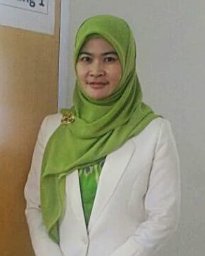 Anindita Septiarini合作论文数Dept Informat, Mulawarman Univ40
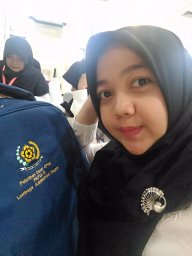 Novianti Puspitasari合作论文数Faculty Mulawarman University11
 Heliza Rahmania Hatta合作论文数11
 Edy Winarno合作论文数Faculty of Information Technology, Universitas Stikubank7
 Masna Wati合作论文数Informatics Department, Universitas Mulawarman6
 Heru Ismanto合作论文数Engineering Faculty, Universitas Musamus4Emy Setyaningsih合作论文数Ilmu Komputer dan Elektronika, Universitas Gadjah Mada4Surya Eka Priyatna合作论文数3Rizqi Saputra合作论文数3
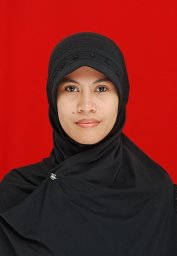 Anita Ahmad Kasim合作论文数Faculty of Engineering, Universitas Tadulako3
 Andri Syafrianto合作论文数STMIK El Rahma3
 Andi Tejawati合作论文数Mulawarman University3
 Joan Angelina Widians合作论文数dept. of informatics, Mulawarman University3
 Wiwien Hadikurniawati合作论文数Faculty of Information Technology, Universitas Stikubank3
 Dyna Marisa Khairina合作论文数3
 Fitri Utaminingrum合作论文数3
 Retantyo Wardoyo合作论文数Faculty of Mathematics and Natural Sciences, Universitas Gadjah Mada3
 Khabib Mustofa合作论文数Institute of Software Technology & Interactive Systems, Vienna University of Technology3
 Zaenal Abidin合作论文数2
 Eko Junirianto合作论文数Department of Information Technology, Polytechnic of Agriculture2
 Agus Qomaruddin Munir合作论文数Universitas Respati Yogyakarta2
 Henderi合作论文数Faculty of Science and Technology, University of Raharja2Noor Alam Hadiwijaya合作论文数Politekknik Negeri Samarinda2
 Widyastuti Andriyani合作论文数Master of Information Technology, STMIK Akakom2
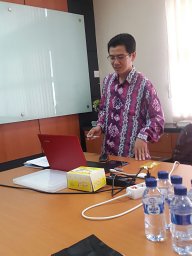 Budi Rahmani合作论文数STMIK Banjarbaru2
 Awang Harsa Kridalaksana合作论文数Mulawarman University2
 Zainal Arifin合作论文数2
 Andi Sunyoto合作论文数2Muhamad Jamaris合作论文数1Bayu Permana Sejati合作论文数1Dita Nurmadewi合作论文数1Sri Rahayu合作论文数1Dandi Nova Siswoyo合作论文数1Fitria Nur Madia合作论文数1Edwanda Arisandy合作论文数1Mhd Muhajir Hasibuan合作论文数1Mohammad Sofyan S. Thayf合作论文数1Hartatik合作论文数1
 Bistari Bistari合作论文数Tanjungpura University1
 M. Khairul Anam合作论文数AMIT1
 siti halidjah合作论文数DiDi1
 Syahrizal Syahrizal合作论文数Program Studi Budidaya Perairan#R##N#Fakultas Pertanian#R##N, Universitas Batanghari1
 Hugo Aprilianto合作论文数Gunadarma University1
 Gandung Triyono合作论文数Faculty of Information Technology, Universitas Budi Luhur1
 Damar Nurcahyono合作论文数Politeknik Negeri Samarinda1
 Didit Suprihanto合作论文数Mulawarman University1
 A. Purwinarko合作论文数State University of Semarang1
 Edi Faizal合作论文数STMIK Akakom Yogyakarta1Amin Padmo Azam Masa合作论文数1




