Vision-Language Models (VLMs) have achieved remarkable progress on a wide range of challenging multimodal understanding and reasoning tasks. However, existing reasoning paradigms, such as the classical Chain-of-Thought (CoT), rely solely on textual information and often underutilize important visual cues. While prior work has incorporated pixel-level visual cues, these representations require precise spatial localization, introducing additional learning complexity. To address this, we propose PatchCue, a novel patch-based visual cue paradigm designed to significantly enhance the visual reasoning capabilities of VLMs. By partitioning images into patches and representing cues at the patch level, PatchCue aligns better with human perceptual habits and leverages the patch-tokenized input of modern VLMs. We train VLMs using a two-stage approach: cold-start supervised fine-tuning to output patch-level cues, followed by reinforcement learning with a process-supervised cue reward that guides intermediate visual reasoning steps. Extensive experiments on multiple VLMs and diverse benchmarks, including general visual question answering, complex reasoning, and document understanding, demonstrate that PatchCue consistently improves overall model performance. Our results show that patch-level cues outperform both pixel-level bounding boxes and point-based cues, providing a more effective and cognitively aligned visual reasoning paradigm.
As the field of Multimodal Large Language Models (MLLMs) continues to evolve, their potential to revolutionize artificial intelligence is particularly promising, especially in addressing mathematical reasoning tasks. Current mathematical benchmarks predominantly focus on evaluating MLLMs' problem-solving ability, yet there is a crucial gap in addressing more complex scenarios such as error detection, for enhancing reasoning capability in complicated settings. To fill this gap, we formally formulate the new task: multimodal error detection, and introduce ErrorRadar, the first benchmark designed to assess MLLMs' capabilities in such a task. ErrorRadar evaluates two sub-tasks: error step identification and error categorization, providing a comprehensive framework for evaluating MLLMs' complex mathematical reasoning ability. It consists of 2,500 high-quality multimodal K-12 mathematical problems, collected from real-world student interactions in an educational organization, with rigorous annotation and rich metadata such as problem type and error category. Through extensive experiments, we evaluated both open-source and closed-source representative MLLMs, benchmarking their performance against educational expert evaluators. Results indicate significant challenges still remain, as GPT-4o with best performance is still around 10
One-Shot Federated Learning (OSFL), a special decentralized machine learning paradigm, has recently gained significant attention. OSFL requires only a single round of client data or model upload, which reduces communication costs and mitigates privacy threats compared to traditional FL. Despite these promising prospects, existing methods face challenges due to client data heterogeneity and limited data quantity when applied to real-world OSFL systems. Recently, Latent Diffusion Models (LDM) have shown remarkable advancements in synthesizing high-quality images through pretraining on large-scale datasets, thereby presenting a potential solution to overcome these issues. However, directly applying pretrained LDM to heterogeneous OSFL results in significant distribution shifts in synthetic data, leading to performance degradation in classification models trained on such data. This issue is particularly pronounced in rare domains, such as medical imaging, which are underrepresented in LDM’s pretraining data. To address this challenge, we propose Federated Bi-Level Personalization (FedBiP), which personalizes the pretrained LDM at both instance-level and concept-level. Hereby, FedBiP synthesizes images following the client’s local data distribution without compromising the privacy regulations. FedBiP is also the first approach to simultaneously address feature space heterogeneity and client data scarcity in OSFL. Our method is validated through extensive experiments on three OSFL benchmarks with feature space heterogeneity, as well as on challenging medical and satellite image datasets with label heterogeneity. The results demonstrate the effectiveness of FedBiP, which substantially outperforms other OSFL methods. Our code is available at https://github.com/HaokunChen245/FedBiP.
Although quantum systems are generally described by quantum state vectors, we show that in certain cases their measurement processes can be reformulated as probabilistic equations expressed in terms of probabilistic state vectors. These probabilistic representations can, in turn, be approximated by the neural network dynamics of the Tensor Brain (TB) model. The Tensor Brain is a recently proposed framework for modeling perception and memory in the brain, providing a biologically inspired mechanism for efficiently integrating generated symbolic representations into reasoning processes.
The Tensor Brain (TB) has been introduced as a computational model for perception and memory. This paper provides an overview of the TB model, incorporating recent developments and insights into its functionality. The TB is composed of two primary layers: the representation layer and the index layer. The representation layer serves as a model for the subsymbolic global workspace, a concept derived from consciousness research. Its state represents the cognitive brain state, capturing the dynamic interplay of sensory and cognitive processes. The index layer, in contrast, contains symbolic representations for concepts, time instances, and predicates. In a bottom-up operation, sensory input activates the representation layer, which then triggers associated symbolic labels in the index layer. Conversely, in a top-down operation, symbols in the index layer activate the representation layer, which in turn influences earlier processing layers through embodiment. This top-down mechanism underpins semantic memory, enabling the integration of abstract knowledge into perceptual and cognitive processes. A key feature of the TB is its use of concept embeddings, which function as connection weights linking the index layer to the representation layer. As a concept's “DNA,” these embeddings consolidate knowledge from diverse experiences, sensory modalities, and symbolic representations, providing a unified framework for learning and memory.
Diffusion-based models have gained significant popularity for text-to-image generation due to their exceptional image-generation capabilities. A risk with these models is the potential generation of inappropriate content, such as biased or harmful images. However, the underlying reasons for generating such undesired content from the perspective of the diffusion model's internal representation remain unclear. Previous work interprets vectors in an interpretable latent space of diffusion models as seman-tic concepts. However, existing approaches cannot discover directions for arbitrary concepts, such as those related to inappropriate concepts. In this work, we propose a novel self-supervised approach to find interpretable latent directions for a given concept. With the discovered vectors, we further propose a simple approach to mitigate inappropriate generation. Extensive experiments have been conducted to verify the effectiveness of our mitigation approach, namely, for fair generation, safe generation, and responsible text-enhancing generation. Project page: https://interpretdiffusion.github.io.
Contemporary large-scale visual language models (VLMs) exhibit strong representation capacities, making them ubiquitous for enhancing image and text understanding tasks. They are often trained in a contrastive manner on a large and diverse corpus of images and corresponding text captions scraped from the internet. Despite this, VLMs often struggle with compositional reasoning tasks which require a fine-grained understanding of the complex interactions of objects and their attributes. This failure can be attributed to two main factors: 1) Contrastive approaches have traditionally focused on mining negative examples from existing datasets. However, the mined negative examples might not be difficult for the model to discriminate from the positive. An alternative to mining would be negative sample generation 2) But existing generative approaches primarily focus on generating hard negative texts associated with a given image. Mining in the other direction, i.e., generating negative image samples associated with a given text has been ignored. To overcome both these limitations, we propose a framework that not only mines in both directions but also generates challenging negative samples in both modalities, i.e., images and texts. Leveraging these generative hard negative samples, we significantly enhance VLMs' performance in tasks involving multimodal compositional reasoning. Our code and dataset are released at https://ugorsahin.github.io/enhancing-multimodal-compositional-reasoning-of-vlm.html.
We analyse perception and memory, using mathematical models for knowledge graphs and tensors, to gain insights into the corresponding functionalities of the human mind. Our discussion is based on the concept of propositional sentences consisting of \textit{subject-predicate-object} (SPO) triples for expressing elementary facts. SPO sentences are the basis for most natural languages but might also be important for explicit perception and declarative memories, as well as intra-brain communication and the ability to argue and reason. A set of SPO sentences can be described as a knowledge graph, which can be transformed into an adjacency tensor. We introduce tensor models, where concepts have dual representations as indices and associated embeddings, two constructs we believe are essential for the understanding of implicit and explicit perception and memory in the brain. We argue that a biological realization of perception and memory imposes constraints on information processing. In particular, we propose that explicit perception and declarative memories require a semantic decoder, which, in a simple realization, is based on four layers: First, a sensory memory layer, as a buffer for sensory input, second, an index layer representing concepts, third, a memoryless representation layer for the broadcasting of information ---the "blackboard", or the "canvas" of the brain--- and fourth, a working memory layer as a processing center and data buffer. We discuss the operations of the four layers and relate them to the global workspace theory. In a Bayesian brain interpretation, semantic memory defines the prior for observable triple statements. We propose that ---in evolution and during development--- semantic memory, episodic memory, and natural language evolved as emergent properties in agents' process to gain a deeper understanding of sensory information.
The field of multimodal research focusing on the comprehension and creation of both images and text has witnessed significant strides. This progress is exemplified by the emergence of sophisticated models dedicated to image captioning at scale, such as the notable Flamingo model and text-to-image generative models, with DALL-E serving as a prominent example. An interesting question worth exploring in this domain is whether Flamingo and DALL-E understand each other. To study this question, we propose a reconstruction task where Flamingo generates a description for a given image and DALL-E uses this description as input to synthesize a new image. We argue that these models understand each other if the generated image is similar to the given image. Specifically, we study the relationship between the quality of the image reconstruction and that of the text generation. We find that an optimal description of an image is one that gives rise to a generated image similar to the original one. The finding motivates us to propose a unified framework to finetune the text-to-image and image-to-text models. Concretely, the reconstruction part forms a regularization loss to guide the tuning of the models. Extensive experiments on multiple datasets with different image captioning and image generation models validate our findings and demonstrate the effectiveness of our proposed unified framework. As DALL-E and Flamingo are not publicly available, we use Stable Diffusion and BLIP in the remaining work. Project website: https://dalleflamingo.github.io.
The human brain can be considered to be a graphical structure comprising of tens of billions of biological neurons connected by synapses. It has the remarkable ability to automatically re-route information flow through alternate paths, in case some neurons are damaged. Moreover, the brain is capable of retaining information and applying it to similar but completely unseen scenarios. In this paper, we take inspiration from these attributes of the brain to develop a computational framework to find the optimal low cost path between a source node and a destination node in a generalized graph. We show that our framework is capable of handling unseen graphs at test time. Moreover, it can find alternate optimal paths, when nodes are arbitrarily added or removed during inference, while maintaining a fixed prediction time. Code accompanying this work can be found here: https://github.com/hangligit/pathfinding .
Graphs can model real-world, complex systems by representing entities and their interactions in terms of nodes and edges. To better exploit the graph structure, graph neural networks have been developed, which learn entity and edge embeddings for tasks such as node classification and link prediction. These models achieve good performance with respect to accuracy, but the confidence scores associated with the predictions might not be calibrated. That means that the scores might not reflect the ground-truth probabilities of the predicted events, which would be especially important for safety-critical applications. Even though graph neural networks are used for a wide range of tasks, the calibration thereof has not been sufficiently explored yet. We investigate the calibration of graph neural networks for node classification, study the effect of existing post-processing calibration methods, and analyze the influence of model capacity, graph density, and a new loss function on calibration. Further, we propose a topology-aware calibration method that takes the neighboring nodes into account and yields improved calibration compared to baseline methods.
Visual Question Answering (VQA) is concerned with answering free-form questions about an image. Since it requires a deep semantic and linguistic understanding of the question and the ability to associate it with various objects that are present in the image, it is an ambitious task and requires multi-modal reasoning from both computer vision and natural language processing. We propose Graphhopper, a novel method that approaches the task by integrating knowledge graph reasoning, computer vision, and natural language processing techniques. Concretely, our method is based on performing context-driven, sequential reasoning based on the scene entities and their semantic and spatial relationships. As a first step, we derive a scene graph that describes the objects in the image, as well as their attributes and their mutual relationships. Subsequently, a reinforcement learning agent is trained to autonomously navigate in a multi-hop manner over the extracted scene graph to generate reasoning paths, which are the basis for deriving answers. We conduct an experimental study on the challenging dataset GQA, based on both manually curated and automatically generated scene graphs. Our results show that we keep up with human performance on manually curated scene graphs. Moreover, we find that Graphhopper outperforms another state-of-the-art scene graph reasoning model on both manually curated and automatically generated scene graphs by a significant margin.
 Volker Tresp合作论文数Institut für Informatik, Fakultät für Mathematik, Informatik und Statistik, Ludwig Maximilian University of Munich10
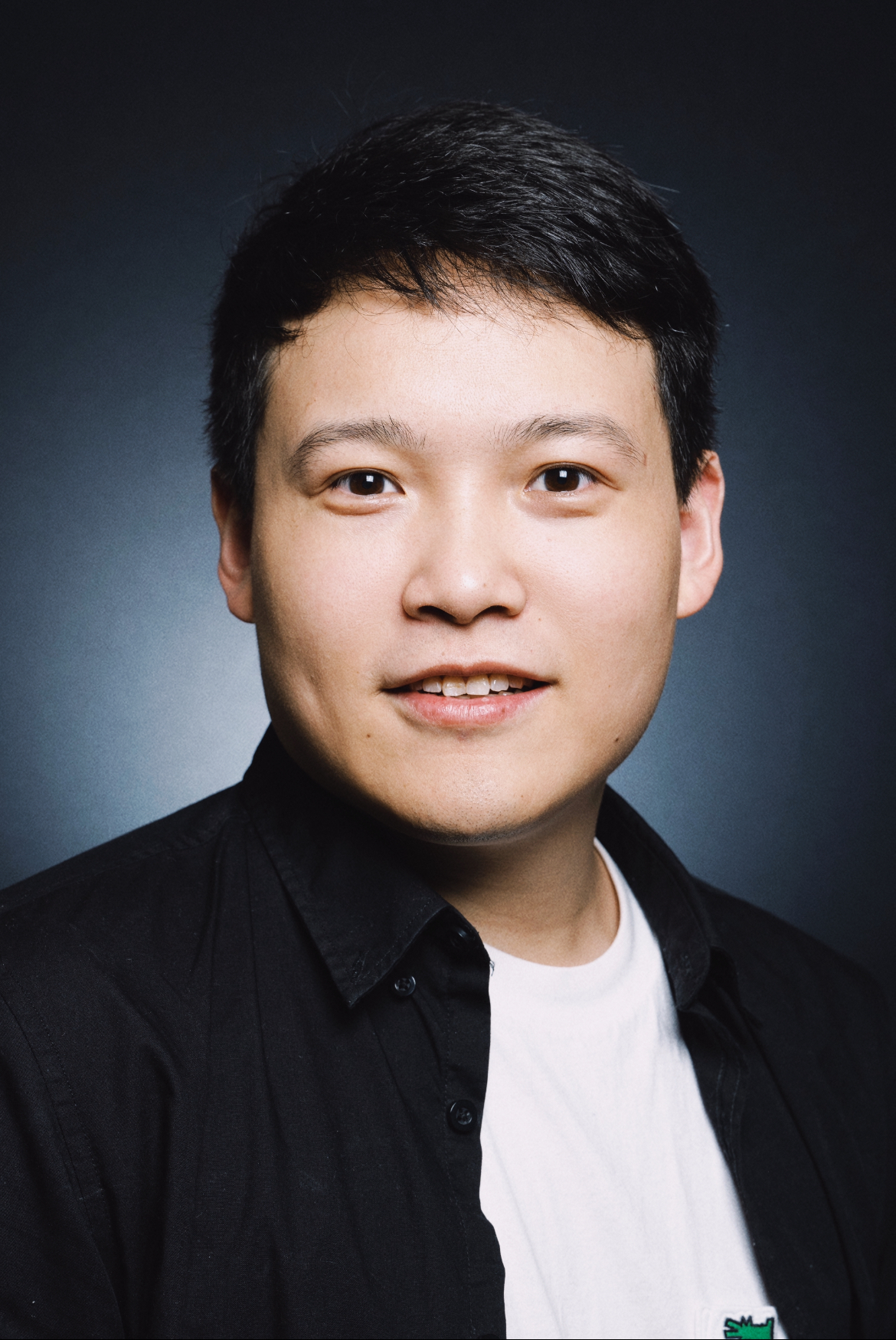 Jindong Gu合作论文数University of Oxford;Google DeepMind3
 Rajat Koner合作论文数Ludwig-Maximilians-Universität München;University of Munich;Google DeepMind2
 Marcel Hildebrandt合作论文数 Siemens2
 Qadeer Khan合作论文数Tech Univ Munich, Munich, Germany2
 Yunpu Ma合作论文数Institute of Informatics, Faculty of Mathematics, Informatics and Statistics, Ludwig-Maximilians-Universität München;Siemens2
 Daniel Cremers合作论文数Departments of Informatics and Mathematics, School of Computation, Information and Technology, Technical University of Munich2
 Philip H. S. Torr合作论文数Department of Engineering Science, University of Oxford;St Catherine's College, University of Oxford;Orphic2
 Sahand Sharifzadeh合作论文数Google DeepMind2Yueqi Zhang合作论文数1Jiahao Huo合作论文数1Jinhe Bi合作论文数1Chengzhi Shen合作论文数1Yibo Yan合作论文数The Hong Kong University of Science and Technology;Alibaba1
 Haokun Chen合作论文数Amazon1
 Gengyuan Zhang (张耕源)合作论文数Amazon;Institut für Informatik, Fakultät für Mathematik, Informatik und Statistik, Ludwig-Maximilians-Universität München;Munich Center for Machine Learning1Dario Konopatzki合作论文数1Aoxiao Zhong合作论文数Squirrel Ai Learning1
 Yao Zhang合作论文数Ludwig Maximilians Univ Munchen1
 Mitchell Joblin合作论文数Siemens AG, Paul Gossen Str 100, D-91052 Erlangen, Germany1
 Deepan Das合作论文数TCS Research and Innovation1
 Denis Krompass合作论文数Siemens Corporate Technology;CreaidAI1
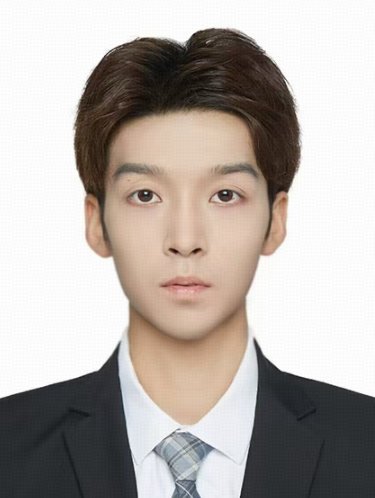 Yi-Fan Zhang (张一帆)合作论文数Institute of Automation, Chinese Academy of Sciences;State Key Laboratory of Pattern Recognition, University of Chinese Academy of Sciences;Kwaishou1
 Kun Wang合作论文数Center for Bioinfo and Comp Bio, University of Maryland1
 Qingsong Wen (文青松)合作论文数Squirrel Ai Learning1
 Hui Xiong (熊辉)合作论文数The Hong Kong University of Science and Technology (Guangzhou)1
 Jian Luan合作论文数1
 Yushan Liu合作论文数Siemens1
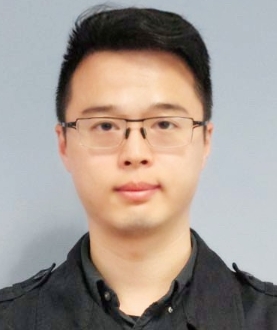 Shen Wang (Charles)合作论文数Amazon Web Services1
 Philip S. Yu (俞士綸)合作论文数Department of Computer Science, College of Engineering, University of Illinois Chicago;Big Data and Social Computing Lab, University of Illinois Chicago1
 Xuming Hu (胡旭明)合作论文数The Hong Kong University of Science and Technology (Guangzhou)1
 Stephan Günnemann合作论文数Data Analytics and Machine Learning Group, Department of Informatics, School of Computation, Information and Technology, Technical University of Munich;Pruna AI1




