Generative AI is a new branch of artificial intelligence, which creates fresh content using neural networks and machine learning methods. Systems of generative AI can generate music, images, text, speech, and other types of content by finding new styles in huge databases. The automation of tedious tasks through the creation of personalized content, and the improvement of accuracy in difficult tasks makes generative AI technology to transform a variety of industries, including gaming, advertising, and healthcare. There are many types of generative AI models. Each has pros and cons of its own. Despite being a relatively young technology, generative AI has many potential applications that make it a fascinating field to research. More research, growth, and advancement in the future may be seen. Future potential uses for generative AI include improving cybersecurity by identifying and preventing cyberattacks, creating human-interactive virtual assistants, and creating intelligent robots that can do challenging tasks in various industries. As generative AI continues to be developed, we should expect to see increasingly sophisticated applications in the years to come, which will open up new opportunities for growth across numerous industries.
The world is experiencing a demographic shift, with an increasing number of elderly individuals who require regular health monitoring. In this context, the development of e-health monitoring systems has become increasingly important in improving the quality of life for elderly individuals. Wearable devices have emerged as a popular choice for remote health monitoring, owing to their convenience and ease of use. However, the cost of such devices can be prohibitive, especially for elderly individuals who may have limited financial resources. This paper introduces a low-cost design for an IoT embedded system that monitors the physiological signals of elderly individuals in their homes or smart cities. The Internet of Things (IoT) aims to extend the network and data exchange to physical objects in everyday life. The proposed system is an embedded stand-alone design that utilizes off-the-shelf components to capture various physiological signals such as heart rate, temperature, body moisture, respiration rate, and patient motion. The system processes the signals and verifies the value of the collected data before transmitting it via RF-transmitters to the treating physician in the form of a file or SMS message. The data is processed via a server and can be recorded in a patient file. The system's main sensors, including heart rate, respiration, and motion, were tested, and the results were positive.
In order to improve the efficiency of elliptic curve multiplication methods, extended and composite elliptic curve operations such as nP,mP + Q , where n > 2 and m ≥ 2 , and repeated doublings were proposed. These operations have lower complexity, in terms of field operations, than that for classical methods. Moreover, they are supposed to replace the classical methods. In this paper, repeated doublings and odd point computation are deeply analyzed in order to measure their actual efficiency. According to the gained results, the improvement ratio in the execution time is not the same as the improvement ratio measured in terms of field operations. Moreover, different implementations of Sakai repeated doubling method yield different results. For example, implementing 4P as a separate function gives lower complexity than implementing repeated doublings as a general function. On the other hand, other methods for computing nP, where n is odd, have been analyzed. Dahmen method failed to meet the expected results for computing odd points in elliptic curve multiplication methods that employ the on-the-fly strategy since its time complexity was more than that for classical methods. It was also found that new techniques should be devised to improve the efficiency of window methods for calculating odd points such as: 5P, 7P, and 15P, which have lower cost than that for classical method.
 Ahmad Al-dahoud合作论文数Univ Bradford, Ctr Visual Comp, Bradford BD7 1DP, W Yorkshire, England2
 Mohamed Fezari合作论文数Faculty of Engineering, Badji Mokhtar University2
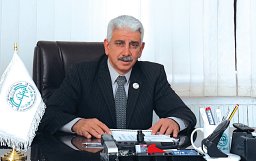 Ali Al-Dahoud合作论文数Al-Zaytoonah University2Darah Aqel合作论文数Al-Zaytoonah University of Jordan1
 Mohammad Rasmi合作论文数1
 Mohammad Sh. Daoud合作论文数1
 Ahmad Alkhatib合作论文数1




