Informal meet-ups for instructors, facilitated by Center for Teaching and Learning (CTL) staff, are an easy and low-resource program with various benefits for faculty. This chapter describes a program for faculty to discuss teaching with colleagues and CTL staff. These regularly-scheduled meet-ups were not presentations by CTL staff or heavily structured discussions; rather, they were an open space for instructors to discuss what was working and receive support and resources around any challenges from peers and CTL staff. The program outcomes were that instructors would: build a repertoire of effective teaching strategies to apply in their classrooms; grow in relationship with colleagues from a variety of disciplines and form connections and community through shared experiences; and engage in reflective practices about their teaching to support their professional development.
Organismal biology (OrgBio) comprises the diversity, structures, and functions of all organisms from bacteria to humans. Arguably, OrgBio is often the most poorly taught and least conceptually rigorous section of the introductory biology sequence offered at most U.S. institutions of higher education. This article reports on the successful implementation of conceptual and pedagogical reforms in an introductory OrgBio course offered at a large public university. Conceptual reforms were based on a theoretical framework consisting of universal physical and chemical laws, deep molecular homologies, and diverse structure–function relationships. Pedagogical reforms involved the development of group active engagements (GAEs) that were designed to encourage students to develop their abilities to engage in principles-based reasoning. A new model for characterizing different approaches toward principles-based reasoning in biology was developed to analyze these GAEs. Two surveys indicated that OrgBio students developed more favorable perceptions about the effectiveness of GAE-based course offerings, as compared to similar lecture-based versions.
The most effective teaching and learning environments are those in which students are involved as active partners with faculty, and the greatest impact occurs when faculty go beyond asking students for feedback and instead involve them in design, production, and implementation. In this paper, we explore the process of student-faculty co-creation by presenting a specific case involving students as partners in the redesign of an introductory chemistry laboratory course to incorporate more group learning, support students’ skill development, and increase students’ sense of belonging in chemistry. This case study investigates how faculty can set up and structure a successful co-design partnership and attend to potential challenges as well as how educational developers and teaching centers can work in partnership with faculty and students to design or redesign courses.
Community and connection are critical for a successful undergraduate experience; connection to fellow students, mentors, faculty, and staff-and student-
Undergraduate academic peer mentors gain a deeper understanding of the academic content and develop professional teaching and coaching skills. While the value of this high impact practice is well documented for academic outcomes, little is known about the leadership self-efficacy that results from serving as an academic peer mentor. In this initial quantitative study of a cross-disciplinary academic peer mentoring program for 79 American undergraduates, we found that after serving as an academic peer mentor, students reported higher self-efficacy for leading groups. Academic peer mentorship programs show promise as a leadership development opportunity for college students
Undergraduate teaching and learning assistants (UTLAs) can help to implement student-centered learning and collaborate with faculty as instructional partners. Researchers have documented the benefits of student-faculty instructional partnerships, but additional research is necessary to better understand how UTLA-faculty partnerships are established and sustained. In this study, I explored how UTLAs are positioned in interactions with faculty for two undergraduate courses at a large, public research institution over the Fall 2018 semester. This in-depth examination revealed UTLAs may be positioned as students, informants, consultants, co-instructors, or co-creators. Positioning of UTLAs changed moment-by-moment, and the different positions were not always mutually exclusive. Thus, UTLA-faculty partnerships are complex and dynamic; even when ranking or characterizing partnerships broadly, considering variety and fluidity in positioning may help uncover the nuances behind different partnerships. This research provides insight into the interactions of collaborative UTLA-faculty instructional partnerships and the factors that may affect those interactions.
In this chapter, we report on middle level math and science preservice teachers taking practice-based courses in the semester preceding student teaching. These courses focus on responsive teaching—an approach that emphasizes eliciting, attending, and responding to the substance of students’ thinking. We describe our practice-based pedagogy and focus our research on three preservice teachers to explore how beliefs about science teaching and learning interact with developing responsive teaching practices. We develop a hypothesis that preservice teachers engage in practices of responsive teaching when they draw on beliefs about science teaching and learning as grounded in building on students’ prior knowledge and experience. This hypothesis could be further explored by following these preservice teachers into their teaching career and by future large-scale studies.
In this chapter, we report on middle level math and science preservice teachers taking practice-based courses in the semester preceding student teaching. These courses focus on responsive teaching an approach that emphasizes eliciting, attending, and responding to the substance of students' thinking. We describe our practice-based pedagogy and focus our research on three preservice teachers to explore how beliefs about science teaching and learning interact with developing responsive teaching practices. We develop a hypothesis that preservice teachers engage in practices of responsive teaching when they draw on beliefs about science teaching and learning as grounded in building on students' prior knowledge and experience. This hypothesis could be further explored by following these preservice teachers into their teaching career and by future large-scale studies.
In this study, we describe a course to educate and prepare undergraduate "facilitators" for small group problem solving sessions in a large, first semester, introductory undergraduate organic chemistry course. We then explore the outcomes of the facilitator experience for one cohort of facilitators through qualitative analysis of. written reflections, surveys, and field notes. Our findings suggest that the course achieved its goals of providing facilitators with effective meeting teaching techniques and reinforcing content knowledge, and it created a forum for the facilitators to-provide feedback to each other and to the course instructor. Furthermore, the course catalyzed the development of professional skills, enhanced metacognitive abilities, reinforced the benefits of active learning, and exposed facilitators to educational literature. These findings are noteworthy because they demonstrate the various potential benefits for undergraduates that facilitate active learning in large chemistry courses.
Integrated Life Sciences (ILS) is a new living-learning program for life-science students offered at the University of Maryland (UMD). This program consists of four components: 1) a residential community composed of 60-72 students entering each year, 2) an honors track of life-science classes designed according to recent national initiatives in undergraduate biology education, 3) research experiences on the UMD campus and at the federal research and biomedical institutes in the Washington, DC area, and 4) service-learning experiences. Several assessment measures indicate that ILS is successfully meeting major objectives of national biology initiatives, as well as realistic student and program expectations.
Faculty often become motivated to try research-based instructional strategies after attending profes-sional development (PD) workshops, but are often underprepared to wisely adapt these strategies both to their local contexts and to specific situations they encounter with their students.We used our workshop observation tool to select a rare session from the Physics and Astronomy New Faculty Workshop where faculty are analyz-ing instruction within a large group open discussion.We analyze video-recordings of this session to understand what it can look like for faculty to learn how to reason about instruction in ways that would support their flexible response to students' reasoning and engagement in the moment.Our analysis identifies features of pedagogical sense-making and considers what might support its emergence in this situation.
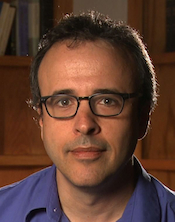 Daniel Levin合作论文数Department of Psychology and Human Development, Peabody College, Vanderbilt University4
 Todd J. Cooke合作论文数Department of Cell Biology and Molecular Genetics, University of Maryland4Bretton W. Kent合作论文数1B Booth Quimby合作论文数1Philippa Crombie合作论文数1Kiu Sum合作论文数1
 Dana Grosser-Clarkson合作论文数College Pk, Univ Maryland1
 Cath Fraser合作论文数1
 Yoko Mori合作论文数Univ Otago1
 Ravanth Baskaran合作论文数1
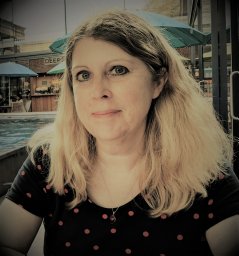 Amanda Millmore合作论文数Univ Reading1Seb Dianati合作论文数1Jarett Vanz-Brian Pereira合作论文数Prince of Wales Clinical School, University of New South Wales1
 Sarah Elizabeth Slates合作论文数1
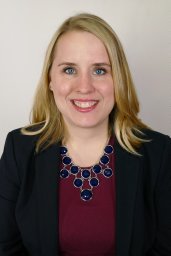 Alice E. Donlan合作论文数College Pk, Univ Maryland1Emmajane Milton合作论文数1
 Meghan Allen合作论文数Department of Computer Science, Faculty of Science, The University of British Columbia1
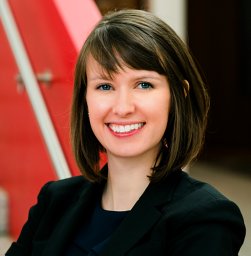 Virginia Byrne合作论文数University of Maryland College Park1
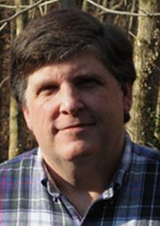 Jeffrey Shultz合作论文数Department of Entomology, College of Agriculture and Natural Resources, University of Maryland1
 Christopher C. Tisdell (Chris Tisdell)合作论文数School of Mathematics and Statistics, Faculty of Science, The University of New South Wales1
 Karen Carleton合作论文数Department of Biology, University of Maryland1
 Andrew R. Elby合作论文数Department of Teaching and Learning, Policy and Leadership, College of Education, University of Maryland College Park1
 Alice Olmstead合作论文数Boston University, Boston University1Kristi Hall合作论文数1
 Joe Redish合作论文数Department of Physics, University of Maryland1
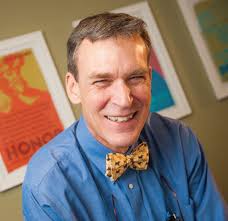 Jeffrey T. Jensen合作论文数Department of Obstetrics and Gynecology, School of Medicine, Oregon Health & Science University;Oregon National Primate Research Center, Oregon Health & Science University1
 Chandra Turpen合作论文数Department of Physics;University of Colorado;Department of Physics, University of Colorado1
 Alex Morgan合作论文数1
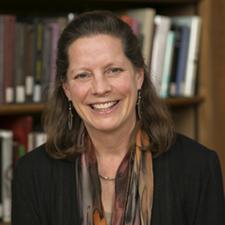 Alison Cook-Sather合作论文数Bryn Mawr College1Lee A. Friedman合作论文数Planning Research Corporation1




