This chapter examines the work of J. P. Rushton, a Canadian psychologist and professor of psychology at the University of Western Ontario, and the psychologist H. J. Eysenck who lived and worked in England until his death in the late 1990s. Both argue for correlations between race and IQ. While Eysenck's major publication on race (The I.Q. Argument, 1971) takes the now familiar route of correlating IQ studies with race, Rushton relies on head measurements of living subjects and, in one case, on data derived from brain scans. He claims to have shown significant relationships between brain size, racial membership, and IQ, and has published a book, Race, Evolution, and Behavior: A Life History Perspective (Transaction Publishers, 1995), offering a sociobiological explanation for IQ differences among the races.KeywordsBrain SizeTransaction PublisherCranial CapacityAmerican Anthropological AssociationFamiliar RouteThese keywords were added by machine and not by the authors. This process is experimental and the keywords may be updated as the learning algorithm improves.
Contemporary epidemiology and health psychology research has pointed out that single risk factors have relatively little influence on ischaemic heart disease (IHD), but that effects are synergistic. The possibility of such interactions has occasionally been noted and indeed might be expected, given the unexplained variance in IHD risk after accounting for the effects of IHD risk factors taken individually. Risk factors of smoking and neuroticism (emotional lability) were investigated simultaneously in groups of 187 male IHD patients and 187 controls. Initially, a logistic regression was used to compare the two groups on the two risk factors. Next, their interaction was tested by dividing the two samples into different subgroups according to the level of neuroticism and presence of smoking. The multivariate regression model and other methods supported both risk factors including a synergistic interaction between the two. The synergistic interaction of smoking and neuroticism plays an important role in predicting IHD. Different potential mechanisms of psychobehavioural pathogenicity have been suggested so far. The presence of a psychobiological synergistic interaction between neuroticism and smoking suggests the involvement of the former risk factor in sudden deterioration in the coronary flow due to vasoconstriction.
The factorial similarity of Psychoticism (P), Extraversion (E), Neuroticism (N), and Social Desirability (L), as measured by the Eysenck Personality Questionnaire, was assessed using gender- specific data collected from 34 countries. As in an earlier study using data from 24 countries (Eysenck et al., 1985), the Kaiser-Hunka-Bianchini (KHB) procedure was utilised as a measure of factorial similarity. However, given the recent evidence concerning the flawed interpretation of the original KHB coefficients, two other coefficients were used to make an assessment of factorial similarity: a congruence coefficient computed from the KHB maximally congruent orthogonalised factors, and a congruence coefficient computed from the oblique factor patterns of the U.K. target and foreign country matrices. The results of these procedures (using the U.K. factor matrices as targets, toward which each country's factor pattern is rotated) indicated that: (1) the Eysenck factors are strongly replicable across all 34 countries (2) the modified KHB similarity procedure is sound, given the nature of these particular comparisons (3) in comparison to the oblique pattern matrix congruences, those computed over the KHB maximally congruent matrices were found to be optimal both in terms of size and variation. It was concluded that contrary to pessimistic observations made elsewhere, concerning the validity of the factor comparisons based upon 'original' KHB coefficients, the analyses in this paper conclusively demonstrate a significant degree of factorial similarity with the U.K. data, across the 34 comparison countries.
We report the results of a prospective study of a random sample of 1353 elderly but healthy men and women who were followed up for a period of 10 yr, when mortality and cause of death were ascertained. Overall results have been reported elsewhere for mortality from cancer, coronary heart disease and other causes; here we are concerned with the personality factors predicting breast cancer, cervical cancer, cancer of the corpus uteri specifically, as well as other types of cancer in women. Ten specific hypotheses were tested, using specially constructed questionnaires for the purpose, and for most of these statistically significant support was obtained. The results justify belief that specific types of cancer may be related to specific stress/personality factors.
This study investigated the psychometric properties of Farsi version of SPIN in Iran. The measures were administered to a sample of 330 participants with (n=30) and without social phobia (n=300) ranging from 18 to 38 years of age. The mean (SD) of the SPIN total score for clinical and nonclinical subjects was 41.87 (6.32) and 14.18 (9.56). Internal consistency (Cronbach's α=0.66 and 0.87 for clinical and non-clinical group respectively) and 2-week test–retest reliability in non-clinical sample (r = 0.89) were both good. A cut-off score of 29 resulted in balanced sensitivity (0.96) and 1-specificity (0.087). Good convergent and discriminant validity were established by examining correlations with other conceptually related and unrelated scales. Also, factor analysis supported a four factor solutions in non-clinical group. Although the cut-off is different from those in other countries, the SPIN is a both reliable and valid measure for screening and evaluating social phobia severity.
Foreword by Professor H.J. Eysenck Preface Introduction Pavlov's Study of Brain-Behavior Relationships Theoretical Integration of Pavlov's Findings The Temperaments and Eysenck's Theory of Personality Thalamocortical Activity and the EEG The Neurological Determination of Temperament The Neurological Determination of Contemporary Personality Dimensions The Neurological Determination of Intelligence Dimensions The Neurological Bases of Spearman's Factors A Reappraisal of Spearman's Intelligence Theory Freud: Insights, Errors and New Explanations Human Nature and the Human Predicament References Index
Using three samples of applicant data, encompassing over 2300 participants, the Concept Model 5.2 Occupational Personality Questionnaire (OPQ) was examined for scale discriminability at the item, scale and factorial level. Item analysis and maximum likelihood factor analysis indicated that the OPQ questionnaire provided good, low complexity measurement on 22 out of the 31 scales. Nine exhibited poor signal‐to‐noise ratios, high item complexity indices, and insufficient number of keyed loadings on the appropriate factor. On the basis of the results below and from those reported by Matthews & Stanton (1994), it was argued that the test requires further development in conjunction with the revision of the psychological and measurement models specified as underlying its construction.
Although some scholars have suggested that coping is constrained by emotional maturity, little is known about the relationship between these constructs. In this paper we assessed a model that included emotional maturity, dispositional coping, and coping effectiveness. We predicted that emotional maturity would have a direct effect on coping effectiveness in addition to an indirect effect via task-, distraction-, and disengagement-oriented coping.Cross-sectional.Seven hundred and ninety athletes completed measures of emotional maturity, dispositional coping, and coping effectiveness. The data was analyzed using structural equation modeling, which revealed partial support for our model.Several of the predicted paths were significant. In particular, there was a significant path between emotional maturity and task-oriented coping, but the paths between emotional maturity and distraction- and disengagement-oriented coping were not significant.Our findings indicate that how an athlete copes might be limited by his or her level of emotional maturity, which provides further evidence that coping is constrained by maturation among adolescent athletes.
 S Eysenck合作论文数46
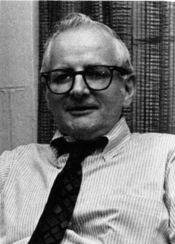 Leon J. Kamin合作论文数McMaster U.23R. Grossarth-Maticek合作论文数22
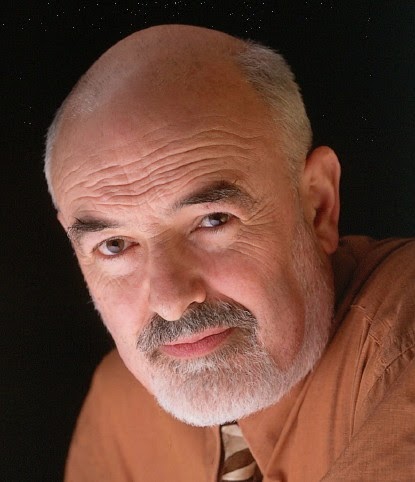 Chris Frith合作论文数Wellcome Centre for Human Neuroimaging, University College London17
 Glenn Daniel Wilson合作论文数Department of Psychology, King's College London9Sybil B. G. Eysenck合作论文数8
 Lindon J. Eaves合作论文数Virginia Institute for Psychiatric and Behavioral Genetics, Virginia Commonwealth University8Willett R A合作论文数7David Nias合作论文数7P BARRETT合作论文数6N. Pyhel合作论文数6Saburo Iwawaki合作论文数6K Götz合作论文数4
 Gisli Gudjonsson合作论文数King's College London4
 Paul Barrett合作论文数Cognadev UK Ltd4P. T. Barrett合作论文数3A LEVEY合作论文数3Boyle Gregory J合作论文数3
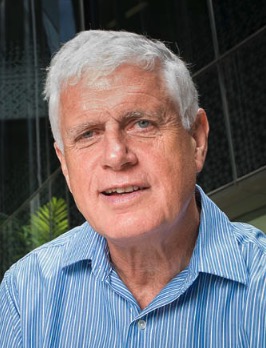 Nick Martin合作论文数QIMR Berghofer Medical Research Institute3David W. Fulker合作论文数3Kenneth M Warwick合作论文数3
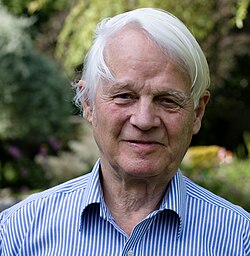 Richard Lynn合作论文数School of Psychology, Ulster University3
 Timothy Bates合作论文数Psychology, School of Philosophy, Psychology and Language Sciences, The University of Edinburgh3
 Philippe Rushton合作论文数Department of Psychology, Faculty of Social Science, University of Western Ontario3james p curran合作论文数2B. Everitt合作论文数2L Rakic合作论文数2
 John Hewitt合作论文数Institute For Behavioral Genetics, University of Colorado Boulder;College of Arts and Sciences, University of Colorado Boulder2Allsopp J F合作论文数2Rieder H合作论文数2Gudrun Sartory合作论文数2
 Gordon Claridge合作论文数Department of Experimental Psychology, South Parks Road, Oxford OX1 3UD, United Kingdom2J. W. C. Chan合作论文数2
 Jack Rachman合作论文数Department of Psychology, Faculty of Arts, The University of British Columbia2W Linford Rees合作论文数2
 Michael C. Neale合作论文数Virginia Institute for Psychiatric and Behavioral Genetics, Virginia Commonwealth University2W Frearson合作论文数2Andrew Heath合作论文数Department of Psychiatry, Washington University School of Medicine in St. Louis2Ae Maxwell合作论文数1John C. Touhey合作论文数1Dkb Nias合作论文数1F Klingberg合作论文数1D Cookson合作论文数1VL SILAKOV合作论文数1F Obál合作论文数1Ah Harris合作论文数1Dt Kanazir合作论文数1Andrej Marusic合作论文数1R. M. Andrysco合作论文数1




