Learning from Demonstrations (LfD) is an attractive paradigm in robot learning, enabling robots to acquire skills by observing human demonstrations without explicit programming. However, existing LfD approaches typically assume that users provide ideal demonstrations, which rarely holds in practice, especially as non-expert inputs often vary in quality. Such multi-quality demonstrations can cause instability in LfD models and produce outputs that deviate from the desired behavior. To address this, recent studies have improved high-level LfD approaches with notable success, whereas low-level approaches represented by the Dynamic Movement Primitives (DMPs) have received limited attention. In this letter, we propose a novel method that enables DMP to effectively learn from multi-quality demonstrations, capturing user intents and mitigating quality inconsistencies. Specifically, the proposed method combines Dynamic Time Warping (DTW) with a representation learning model (TS2Vec) for unsupervised identification, estimating the relative qualities of DMP's forcing terms and assigning scores. Then, when modeling these terms with a Gaussian Mixture Model, we introduce a latent variable representing the desired forcing term and formulate a weighted joint Maximum A Posteriori objective, enabling reliable modeling guided by the identified scores. Simulation and experimental results show that our method enables DMPs to produce outputs closer to the desired behavior, with improvements in compactness (18 & times;), smoothness (20 & times;), and similarity to the desired demo (5 & times;).
Thermoplastic vulcanizates (TPV) combine the high elasticity of crosslinked rubber with the excellent processability of thermoplastics, offering a sustainable material alternative. However, conventional TPV struggles to simultaneously achieve efficient rubber crosslinking and fine phase dispersion, which limits the development of high-performance TPV. Herein, mechanochemical strategy is for the first time applied to prepare ethylene propylene diene monomer/polypropylene (EPDM/PP)TPV. By utilizing the powerful three-dimensional shear force of solid-state shear milling (S3M), the rubber phase is broken down into nanoparticles, while at the same time, the frictional heat causes a certain degree of cross-linking in the fragmented rubber phase, resulting in stable nanoscale rubber particles with an average particle size of approximately 40 nm. The optimum structure exhibits outstanding mechanical properties, with a tensile strength of 9.4 MPa (59% higher than that of the conventional melt-mixed counterpart) and an elastic modulus of 90.4 MPa (a 364% increase). Uniaxial tensile simulations based on a two-dimensional representative volume element (2D-RVE) TPV model further confirm that reducing the rubber particle size enhances both tensile strength and elastic modulus. This study systematically identified shear-induced nanoscale dispersion of the rubber phase as the key factor behind the property enhancement, providing theoretical guidance for the precise control of TPV microstructure.
Using the EU Sustainable Finance Action Plan as a natural experiment, we find that flows into “dark green” funds surge after the publication of the June 2020 Taxonomy Regulation, before tapering around the Sustainable Finance Disclosure Regulation in March 2021. Stocks with strong green fund buying pressures in June 2020 experience further price increases and subsequent reversals, comoving with flows. Comprehensive, dynamic analyses of green fund flows and asset prices in global stock markets, augmented with synthetic controls, provide causal evidence for large, transitory impacts of green investing on green asset prices, lacking sustainable effects on the cost of capital.
The dual-swing laser head is essential for five-axis laser machining, yet its precision is greatly affected by the incident laser beam. Any positional or angular deviation in the laser can cause the focus spot position of the head to change continuously during rotation, thereby severely compromise the manufacturing performance of the head. However, the current calibration methods for the incident beam of dual-swing laser heads have issues with low accuracy and insufficient engineering applicability. This paper proposes an on-machine measurement and calibration method for incident laser error in dual-swing laser heads. An error model for the incident beam with a dual-swing laser head was established, from which the law of spot position changes caused by incident beam errors during the head's rotation was derived. Subsequently, following this law, a precision calibration method for the laser head's incident beam error was proposed, based on the theory of optical image height. Afterwards, an on-machine error measurement system was established on the dual-swing laser head, and the calibration method was verified through experiments. The results show that the use of this calibration method can improve the accuracy of the incident beam for dual-swing laser head to 0.071 mm, which is approximately 3-4 times better than traditional calibration methods, thereby significantly enhancing the manufacturing precision of the laser head.
We study how passive investing affects asset prices. Flows into passive funds disproportionately raise the stock prices of the economy's largest firms, especially those large firms in high demand by noise traders. Because of this effect, the aggregate market can rise even when flows are entirely due to investors switching from active to passive funds. Intuitively, passive flows increase the idiosyncratic risk of large firms in high demand, which discourages investors from correcting the flows' effects on prices. Consistent with our theory, prices and idiosyncratic volatilities of the largest S&P500 firms rise the most following flows into that index.
Movement Primitives(MPs) are compact generators for representation and generalization of modular movements, which are usually used to implement learning from demonstration tasks in robotics. Existing works on MPs mostly utilize combinations of basis functions to represent diverse movements, whether employing probabilistic or dynamic approaches. However, applying these approaches requires manual specification of hyperparameters related to basis functions, resulting in inconvenience and a reliance on specific expertise. In this paper, we develop a Conditional Dirichlet Process Mixture Model-based Dynamic Movement Primitive (CDPMM-DMP) to achieve a nonparametric improvement for the Dynamic Movement Primitive (DMP). First, inspired by Bayesian nonparametric theory, we explore the use of the Dirichlet Process Mixture Model (DPMM) to replace the original radial basis functions in the DMP, and construct the required training set from demonstrations. Then, we study the output generation mechanism driven by the DPMM, particularly by employing conditional sampling to avoid the anomalous outputs caused by direct sampling from the DPMM. Finally, we provide analyses of the various properties brought by our nonparametric transformation of DMP. The analyses and validation results show that the proposed CDPMM-DMP can significantly reduce the parameter tuning burden in usage with its nonparametric learning property. Besides, our method still retains the inherent properties of DMP, while also incorporating some properties of probabilistic MPs, such as multi-sample learning and co-activation. Note to Practitioners-This paper is motivated by alleviating the parameter tuning burden of the Dynamic Movement Primitive (DMP) in its learning process. In our research, we address this issue by introducing a nonparametric probabilistic model (namely, Dirichlet process mixture model) into the learning process of DMP to substitute its original deterministic basis functions. This substitution effectively enables our method to automatically identify the required parameters from the demonstration data. To address the subsequent influences of the probabilistic components on the generation process of DMP and its inherent properties, on one hand, we focus on conditional sampling to establish a mechanism for the generation process. This mechanism can prevent the discontinuity and non-convergence of outputs caused by probabilistic sampling. On the other hand, we explore our method to achieve some probabilistic properties of generalization, which the DMP lacks. Simulation and experimental results show our method can achieve nonparametric learning from demonstrations. Additionally, it not only produces smooth and continuous movement from any initial to final states (similar to DMPs), but also holds probabilistic properties such as multi-sample learning and co-activation (similar to probabilistic primitive methods). In practical applications, due to the CDPMM-DMP's ability of nonparametric learning, it is more user-friendly for general users lacking specialized experience, aligning with the development goals of robot leaning from demonstrations. Moreover, its properties combining deterministic and probabilistic primitive methods make it more potent when facing complex scenarios and various requirements.
This paper shows a strong link between the granular information contained in individual stock prices and sectoral movements. We find that a predictor aggregating the price movements of a broad cross section of individual stocks predicts intraday returns of sector ETF. When we further incorporate the information from structural models, the resulting information signal has even stronger return predictability. These results support theories of granular and network origins of aggregate shocks.
Cyber risk is an important emerging source of risk in the economy. To estimate its impact on the asset market, we use machine learning techniques to develop a firm-level measure of cyber risk. The measure aggregates information from a rich set of firm characteristics and shows superior ability to forecast future cyberattacks on individual firms. We find that firms with higher cyber risk earn higher average stock returns. When these firms underperform, cybersecurity experts tend to have higher concerns about cyber risk, and cybersecurity exchange-traded funds outperform. Further tests strengthen the identification of the cyber risk premium. This paper was accepted by William Cong, finance. Supplemental Material: The online appendix and data files are available at https://doi.org/10.1287/mnsc.2022.02056 .
This paper studies the role of mutual fund yield in driving investor flows and performance of bond funds. Using two common measures, the SEC yield and 12-month distribution yield, we find strong evidence that investors tend to chase bond funds with higher yields, even after controlling for total fund returns and fund ratings. Although bond funds with higher yields achieve higher average total returns, the return spread is less than one half of the yield spread, and is attributable to higher fund risk. We also show that high yield bond funds suffer sharp losses during crisis periods, which trigger large outflows.
This paper investigates the effect of local urban investment bonds (local UIBs) on firms’ profitability in Chinese stock market. We find that the increase of local UIBs will significantly improve the profitability of local firms. Moreover, our results indicate that local UIBs affect firms’ profitability by simultaneously improving their productivity, reducing their costs, and increasing investment. Local UIBs have a more pronounced and positive effect on the profitability of firms in the central region and underdeveloped region in China. Additionally, state-owned firms and financial unconstrained firms benefit the most from the increase in local UIBs. Our results are robust to various identification strategies which address the endogeneity concern.
Using Norwegian administrative data, we examine how idiosyncratic personal experiences during an aggregate market shock shape long-run investment behavior. We find that investors who suffered large losses during the 2008 financial crisis persistently reduced their equity allocations and became more likely to exit the stock market entirely. Among those who remained invested, crisis experiences led to significantly more concentrated portfolios—an unintended consequence that increased idiosyncratic risk despite investors' apparent desire to reduce risk exposure. These effects persist for at least five years after the crisis, even as aggregate market conditions recovered and model-based expected returns remained high. We also show that personal crisis experiences affect equity allocation decisions even after controlling for formative year experiences. Moreover, positive formative-year stock market returns partially offset crisis-driven reduction in stock allocation, demonstrating how both direct experience of personal losses and indirect experience of early-life equity market conditions jointly drive persistent investor heterogeneity.
Firms employing more H-1B visa holders realize abnormally high stock returns, particularly on earnings announcement dates. Excess returns are higher in talent clusters: doubling the number of H-1B workers in a city doubles the effect of a firm’s own H-1B hiring on its future returns. The surprise election of President Trump in 2016 had an immediate, negative effect on firms benefiting from the H-1B visa program. The results suggest that the stock market was slow to recognize value creation associated with skilled immigrant labor.
We study the network structure of the global supply chain, using trade in value-added data for 67 economies and 45 industries. We find that, in the global manufacturing network, a few hub economies such as China, US, Germany, Japan, and Russia drive the global and regional trade flows, but have low dependence on foreign sourcing. Building fine-grained global networks linking economy-industry pairs, we find that the structural importance of an economy-industry pair in the global supply chain drives its contribution to global economic and stock market fluctuations. These results provide fresh evidence supporting the network origins of global economic fluctuations.
This study theoretically explores the effectiveness of the non-disclosure policy of audit intensity using the portfolio choice approach. In our setting, audit intensity follows a two-state Markov chain, which is not disclosed by the tax authority, and agents will exploit the available information to learn the state and accordingly make tax evasion decisions. We find that the effectiveness of the non-disclosure policy in reducing tax evasion and increasing tax revenues depends on the proportion of time in the high-intensity state. Interestingly, when this proportion is high during a period, the disclosure policy is more effective.
Open-end corporate bond mutual funds invest in illiquid assets while providing liquid claims to shareholders Does such liquidity transformation introduce fragility to the corporate bond market? To address this question, we create a novel bond-level latent fragility measure based on asset illiquidity of mutual funds holding the bond We find that corporate bonds bearing higher fragility subsequently experience higher return volatility and more outflows-induced mutual fund selling over the period of 2006–2019 Using the COVID-19 crisis as a natural experiment, we find that bonds with higher precrisis fragility experienced more negative returns and larger reversals around March 2020
We study the dynamic information flows between stock and corporate bond markets. Using accurately measured returns on corporate bond exchange-traded funds (ETFs), we find that returns on a portfolio of stocks of firms issuing the bonds in the ETFs positively predict corporate bond ETF returns, but not vice versa. The return predictability is stronger for ETFs tracking the indices of corporate bonds with lower credit ratings and higher yields. By contrast, a randomly formed stock portfolio does not predict the ETF returns. These results are consistent with the notion of gradual information diffusion across asset markets.
This study proposes an ultrafast laser ablation method for improving the depth uniformity of microgrooves in bursting discs. Under a lower laser fluence, the influence of the spot overlap rate on the depth uniformity of microgrooves was studied. The results show that 80% of the spot overlap ratio has good performance in ablation efficiency and depth uniformity of microgrooves. On this basis, the relationship between the number of laser scanning layers and the depth of microgrooves was studied, and the number of scanning layers needed to ablate 70 µm microgrooves was obtained. Based on the combination of the process parameters and the optimization of the laser scanning path, laser ablation of bursting disc microgrooves with a specific shape was realized. The depth uniformity of microgrooves in different sections of the bursting disc was not worse than 4 µm. The preliminary bursting test shows that the bursting pressure between the discs was no more than 0.06 Mpa. Compared with the results of the traditional processing method, the microgroove depth uniformity of bursting discs was greatly improved. Therefore, femtosecond laser ablation technology provides an advanced manufacturing method for bursting disc microgroove machining.
In this study, we consider the memory property of tax audits to investigate the tax evasion problem from the perspective of portfolio choice. We explore the implications of the memory property for tax evasion, consumption, and asset allocation. Assuming that tax audits and jumps in the risky asset both follow self-exciting Hawkes processes, we provide a semi-analytical solution to this problem for an agent with constant relative risk aversion (CRRA) utility. We find that the memory feature does not change the agent's effective holding in the risky asset, and its effects on tax evasion and consumption are determined by the agent's risk aversion. It is suggested that government should treat agents differentially by their risk preferences and set audit-related parameters carefully to avoid unnecessary public expenditure.
Renewable biobased aerogels display a promising potential to fulfill the surging demand in various industrial sectors. However, its inherent low mechanical robustness, flammability, and lack of functionality are still huge obstacles in its practical application. Herein, a novel integrated leather solid waste (LSW)/poly(vinyl alcohol) (PVA)/polyaniline (PANI) aerogel with high mechanical robustness, flame retardancy, and electromagnetic interference (EMI) shielding performance was successfully prepared. Amino carboxyl groups in LSW could be effectively exposed by solid-state shear milling (S3 M) technology to form strong hydrogen-bond interactions with the PVA molecular chains. This led to a change in the compressive strength and the temperature of the initial dimensional change to 15.6 MPa and 112.7 °C at a thickness of 2.5 cm, respectively. Moreover, LSW contains a large number of N elements, which ensures a nitrogen-based flame-retardant mechanism and increase in the limit oxygen index value of LSW/PVA aerogel to 32.0% at a thickness of 2.5 mm. Notably, by the cyclic coating method, a conductive PANI layer could be polymerized on the surface of LSW/PVA aerogel, which led to the construction of a sandwich structure with impressive EMI shielding capability. The EMI shielding effectiveness (SE) reached more than 40 dB, and the specific shielding effectiveness (SSE) reached 73.0 dB cm3 g-1. The inherent dipoles in collagen fibers and the conductive PANI synergistically produced an internal multiple reflection and absorption mechanism. The comprehensive performance of LSW/PVA/PANI aerogel not only demonstrates a new strategy to recycle LSW in a more value-added way but also sheds some more light on the development of biomass aerogels with high-performance, environmentally friendly, and cost-effective properties.
 John M. Carroll合作论文数Center for Human-Computer Interaction, College of Information Sciences and Technology, Pennsylvania State University;Laboratory for Collaboration and Innovation, College of Information Sciences and Technology, Pennsylvania State University11
 Yongfu Xu (徐永福)合作论文数School of Ocean and Civil Engineering, Shanghai Jiao Tong University6
 Lu Zheng (郑路)合作论文数School of Social Sciences, Tsinghua university6
 Zheng Sun合作论文数University of California6
 Uday V. Shanbhag合作论文数Penn State Univ, University Pk6
 Guosheng Xiang合作论文数5
 Sophia Zhengzi Li合作论文数4
 Teodor Dyakov合作论文数EDHEC Business Sch, Roubaix, France4
 Jianping He (何建平)合作论文数Center for Intelligent Wireless Networks and Cooperative Control, Department of Automation, Shanghai Jiao Tong University4
 Yong Ma (马勇)合作论文数College of Finance and Statistics, Hunan University4
 Takeshi Yamada合作论文数4
 Marno Verbeek合作论文数Dept. of Financial Management and Econometric Institute, Erasmus University Rotterdam4
 Yongchang Zhang (张永昌)合作论文数North China Electric Power University4Juyi Zhang (张雎易)合作论文数3Jing Zhou (周璟)合作论文数3
 Ming Li (李明)合作论文数School of Mechanical Engineering, Shandong University3
 Dimitri Vayanos合作论文数Department of Finance, London School of Economics and Political Science3
 Mary Beth Rossen合作论文数College of Information Sciences and Technology, Pennsylvania State University3
 Paula Bach合作论文数3Ji-Zheng Chu合作论文数北京化工大学信息科学与技术学院3
 Junlai Liu (刘俊来)合作论文数School of Earth Science and Resources, China University of Geosciences3
 Haitao Yang (杨海涛)合作论文数School of Electrical and Control Engineering, North China University of Technology2Jinxin Dai合作论文数2LiHai Yao合作论文数2Jinxiang Fu合作论文数2Chen Liang-jun合作论文数2Zheng YuanYuan合作论文数2Peixuan Yuan合作论文数2Siming Meng合作论文数2Shulong Zeng合作论文数2Xuda Ding合作论文数Shanghai Jiao Tong University, Jiao Tong Univ2Ashley Wang合作论文数2Fuqiang Zhang合作论文数2XueLian Wang (王雪莲)合作论文数2
 Bryan Kelly合作论文数Yale School of Management2
 Libing Liao (廖立兵)合作论文数China University of Geosciences, Beijing2
 Guangwei Meng (孟广伟)合作论文数School of Mechanical and Aerospace Engineering, Jilin University2Jie Xu合作论文数2
 Caiwen Ma (马彩文)合作论文数中国科学院西安光机所2
 Craig H. Ganoe合作论文数The Pennsylvania State University2
 Mark L. Brusseau合作论文数Department of Environmental Science, The University of Arizona;Department of Hydrology & Atmospheric Sciences, College of Science, The University of Arizona2
 Shuxu Guo (郭树旭)合作论文数College of Electronic Science & Engineering, Jilin University2
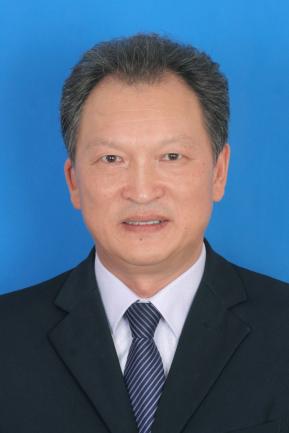 Jinhua Zheng (郑金华)合作论文数School of Computer Science, Xiangtan University2Xu Jie合作论文数2
 Bo Guo合作论文数Department of Hydrology and Atmospheric Sciences, College of Science, University of Arizona2
 Sheridan Titman合作论文数Department of Finance, Red McCombs School of Business, The University of Texas at Austin;Department of Economics, College of Liberal Arts, The University of Texas at Austin2
 Yingmin Jia (贾英民)合作论文数School of Automation Science and Electrical Engineering, Beihang University2Honglu Du合作论文数2
 Marcin Polak合作论文数Department of Nature Conservation;Institute of Biology;Institute of Biology, Department of Nature Conservation2




