Reasoning stands as a cornerstone of intelligence, enabling the synthesis of existing knowledge to solve complex problems. Despite remarkable progress, existing reasoning benchmarks often fail to rigorously evaluate the nuanced reasoning capabilities required for complex, real-world problemsolving, particularly in multi-disciplinary and multimodal contexts. In this paper, we introduce a graduate-level, multi-disciplinary, EnglishChinese benchmark, dubbed as Reasoning Bench (RBench), for assessing the reasoning capability of both language and multimodal models. RBench spans 1,094 questions across 108 subjects for language model evaluation and 665 questions across 83 subjects for multimodal model testing. These questions are meticulously curated to ensure rigorous difficulty calibration, subject balance, and cross-linguistic alignment, enabling the assessment to be an Olympiad-level multidisciplinary benchmark. We evaluate many models such as o1, GPT-4o, DeepSeek-R1, etc. Experimental results indicate that advanced models perform poorly on complex reasoning, especially multimodal reasoning. Even the top-performing model OpenAI o1 achieves only 53.2% accuracy on our multimodal evaluation. Data and code are made publicly available athttps://evalmodels.github.io/rbench/
Denoising diffusion models have demonstrated tremendous success in modeling data distributions and synthesizing high-quality samples. In the 2D image domain, they have become the state-of-the-art and are capable of generating photo-realistic images with high controllability. More recently, researchers have begun to explore how to utilize diffusion models to generate 3D data, as doing so has more potential in real-world applications. This requires careful design choices in two key ways: identifying a suitable 3D representation and determining how to apply the diffusion process. In this survey, we provide the first comprehensive review of diffusion models for manipulating 3D content, including 3D generation, reconstruction, and 3D-aware image synthesis. We classify existing methods into three major categories: 2D space diffusion with pretrained models, 2D space diffusion without pretrained models, and 3D space diffusion. We also summarize popular datasets used for 3D generation with diffusion models. Along with this survey, we maintain a repository https://github.com/cwchenwang/awesome-3d-diffusion to track the latest relevant papers and codebases. Finally, we pose current challenges for diffusion models for 3D generation, and suggest future research directions.
In the field of digital content creation, generating high-quality 3D characters from single images is challenging, especially given the complexities of various body poses and the issues of self-occlusion and pose ambiguity. In this paper, we present CharacterGen, a framework developed to efficiently generate 3D characters. CharacterGen introduces a streamlined generation pipeline along with an image-conditioned multi-view diffusion model. This model effectively calibrates input poses to a canonical form while retaining key attributes of the input image, thereby addressing the challenges posed by diverse poses. A transformer-based, generalizable sparse-view reconstruction model is the other core component of our approach, facilitating the creation of detailed 3D models from multi-view images. We also adopt a texture-back-projection strategy to produce high-quality texture maps. Additionally, we have curated a dataset of anime characters, rendered in multiple poses and views, to train and evaluate our model. Our approach has been thoroughly evaluated through quantitative and qualitative experiments, showing its proficiency in generating 3D characters with high-quality shapes and textures, ready for downstream applications such as rigging and animation.
Neural radiance fields(NeRFs)for novel-view synthesis have attracted the attention of researchers in computer vision and graphics.Unlike traditional methods using explicit expressions,NeRFs represent a scene as an implicit neural radiance field.
Polygonal mesh has been proven to be a powerful representation of 3D shapes, given its efficiency in expressing shape surface while maintaining geometric and topological information. Increasing efforts have been made to design elaborate deep convolutional neural networks for meshes. However, these methods naturally ignore the global connectivity among mesh primitives due to the locality nature of convolution operations. In this paper, we introduce a transformer-like self-attention mechanism with down-sampling architectures for mesh learning to capture both the global and local relationships among mesh faces. To achieve this, we propose BFS-Pooling, which can convert a connected mesh into discrete tokens (i.e., a set of adjacent faces) with breath-first-search (BFS) and naturally build hierarchical architectures for mesh learning by pooling mesh tokens. Benefiting from BFS-Pooling, we design a hierarchical transformer architecture with a window-based local attention mechanism, Mesh Window Transformer (MWFormer). Experimental results demonstrate that MWFormer achieves the best or competitive performance in both mesh classification and mesh segmentation tasks. Code will be available.
View synthesis methods using implicit continuous shape representations learned from a set of images, such as the Neural Radiance Field (NeRF) method, have gained increasing attention due to their high quality imagery and scalability to high resolution. However, the heavy computation required by its volumetric approach prevents NeRF from being useful in practice; minutes are taken to render a single image of a few megapixels. Now, an image of a scene can be rendered in a level-of-detail manner, so we posit that a complicated region of the scene should be represented by a large neural network while a small neural network is capable of encoding a simple region, enabling a balance between efficiency and quality. Recursive-NeRF is our embodiment of this idea, providing an efficient and adaptive rendering and training approach for NeRF. The core of Recursive-NeRF learns uncertainties for query coordinates, representing the quality of the predicted color and volumetric intensity at each level. Only query coordinates with high uncertainties are forwarded to the next level to a bigger neural network with a more powerful representational capability. The final rendered image is a composition of results from neural networks of all levels. Our evaluation on public datasets and a large-scale scene dataset we collected shows that Recursive-NeRF is more efficient than NeRF while providing state-of-the-art quality. The code will be available at https://github.com/Gword/Recursive-NeRF
Polygonal mesh has been proven to be a powerful representation of 3D shapes, given its efficiency in expressing shape surface while maintaining geometric and topological information. Increasing efforts have been made to design elaborate deep convolutional neural networks for meshes. However, these methods naturally ignore the global connectivity among mesh primitives due to the locality nature of convolution operations. \revise{In this paper, we for the first time introduce a transformer-like self-attention mechanism with downsampling architectures for mesh learning to capture both the global and local relationships within the mesh faces.} To achieve this, we propose BFS-Pooling, which can convert an irregular mesh into discrete tokens (i.e., a set of adjacent faces) with breath-first-search (BFS) and naturally build hierarchical architectures for mesh learning by pooling mesh tokens. Benefiting from BFS-Pooling, several advanced transformer architectures for 2D images can be easily adapted to mesh data as MeshFormers, including MeshViT, MeshWin and MeshPVT. Experimental results demonstrate that MeshFormers achieve the best or competitive performance in both mesh classification and mesh segmentation tasks. Code will be available.
 Meng-Hao Guo (国孟昊)合作论文数Department of Computer Science and Technology, Tsinghua University4
 Zheng-Ning Liu (刘政宁)合作论文数3
 Tai-Jiang Mu (穆太江)合作论文数3
 Guo-Wei Yang合作论文数Proxseer Inc.3
 Shimin Hu (胡事民)合作论文数Department of Computer Science and Technology, Tsinghua University3
 Chen Wang (王琛)合作论文数General Robotics, Automation, Sensing & Perception Laboratory, School of Engineering and Applied Sciences, University of Pennsylvania;NVIDIA2
 Yongliang Yang合作论文数Department of Computer Science, University of Bath2
 Shi-min Hu合作论文数1Gordon Wetzstein合作论文数1Yongming Rao合作论文数1Kiyohiro Nakayama合作论文数1Xinzhi Dong合作论文数1Yi-Xuan Deng合作论文数1Jiaxi Song合作论文数1Jiajun Xu合作论文数1Jia-Peng Zhang合作论文数1
 Yi Zhang (张仪)合作论文数State Key Laboratory of Virtual Reality Technology and Systems, School of Computer Science and Engineering, Beijing University of Aeronautics and Astronautics;Graphics and Geometric Computing Group, Department of Computer Science and Technology, Tsinghua University1
 Wenyang Zhou合作论文数Department of Computer Science and Technology, Tsinghua University1
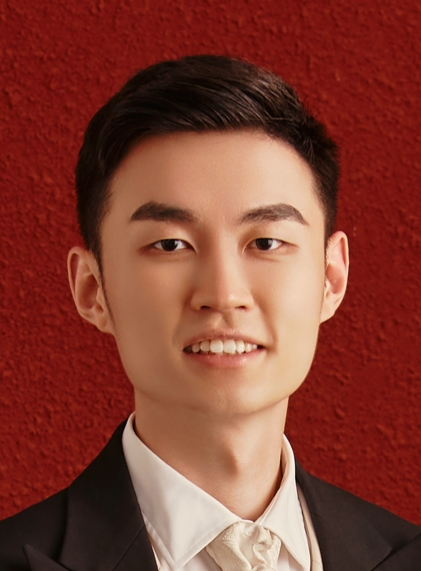 Zhengyang Geng (耿正阳)合作论文数Computer Science Department, School of Computer Science, Carnegie Mellon University1
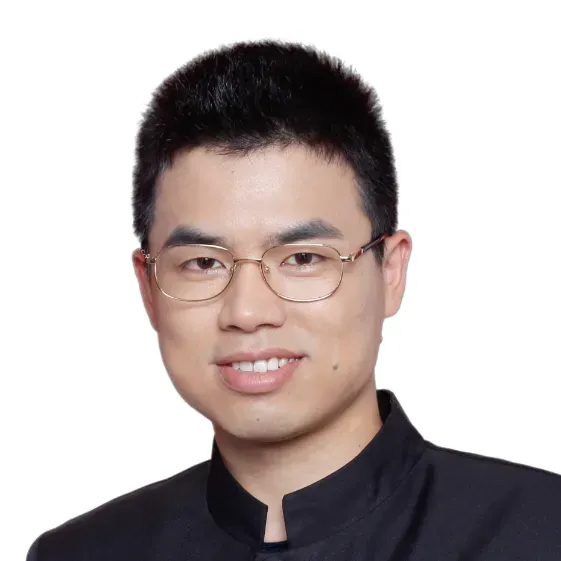 Han Hu (胡瀚)合作论文数1Ying-Tian Liu合作论文数1Bolin Ni合作论文数State Key Laboratory of Multimodal Artificial Intelligence Systems, Institute of Automation, Chinese Academy of Sciences;School of Artificial Intelligence, University of Chinese Academy of Sciences1
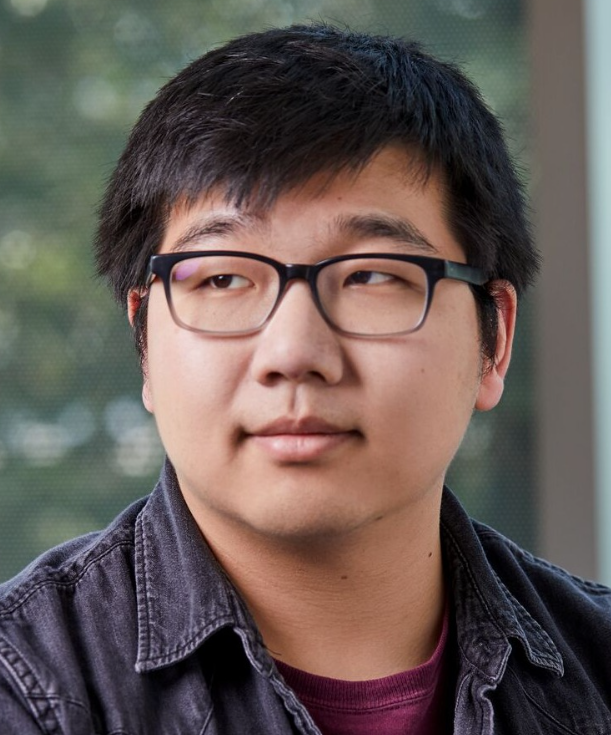 Jiatao Gu (顾佳涛)合作论文数Department of Computer and Information Science, University of Pennsylvania;Apple1
 Yanpei Cao (曹炎培)合作论文数VAST1Dun Liang (梁钝)合作论文数School of Mathematics, Sun Yat-sen University1
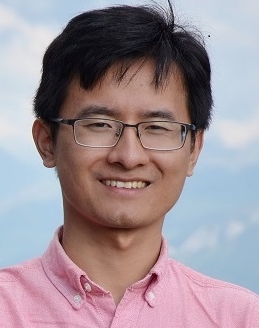 Houwen Peng (彭厚文)合作论文数Microsoft Research1




