Introduction. This paper reports on the observation of twenty participants engaged on personal projects. The goal was to understand how people organize and structure a personal information collection. Method. Selected participants were asked to choose a relatively new project that they would likely be working on and completing in six to eight weeks. Participants were interviewed three times over the study period and the interviews were transcribed. Analysis. Members of the research team independently read each interview transcript, then met to discuss their independent analyses of the data. Through several iterations of this process, the researchers developed the themes and working definitions for their coding of the transcripts. Results. Participants changed the organization of their collections by adding new folders or categories, increasing the number of separate piles for information, or adding tags. They collected more information for their project than anticipated and found their initial plans for managing this information inadequate. Some abandoned their collections, while others faced the inadequacy of their strategies with resignation. Conclusion. Participants often described the need for a system which allowed for greater integration of their information. They assigned human qualities - an intelligent automated helper that would magically solve the challenges they face with the management of a personal information collection.
近年來,iSchools 聯盟在北美地區快速成長,已經引起世界各地的注意。資訊科學領域的教育與研究相關學院多以能夠成為iSchools 成員為目標。iSchools 的定義是抽象或概括的,根據其意向聲明的框架,iSchools 所關切的是對資訊、科技與人之間的互動。iSchools 的成員提供多元的課程、多樣化的學術研究計畫,和跨學科整合的研究範疇。本文藉由三個問題探討iSchools 的相似之處:(1)什麼是Information Schools?(2)什麼是資訊?(3)在資訊領域中研究者如何研究資訊?iSchools 對於未來的資訊教育與研究追求著共同的願景,本文中也將呈現iCaucus 成員對於該願景的闡述以及追求願景的歷程。頁次:4-10
AbstractPeople can organize information items by placing them into folders or by tagging them with labels. Over the years there has been considerable discussion on the relative merits of folders vs. labels. But there is relatively little empirical data directly comparing people's experiences with each model of organization on comparable sets of information. We compared participants' experiences organizing information with both folders and labels over time. Results indicate that each model has its strengths and weaknesses when assessed with respect to basic activities of personal information management (PIM) such as keeping, organizing and re‐finding. Results afford a deeper, more detailed understanding of each model in practice. This understanding is achieved by engaging participants in an active, “hands‐on” comparison of models over a period of time. Study results point to syntheses in tool support for organizing information that might combine strengths of folders and labels while avoiding the inadvertent introduction of weaknesses from these models.
In this paper, we present initial findings from a six-month study involving qualitative interviews on the topic of project-related personal information management. Specifically, we report on the emergent theme of information management strategy abandonment - that is, what factors in particular might cause people to give up on their systems for managing documents, calendars, email, and other sorts of project information. In exploring the recurrence of this theme throughout the interview data, five factors emerged as particularly compelling and frequently-cited reasons for system abandonment: (1) visibility, (2) integration, (3) co-adoption, (4) scalability, and (5) return on investment. We describe each of these factors in turn, using examples from the interviews for illustration. These findings, though preliminary in nature, provide a starting point for understanding why systems fail and how future systems might be designed to improve their success rate. Few of us are completely satisfied with the way we manage the information that helps us perform our daily activities. Our email inboxes overflow, the papers pile up on our desks, and our various calendars and to-do lists become neglected or overwhelmingly complicated. But this does not stop us from trying. We look for better ways; practices that make information management easier, so that we can get on with our lives. Along the way, we often leave a trail of abandoned systems behind us, or weave back and forth between new systems and old. The systems we each develop involve a combination of existing information management tools and strategies for their use. Boardman and Sasse (2004) observed that people often maintain several distinct systems depending upon the information form involved. Participants in their study tended to be most organized for electronic documents and other files, for which organization most frequently took the form of folders correlated with particular projects. Folders were less commonly used to organize web bookmarks, and, when used, they more typically reflected a topic area rather than a specific project. Consistent with the idea that individuals organize their information by topic and project is Kwasnik's (1989) observation that expected use or intended purpose is often a primary consideration in the development of an organization system. Documents, then, may be organized for use on a current project whereas web references (when the trouble is taken to save these) may more likely be organized by topic, as part of a reference collection intended for repeated use. Information is also organized according to activity level or frequency of use. For example, Cole (1982) observed that people tend to divide their information broadly into three categories - action information (to be processed in the next few days), project information (relevant to current projects) and archival information.
In its academic plan, a school of information studies recently described itself as broadening its mandate, and thereby joining “an elite group of North American faculties collectively known as the ‘Information Schools’ or i-schools.” At the first formal Conference of the i-School Community, in September 2005, 19 institutions from the US and Canada were identified as i-conference schools. 15 of these are schools which include American Library Association-accredited master's degree programs. Some who were not present would argue (and have done so) that they were “i-schools” long before the “i-” existed. The academic community in library and information science (LIS) has begun to wonder what the i-schools movement is all about, and how it evolved from a small occasional meeting of deans to an annual conference, and perhaps more. This panel will attempt to demystify the i-school concept. The next i-school conference will be held in October 2006, immediately prior to the ASIST annual meeting, and should inform the conversation. The panel is deliberately quite large - this is meant to be a discussion, not a set of presentations. Each of the panelists (including the moderator) will make a brief presentation, and the moderator will lead the conversation, addressing the questions listed above, adding any insights gained from the October 2006 conference, and soliciting input from the audience. How did the i-school movement come about, and what is its purpose? Is this an association in the making, or just an annual gathering of like-minded people? Is there an infrastructure that involves governance, committees, and so on? How did/might your school become part of it, and what has that meant for your program? How does “membership” work-what qualifies a school to be i-, and how does a program join the i-school community? What are the advantages? Has the i-school group talked about accreditation or similar kinds of activities? Do you expect the roster of i-schools to grow, and if so, with what kinds of programs? What are your take-aways from the 2006 conference? Do you see a role for ASIST or ACM or any other professional organization in relation to the i-schools? The panelists are all deans, associate deans, or former deans of a variety of program types The program at the University of Texas at Austin was founded in 1948, renamed itself as a school of LIS in 1980 (as did many others) and became a School of Information in 2002, which was when Andy joined (he had been with Indiana University). He represents someone coming from outside to lead an existing program into a new era, and is also very active in ASIST. The program at the University of Washington was founded in 1911 (making it the oldest west of the Mississippi), changed to LIS in 1983, and became the iSchool in 2001 under the direction of Mike Eisenberg. Harry became Dean in 2006 (having been Associate Dean), and so represents someone who had been part of the evolution taking over a program which is already well-established as an i-school. The Simmons program was founded with its institution, in 1899, changed its name to library and information science in the late 70s, has a significant grant-getting record, and is well-ranked nationally despite not having a PhD program until this year. Michèle, who joined Simmons in 2002, represents leadership of a successful example of contrast. The University of Michigan program was the first to call itself just School of Information, which it did in 1996. John joined Michigan in 2000, coming from the University of California at Irvine. He represents a program which was at the beginning of the “i-” wave, and he came from the outside to an already well-established i-school. Under Debra's leadership at UC Irvine, the former ICS department was promoted in December 2002 to The Donald Bren School of Information and Computer Sciences, the first computing-focused school in University of California history. Debra represents an i-school which comes from the computing science tradition. In 1893, Katharine L. Sharp founded a department of library science at the Armour Institute in Chicago, and four years later she moved her school to Urbana to become part of the University of Illinois, the longest continuous university affiliation of any library school in the United States. In 1981, the school changed its name to the Graduate School of Library and Information Science. Linda represents an i-school which has made a deliberate decision to keep its identity as an “and” school. Penn State's program was a response to a planned initiative at the university level, and was led by Jim from the beginning (1997) until he stepped down in July 2006. Penn State hosted the first i-school conference. Jim represents a “greenfield” program that did not evolve from a pre-existing form. The program at Syracuse has been around for more than a hundred years, and has been a School of Information Studies since 1974 (hence it calls itself “The Original Information School”). This was one of the first information science programs. Ray joined Syracuse in 1995, and represents what could almost be called the old guard in this relatively new movement.
The Personal Project Planner prototype works as an extension to the file manager to provide people with rich-text overlays to their information (folders, files and also email, web pages, notes). Rich-text, document-like project plans can be created which then provide a context in which to create or reference the email messages, electronic documents, web pages, etc. that are needed to complete the plan. The user can later locate an information item such as an email message with reference to the plan (e.g., as an alternative to a mostly context-free search through the inbox or sent mail). The Planner explores a possibility that an effective organization of project-related information can emerge as a natural by-product of efforts to plan and structure the project.
AbstractIn a given week, an active person may be working on, or at least thinking about, several different projects. Some are work‐related (“prepare annual report”); others are not (“plan family ski vacation”). Projects have duration (several days to several months) and a structure that includes basic tasks (“book plane tickets”) and subprojects (“decide on hotel”). This article describes exploratory research that looks at the kinds of projects people manage in their daily lives, the problems they encounter and the kinds of support people need to manage better. The personal project is advanced as a tractable unit of analysis for the study of personal information management (PIM). Over time, a personal project often involves several forms of information (paper and digital documents, email, web pages, handwritten notes, etc.) and several supporting applications. People face problems of information fragmentation that are more widely experienced in their practice of PIM. A Project Plannerprototype explores an exciting possibility that an effective, integrative organization of project‐related information can emerge as a natural by‐product of efforts to plan and structure the project.
Great anticipation accompanied the opening session of the first-ever I-Schools conference. This conference was an historic event — not quite in the constitutional convention sort of way (although prior organizational work was done by the deans of the schools and there would also be a post-conference meeting of the deans) — rather the I-Schools conference was similar to a gathering of the clans. The conference represented the first time that faculty, students and staff from schools that embrace and champion the broad-based information school model had gathered together. In this spirit, the goal of the opening session of the I-Conference was to facilitate engagement by all participants in a discourse aimed at identifying the baseline attributes and qualities defining their affiliation as “information schools.” The focus was to be on essentials — on trying to articulate the essence of an “information school” and the “information field.” Yes, this goal was ambitious and contentious and perhaps even a little misguided. For more than 40 years, the information field has attempted to articulate clear statements of identity, core values and distinctive qualities. We have learned that such a discourse risks the exclusion of voices, the alienation of important partners and the building of barriers that can threaten future collaboration. If we draw too narrow a formulation in identifying what is essential to being an information school, we risk drawing artificial boundaries that may have long-lasting impact. Alternatively, being too broad runs the risk of having an abstract and mostly meaningless or trivial view of the information school movement. So, it's important to strike the right balance, to address serious and important questions and to better define what we mean when we say that, “This is our time!” Understanding that most (if not all) propositions about the core or essence of an information school would be contentious. Hearing all voices; to be broad and inclusive. Emphasizing that the qualities we sought to identify were those we regarded as essential; those at the essence of who we are. Focusing on attributes that are clear to us and able to make them clear to others both inside and outside the information community. What qualities of information schools and the information field lie in the center? Here we each should see ourselves clearly and be able to say. “I definitely belong here.” What other qualities identify us and help us to understand who we are? These qualities may lie in outer circles — not at the essence or may not apply to all of us. These qualities may also contribute to our discussion and over time may appear closer to or further from our center. To structure the participants' thinking, one of the chairs of the opening session presented a number of preliminary ideas that had been discussed earlier among the deans of the schools represented at the conference. This introduction also included a number of views expressed in papers submitted for the opening session. The focus of the school should be on information — variously defined. Information should be clearly at the center of the schools academic, research and service programs, and a vision that emphasizes information provision and the connection of people with information should be fundamental. The school should focus on the interaction of people with information and technology, viewing effective use by people as the motivation for design, development, evaluation and re-design of information technologies, services and systems. The faculty of an information school should come from various disciplines and have broad based, inclusive, multidisciplinary mindsets. They should be active in leading, advocating and celebrating the information field. The dean of the school should report directly to the chief academic officer or provost of the university. The information school should, in other words, be an independent school or college within its institution. The school must have an active research program that may be reported on a range of metrics. For example, the school should have a Ph.D. program and some minimum dollar value in terms of annual research expenditures. Initial analysis of the submitted papers for the opening session of the I-Conference revealed that these essentials for information schools might be loosely organized for the purpose of the I-Conference discussion according to who we are as 1) academic and educational communities; 2) scientific communities; and 3) professional communities. After this introduction, participants dispersed into five breakout sessions. The participants who submitted papers to the essentials session were assigned to these breakout discussions and asked to briefly present the ideas in their paper. Each session was chaired, and the discussion was recorded by a note-taker. Participants then reassembled for a plenary session, which began with the breakout discussion chairs forming a panel to provide a five-minute report on their discussions. These reports were followed by questions and open discussion. The general discussion celebrated the multi-disciplinarity of the information school community and our variety of theoretical traditions and methods. The centrality of information as the primary object of study was acknowledged but no defining single core set of methods or theories binding the community together emerged. Rather, the notion of a scientific community overarching a set of sub-fields was the model most used for articulating the information field. There is, of course, some tension with the goal of being a defined field while at the same time being multidisciplinary. The information schools provide an opportunity to bring together interdisciplinary collaborators on common ground while maintaining connections to the contributing disciplines. At the same time, the information schools must produce core research and develop theories so that other disciplines will come to the information schools and see society through the “I-School lens,” not per se in the content, but especially in the design of information, its representation and use. The group identified the need to grow an information school both by hiring new grads from other I-Schools (while maintaining the diversity and tension by mixing in academics from the contributing disciplines) and also by exporting our graduates to other disciplines, since every discipline deals with information. In terms of educational programs, a wide range of views was expressed on what is fundamental or foundational for students in an information school. There were differences of opinion as to what all graduates of information schools needed to know or have in their skill sets. Most participants agreed, however, that a core course introducing the baseline knowledge required by graduates would help define information schools academically and professionally. In fact, an important theme throughout this discussion was the desire to see information schools participate in the broader society and culture — a desire to make the information field relevant not just to the academy but also to the local, national and international communities in which it is situated. Establishing community relevance and social good is an essential thrust of the information school movement. Tied to this is the emphasis many of the participants placed on collaborating with industry and preparing students for jobs. The general view was that information schools must prepare students for leadership positions with a core curriculum of adaptable skills and the ability to think abstractly and critically. It was proposed that information schools in this way are providing a new liberal arts education — preparing students with strong thinking and analytical skills and preparing them to meet the challenges of the future workplace. Collaboration and diversity were common themes, with agreement that the most fruitful gains for the field occur through collaborative efforts bringing diverse ideas and intellectual backgrounds together. These conditions are occurring in faculty collaborations on projects, student collaborations and collaboration with industry on innovation (and a real desire to work with industry and graduate job-ready professionals). Many other points, issues and topics were raised as well. For example, in relation to other fields and disciplines, there seemed to be agreement that we shouldn't try to set clear boundaries between ourselves and other disciplines; we should seek collaboration and partnership. At the same time, identity was the key and most-discussed theme: the information field does need to establish its own identity in terms of who we are and what we are attempting to do. The information field is not simply a confluence of other fields, but rather it is a science in its own right with theoretical foundations, understandings and principles. Every field has a foundation question and ours might well be, “What is information?” The opening session ended having accomplished exactly what we hoped it would: the clans were assembled, the challenges were presented and the hard work of engaging, debating and discussing in order to reach consensus commenced.
Personal information as initially encountered can often be very raw, fragmentary, or partially relevant; it may come from disparate sources with differing format and structures. Hence there have been many proposals to enhance it in various ways to make it more useful for the task at hand, to improve later findability, or to record and reuse human analysis and judgment connected with it. Enhancements typically involve adding more data to personal information or adding links between previously unconnected pieces of personal information, but can involve deletions or removal of extraneous relationships. This breakout group discussed the kinds of enhancements that have been considered (or should be considered), the variety of reasons for enhancing personal information, and the issues that arise in devising enhancement methods. We recount our discussions on each in turn.
AbstractThe Universal Labeler (UL) supports a single, unified scheme of “labeling“ which can be used to organize various kinds of information including electronic documents, email messages and web references. The UL takes a project‐centered approach to personal information management (PIM): 1. People often keep information to get things done ‐ to complete projects (“finish a course”, “re‐model a house“, etc.). 2. Project‐planning involves problem‐solving: A person's conceptualization of a project can often be characterized as a hierarchy of subproject/tasks. 3. Project structure, if made explicit, can aid not only in planning but also in the organization of related information. Projects, subprojects and tasks are represented by “labels” in the UL. Useful properties and behaviors can be associated with these labels ‐ “remind me by” or due dates, for example. The UL is a step towards the integration of information regardless of its form (e‐document, paper, web page) and towards the integration of information management with the management of tasks and projects.
AbstractIn an ideal of personal information management or PIM, people always have just the right information, in the right form and at the right place, to meet their current information needs. Panelists all participated in a special workshop sponsored by the National Science Foundation to consider the challenges of PIM that must be met in order to make significant progress towards this ideal. Panelists will discuss key challenges of and promising approaches to PIM. Approaches discussed involve not only high‐technology tools but also practical, teachable everyday techniques of PIM. Panelists will also discuss what it means to foster a research community for the field of PIM inquiry. Although panelists will use their experiences at the workshop as a starting point, discussion will freely range beyond the workshop to a general discussion of PIM. The panel is structured to maximize interaction among the panelists themselves and with the audience.
This article describes research that looks at how structure is now used and might be better used in support of personal information management (PIM). Efforts to structure personal information find expression in various external representations (ERs) such as folder hierarchies, physical piles and analogous groupings of items on a computer desktop, user-assigned property/value combinations, annotations, file and folder names including leading characters, etc. But the ways in which these ERs develop over time and the roles they play in the management of personal information are poorly understood and poorly supported. Fieldwork is described that identifies several opportunities for improved support of ERs to manage personal information. A Project Planner prototype supports a rich-text outline view for the creation of ERs (project plans). Project plans can be used not only to represent the structure of a project but also to organize information (electronic documents, email messages, web pages) required to complete the project. The Project Planner works by extending, rather than trying to replace, the user’s current file folder structure. The Planner works as an extension to the file manager to provide people with rich-text overlays to their information.
Background. The role of personal information collections is a well known feature of personal information management. The World Wide Web has introduced to such collections ideas such as filing Web pages or noting their existence in 'Bookmarks' and 'Favourites'. Argument. It is suggested that personal information collections are created in anticipation of some future need for that information-personal, anticipated information need, which also underlies the design of formal information systems. Elaboration. Examination of the literature of information needs and information seeking behaviour leads to the formulation of five propositions that elaborate the concept of personal, anticipated information need. These propositions draw upon concepts such as uncertainty, predictability, sensitivity and the valuation of information sources. Conclusion. An individual's understanding of personal, anticipated information need and how this understanding guides the acquisition and management of personal information will determine the effectiveness of that collection.
 William Jones合作论文数The Information School, University of Washington13
 Susan Dumais合作论文数Microsoft Research11
 Raya Fidel合作论文数University of Washington8
 Annelise Mark Pejtersen合作论文数7
 Jonathan T. Grudin合作论文数Information School, University of Washington6
 Steven Poltrock合作论文数Boeing Research & Technology4Austin Foxley合作论文数4
 Elisabeth Jones合作论文数University of Washington3
 Predrag "Pedja" Klasnja合作论文数School of Information, University of Michigan3
 William P. Jones合作论文数Space Sciences Laboratory, NASA Marshall Space Flight Center3
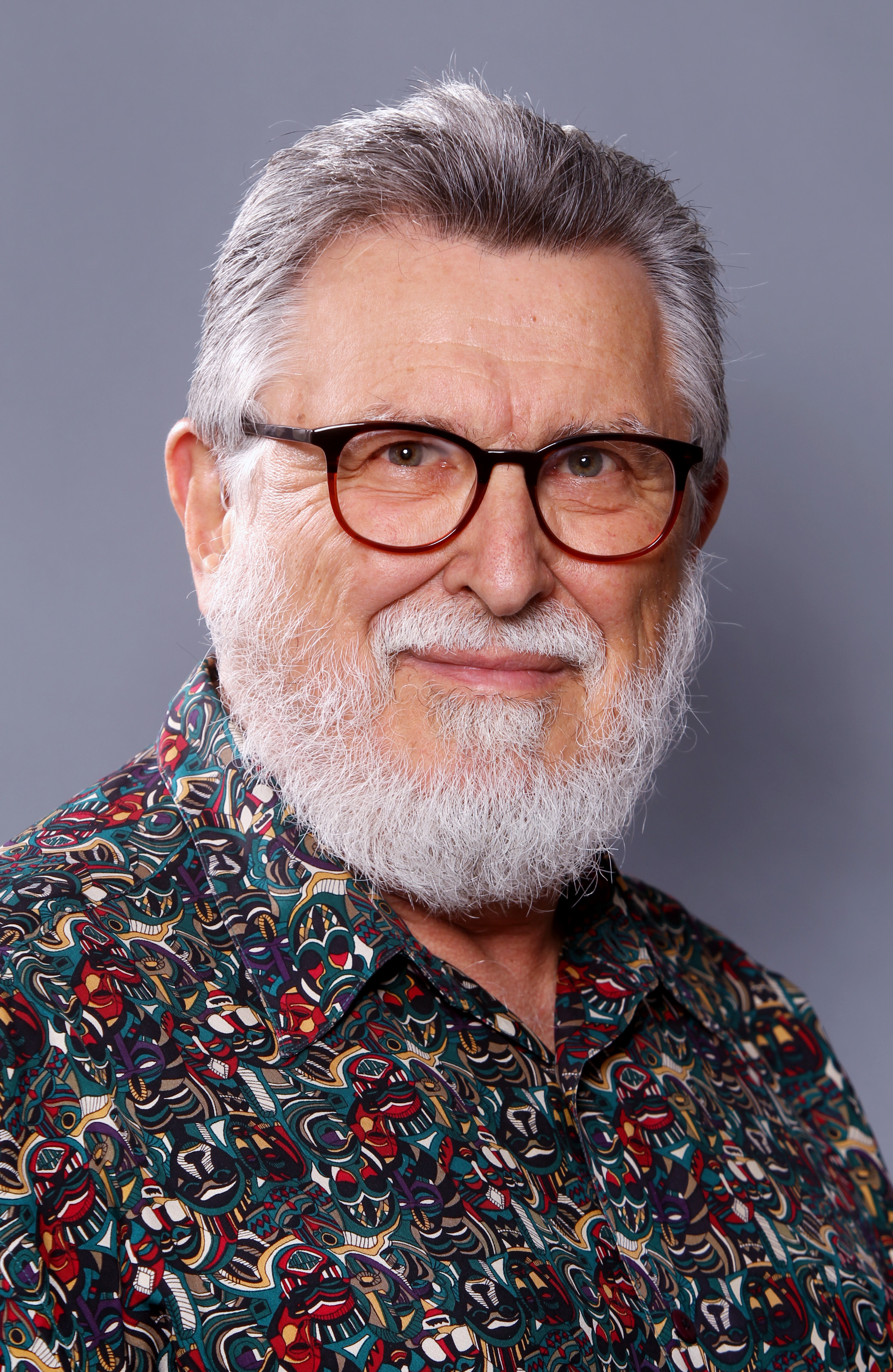 Nicholas J. Belkin合作论文数Department of Library and Information Science, School of Communication and Information, Rutgers University2Debra J. Richardson合作论文数Donald Bren School of Information and Computer Sciences2Charles F. Munat合作论文数2Steven E. Poltrock合作论文数Boeing Phantom Works2Efthimis N. Efthimiadis合作论文数1
 Peter Ingwersen合作论文数Royal School of Library and Information Science, University of Copenhagen1Peter Clayton合作论文数1
 Gary Marchionini合作论文数School of Information and Library Science, University of North Carolina at Chapel Hill1
 Marcia J. Bates合作论文数Department of Information Studies, Graduate School of Education and Information Studies, University of California, Los Angeles1
 Ofer Bergman合作论文数University of Sheffield1Deborah Barreau合作论文数1Carl Sebelius合作论文数1
 Pertti Vakkari合作论文数Faculty of Information Technology and Communication Sciences, Tampere University1Celina Pascoe合作论文数1Marc Lampson合作论文数1Andrea Civan合作论文数1Abraham Wenning合作论文数1Cathy Marshall合作论文数1
 Ammy Jiranida Phuwanartnurak合作论文数1Marcia Bates合作论文数1I Give Up合作论文数1C Howell合作论文数1Ann Applebee合作论文数1Julia Vinson合作论文数1
 John Leslie King合作论文数School of Information, University of Michigan1




