Purpose A number of approaches and algorithms have been proposed over the years as a basis for automatic indexing. Many of these approaches suffer from precision inefficiency at low recall. The choice of indexing units has a great impact on search system effectiveness. The authors dive beyond simple terms indexing to propose a framework for multi-word terms (MWT) filtering and indexing. Design/methodology/approach In this paper, the authors rely on ranking MWT to filter them, keeping the most effective ones for the indexing process. The proposed model is based on filtering MWT according to their ability to capture the document topic and distinguish between different documents from the same collection. The authors rely on the hypothesis that the best MWT are those that achieve the greatest association degree. The experiments are carried out with English and French languages data sets. Findings The results indicate that this approach achieved precision enhancements at low recall, and it performed better than more advanced models based on terms dependencies. Originality/value Using and testing different association measures to select MWT that best describe the documents to enhance the precision in the first retrieved documents.
Language models have proved to achieve high performances and outperform state of the art results in the Natural Language Processing field. More specifically, Bidirectional Encoder Representations from Transformers (BERT) has become the state of the art model for such tasks. Most of the available language models have been trained on Indo-European languages. These models are known to require huge training datasets. However, only a few studies have focused on under-represented languages and dialects. In this work, we describe the pretraining of a customized Google BERT Tensorflow implementation model (named TunBERT-T) and the pretraining of a PyTorch implementation of BERT language model using NVIDIA implementation (named TunBERT-P) for the Tunisian dialect. We describe the process of creating a training dataset from collecting a Common-Crawl-based dataset, filtering and pre-processing the data. We describe the training setup and we detail fine-tuning TunBERT-T and TunBERT-P models on three NLP downstream tasks. We challenge the assumption that a lot of training data is needed. We explore the effectiveness of training a monolingual Transformer-based language model for low-resourced languages, taking the Tunisian dialect as a use case. Our models results indicate that a proportionately small sized Common-Crawl-based dataset (500K sentences, 67.2MB) leads to comparable performances as those obtained using costly larger datasets (from 24GB to 128GB of text). We demonstrate that with the use of newly created datasets, our proposed TunBERT-P model achieves comparable or higher performances in three downstream tasks: Sentiment Analysis, Language Identification and Reading Comprehension Question-Answering. We release the two pretrained models along with all the datasets used for the fine-tuning.
Users of social media tend to explore different platforms to obtain news and find information about different events and activities. Furthermore they read, share, publish news with no prior knowledge of the certainty of being real or fake. This necessitates the development of an automated system for fake news detection. In this paper we report a system and its output as part of CLEF2022 - CheckThat! Lab Fighting the COVID-19 Infodemic and Fake News Detection. Task 3 was carried out using two BERT base uncased and data preprocessing with stop-words removal, lemmatization. We achieve an F1 score of 0.339 on news classification on English dataset. © 2022 Copyright for this paper by its authors.
We describe our submitted system to the Nuanced Arabic Dialect Identification (NADI) shared task. We tackled only the first subtask (Subtask 1). We used state-of-the-art Deep Learning models and pre-trained contextualized text representation models that we finetuned according to the downstream task in hand. As a first approach, we used BERT Arabic variants: MARBERT with its two versions MARBERT v1 and MARBERT v2, we combined MARBERT embeddings with a CNN classifier, and finally, we tested the Quasi-Recurrent Neural Networks (QRNN) model. The results found show that version 2 of MARBERT outperforms all of the previously mentioned models on Subtask 1.
Pretrained contextualized text representation models learn an effective representation of a natural language to make it machine understandable. After the breakthrough of the attention mechanism, a new generation of pretrained models have been proposed achieving good performances since the introduction of the Transformer. Bidirectional Encoder Representations from Transformers (BERT) has become the state-of-the-art model for language understanding. Despite their success, most of the available models have been trained on Indo-European languages however similar research for under-represented languages and dialects remains sparse. In this paper, we investigate the feasibility of training monolingual Transformer-based language models for under represented languages, with a specific focus on the Tunisian dialect. We evaluate our language model on sentiment analysis task, dialect identification task and reading comprehension question-answering task. We show that the use of noisy web crawled data instead of structured data (Wikipedia, articles, etc.) is more convenient for such non-standardized language. Moreover, results indicate that a relatively small web crawled dataset leads to performances that are as good as those obtained using larger datasets. Finally, our best performing TunBERT model reaches or improves the state-of-the-art in all three downstream tasks. We release the TunBERT pretrained model and the datasets used for fine-tuning.
Speech Emotion Recognition (SER) has become an important component for Human-Computer interaction. It is generally used in job interviews, caller-agent calls and streaming videos, etc. In the speech emotion recognition literature, many languages have tackled this topic to extract emotions from signals. The pur-pose of this work is to build a Speech Emotion Recognition model that predicts the emotional state of Tunisian speakers. We explore different pre-trained acoustic models, we detail the process of building the first Tunisian Speech Emotion Recognition dataset (TuniSER) and we describe the training and testing phases. Our experiments’ results show that fine-tuning the pretrained multilingual wav2vec 2.0 model on the Automatic Speech Recognition downstream task then building a classifier on top of fit out-performed all the tested models achieving an Accuracy of 60.6%.
Arabic propaganda detection in Arabic was carried out using transformers pre-trained models ARBERT, MARBERT. They were fine-tuned for the down-stream task in hand ‘subtask 1’, multilabel classification of Arabic tweets. Submitted model was MARBERT the got 0.597 micro F1 score and got the fifth rank.
On various Social Media platforms, people, tend to use the informal way to communicate, or write posts and comments: their local dialects. In Africa, more than 1500 dialects and languages exist. Particularly, Tunisians talk and write informally using Latin letters and numbers rather than Arabic ones. In this paper, we introduce a large common-crawl-based Tunisian Arabizi dialectal dataset dedicated for Sentiment Analysis. The dataset consists of a total of 100k comments (about movies, politic, sport, etc.) annotated manually by Tunisian native speakers as Positive, negative and Neutral. We evaluate our dataset on sentiment analysis task using the Bidirectional Encoder Representations from Transformers (BERT) as a contextual language model in its multilingual version (mBERT) as an embedding technique then combining mBERT with Convolutional Neural Network (CNN) as classifier. The dataset is publicly available.
We describe our submitted system to the first Arabic Misogyny Identification shared task. We tackled both subtasks, namely Misogyny Content Identification (Subtask 1) and Misogyny Behavior Identification (Subtask 2). We used state-of-the-art Machine Learning models and pretrained contextualized text representation models that we fine-tuned according to the downstream task in hand. As a first approach, we used Machine Learning algorithms including: Naive Bayes and Support Vector Machine for both subtasks. Then, we used Google’s multilingual BERT and then other BERT Arabic variants: AraBERT, ARBERT and MARBERT. The results found show that MARBERT outperforms all of the previously mentioned models overall, whether on Subtask 1 or Subtask 2.
The complete freedom of expression in social media has its costs especially in spreading harmful and abusive content that may induce people to act accordingly. Therefore, the need of detecting automatically such a content becomes an urgent task that will help and enhance the efficiency in limiting this toxic spread. Compared to other Arabic dialects which are mostly based on MSA, the Tunisian dialect is a combination of many other languages like MSA, Tamazight, Italian and French. Because of its rich language, dealing with NLP problems can be challenging due to the lack of large annotated datasets. In this paper we are introducing a new annotated dataset composed of approximately 10k of comments. We provide an in-depth exploration of its vocabulary through feature engineering approaches as well as the results of the classification performance of machine learning classifiers like NB and SVM and deep learning models such as ARBERT, MARBERT and XLM-R.
Advances in speech and language technologies enable tools such as voice-search, text-to-speech, speech recognition and machine translation. These are however only available for high resource languages like English, French or Chinese. Without foundational digital resources for African languages, which are considered low-resource in the digital context, these advanced tools remain out of reach. This work details the AI4D - African Language Program, a 3-part project that 1) incentivised the crowd-sourcing, collection and curation of language datasets through an online quantitative and qualitative challenge, 2) supported research fellows for a period of 3-4 months to create datasets annotated for NLP tasks, and 3) hosted competitive Machine Learning challenges on the basis of these datasets. Key outcomes of the work so far include 1) the creation of 9+ open source, African language datasets annotated for a variety of ML tasks, and 2) the creation of baseline models for these datasets through hosting of competitive ML challenges.
Recognize automatically the spontaneous Human speech and transcribe it into text is becoming an important task. However, freely available models are rare especially for under-resourced languages and dialects since they require large amounts of data in order to achieve high performances. This paper describes an approach to build an end-to-end Tunisian dialect speech system based on deep learning. For this propose, a Tunisian dialect paired text-speech dataset called "TunSpeech" was created. Existing Modern Standard Arabic (MSA) speech data was also combined with dialectal Tunisian data and decreased the Out-Of-Vocabulary rate and improve perplexity. On the other hand, synthetic dialectal data from a text to speech increased the Word Error Rate.
We describe our submitted system to the 2021 Shared Task on Sarcasm and Sentiment Detection in Arabic (Abu Farha et al., 2021). We tackled both subtasks, namely Sarcasm Detection (Subtask 1) and Sentiment Analysis (Subtask 2). We used state-of-the-art pretrained contextualized text representation models and fine-tuned them according to the downstream task in hand. As a first approach, we used Google’s multilingual BERT and then other Arabic variants: AraBERT, ARBERT and MARBERT. The results found show that MARBERT outperforms all of the previously mentioned models overall, either on Subtask 1 or Subtask 2.
Tunisians on social media tend to express themselves in their local dialect using Latin script (TUNIZI). This raises an additional challenge to the process of exploring and recognizing online opinions. To date, very little work has addressed TUNIZI sentiment analysis due to scarce resources for training an automated system. In this paper, we focus on the Tunisian dialect sentiment analysis used on social media. Most of the previous work used machine learning techniques combined with handcrafted features. More recently, Deep Neural Networks were widely used for this task, especially for the English language. In this paper, we explore the importance of various unsupervised word representations (word2vec, BERT) and we investigate the use of Convolutional Neural Networks and Bidirectional Long Short-Term Memory. Without using any kind of handcrafted features, our experimental results on two publicly available datasets showed comparable performances to other languages.
For easier communication, posting, or commenting on each others posts, people use their dialects. In Africa, various languages and dialects exist. However, they are still underrepresented and not fully exploited for analytical studies and research purposes. In order to perform approaches like Machine Learning and Deep Learning, datasets are required. One of the African languages is Bambara, used by citizens in different countries. However, no previous work on datasets for this language was performed for Sentiment Analysis. In this paper, we present the first common-crawl-based Bambara dialectal dataset dedicated for Sentiment Analysis, available freely for Natural Language Processing research purposes.
Searching for an available, reliable, official, and understandable information is not a trivial task due to scattered information across the internet, and the availability lack of governmental communication channels communicating with African dialects and languages. In this paper, we introduce an Artificial Intelligence Powered chatbot for crisis communication that would be omnichannel, multilingual and multi dialectal. We present our work on modified StarSpace embedding tailored for African dialects for the question-answering task along with the architecture of the proposed chatbot system and a description of the different layers. English, French, Arabic, Tunisian, Igbo,Yorùbá, and Hausa are used as languages and dialects. Quantitative and qualitative evaluation results are obtained for our real deployed Covid-19 chatbot. Results show that users are satisfied and the conversation with the chatbot is meeting customer needs.
On social media, Arabic people tend to express themselves in their own local dialects. More particularly, Tunisians use the informal way called "Tunisian Arabizi". Analytical studies seek to explore and recognize online opinions aiming to exploit them for planning and prediction purposes such as measuring the customer satisfaction and establishing sales and marketing strategies. However, analytical studies based on Deep Learning are data hungry. On the other hand, African languages and dialects are considered low resource languages. For instance, to the best of our knowledge, no annotated Tunisian Arabizi dataset exists. In this paper, we introduce TUNIZI a sentiment analysis Tunisian Arabizi Dataset, collected from social networks, preprocessed for analytical studies and annotated manually by Tunisian native speakers.
We describe our submitted system to the SemEval 2020. We tackled Task 12 entitled "Multilingual Offensive Language Identification in Social Media", specifically subtask 4A-Arabic. We propose three Arabic offensive language identification models: Tw-StAR, BERT and BERT+BiLSTM. Two Arabic abusive/hate datasets were added to the training dataset: L-HSAB and T-HSAB. The final submission was chosen based on the best performances which was achieved by the BERT+BiLSTM model.
 Chedi Bechikh Ali合作论文数15
 Abir Messaoudi合作论文数iCompass, Tunis 1001, Tunisia13
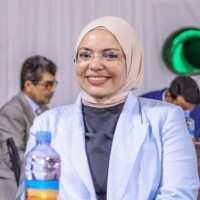 Chayma Fourati合作论文数ASF Consulting13
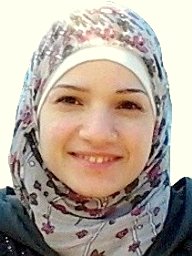 Hala Mulki合作论文数Selçuk University10
 Moez Ben Haj Hmida合作论文数Department of Computer Science, Faculty of Sciences of Tunis, Campus Universitaire, 2092 El Manar, Tunis, Tunisia.10
 Mourad Gridach合作论文数Ibn Zohr Univ, High Inst Technol, Agadir, Morocco5
 Ismail Babaoglu合作论文数Department of Computer Engineering, Selcuk University5
 Aymen Ben Elhaj Mabrouk合作论文数4
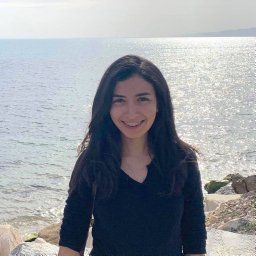 Malek Naski合作论文数4
 Chiraz Latiri合作论文数Faculty of Sciences of Tunis, El Manar University4
 Yahya Slimani合作论文数3
 Bilel Taboubi合作论文数3Mohammad Salman合作论文数American University of the Middle East3
 Edison Fernando Loza-Aguirre合作论文数Univ. Grenoble Alpes;c;Univ. Grenoble Alpes3
 Marie-Laurence Caron-Fasan合作论文数Université Pierre3Mathias Géry合作论文数Université de Lyon, Université de Saint-Étienne Jean Monnet3
 Nicolas Lesca合作论文数CERAG, Université de Grenoble;Grenoble Ecole de Management;CERAG, Université de Grenoble3
 Jean Pierre Chevallet合作论文数Universite Pierre Mendes-France3Mohamed Aziz Ben Nessir合作论文数2Faten Ghriss合作论文数2maroua mbarek合作论文数2Abir Korched合作论文数2Mayssa Kchaou合作论文数2Ahmed Cheikh Rouhou合作论文数2
 Tajuddeen Gwadabe合作论文数Masakhane NLP2
 Mujahid Ado合作论文数2
 Muhammad Lawan Aliyu合作论文数2
 Philippe Mulhem合作论文数LIG-CNRS2
 Mustafa Kaiiali合作论文数Department of Computer and Information Sciences, University of Hyderabad2
 Mohamed Graiet合作论文数MIRACL, ISIMS2
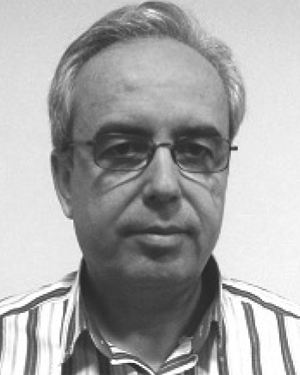 Armagan Ozkaya合作论文数2
 Halis Altun合作论文数Faculty of Engineering, Nigde University2
 H. M. Harmain合作论文数College of Information Technology, The UAE University2
 Marc Alier Forment合作论文数1Halima Alshabani合作论文数1Amel Sellami合作论文数1Nourchene Ferchichi合作论文数1Emrah Ugurlu合作论文数1
 Amine Kerkeni合作论文数1
 David Ifeoluwa Adelani合作论文数University College London;School of Computer Science, McGill University1
 Amelia Taylor合作论文数Malawi University of Business and Applied Sciences1
 Godson Koffi Kalipe合作论文数1Jamiil Toure Ali合作论文数1Freshia Sackey合作论文数1Kevin Degila合作论文数1
 Jade Abbott合作论文数Lelapa AI;Masakhane1
 Kathleen Siminyu合作论文数1Rui Wang合作论文数1
 Tarek Hamrouni合作论文数Computer Science DepartmentFaculty of Sciences of TunisTunis El Manar UniversityUniversity CampusTunisTunisia1




