Riparian plants provide an important source of energy for freshwater food webs through inputs of leaf litter. Planting riparian buffers with mixed species could enhance the detrital resource supply for invertebrates through varied leaf breakdown rates. To quantify leaf breakdown rates and invertebrate colonisation, we used leaves from eleven grass, shrub and tree species common along agricultural waterways in New Zealand. Breakdown of leaves immersed in a spring-fed stream differed significantly among species, being fastest for pasture grass (k = 0.0458 day(-1)) followed by broadleaf, pittosporum, willow, toetoe, poplar, gorse, Carex, eucalyptus, flax, and slowest for cabbage tree leaves (k = 0.0099 day(-1)). Invertebrate community composition did not differ between leaf species, but consumers were extremely abundant on some leaves (e.g. 51-83 Potamopyrgus snails g(-1) pasture grass), indicating coarse detrital resources were in high demand for food or habitat. These breakdown rates could inform selection of riparian plant combinations that will enhance food availability for stream communities, especially continuity of supply, thereby contributing to waterway restoration.
Introduced aquatic macrophytes can dominate small agricultural waterways in summer and autumn becoming a significant management problem. Excessive growth can clog waterways, causing drainage issues and reducing agricultural productivity while in-stream velocities are reduced and sedimentation increased. Consequently, water managers remove them by mechanical clearance, chemical spray and cutting which can be costly and have negative impacts on in-stream habitat and ecological health. We trialled three tools to reduce macrophytes: hand-weeding, weed mat and artificial shading, at a reach-scale (50 m) and larger-scale (200-400 m). Hand-weeding reduced cover in the short-term, however macrophytes recovered to pre-treatment levels within one season. Weed mat along the banks was effective at reducing emergent macrophytes, particularly Erythranthe guttata (monkey musk) and Nasturtium microphyllum (watercress). Weed mat lasted for several growing seasons and continued to be effective. Shading over the waterway using polythene markedly reduced submerged macrophytes indicating that heavy shading by riparian plantings could reduce submerged macrophytes in the longer-term. These results indicate that in the short-term, weed mat could be used to limit sprawling emergent macrophytes. In the longer-term, weed mat used in conjunction with riparian planting could provide shading so that macrophyte cover in these small waterways could be reduced and controlled.
Through the CAREX project, we have tested a series of practical tools, and developed solutions and approaches to address aquatic weed, sediment, and nutrient management issues in agricultural waterways in lowland Canterbury.We have developed a set of steps and toolboxes, underpinned by science, which can be applied by farmers, landowners and stakeholders to facilitate rehabilitation and improve agricultural waterway health.This handout provides examples of the steps taken and tools used to restore two agricultural waterways in lowland Canterbury as part of the CAREX project. Suggested citation: Febria, C.M., Hogsden, K.L., Devlin, H.S., Collins, K.E., Goeller, B.C. Harding, J.S. and A.M. McIntosh. 2018. Restoration in Action, CAREX Toolbox Handout, University of Canterbury, Christchurch.
In Aotearoa New Zealand, agricultural land-use intensification and decline in freshwater ecosystem integrity pose complex challenges for science and society. Despite riparian management programmes across the country, there is frustration over a lack in widespread uptake, upfront financial costs, possible loss in income, obstructive legislation and delays in ecological recovery. Thus, social, economic and institutional barriers exist when implementing and assessing agricultural freshwater restoration. Partnerships are essential to overcome such barriers by identifying and promoting co-benefits that result in amplifying individual efforts among stakeholder groups into coordinated, large-scale change. Here, we describe how initial progress by a sole farming family at the Silverstream in the Canterbury region, South Island, New Zealand, was used as a catalyst for change by the Canterbury Waterway Rehabilitation Experiment, a university-led restoration research project. Partners included farmers, researchers, government, industry, treaty partners (Indigenous rights-holders) and practitioners. Local capacity and capability was strengthened with practitioner groups, schools and the wider community. With partnerships in place, co-benefits included lowered costs involved with large-scale actions (e.g., earth moving), reduced pressure on individual farmers to undertake large-scale change (e.g., increased participation and engagement), while also legitimising the social contracts for farmers, scientists, government and industry to engage in farming and freshwater management. We describe contributions and benefits generated from the project and describe iterative actions that together built trust, leveraged and aligned opportunities. These actions were scaled from a single farm to multiple catchments nationally.
Excessive macrophytes can cause significant problems in agricultural waterways requiring active management. Conventional control techniques can have a range of adverse effects. We investigated several control tools in two experiments: firstly, we tested eight treatments at a small-scale (2 m × 2 m). We found intensive hand weeding, weed mat and herbicide spraying to be effective treatments, reducing macrophyte cover to <5%. Hand weeding and weed mat immediately reduced cover, while dieback from herbicide took two months. Weed mat was a novel and effective control mechanism along stream banks. Secondly, we tested the impact of shading on macrophyte growth. Macrophyte growth was enhanced under partially shaded conditions, but with 80% effective shading over the entire channel, cover was reduced to 17%. Once treatments ceased, macrophytes grew back within 3–5 months. Long-term, control methods will require combinations of tools but will need to include optimal shading for the target species.
Excessive nutrient loading from small agricultural headwaters can substantially degrade downstream water quality and ecological conditions. But, our understanding of the scales and locations to implement nutrient attenuation tools within these catchments is poor. To help inform farm- and catchment-scale management, we quantified nitrate export in nine one-kilometre-long lowland agricultural headwaters fed by tile and open tributary drains in a region with high groundwater nitrate (<1 to >15 mg L−1 NO3-N) over four years. Across-catchment differences in upstream spring water nitrate concentrations predicted differences in annual nitrate loads at catchment outlets (range <1–72 megagrams NO3-N 365 d−1), and nitrate loads were higher in wet seasons and wet years, reflecting strong groundwater influences. Partitioning the sources of variability in catchment nitrate fluxes revealed that ~60% of variation was accounted for by a combination of fluxes from up-stream springs and contributions from tile and open tributary drains (46% and 15%, respectively), with ~40% of unexplained residual variation likely due to groundwater upwellings. Although tile and open tributary drains contributed comparatively less to catchment loads (tile drains: <0.01 and up to 50 kg NO3-N d−1; open drains: <5 kg and up to 100 kg NO3-N d−1), mitigation targeted at these localised, farm-scale sources will contribute to decreasing downstream nitrate fluxes. However, high nitrate loads from groundwater mean current NO3-N waterway management and rehabilitation practices targeting waterway stock exclusion by fencing alone will be insufficient to reduce annual NO3-N export. Moreover, managing catchment nutrient fluxes will need to acknowledge contributions from groundwater as well as farm-scale losses from land. Overall, our results highlight how nutrient fluxes in spring-fed waterways can be highly dynamic, dominated more by groundwater than local run-off, and point to the scales and locations where nitrate attenuation tools should be implemented.
Through the CAREX project, we have tested a series of practical tools, and developed solutions and approaches to address aquatic weed, sediment, and nutrient management issues in agricultural waterways in lowland Canterbury.We have developed a set of steps and toolboxes, underpinned by science, which can be applied by farmers, landowners and stakeholders to facilitate rehabilitation and improve agricultural waterway health.We have collaborated with scientists at ESR to research and better understand microbial contamination in agricultural waterways. This handout is the fifth in a series and provides information on E. coli and tools for understanding microbial contamination of agricultural waterways.Suggested citation: Devane, M., Febria, C.M., Hogsden, K.L., Devlin, H.S., Harding, J.S., and A.M. McIntosh. 2018. E. coli, CAREX Toolbox Handout 5, University of Canterbury, Christchurch.
Through the CAREX project, we have tested a series of practical tools, and developed solutions and approaches to address aquatic weed, sediment, and nutrient management issues in agricultural waterways in lowland Canterbury. We have developed a set of steps and toolboxes, underpinned by science, which can be applied by farmers, landowners and stakeholders to facilitate rehabilitation and improve agricultural waterway health.This handout is the third in a series, which focuses on tools to manage sediment in waterways.Suggested citation: Harding, J.S., Hogsden, K.L., Febria, C.M., Devlin, H.S., Collins, K.E., Goeller, B.C, and A.M. McIntosh. 2018. Sediments – Stop sediment at the source & address sediment legacies, CAREX Toolbox Handout 3, University of Canterbury, Christchurch.
Through the CAREX project, we have tested a series of practical tools, and developed solutions and approaches to address aquatic weed, sediment, and nutrient management issues in agricultural waterways in lowland Canterbury. We have developed a set of steps and toolboxes, underpinned by science, which can be applied by farmers, landowners and stakeholders to facilitate rehabilitation and improve agricultural waterway health.This handout in the second in a series, which focuses on tools to manage and control aquatic weeds.Suggested citation: Collins, K.E., Hogsden, K.L., Febria, C.M., Devlin, H.S., Goeller, B.C, Harding, J.S., and A.M. McIntosh. 2018. Aquatic Weeds – Use riparian planting to control weeds, CAREX Toolbox Handout 2, University of Canterbury, Christchurch.
Through the CAREX project, we have tested a series of practical tools, and developed solutions and approaches to address aquatic weed, sediment, and nutrient management issues in agricultural waterways in lowland Canterbury.We have developed a set of steps and toolboxes, underpinned by science, which can be applied by farmers, landowners and stakeholders to facilitate rehabilitation and improve agricultural waterway health.This handout is the sixth in a series, which provides information on rebattering as a tool to stop sediments at the source and stabilise banks.Suggested citation: Harding, J.S.,Hogsden, K.L.,Febria, C.M., Devlin, H.S., Collins, K.E., Goeller, B.C. and A.M. McIntosh. 2018. Rebattering, CAREX Toolbox Handout 6, University of Canterbury, Christchurch.
Through the CAREX project, we have tested a series of practical tools, and developed solutions and approaches to address aquatic weed, sediment, and nutrient management issues in agricultural waterways in lowland Canterbury. We have developed a set of steps and toolboxes, underpinned by science, which can be applied by farmers, landowners and stakeholders to facilitate rehabilitation and improve agricultural waterway health.This handout is the first in a series, which outlines the CAREX key steps and the tools we have tested to improve waterway health.Suggested citation: Febria, C.M., Hogsden, K.L., Devlin, H.S., Collins, K.E., Goeller, B.C, Harding, J.S., and A.M. McIntosh. 2018. CAREX Key Steps, CAREX Toolbox Handout 1, University of Canterbury, Christchurch.
Through the CAREX project, we have tested a series of practical tools, and developed solutions and approaches to address aquatic weed, sediment, and nutrient management issues in agricultural waterways in lowland Canterbury. We have developed a set of steps and toolboxes, underpinned by science, which can be applied by farmers, landowners and stakeholders to facilitate rehabilitation and improve agricultural waterway health.This handout is the fourth a series, which focuses on an edge-of-field tool to manage nutrients (nitrate).Suggested citation: Goeller, B.C, Hogsden, K.L., Febria, C.M., Devlin, H.S., Collins, K.E., Harding, J.S., and A.M. McIntosh. 2018. Nutrients – Edge-of-field nitrate reduction with woodchip bioreactors, CAREX Toolbox Handout 4, University of Canterbury, Christchurch.
 Kristy L. Hogsden合作论文数Department of Biology, Trent University11
 Brandon Goeller合作论文数Natl Inst Water & Atmospher Res NIWA10
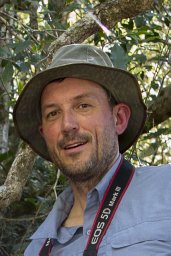 Angus R. McIntosh合作论文数School of Biological Sciences;University of Canterbury;School of Biological Sciences, University of Canterbury10
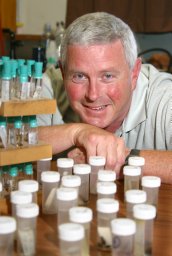 Jon S. Harding合作论文数School of Biological Sciences;University of Canterbury;School of Biological Sciences, University of Canterbury10
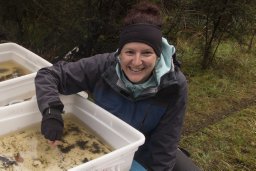 Helen J Warburton合作论文数Sch Biol Sci, Univ Canterbury Te Whare Wananga Waitaha5
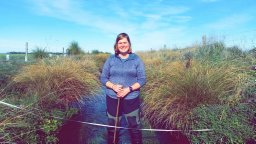 Kathryn E. Collins合作论文数Sch Biol Sci, Univ Canterbury5
 Catherine Febria合作论文数Surface and Groundwater Ecology Research Group, University of Toronto Scarborough5
 Sophie A O'Brien合作论文数Sch Biol Sci, Univ Canterbury Te Whare Wananga Waitaha1




