Background: Patient self-reports and clinician ratings of depression severity can differ substantially. The aim of the current study was to explore factors associated with discrepancies between depressed patients' Patient Health Questionnaire (PHQ-9) self-reports and clinicians' Hamilton Rating Scale for Depression (HAMD-17) ratings. Methods: We first computed discrepancy scores defined as the standardized weighted HAMD-17 total score minus the standardized PHQ-9 total score. To assess correlates of inconsistent scores, results of patients with similar standardized scores were removed (i.e., within 1/2 standard deviation, n = 270). Positive values indicate underreporting (HAMD-17 > PHQ-9), i.e., the underreporting group (n = 200); and negative discrepancy scores indicate overreporting (PHQ-9 > HAMD-17), i.e., the overreporting group (n = 221). We examined the relationship of demographic, dysfunctional attitudes and personality variables to the discrepancies between self and observer rated depression. Results: There were significant differences in extraversion, psychoticism, neuroticism, dysfunctional attitudes and occupation between the underreporting group and the overreporting group (all p < .05). When controlling for potential confounding variables, being a working professional and having high neuroticism and dysfunctional attitudes were significantly associated with overestimating symptoms of depression (e.g., professional: OR, 2.89; 95% CI, 1.67-5.00; p < .001; high neuroticism: OR, 7.08; 95% CI, 1.47-34.08; p < .001;dysfunctional attitudes: OR, 1.01; 95% CI, 1.00-1.02; p =.030). People with average, or high extraversion tended to underestimate scores (average extraversion: OR, 0.59; 95% CI, 0.37-0.95; high extraversion: OR, 0.48; 95% CI, 0.24-0.98). Conclusions: This study is the first to use PHQ-9 and HAMD-17 to explore the discrepancies between self and observer rated depression. Discrepancies occurred between the PHQ-9 score and HAMD-17 score, which were related to neuroticism, extraversion, dysfunctional attitudes and being a working professional. Future research should clarify the relationship between these factors and therapeutic effects of treatments, including adverse outcomes.
BACKGROUND:Nonsuicidal self-injury (NSSI) is related to childhood abuse, family relationships, interpersonal relationships, personality, but the interaction between them is still unclear, and how they interact in major depressive disorder (MDD).METHODS:Collected data from 444 undergraduate degree students with MDD participated. Used the Eysenck Personality Questionnaire, Childhood Trauma Questionnaire, Interpersonal Relationship Comprehensive Diagnostic Scale, and Family Assessment Device to assess the patients' psychosocial factors. NSSI behavior was assessed through interviews. Use the Chi-square test, Wilcoxon rank-sum test, Kruskal-Wallis H-test, Distance Correlation, Structural Equation Mode for data analysis.RESULTS:Overall, 34.2% of patients with MDD had a history of NSSI. MDD patients with a history of NSSI had significant differences in psychoticism, neuroticism, emotional abuse, physical abuse, sexual abuse, emotional neglect, troubles in conversation, ability to make friends and family roles. Among these factors, psychoticism was most related to NSSI, and child abuse, interpersonal relationships and family roles played a variety of roles in mediating the relationship with NSSI.CONCLUSIONS:Psychosocial factors affect the occurrence of NSSI through chain intermediary effects.
 Chunqi Ai (艾春启)合作论文数2Lijun Kang合作论文数2Hanping Bai合作论文数2
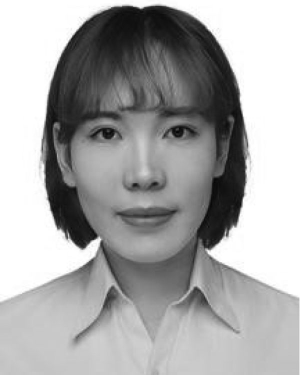 Simeng Ma合作论文数Department of Psychiatry, Renmin Hospital of Wuhan University, Wuhan, China.2Ruiting Li合作论文数2
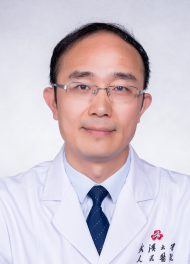 Zhongchun Liu (刘忠纯)合作论文数Taikang Center for Life and Medical Sciences, Wuhan University2Yao Li-hua合作论文数2
 Ying Wang合作论文数1Xin Guo合作论文数1Siqi Sun合作论文数1Hui Du合作论文数1
 Lian Du (杜莲)合作论文数1
 Maolin Hu合作论文数1
 Xiaofen Zong (宗小芬)合作论文数武汉大学人民医院精神卫生中心1
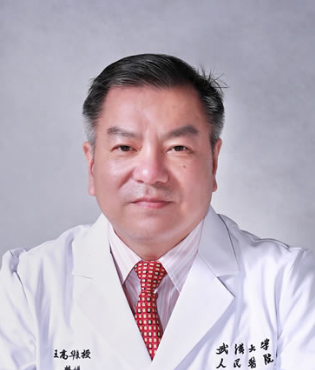 Gaohua Wang (王高华)合作论文数Hubei General Hospital;Renmin Hospital of Wuhan University1
 Bingxiang Yang (杨冰香)合作论文数School of Nursing, Wuhan University1
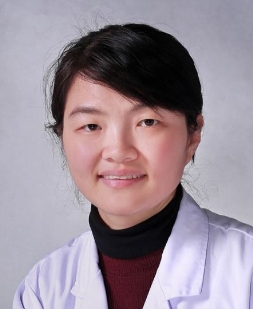 Cheng Chen (陈铖)合作论文数Renmin Hospital of Wuhan University1Fei Wang合作论文数1




