A reconfigurable metasurface made of Ge2Sb2Te5 phase-change material was experimentally demonstrated in the 1.55 mu m wavelength range. A nanostructured Ge2Sb2Te5 film on fused silica substrate was optimiz.ed to switch from highly transmissive (80%) to highly absorptive (76%) modes with a 7:1 contrast ratio in transmission independent of polarization, when thermally transformed from the amorphous to crystalline state. The metasurface was designed using a genetic algorithm optimizer linked with an efficient full-wave electromagnetic solver. (C) 2018 Optical Society of America under the terms of the OSA Open Access Publishing Agreement
The paper introduces the principles, simulation results, and hardware implementation of ultrawideband (UWB) noise radar for obtaining tomographic images of various scenarios of rotating cylindrical objects using independent and identically distributed UWB noise waveforms. A UWB noise radar was designed to transmit multiple UWB random noise waveforms over the 3–5 GHz frequency range and to measure the backward scattering data for the validation of the theoretical analysis and numerical simulation results. The reconstructed tomographic images of the rotating cylindrical objects based on experimental results are seen to be in good agreement with the simulation results, which demonstrates the capability of UWB noise radar for complete two-dimensional tomographic image reconstruction of various shaped metallic and dielectric target objects.
In this paper, the principle, simulation, and experiment results of tomographic imaging of a cylindrical conducting object using random noise waveforms are presented. Theoretical analysis of scattering and the image reconstruction technique are developed based on physical optics approximation and Fourier diffraction tomography, respectively. The bistatic radar system is designed to transmit band-limited ultra-wideband (UWB) random noise waveforms at a fixed position, and a linear scanner allows a single receiving antenna to move along a horizontal axis for backward scattering measurement in the frequency range from 3-5 GHz. The reconstructed tomographic image of the rotating cylindrical conducting object based on experimental results are seen to be in good agreement with the simulation results, which demonstrates the capability of UWB noise radar for complete two-dimensional tomographic image reconstruction of a cylindrical conducting object.
A hardware system has been developed to perform ultrawideband (UWB) noise radar tomography over the 3–5 GHz frequency range. The system utilizes RF hardware to transmit multiple independent and identically distributed UWB random noise waveforms. A 3–5 GHz band-limited signal is generated using an arbitrary waveform generator and the waveform is then amplified and transmitted through a horn antenna. A linear scanner with a single antenna is used in place of an antenna array to collect backscatter. The backscatter is collected from the transmission of each waveform and reconstructed to form an image. The images that result from each scan are averaged to produce a single tomographic image of the target. After background subtraction, the scans are averaged to improve the image quality. The experimental results are compared to the theoretical predictions. The system is able to successfully image metallic and dielectric cylinders of different cross sections.
Two-dimensional cross-section images of various cylindrical shapes of metallic targets are obtained based on the theory of diffraction tomography. Specifically, multiple iid ultra-wideband random noise waveforms are transmitted, and the tomographic images of PEC targets with sharp edges and angles are reconstructed with the backward scattering data of each transmitted iid noise waveforms over a frequency range from 8GHz to 10GHz. The image quality of the reconstructed tomographic images is measured by calculating the cumulative mean squared error between the corresponding pixels of the reference images and the reconstructed images.
: Ultra-wideband (UWB) waveforms achieve excellent spatial resolution for better characterization of targets in tomographic imaging applications compared to narrowband waveforms. In this report, two-dimensional tomographic images of multiple scattering objects are successfully obtained using the diffraction tomography approach by transmitting multiple independent and identically distributed (iid) UWB random noise waveforms. The feasibility of using a random noise waveform for tomography is investigated by formulating a white Gaussian noise (WGN) model using spectral estimation. The analytical formulation of object image formation using random noise waveforms is established based on the backward scattering, and several numerical diffraction tomography simulations are performed in the spatial frequency domain to validate the analytical results by reconstructing the tomographic images of scattering objects. The final image of the object based on multiple transmitted noise waveforms is reconstructed by averaging individually formed images which compares very well with the image created using the traditional Gaussian pulse. Pixel difference-based measure is used to analyze and estimate the image quality of the final reconstructed tomographic image under various signal-to-noise ratio (SNR) conditions. A UWB noise radar was designed to transmit multiple UWB random noise waveforms over the 3-5 GHz frequency range and to measure the backward scattering data for the validation of the theoretical analysis and numerical simulation results. The reconstructed tomographic images of the rotating cylindrical objects based on experimental results are seen to be in good agreement with the simulation results, which demonstrates the capability of UWB noise radar for complete two-dimensional tomographic image reconstruction of various shaped metallic and dielectric target objects.
Ultrawideband (UWB) waveforms achieve excellent spatial resolution for better characterization of targets in tomographic imaging applications compared to narrowband waveforms. In this paper, two-dimensional tomographic images of multiple scattering objects are successfully obtained using the diffraction tomography approach by transmitting multiple independent and identically distributed (iid) UWB random noise waveforms. The feasibility of using a random noise waveform for tomography is investigated by formulating a white Gaussian noise (WGN) model using spectral estimation. The analytical formulation of object image formation using random noise waveforms is established based on the backward scattering, and several numerical diffraction tomography simulations are performed in the spatial frequency domain to validate the analytical results by reconstructing the tomographic images of scattering objects. The final image of the object based on multiple transmitted noise waveforms is reconstructed by averaging individually formed images which compares very well with the image created using the traditional Gaussian pulse. Pixel difference-based measure is used to analyze and estimate the image quality of the final reconstructed tomographic image under various signal-to-noise ratio (SNR) conditions. Also, preliminary experiment setup and measurement results are presented to assess the validation of simulation results.
In this paper, we show that a single transmission of a random noise waveform may not sufficient to obtain a successful tomographic image of an object. In order to overcome this shortcoming, multiple independent and identically distributed (iid) random noise waveforms over a frequency range from 8 to 10 GHz are transmitted to reconstruct the final image of various objects. Diffraction tomography theorem is applied for each noise waveform transmission so that the image of the multiple objects is reconstructed based on the backward scattered field at the end of each noise waveform transmission realization. After all iid noise waveforms are transmitted, the final tomographic image of the target is reconstructed by averaging all obtained images from multiple transmissions. Several numerical simulations in the spatial frequency domain are performed, and the successful tomographic image of the multiple cylindrical PEC objects is achieved after transmission of multiple iid ultra-wideband (UWB) random noise waveforms.
The tomographic image of a single cylindrical PEC object is obtained using diffraction tomography theorem after multiple transmissions of independent and identically distributed (iid) UWB random noise waveforms. The final tomographic image of the cylinder is successfully achieved by averaging all obtained images from multiple transmissions. For each transmission, iid band-limited white Gaussian noise waveform over a frequency range from 8-10 GHz is transmitted. Several numerical simulations in spatial frequency domain are performed, and the tomographic images are generated based on the backward scattering data of each transmitted iid UWB noise waveform. Mean square error is calculated to measure the image quality of the reconstructed tomographic image as well.
This paper investigates the feasibility of using a noise waveform in an ultra-wideband (UWB) radar system for two-dimensional tomographic imaging of a stationary object with a multistatic tomographic geometry. Multiple UWB transmitters and receivers are positioned along each side of the imaging area. We perform several numerical simulations in time-domain, and the successful imaging of the target is achieved by visual inspection of the formed images.
This paper discusses the use of chalcogenide phase change materials to create tunable metamaterials as potential candidates for application to adaptive coded aperture control in the infrared. Phase change materials exhibit large and reversible changes in optical properties (Delta n, Delta k) when switched between the amorphous and crystalline phases. Thermally-induced phase transitions from the insulating amorphous to the conductive crystalline state can be controlled through external means, facilitating the design of reconfigurable metamaterial devices that operate with ultrafast response times. In this work, robust global stochastic optimization algorithms were combined with full-wave electromagnetic simulation tools to design periodic subwavelength chalcogenide nanostructured arrays to meet the specified device performance goals in each phase. The measured optical properties (n, k) of deposited chalcogenide thin films and nanofabrication constraints were incorporated into the optimization algorithm to guarantee that the designed nanostructures could be manufactured. By choosing the appropriate cost functions, adaptive metamaterials were designed to switch between transmissive and reflective, transmissive and absorptive, and reflective and absorptive states. These design demonstrations represent a significant step forward in the development of adaptive infrared metamaterials.
Enzymatic modification by amylosucrase (AS) from Neisseria polysaccharea was used on waxy rice, normal rice, waxy corn, normal corn, waxy potato, and normal potato starches to prepare the starches with a high content of slowly digestible starch (SDS) fraction. The AS-treated starches contained similar amounts of resistant starch, decreased rapidly digestible starch, and increased SDS compared to controls. After the AS treatment, the SDS contents increased by approximately 25% in waxy starches but about 8% in normal starches. The yields of the insoluble fraction of waxy starches were about 15% higher than those of normal starches. The branch chain length was increased by DP 13–19. The AS-treated starches showed a B-type X-ray diffraction pattern, 5–9J/g for retrogradation enthalpy, 88–89°C for peak temperature, and much larger moduli for their gels compared with raw starches.
The past Single Sustain Driving System had critical problems on both the VS (Sustain Voltage) and the VA (Address Voltage) margins. A novel method to overcome these deficiencies has been performed by separating the ground reference of the Y_SUS (Scan) and Z_SUS (Common) boards from that of the Control and Address boards, which results in a driving system that is achieved by designing it as a single board. This system is referred to as an FSS (Floating Single Sustain). The FSS driving system improved the VS and VA margin dramatically and simplified the PDP driving system configuration when compared to the conventional PDP driving system.
The recombinant alanine dehydrogenase (ADH) from E. coli containing Thermus caldophilus ADH was purified to homogeneity from a cell-free extract. The enzyme was purified 38-fold with a yield of 68% from the starting cell-free extract. The purified enzyme gave a single band in polyacrylamide gel electrophoresis, and its molecular weight was estimated to be 45 kDa. The pH optimum was 8.0 for reductive amination of pyruvate and 12.0 for oxidative deamination of L-alanine. The enzyme was stable up to 70degreesC. The activity of the enzyme was inhibited by 1 mM Zn2+ , 20% hexane, and 20% CHCl3. However, 10 mM Mg2+ and 40% propanol had no effect on the enzyme activity. The Michaelis constants (K-m) for the substrates were 50 muM for NADH, 0.2 mM for pyruvate, 39.4 mM for NH4+, 2.6 mM for Lalanine, and 1.8 mM for NAD(+).
 Ram Narayanan合作论文数School of Electrical Engineering and Computer Science, Pennsylvania State University7
 Muralidhar Rangaswamy合作论文数Air Force Research Laboratory Sensors Directorate6
 mark a asmuth合作论文数3
 Alexej Pogrebnyakov合作论文数Penn State Univ, Dept Mat Sci & Engn, University Pk, PA 16802 USA2
 Douglas Werner合作论文数School of Electrical Engineering and Computer Science, College of Engineering, Pennsylvania State University2
 Theresa Mayer合作论文数Carnegie Mellon University2
 Kathleen A. Richardson合作论文数Center for Research and Education in Optics and Lasers, The College of Optics and Photonics, University of Central Florida2Nikolas J. Podraza合作论文数Ph.D., The University of Toledo2
 Jeremy A. Bossard合作论文数2
 Clara Rivero-Baleine合作论文数2J. David Musgraves合作论文数2jeremy turpin合作论文数1on vox yi合作论文数1EJ Shin合作论文数1ji won lee合作论文数1Jang-Hwan Cho合作论文数1Hyun-Il Park合作论文数1Dae-Hun Kim合作论文数1
 bumchang kim合作论文数1Chungnam Whang合作论文数1
 Sung Hwan Kim合作论文数Department of Chemistry and Institute of Basic Science, Chonnam National University1
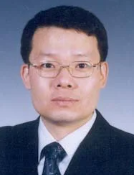 Cheon-Seok Park合作论文数College of Life Sciences, Kyung Hee University1Doo-Il Kim合作论文数1Stanley Rogers合作论文数1
 Woong Kim合作论文数1Yong Sup Lee合作论文数1
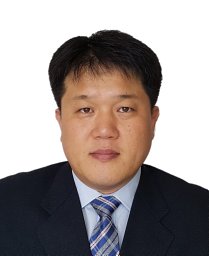 Yong-Duck Chung合作论文数Basic Research Laboratory;Telecommunications Research Institute;Basic Research Laboratory, Telecommunications Research Institute1
 Dongsoo Lee合作论文数Naver Cloud1Chang Joon Park合作论文数1
 Yeonjin Yi合作论文数1Tae Wha Moon合作论文数1
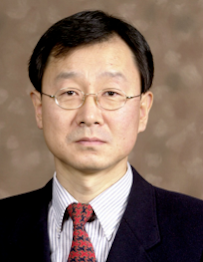 Chung Ki Hong合作论文数Department of Physics, Pohang Universirty of Science and Technology1
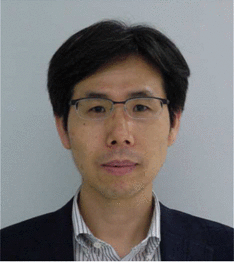 Seong Hak Moon合作论文数1Jungdon Bae合作论文数1
 Jeremiah P. Turpin合作论文数1
 Seung Jun Choi合作论文数1Moon Key Lee合作论文数1
 Robert Muise合作论文数Lockheed Martin Missiles and Fire Contro1




