Generalizing the relation between spin-systems and Fermi-systems on the lattice we construct for a spin-system with dimension d an algebra for which quasifree time-evolutions exist. With appropriate assumptions the gauge invariant subalgebra common for both algebras is invariant under this time-evolution and on this subalgebra is norm-asymptotically abelian.
The Hugenholz-Boltzmann-evolution is generalized to strongly interacting systems on the lattice. Under appropriate assumptions states stable under this evolution are shown to satify the KMS-condition. How far these assumptions are reasonable is discussed.
We consider a specific instance of a superconducting circuit, the so-called charge-qubit, consisting of a capacitor and a Josephson junction. Starting from the microscopic description of the latter in terms of two tunneling BCS models in the strong-coupling quasi-spin formulation, we derive the Hamiltonian governing the quantum behavior of the circuit in the limit of a large number $N$ of quasi-spins. Our approach relies on the identification of suitable quantum fluctuations, i.e. of collective quasi-spin operators, which account for the presence of fluctuation operators in the superconducting phase that retain a quantum character in spite of the large-$N$ limit. We show indeed that these collective quantum fluctuations generate the Heisenberg algebra on the circle and that their dynamics reproduces the one of the quantized charge-qubit, without the need of a phenomenological ``third quantization'' of a semiclassically inspired model. As a byproduct of our derivation, we explicitly obtain the temperature dependence of the junction critical Josephson current in the strong coupling regime, a result which is not directly accessible using standard approximation techniques.
We argue that for Fermi systems on lattices or the continuum with interaction invariant under a kind of Galilei transformation the time evolution is either weakly asymptotically abelian or at least η-abelian in the tracial state but not norm asymptotically abelian.
We study the behaviour of continuous automorphism groups of quantum spin systems on the lattice. Whereas the shift is norm asymptotically abelian continuous automorphism groups can lead only to delocalization but not to norm asymptotic abelianess. As a consequence the shift does not allow a continuous extension.
We study the continuous extension of discrete shift translations on one-dimensional quantum lattice systems.
We construct the fluctuation algebra for fermions in a quasifree state and its timedependence for quasifree evolutions. We find a Bose-Einstein-condensate and study its stability under interaction.
For quantum lattice systems a Boltzmann-type evolution arrises according to results of Hugenholtz in the limit of N-scaled time evolution together with an interaction scaled as N^-1/2. According ti Illner-Neunzert this passage to an irreversible dynamics can only happen when the initial state satisfies stronger assumptions than the evolved state. We show that the initial state satisfies space clustering as it is necessary for the construction of a fluctuation algebra whereas the evolved state allows fluctuations only in an appropriate local scaling but not on a mesoscopic level.
For Fermi systems interacting with a Galilei invariant pair potential with a cut-off for particles with highly different velocities the time evolution corresponds to an automorphism. We prove that all states satisfying the KMS-condition are locally normal with respect to the representation in Fock-space. Removing the cut-off limit states remain locally normal provided the interaction is repulsive or of positive type. The modular automorphism of the von Neumann-algebra of the limit state coincides with the time evolution.
It is shown that under the assumption of the nuclearity condition for local regions the resulting Doplicher-Longo-algebra between two double cones which due to nuclearity is type I allows to estimate its entropy by nuclearity bounds.
We study the emergent dynamics resulting from the infinite volume limit of the mean-field dissipative dynamics of quantum spin chains with clustering, but not time-invariant states. We focus upon three algebras of spin operators: the commutative algebra of mean-field operators, the quasi-local algebra of microscopic, local operators and the collective algebra of fluctuation operators. In the infinite volume limit, mean-field operators behave as time-dependent, commuting scalar macroscopic averages while quasi-local operators, despite the dissipative underlying dynamics, evolve unitarily in a typical non-Markovian fashion. Instead, the algebra of collective fluctuations, which is of bosonic type with time-dependent canonical commutation relations, undergoes a time-evolution that retains the dissipative character of the underlying microscopic dynamics and exhibits non-linear features. These latter disappear by extending the time-evolution to a larger algebra where it is represented by a continuous one-parameter semigroup of completely positive maps. The corresponding generator is not of Lindblad form and displays mixed quantum-classical features, thus indicating that peculiar hybrid systems may naturally emerge at the level of quantum fluctuations in many-body quantum systems endowed with non time-invariant states.
We study the emergent dynamics resulting from the infinite volume limit of the mean-field dissipative dynamics of quantum spin chains with clustering, but not time-invariant states. We focus upon three algebras of spin operators: the commutative algebra of mean-field operators, the quasi-local algebra of microscopic, local operators and the collective algebra of fluctuation operators. In the infinite volume limit, mean-field operators behave as time-dependent, commuting scalar macroscopic averages while quasi-local operators, despite the dissipative underlying dynamics, evolve unitarily in a typical non-Markovian fashion. Instead, the algebra of collective fluctuations, which is of bosonic type with time-dependent canonical commutation relations, undergoes a time-evolution that retains the dissipative character of the underlying microscopic dynamics and exhibits non-linear features. These latter disappear by extending the time-evolution to a larger algebra where it is represented by a continuous one-parameter semigroup of completely positive maps. The corresponding generator is not of Lindblad form and displays mixed quantum-classical features, thus indicating that peculiar hybrid systems may naturally emerge at the level of quantum fluctuations in many-body quantum systems endowed with non time-invariant states.
Recent experimental results point to the existence of coherent quantum phenomena in systems made of a large number of particles, despite the fact that for many-body systems the presence of decoherence is hardly negligible and emerging classicality is expected. This behaviour hinges on collective observables, named quantum fluctuations, that retain a quantum character even in the thermodynamic limit: they provide useful tools for studying properties of many-body systems at the mesoscopic level, in-between the quantum microscopic scale and the classical macroscopic one. We herein present the general theory of quantum fluctuations in mesoscopic systems, and study their dynamics in a quantum open system setting, taking into account the unavoidable effects of dissipation and noise induced by the external environment. As in the case of microscopic systems, decoherence is not always the only dominating effect at the mesoscopic scale: certain types of environment can provide means for entangling collective fluctuations through a purely noisy mechanism.
We study the dissipative dynamics of N quantum spins with Lindblad generator consisting of operators scaling as fluctuations, namely with the inverse square-root of N. In the large N limit, the microscopic dissipative time-evolution converges to a non-Markovian unitary dynamics on strictly local operators, while at the mesoscopic level of fluctuations it gives rise to a dissipative non-Markovian dynamics. The mesoscopic time-evolution is Gaussian and exhibits either a stable or an unstable asymptotic character; furthermore, the mesoscopic dynamics builds correlations among fluctuations that survive in time even when the original microscopic dynamics is unable to correlate local observables.
We consider infinite Fermi systems for which time evolution is defined as automorphism group. Under appropriate assumptions quasifree evolutions are norm asymptotic abelian on the even subalgebra. If interaction is added in the ground state strong asymptotic abelianess is preserved. In the tracial state, however, it is argued that for appropriate interacting systems even strong asymptotic abelianess fails in first order perturbation theory and only weak asymptotic abelianess seems to be possible. Consequences of different kinds of abelianess are discussed.
We prove a quantum version of the second law of thermodynamics: the (quantum) Boltzmann entropy increases if the initial (zero time) density matrix decoheres, a condition generally satisfied in Nature. It is illustrated by a model of wave-packet reduction, the Coleman–Hepp model, along the framework introduced by Sewell (2005) in his approach to the quantum measurement problem. Further models illustrate the monotonic-versus-non-monotonic behavior of the quantum Boltzmann entropy in time. As a last closely related topic, decoherence, which was shown by Narnhofer and Thirring (1999) to enforce macroscopic purity in the case of quantum K systems, is analyzed within a different class of quantum chaotic systems, viz. the quantum Anosov models as defined by Emch, Narnhofer, Sewell and Thirring (1994). A review of the concept of quantum Boltzmann entropy, as well as of some of the rigorous approaches to the quantum measurement problem within the framework of Schrödinger dynamics, is given, together with an overview of the C* algebra approach, which encompasses the relevant notions and definitions in a comprehensive way.
We trace back the phenomenon of "delayed-choice entanglement swapping" as it was realized in a recent experiment to the commutativity of the projection operators that are involved in the corresponding measurement process. We also propose an experimental set-up which depends on the order of successive measurements corresponding to noncommutative projection operators. In this case entanglement swapping is used to teleport a quantum state from Alice to Bob, where Bob has now the possibility to examine the noncommutativity within the quantum history.
Each semigroup describing time evolution of an open quantum system on a finite dimensional Hilbert space is related to a special structure of this space. It is shown how the space can be decomposed into orthogonal subspaces: One part is related to decay, some subspaces of the other subspace are ranges of the stationary states. Specialities are highlighted where the complete positivity of evolutions is actually needed for analysis, mainly for evolution of coherence. Decompositions are done the same way for discrete as for continuous time evolutions, but they may show differences: Only for discrete semigroups there may appear cases of sudden decay and of perpetual oscillation. Concluding the analysis, we identify the relation of the state space structure to the processes of decay, decoherence, dissipation and dephasing.
We start from the geometrical observation that a finite set of pure states correspond to some points on a sphere and their convex span cannot be the whole set of states. If we call the left over entangled we can pursue this picture from the simplest case of a two dimensional Hilbert space to the usual Alice-and-Bob game of entangled states and then move to bigger systems and finely to quantum field theory where almost everything is entangled. On the way we encounter more or less known old friends up from the shell structure of states to the monogamy of squashed entanglement. We study how entanglement can be concentrated on a small slice and how it depends on the particular factorization of the Hilbert space.
Quantum entanglement has become a resource for the fascinating developments in quantum information and quantum communication during the last decades. It quantifies a certain nonclassical correlation property of a density matrix representing the quantum state of a composite system. We discuss the concept of how entanglement changes with respect to different factorizations of the algebra which describes the total quantum system. Depending on the considered factorization a quantum state appears either entangled or separable. For pure states we always can switch unitarily between separability and entanglement, however, for mixed states a minimal amount of mixedness is needed. We discuss our general statements in detail for the familiar case of qubits, the GHZ states, Werner states and Gisin states, emphasizing their geometric features. As theorists we use and play with this free choice of factorization, which for an experimentalist is often naturally fixed. For theorists it offers an extension of the interpretations and is adequate to generalizations, as we point out in the examples of quantum teleportation and entanglement swapping.
 Walter Thirring合作论文数University of Vienna22
 Fabio Benatti合作论文数18Bernhard Baumgartner合作论文数9
 Beatrix Hiesmayr合作论文数Faculty of Physics, University of Vienna8Federico Carollo合作论文数Institut für Theoretische Physik, Universität Tübingen5Roberto Floreanini合作论文数5
 Nevena Ilieva合作论文数Theory Division4Geoffrey L. Sewell合作论文数4HA Posch合作论文数3W THIRRING合作论文数3
 John R. Klauder合作论文数Departments of Physics and Mathematics, University of Florida3
 Reinhold A Bertlmann合作论文数University of Vienna3
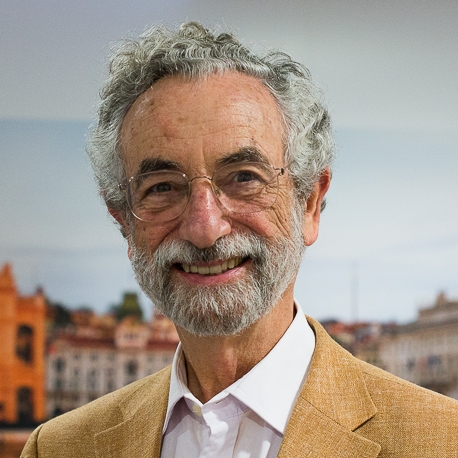 Elliott H. Lieb合作论文数Princeton University2Harald a Posch合作论文数2
 Walter Felipe Wreszinski合作论文数2Roman U Sexl合作论文数2
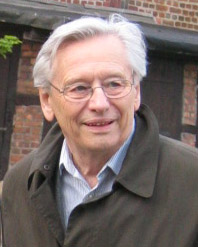 Armin Gotthard Uhlmann合作论文数Institut für Theoretische Physik, Universität Leipzig2H.-R. Grümm合作论文数2H. Grosse合作论文数1
 Philipp Kohler合作论文数1Adam Nagy合作论文数1M. Baro合作论文数1
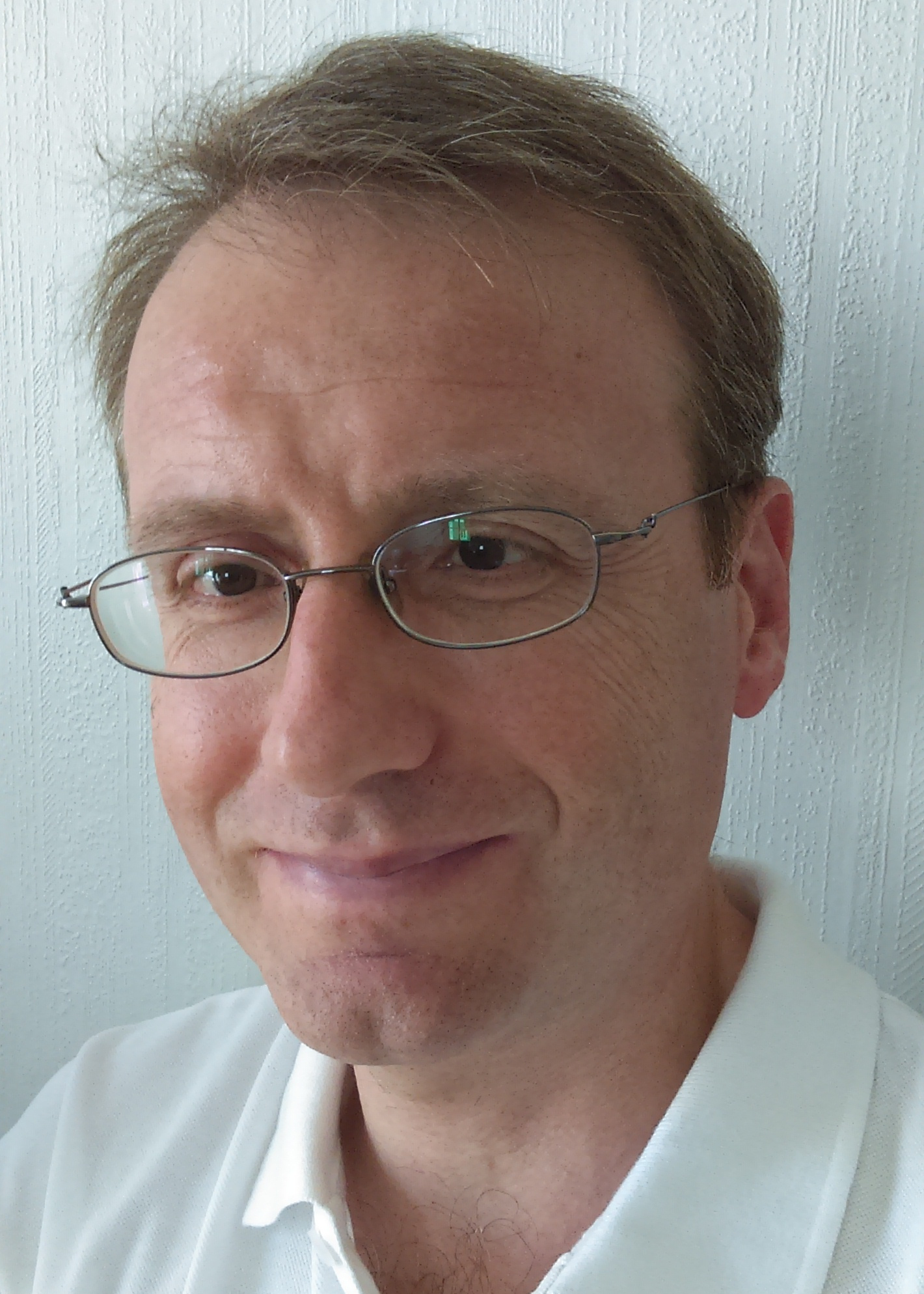 Claudio Altafini合作论文数Department of Electrical Engineering, Linkoping University1
 Robert Alicki合作论文数Freiburg Institute for Advanced Studies, University of Freiburg1
 Erling Størmer合作论文数Department of Mathematics, The Faculty of Mathematics and Natural Sciences, University of Oslo1Yuzuru Inahama合作论文数1Hajime Moriya合作论文数1
 Manfred Requardt合作论文数1
 Harald Alois Posch合作论文数1
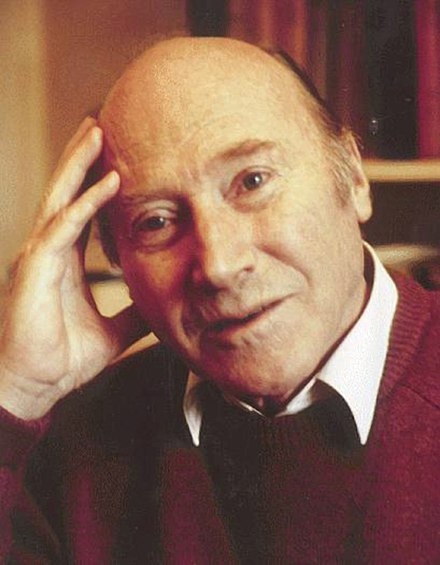 Rudolf Haag合作论文数University of Hamburg1Gerard G Emch合作论文数1
 Christian Jakel合作论文数ETH Zürich1
 Herbert Wiklicky合作论文数Imperial College London
Department of Computing1Pierre Del Castillo合作论文数1
Herbert Wiklicky合作论文数Imperial College London
Department of Computing1Pierre Del Castillo合作论文数1 Ulrich Stein合作论文数H. Institut für Theoretische Physik Universität Hamburg1
 Matyas Koniorczyk合作论文数Department of Nonlinear and Quantum Optics;Institute for Solid State Physics;Hungarian Academy of Sciences;Institute for Solid State Physics, Hungarian Academy of Sciences1
 Hagen Neidhardt合作论文数Weierstraß-Institut für Angewandte Analysis und Stochastik Mohrenstr. 39 D-10117 Berlin Germany1
 Shinichi Shirai合作论文数Department of Cardiology, Kokura Memorial Hospital1
 Alain Connes合作论文数Collège de France;Department of Mathematics, College of Arts and Sciences, The Ohio State University1
 Franz Embacher合作论文数1




