Societal Impact Statement Plant breeding for agroecological transition (AET) holds the potential to transform agriculture by fostering crop diversification and empowering farmers through collaborative, inter‐ and transdisciplinary research. By adopting a systemic, co‐learning approach, we can deepen our understanding of the complex interactions between plant diversity, management practices and socio‐ecological contexts. Achieving this transition requires responsible governance to co‐design cropping systems and ensure sustainable, safe and resilient agricultural systems with healthy nutrition. Embracing these integrative practices will not only advance plant breeding science for the transformation of sustainable food systems but also strengthen food security, safety and resilience in the face of pressing environmental and societal challenges. Summary This opinion paper advocates for a transformative approach to plant breeding to support the agroecological transition (AET), essential for addressing global challenges such as biodiversity loss and climate change. It emphasizes the need for inter‐ and transdisciplinary, collaborative and inclusive research to enhance plant and crop diversity while empowering farmers. Key strategies include co‐designing agroecological systems with stakeholders, leveraging crop inter‐ and intraspecies diversity and establishing responsible governance. The participatory approach encourages collaboration between farmers and researchers to co‐develop solutions that enhance crop inter‐ and intra‐species diversity within cropping systems. Through responsible governance, we aim to ensure inclusivity, participation and equitable access to knowledge at individual and institutional levels. In addition, researchers and institutions must collaborate with farmers to co‐design systems that prioritize context‐specific solutions, sustainability and diversity. Enhancing plant diversity for AET requires plant breeding tailored to diverse agroecological contexts and farming needs, supported by collaborative networks, participatory methods and appropriate experimental and modelling tools. We conclude with a call for inter‐ and transdisciplinary training to better prepare future researchers in plant breeding for AET.
Abstract Accurate and reproducible assessment of foliar disease severity is essential for evaluating the performance of heterogeneous plant communities and understanding host-pathogen interactions. However, traditional visual scoring methods remain subjective, with limited precision, and difficult to scale in large phenotyping experiments. Here, we present a semi-automated image analysis workflow designed to quantify multiple foliar disease symptoms simultaneously on wheat flag leaves sampled from varietal mixtures. The workflow combines three methodological components: (i) a standardized protocol for leaf sampling and imaging, (ii) supervised machine learning segmentation using Random Forest implemented in Ilastik to classify multiple symptoms (powdery mildew and yellow rust), and (iii) a graphical user interface facilitating pipeline deployment by non-specialist operators. To evaluate the influence of image representation on classification performance, four color spaces (RGB, HSV, HLS, LAB) were systematically compared. The approach was validated using images of durum wheat flag leaves collected from a field experiment assessing eight-way varietal mixtures under natural fungal pressure. Cross-validation against manually annotated images demonstrated high segmentation accuracy across all symptom. Comparison among color spaces revealed only minor differences in performance. Overall, this workflow offers a cost-effective, annotation-efficient and reproducible alternative to deep learning approaches, leveraging open-source and actively maintained tools while requiring limited training data and enabling objective, reproducible and scalable disease phenotyping.
Biotic interactions between plants and insects can drive key evolutionary processes. In Mediterranean agroecosystems, the harvester ants Messor barbarus (Hymenoptera: Formicidae) frequently collect seeds, including those of cultivated cereals. Yet their potential role in shaping crop traits remains poorly understood. This study investigates whether harvester ant seed predation is driven by genetic and phenotypic variation in durum wheat (Triticum turgidum ssp. durum), a major Mediterranean crop derived from wild emmer (T. turgidum ssp. dicoccoides). Using a panel of 180 genetically diverse durum wheat inbred lines grown in a field experiment, we visually recorded spike predation and performed a genome-wide association study (GWAS) using SNP markers to assess the genetic architecture of susceptibility to seed predation by M. barbarus. We identified a significant quantitative trait loci (QTL) on chromosome 2A explaining 21% of the variation in predation rate. This region contains a 3.6 Mb chromosomal inversion and 46 candidate genes, including a MYB transcription factor potentially involved in regulating cuticle and chemical traits. To validate these genetic findings, we conducted a cafeteria experiment with 208 spikes from 26 genotypes, placed at the entrances of eight ant nests. Ants preferentially removed spikes from genotypes carrying the allele identified in the GWAS. Additionally, shorter spikes were more likely to be harvested. However, unlike previous studies on wild plants, seed morphology and protein content did not significantly affect ant preference. Synthesis. Our results demonstrate that M. barbarus exhibits genotype-specific preferences in durum wheat, associated with a major QTL, and is influenced by spike traits. This study provides the first evidence of ant-mediated selective pressure in a cereal crop and opens new perspectives on plant-insect dynamics in agroecosystems and the role of plant-insect interactions in the evolutionary history of crop species.
Crop domestication and breeding have led to phenotypic changes, particularly in plant size. Allometric relationships-the link between trait and size-have been repeatedly described as invariant across taxa, suggesting strong constraints on phenotypic evolution. By analogy, artificial selection during domestication and breeding might have been strongly constrained by plant allometry, but an experimental test is lacking. We used 39 genotypes representative of the four key stages (wild, first domesticated, landrace and elite) of the evolutionary history of durum wheat. We grew them in pots as monogenotypic culture, with increasing density from 1 to 10 individuals. We measured biomass components and functional traits involved in plant competition to assess the response of genotypes to density. In response to density, wheat genotypes reduced their tiller number and flowered earlier. However, we showed invariant biomass-based responses to density across the different stages. Furthermore, allometric relationships between vegetative biomass and reproductive biomass did not vary across stages, despite phenotypic changes. Our findings contribute to strengthening empirical knowledge of the phenotypic changes in the aerial compartment over the course of plant domestication. Moreover, they reinforce the interest of using the allometric framework to better understand constraints on crop phenotype and productivity.
The need to address the impact of domestication on plant traits is frequently highlighted in modern agriculture. It is often argued that domesticated plants have lost competitive ability due to reduced phenotypic plasticity. This study investigates whether domestication has affected competitive ability, functional trait values, and plasticity in durum wheat across 39 genotypes representing four key stages of domestication, from wild progenitors to modern elite varieties. Plants were grown in pots, both alone and in competition with the same neighbouring genotype. Biomass, and above- and belowground traits were measured at the end of the vegetative stage. Our results showed that the three domesticated groups lost less biomass in response to competition compared with their wild progenitors. All genotypes developed thinner leaves and thicker roots when grown with a neighbour. While wild progenitors exhibited the highest plasticity, this did not translate to a greater competitive ability. These findings challenge the theoretical expectation that domesticated plants are less suited for competition. Instead, they suggest that domesticated plants perform well in competitive environments and question the need to reintroduce wild traits to improve competitive ability.
Plant diversification at field, farm, and landscape scales is a key strategy for protecting crops from pests. But its level of adoption remains confidential, while the overall negative impacts of pesticides are now well established. To understand the obstacles to this adoption, we conducted an extensive review of literature in life and socio-economic sciences. We found that all diversification practices are largely effective in pest control, achieving satisfactory yields and many ecological cobenefits, although context dependent. Plant diversification does not appear solely as an alternative to pesticide-based pest control but as a transformative approach to achieve sustainable agrifood systems. However, its adoption is currently strongly hindered by socioeconomic barriers, including low short-term profitability, rigid agricultural sectors, and limited support from public policies. The most beneficial practices, agroforestry and diversified landscapes, face the greatest obstacles. In contrast, cultivar mixtures, while easier to implement, offer limited cobenefits. Collaboration between scientists, policymakers, and local stakeholders seems essential to scale up plant diversification.
Competition between plants can lead to a tragedy of the commons (TOC), where excessive investment in resource-harvesting organs reduces collective performance. Mixing crop varieties could resolve such TOCs through niche complementarity-if varieties differ in resource use-or selection effects, where competitive varieties benefit from weaker neighbours. While most studies on varietal mixtures focus on above-ground traits, below-ground interactions remain poorly understood. We grew 36 durum wheat (Triticum turgidum ssp. durum) varieties in pure stands and 54 binary mixtures using a high-throughput root phenotyping platform, under both non-limiting (R+) and limiting (R-) water and nutrient conditions, to assess early-stage root competition. In R-, mixtures produced less biomass than expected based on pure stands, largely due to a negative complementarity effect. This was mostly explained by the average projected root area of the two varieties. Rather than indicating a negative interaction, the effect reflected a relaxation of competition: varieties with larger root systems benefited from having weaker competitors, disengaging from the arms race for biomass accumulation. These findings suggest that root area is a promising breeding target for mitigating intra-specific competition and a critical trait for assembling optimal varietal mixtures.
Plant genetics and environmental factors play key roles in shaping the root microbiota, but plant genetic control of the root mycobiota is still poorly investigated. By using a collection of 181 lines derived from a population with a broad genetic basis, we investigated whether wheat genotypes shape the composition of root endophytic fungal communities and the genetic determinants underlying these relationships. We correlated the fungal communities associated with roots on Evolutionary Prebreeding pOpulation (EPO) field-grown lines based on Internal Transcribed Spacer 2 (ITS2) metabarcoding with host quantitative genetic methods, including heritability analysis and Genome Wide Association Studies (GWAS), to uncover original genetic determinants influencing mycobiota. Fungal species richness was positively correlated between most fungal clades, except between Mortierellomycotina and Glomeromycotina. Overall, we also found higher heritability of fungal clades (i.e. at the phylum or subphylum rank) with a unique trophic mode, such as the biotrophic Arbuscular Mycorrhizal Fungi (AMF). This study reveals 11 QTLs for mycobiota composition at the clade level. Finally, presence of specific fungal clades, such as Olpidiomycota or Chytridiomycota, highlighted their potential as root endophytes. By elucidating the genetic control of fungal diversity and identifying key fungal associations, this work advances our understanding of plant-microbiota and the potential for breeding to maximise these interactions. ### Competing Interest Statement The authors have declared no competing interest.
The introduction of Reduced height (Rht) dwarfing genes into elite wheat varieties has contributed to enhanced yield gain in high input agrosystems by preventing lodging. Yet, how modern selection for dwarfing has affected symbiosis remains poorly documented. In this study, we evaluated the response of both the plant and the arbuscular mycorrhizal fungus to plant genetic variation at a major Quantitative Trait Locus called QTL 4B2, known to harbor a Rht dwarfing gene, when forming the symbiosis. We used twelve inbred genotypes derived from a diversity base broadened durum wheat Evolutionary Pre-breeding Population and genotyped with a high-throughput Single Nucleotide Polymorphism (SNP) genotyping array. In a microcosm setup segregating roots and the extra-radical mycelium, each wheat genotype was grown with or without the presence of Rhizophagus irregularis. To characterize arbuscular mycorrhizal symbiosis, we assessed hyphal density, root colonization, spore production, and plant biomass. Additionally, we split the variation of these variables due either to genotypes or to the Rht dwarfing genes alone. The fungus exhibited greater development in the roots of Dwarf plants compared to non-Dwarf plants, showing increases of 27%, 37% and 51% in root colonization, arbuscules, and vesicles, respectively. In addition, the biomass of the extra-radical fungal structures increased by around 31% in Dwarf plants. The biomass of plant roots decreased by about 43% in mycorrhizal Dwarf plants. Interestingly, extraradical hyphal production was found to be partly genetically determined with no significant effect of Rht, as for plant biomasses. In contrast, variations in root colonization, arbuscules and extraradical spore production were explained by Rht dwarfing genes. Finally, when mycorrhizal, Dwarf plants had significantly lower total P content, pointing towards a less beneficial symbiosis for the plant and increased profit for the fungus. These results highlight the effect of Rht dwarfing genes on both root and fungal development. This calls for further research into the molecular mechanisms governing these effects, as well as changes in plant physiology, and their implications for fostering arbuscular mycorrhizal symbiosis in sustainable agrosystems.
Identifying the genetic determinants underlying plant-plant interactions is key for understanding plant community dynamics, both in natural and agronomical systems. This report unveils the complex genetic architecture of plant-plant interaction effects on aerial biomass and septoria tritici blotch severity in varietal mixtures of wheat, using co-genome-wide association study. Fifty-four significant allelic interactions between distinct loci were identified, with half involving hub loci. Some inter-individual epistasis might be related to the shade-avoidance syndrome. Our results underscore the critical role of allelic interactions between inter-individual loci in shaping plant phenotypes and community dynamics, offering new perspectives to optimize varietal mixtures.
The exploration of phenotypic spaces of large sets of plant species has considerably increased our understanding of diversification processes in the plant kingdom. Nevertheless, such advances have predominantly relied on interspecific comparisons that hold several limitations.Here, we grew in the field a unique set of 179 inbred lines of durum wheat, Triticum turgidum spp. durum, characterized by variable degrees of artificial selection. We measured aboveground and belowground traits as well as agronomic traits to explore the functional and agronomic trait spaces and to investigate trait-to-agronomic performance relationships.We showed that the wheat functional trait space shared commonalities with global cross-species spaces previously described, with two main axes of variation: a root foraging axis and a slow-fast trade-off axis. Moreover, we detected a clear signature of artificial selection on the variation of agronomic traits, unlike functional traits. Interestingly, we identified alternative phenotypic combinations that can optimize crop performance.Our work brings insightful knowledge about the structure of phenotypic spaces of domesticated plants and the maintenance of phenotypic trade-offs in response to artificial selection, with implications for trade-off-free and multi-criteria selection in plant breeding.
[This corrects the article DOI: 10.1371/journal.pbio.3002287.].
Interactions among plants have been long recognized as a major force driving plant community dynamics and crop yield. Surprisingly, our knowledge of the ecological genetics associated with variation of plant-plant interactions remains limited. In this opinion article by scientists from complementary disciplines, the international PLANTCOM network identified four timely questions to foster a better understanding of the mechanisms mediating plant assemblages. We propose that by identifying the key relationships among phenotypic traits involved in plant-plant interactions and the underlying adaptive genetic and molecular pathways, while considering environmental fluctuations at diverse spatial and time scales, we can improve predictions of genotype-by-genotype-by-environment interactions and modeling of productive and stable plant assemblages in wild habitats and crop fields.
Summary Agroecosystem diversification through increased crop genetic diversity could provide multiple services such as improved disease control or increased productivity. However, we still poorly understand how genetic diversity affects agronomic performance. We grew 179 inbred lines of durum wheat in pure stands and in 202 binary mixtures in field conditions. We then tested the effect of allelic richness between genotypes and genotype richness on grain yield and Septoria tritici blotch disease. Allelic richness was tested at 19K single nucleotide polymorphisms distributed along the durum wheat genome. Both genotype richness and allelic richness could be equal to 1 or 2. Mixtures were overall more productive and less diseased than their pure stand components. Yet, we identified one locus at which allelic richness between genotypes was associated with increased disease severity and decreased grain yield. The effect of allelic richness at this locus was stronger than the effect of genotype richness on grain yield (−7.6% vs +5.7%). Our results suggest that positive effects of crop diversity can be reversed by unfavourable allelic associations. This highlights the need to integrate genomic data into crop diversification strategies. More generally, investigating plant–plant interactions at the genomic level is promising to better understand biodiversity–ecosystem functioning relationships.
Plant domestication can be viewed as a form of co-evolved interspecific mutualism between humans and crops for the benefit of the two partners. Here, we ask how this plant-human mutualism has, in turn, impacted beneficial interactions within crop species, between crop species, and between crops and their associated microbial partners. We focus on beneficial interactions resulting from three main mechanisms that can be promoted by manipulating genetic diversity in agrosystems: niche partitioning, facilitation, and kin selection. We show that a combination of factors has impacted either directly or indirectly plant-plant interactions during domestication and breeding, with a trend toward reduced benefits arising from niche partitioning and facilitation. Such factors include marked decrease of molecular and functional diversity of crops and other organisms present in the agroecosystem, mass selection, and increased use of chemical inputs. For example, the latter has likely contributed to the relaxation of selection pressures on nutrient-mobilizing traits such as those associated to root exudation and plant nutrient exchanges via microbial partners. In contrast, we show that beneficial interactions arising from kin selection have likely been promoted since the advent of modern breeding. We highlight several issues that need further investigation such as whether crop phenotypic plasticity has evolved and could trigger beneficial interactions in crops, and whether human-mediated selection has impacted cooperation via kin recognition. Finally, we discuss how plant breeding and agricultural practices can help promoting beneficial interactions within and between species in the context of agroecology where the mobilization of diversity and complexity of crop interactions is viewed as a keystone of agroecosystem sustainability.
Estimating plasticity of leaf silicon (Si) in response to abiotic and biotic factors underpins our comprehension of plant defences and stress resistance in natural and agroecosystems. However, how nitrogen (N) addition and intraspecific plant-plant interactions affect Si concentration remains unclear. We grew 19 durum wheat genotypes (Triticum turgidum ssp. durum) in pots, either alone or in intra- or intergenotypic cultures of two individuals, and with or without N. Above-ground biomass, plant height and leaf [Si] were quantified at the beginning of the flowering stage. Nitrogen addition decreased leaf [Si] for most genotypes, proportionally to the biomass increase. Si plasticity to plant-plant interactions varied significantly among genotypes, with both increases and decreases in leaf [Si] when mixed with a neighbour, regardless of the mixture type (intra-/intergenotype). Besides, increased leaf [Si] in response to plant-plant interactions was associated with increased plant height. Our results suggest the occurrence of both facilitation and competition for Si uptake from the rhizosphere in wheat mixtures. Future research should identify which leaf and root traits characterise facilitating neighbours for Si acquisition. We also show that Si could be involved in height gain in response to intraspecific competition, possibly for increasing light capture. This important finding opens up new research directions on Si and plant-plant interactions in both natural ecosystems and agroecosystems. More generally, our results stress the need to explore leaf Si plasticity in responses to both abiotic and biotic factors to understand plant stress resistance. Read the free Plain Language Summary for this article on the Journal blog.
Abstract A classic example of phenotypic plasticity in plants is the suit of phenotypic responses induced by a change in the ratio of red to far‐red light (R∶FR) as a result of shading, also known as the shade avoidance syndrome (SAS). While the adaptive consequences of this syndrome have been extensively discussed in natural ecosystems, how SAS varies within crop populations and how SAS evolved during crop domestication and breeding remain poorly known. In this study, we grew a panel of 180 durum wheat (Triticum turgidum ssp. durum) genotypes spanning diversity from wild, early domesticated, and elite genetic compartments under two light treatments: low R:FR light (shaded treatment) and high R:FR light (unshaded treatment). We first quantified the genetic variability of SAS, here measured as a change in plant height at the seedling stage. We then dissected the genetic basis of this variation through genome‐wide association mapping. Genotypes grown in shaded conditions were taller than those grown under unshaded conditions. Interaction between light quality and genotype did not affect plant height. We found six QTLs affecting plant height. Three significantly interacted with light quality among which the well‐known Rht1 gene introgressed in elite germplasm during the Green Revolution. Interestingly at three loci, short genotypes systematically expressed reduced SAS, suggesting a positive genetic correlation between plant height and plant height plasticity. Overall, our study sheds light on the evolutionary history of crops and illustrates the relevance of genetic approaches to tackle agricultural challenges.
 Isabelle Olivieri合作论文数16Bruno Colas合作论文数CC 237, Université de Paris VI14
 Florian Fort合作论文数UMR AGIR, INRA13Agnes Mignot合作论文数13
 David R. Jacques合作论文数Air Force Institute of Technology13Cyrille Violle合作论文数Univ Montpellier, Univ Paul Valery Montpellier12
 Germain Montazeaud合作论文数Dept Ecol & Evolut, Univ Lausanne11Aline Rocher合作论文数10Eric Imbert合作论文数8Martin Ecarnot合作论文数6
 P. Roumet合作论文数6
 Miquel Riba合作论文数6
 Simon Ducatez合作论文数Department of Biology, McGill University5
 Jean-Benoit Morel合作论文数French National Institute for Agriculture, Food, and Environment5
 Olivier J. Hardy (Olivier Hardy)合作论文数Evolutionary Biology and Ecology Department, Universite Libre de Bruxelles5
 Michel Baguette合作论文数Institute of Systematics, Biodiversity, Evolution, Museum National d'Histoire Naturelle5M Riba合作论文数4
 Delphine Legrand合作论文数UMR 7204, MNHN-CNRS-UPMC4
 Elsa Ballini合作论文数UMR BGPI INRA/CIRAD/SupAgro, Montpellier SUPAGRO4Benoît Grimonprez合作论文数3Aurélien Besnard合作论文数3Taïna Lemoine合作论文数3Aurélie Ducasse合作论文数3Michel Colombo合作论文数3Anais Tibi合作论文数3Mourad Hannachi合作论文数3Elisa Taschen合作论文数Eco & Sols, Univ Montpellier3Gilles Martel合作论文数UMR BAGAP, Ecole Super Agr ESA3
 Flutre Timothée合作论文数INRAE, Univ Paris Saclay3
 M. Launay合作论文数3
 H. (Hal) Caswell合作论文数Institute for Biodiversity and Ecosystem Dynamics, University of Amsterdam;Faculty of Science, University of Amsterdam;Biology Department, Woods Hole Oceanographic Institution3
 Marie-Helene Muller合作论文数3
 Pierre Courtois合作论文数Departament d'Economia i Historia Econòmica;Universitat Autònoma de Barcelona;Departament d'Economia i Historia Econòmica, Universitat Autònoma de Barcelona3
 Douadia Bougherara合作论文数UR122 Economie et Sociologie Rurales, INRA3
 Frederic Fabre合作论文数Institut National de la Recherche Agronomique;National de la Recherche;Processus Spatiaux;Processus Spatiaux, Institut National de la Recherche Agronomique3Navarrete Mireille合作论文数3
 Laurent Bedoussac合作论文数UMR 1248 AGIR Equipe VASCO, INRA Toulouse3
 Valerie Angeon合作论文数3
 Stéphane Lemarié合作论文数INRA/SERD, UPMF Grenoble3Pierre-Emmanuel Courty合作论文数INRA, Nancy Université3Jérôme Enjalbert合作论文数3Brigitte Gouesnard合作论文数3
 Stephane Cordeau合作论文数Biologie et Gestion des Adventices, INRA3Virginie M. Stevens合作论文数3
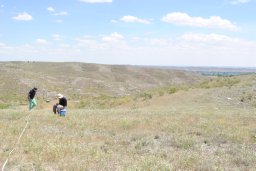 Nicolas Gross合作论文数CEFE/CNRS 1919 route de Mende 34293 Montpellier Cedex 5 France3Jean-Marie Prospéri合作论文数3
 Audrey Alignier合作论文数BAGAP, INRA3
 David A. Bohan合作论文数Rothamsted Research3Régis Grateau合作论文数2




