Eighteen patients who survived an acute myocardial infarction were found to have a normal coronary arteriogram. Seven patients were younger than 35 years and six were female. The myocardial infarction was nontransmural in 1 1 cases. The mean follow-up was 21.6 months. Eleven patients developed residual chest pain at rest early after myocardial infarction. One, treated by beta-blockers, suffered a recurrent myocardial infarction. Eight became asymptomatic, and two improved under antispastic therapy. Another patient developed a severe form of variant angina three m9nths after myocardial infarction; she died following plexectomy. Final-
Aortic valve stenosis (AS) is the most commonly operated valvular heart disease in developed countries. Aortic valve replacement is the sole effective treatment of symptomatic patients. PARTNER-1 (Placement of AoRtic TraNscathetER Valves) has recently proved the efficacy of percutaneous aortic valve replacement (TAVI : Transcatheter Aortic Valve Implantation) in patients at high surgical risk, or inoperable. In the present article, we report and discuss the results of the PARTNER-2 study in intermediate risk patients. Data from PARTNER-2 confirmed those of PARTNER-1 with a similar rate of combined events (death or disabling stroke) in the TAVI and surgical groups. At 2 years, the Kaplan-Meier event rates were 19.3% in the TAVI group and 21.1% in the surgery group, with a hazard ratio in the TAVI group of 0.89. The non inferiority analysis was validated with a p inferior to 0.001. In the transfemoral-access cohort, TAVI resulted in a lower rate of death or disabling stroke than surgery (p = 0.05), whereas, in the transthoracic access cohort, outcomes were similar in the two groups. Finally, TAVI was associated with lower rates of new onset atrial fibrillation, acute renal failure, and severe bleeding, whereas surgery resulted in fewer major vascular complications and less paravalvular aortic regurgitation.
Atrial fibrillation (AF) is the most common arrhythmia encountered in clinical practice. In its non valvular form, it appears as a disorder of the aged. Surprisingly, its incidence and prevalence have constantly been on the rise over the last decades to the extent that some authors nowadays call this phenomenon an "emerging epidemic". The reasons for that proliferation are not entirely elucidated. Obesity, which has simultaneously and similarly increased in frequency, might have played a significant role. AF is frequently pauci-symptomatic in the aged and can easily go unrecognized. Yet, it entails a higher mortality rate, carries a significant risk of thrombo-embolic events, in particular strokes, and may lead to heart failure. We shall briefly review the current epidemiologic aspects of AF and evoke the possible role of obesity. We shall then discuss the therapy of this disorder with a particular attention to the new oral anticoagulants.
Atherosclerosis is a complex disease resulting from an interaction between environmental risk factors (diet, smoking habit, lack of exercise, stress) and a favourable genetic profile. In the recent past, the analysis of the genetic factors involved has considerably progressed. A significant number of genetic variants associated with the various phenotypes of atherosclerosis or its risk factors have been identified. Each, taken individually, only exerts a modest influence, but as a group, they play a significant role, albeit as yet not precisely quantified, in the aetiology of atherosclerosis. The individual response to various therapies prescribed in atherosclerosis can also be significantly influenced by genetic factors. In the next future, genetics and pharmacogenetics will represent major determinants of our approach to the prevention and individualized treatment of atherosclerosis and its complications.
The concept of "polypill" for cardiovascular prevention was introduced in 2003 in a landmark paper of the British Medical Journal. A model based on results provided by evidence-based medicine suggested that a "polypill", that contains a statin, three blood pressure lowering drugs (each at half standard dose), aspirin and folic acid, would result in an 80% reduction in the incidence of coronary and cerebrovascular events, while being associated with a good tolerance profile and offering a favourable cost-effectiveness ratio. The present paper aims at presenting the new advances dealing with this new paradigm in cardiovascular prevention. We will present the progresses of the "polypill" concept since 2003, the results of a first controlled clinical trial, the pharmaceutical feasibility for routine clinical use and the potential pharmaco-economical impacts of such a strategy. The "polypill" may offer a solution to avoid physician's clinical inertia and reduce patients's lack of compliance, two drawbacks in the field of cardiovascular prevention.
Tom Adriaenssens (5)*, Wim Anné (3), André Aubert (4), Pablo Avanzas, Silvio Henrique Babberato, Michael Bauwer, Guy Berkenboom (2), Jean Boland (2), Camille Brasselet, Christian Brohet (2), Michel Buche, Werner Budts (6), Bertien Buyse (2), Filip Casselman, Jean-Jacques Cassiman (6), José Castro, NC Chang, Jean-Paul Chapelle, Patrick Chenu, Nerée Claes, Marc Claeys (2), Piet Claus, Denis Clement (2), Viviane Conraads, Patrick Coussement, Willem Daenen, Peter F. Davies, Laurent Davin (3), Tine De Backer (2), Julie De Backer, Bart De Geest (17), Luc De Roy (2), Jean De Schepper, Johan De Sutter (3), Daniel De Wolf (3), Ivo Deblier, Bernard De Bruyne, Brigitte Decallonne, Chantal Dedobbeleer, Gilles Dekeulenaer, Joris Delanghe, Paul Dendale, Jo Dens (4), Olivier Descamps, Walter Desmet (4), Olivier Detry, Benny Drieghe, Steven Droogmans (3), Walter Droogné (2), Christophe Dubois (8), Jean Ducobu (3), Karl Dujardin, Alain Dupont, Mattias Duytschaever, Hugo Ector (44), Joris Ector (2), Jesus Egido, Bert Everaert, Fabio Fabbian, Patrick Ferdinande (2), Luc Folon, Laurence Gabriel (2), Olivier Gach, Javier Ganame (2), Peter Geelen (2), Alessandro Giacomello, Thierry Gillebert (2), Marnix Goethals (5), Kaatje Goetschalckx, Olivier Gurne, Stanley L. Hazen, Hein Heidbüchel (3), Paul Herijgers (5), Michel Hermans, Marie-Christine Herregods (6), Etienne Hoffer (2), Paul Holvoet (3), Luc Hondeghem (4), Marc Hoylaerts, Wim Huybrechts, Lotte Jacobs, Gregory T. Jones, Luc Jordaens, Chandrasekharen C. Kartha, M. Kawai, Steven M. Kawut, Joelle Kefer, Hugo Kesteloot (16), Philippe Kohl (4), Genovefa Kolovou, Jean-Marie Krzesinski, Henri Kulbertus, Patrizio Lancellotti (5), Victor Legrand (6), Georges Mairesse (2), Francisco Marin, Massin Martial (2), Jay W. Mason, Pierre Melon (4), Bart Meuris (3), Luc Missault (6), Philip Moons (2), Luc Muyldermans, Tim Nawrot, Eric Nellesen (6), Julio Nunez, Dieter Nuyens, Guy Odent (4), Kyong Soo Park, Agnès Pasquet (5), Alexandre Persu, Peter Peytchev, Frank Provenier, Regis Radermecker (2), Dirk Ramaekers, Filip Rega (3), Tony Reybrouck (5), José Castro Rodriguez (2), Inez Rodrigus, Tom Rossenbacker, Erwin Schroeder, Siegfried Segaert, Partho P. Sengupta, Paul Sergeant (6), Peter Sinnaeve, Werner Spileers, Muriel Sprynger, Jan Staessen, Francis Stammen, Erik Stroes, Roland Stroobandt, Bert Suys, René Tavernier (2), Michel Telerman, Vincent Thijs, Lutgarde Thys, Els Troost (3), JeanLuc Vachiery, Guy Van Camp, Johan Van Cleemput (4), Emeline Vancraenenbroeck, Marc Van de Velde (2), Frans Van de Werf, Frank Van den Branden (3), Patricia Van Der Niepen, Luc Van Gaal, Luc Vanhees (2), Walter Van Mieghem (7), Guido Van Nooten, Florent Van Stapel (2), Rafaël Vazquez-Martinez, Thierry Verbeet (5), Raymond Verhaeghe (7), Peter Verhamme (2), Beata Verhamme, Bart Verheyden (2), Pieter Vermeersch, Jos Vermylen, Patrick Verschuren, Johan Vijgen, Jens-Uwe Voigt (5), Christiaan Vrints (4), Mathias Vrolix (7), Jean-Claude Wautrecht (3), René Westhovens (2), William Wijns, Rik Willems (2), Tine Willum-Hansen, Eric Wyffels (2), Tae-Jin Yun and Rauf Zeina.
The AHA has released its annual selection of the 10 top major advances in heart disease and stroke research for 2007. This list is very interesting. It contains papers on genetics which present the newly introduced genome-wide association studies of different common diseases, including coronary artery disease. The results of investigations carried out on cardiomyocytes derived from adult mouse spermatogonial stem-cells are mentioned. The value of angioplasty in chronic stable coronary artery disease is reassessed as is the need for mouth to mouth ventilation in resuscitation manoeuvres for cardiac arrest. The effectiveness and safety of drug-eluting stents in routine clinical practice is demonstrated and the merit of bivaluridin for the treatment of patients with a STEMI infarct is described. The improvement in quality of care provided by a statewide system for coronary revascularisation is outlined. Finally, two papers are devoted to epidemiological issues: one demonstrates that a reduced sodium intake lowers not only blood pressure, but also the risk of clinical cardiovascular disease outcomes; the second stresses that hypertension and prehypertension are often undiagnosed in the pediatric population.
INTERHEART is a standardised case-control study of acute myocardial infarction in 52 countries representing every inhabited continent. 15152 cases and 14820 controls were enrolled. Collectively, 9 factors accounted for 90% of myocardial infarctions in men and 94% in women. These factors were 6 risk factors (dyslipidaemia characterized by high apoB/apoA1 ratio, smoking, hypertension, diabetes mellitus, abdominal obesity and stressful psychosocial factors) and 3 protective factors (daily consumption of fruits and vegetables, regular alcohol consumption, and regular physical activity). These findings suggest that interventions targeting these 9 factors have the potential to prevent most premature cases of myocardial infarction and that these strategies should be implemented worldwide.
Statins, as compared to placebo, have proven their efficacy in reducing cardiovascular events in patients with or without cardiovascular disease and in a large range of cholesterol levels. Two new head-to-head randomised trials comparing intensive treatment with atorvastatin 80 mg/day with moderate treatment with pravastatin 40 mg/day were recently completed. The mechanistic "Reversing Atherosclerosis with Aggressive Lipid Lowering" (REVERSAL) trial randomised 502 patients with stable coronary disease. Atorvastatin 80 mg (leading to a mean LDL cholesterol of 79 mg/dl) was superior to pravastatin 40 mg (mean LDL of 110 mg/dl) in terms of limiting the progression of atheroma assessed with the use of intravascular ultrasonography after 18 months of follow up (p = 0.02). These differences may be related to the greater reduction in atherogenic lipoprotein (-46% versus -26%, p < 0.001) and C-reactive protein (-36% versus -5%, p < 0.001) in patients treated with atorvastatin as compared to pravastatin. In the clinical "Pravastatin or Atorvastatin Evaluation and Infection Therapy" (PROVE-IT) trial, 4162 patients with acute coronary syndromes were randomised to either atorvastatin 80 mg or pravastatin 40 mg and followed for a mean of 24 months. Again, atorvastatin (mean LDL of 62 mg/dl) was superior to pravastatin (mean LDL of 95 mg/dl), resulting in a 16% percent lower risk of the primary end point, a composite of major cardiovascular events (p = 0.005). Thus, both REVERSAL and PROVE-IT support the concept "the lower, the better". However, they do not allow to disentangle the independent and interdependent effects of statins on LDL cholesterol and the process of arterial inflammation. What so ever, the results suggest that the target LDL cholesterol level may be lower than recommended in the current guidelines in high-risk patient so that a sea change in the prevention and management of atherosclerotic vascular disease may occur very soon.
In the June 28, 2003 issue of the British Medical Journal, an extensive literature survey based on various large meta-analyses of the efficacy and safety of the reduction of four cardiovascular risk factors (cholesterol, arterial blood pressure, platelet aggregation, homocysteine) leads to the conclusion that a combined pharmacological intervention should reduce ischaemic heart disease events by 88% and strokes by 80% in at risk individuals. Therefore, a new paradigm is proposed for the prevention of cardiovascular diseases. This new strategy would consist in the systematic prescription to people with a history of heart attack or stroke, those with any form of obliterative atherosclerotic vascular disease or diabetes, and everyone aged 55 and older of a fixed combination of 6 pharmacological agents independently of initial risk factor profile.... Such pharmacological formulation, called "polypill", should contain a statin, three blood pressure lowering drugs (each at half standard dose), aspirin (75 mg/day) and folic acid (0.8 mg/day). We discuss the pros and cons of this new paradigm. However, the efficacy of such "polypill" remains to be demonstrated in a large controlled clinical trial as well as its superiority as compared to a classical approach of cardiovascular prevention based upon the individual optimal correction of each risk factor thanks a dose titration of each pharmacological compound.
 Jean-Paul Chapelle合作论文数31A. Waleffe合作论文数31
 Victor Legrand合作论文数30Pierre Rigo合作论文数30P Collignon合作论文数25Adelin Albert合作论文数21J C Demoulin合作论文数20c heusghem合作论文数19
 André J Scheen合作论文数Division of Diabetes, Nutrition, and Metabolic Disorders, Academic Hospital of Liege;Faculty of Medicine, University of Liège18JP SMEETS合作论文数17
 Luc Pierard合作论文数Département des Sciences Cliniques, Faculté de Médecine, Université de Liège;Department of Cardiology, Centre Hospitalier Universitaire de Liège16M Bertholet合作论文数13
 Veronique Mahaux合作论文数13C DELANDSHEERE合作论文数12Soyeur D合作论文数12D LAMOTTE合作论文数10Raymond Limet合作论文数10J.C. Demoulin合作论文数10M. El Allaf合作论文数10D Raets合作论文数9
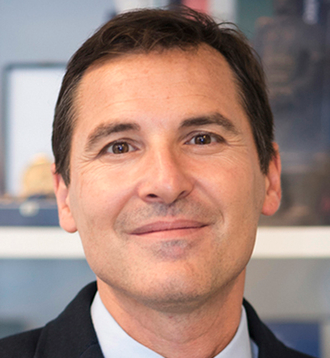 Patrizio Lancellotti合作论文数Department of Cardiology, University of Liège9Pierre Materne合作论文数9K. Nzayinambaho合作论文数8H Joris合作论文数7M. Chevigné合作论文数7Guy Delfiore合作论文数7Pierre Melon合作论文数7L HUMBLET合作论文数7Marcel Guillaume合作论文数7luc pierard合作论文数6JM PETERS合作论文数6Fourny J合作论文数6Alain Cribier合作论文数6L MARYRABINE合作论文数6J BECKERS合作论文数5Henrard L合作论文数5A. Sacrez合作论文数5J Carlier合作论文数5Jeanpierre Monassier合作论文数5
 Luca Quaglia合作论文数5D Soumagne合作论文数4MP LAROCK合作论文数4Bernard Charbonnier合作论文数4Foidart G合作论文数4Delvigne J合作论文数4Brochier M L合作论文数4Baudinet V合作论文数4Cuypers Y合作论文数4Christophe Dubois合作论文数4




