Deep generative models offer a natural foundation for out-of-distribution (OOD) detection, yet prior work has shown that their assigned likelihoods are notoriously unreliable indicators for in- vs out-of-distribution data. In this paper, we address this problem by leveraging the diffeomorphic and mass-preserving properties of continuous normalising flows. Our analysis shows that OOD samples are mapped to noise samples that are highly atypical under the noise prior in ways not captured by the likelihood. Based on this observation, we propose a new method – Signal in the Noise (SITN) – for OOD detection on the single-sample level. SITN requires no access to OOD data, incurs minimal computational overhead, and provides strict control of false positive rates. Comprehensive evaluations through standard benchmarks and synthetic perturbations highlight the method's effectiveness and the absence of the complexity bias inherent to likelihood-based methods.
Test-time alignment (TTA) aims to adapt models to specific rewards during inference. However, existing methods tend to either under-optimise or over-optimise (reward hack) the target reward function. We propose Null-Text Test-Time Alignment (Null-TTA), which aligns diffusion models by optimising the unconditional embedding in classifier-free guidance, rather than manipulating latent or noise variables. Due to the structured semantic nature of the text embedding space, this ensures alignment occurs on a semantically coherent manifold and prevents reward hacking (exploiting non-semantic noise patterns to improve the reward). Since the unconditional embedding in classifier-free guidance serves as the anchor for the model's generative distribution, Null-TTA directly steers model's generative distribution towards the target reward rather than just adjusting the samples, even without updating model parameters. Thanks to these desirable properties, we show that Null-TTA achieves state-of-the-art target test-time alignment while maintaining strong cross-reward generalisation. This establishes semantic-space optimisation as an effective and principled novel paradigm for TTA.
Tabular data is more challenging to generate than text and images, due to its heterogeneous features and much lower sample sizes. On this task, diffusion-based models are the current state-of-the-art (SotA) model class, achieving almost perfect performance on commonly used benchmarks. In this paper, we question the perception of progress for tabular data generation. First, we highlight the limitations of current protocols to evaluate the fidelity of generated data, and advocate for alternative ones. Next, we revisit a simple baseline – hierarchical mixture models in the form of deep probabilistic circuits (PCs) – which delivers competitive or superior performance to SotA models for a fraction of the cost. PCs are the generative counterpart of decision forests, and as such can natively handle heterogeneous data as well as deliver tractable probabilistic generation and inference. Finally, in a rigorous empirical analysis we show that the apparent saturation of progress for SotA models is largely due to the use of inadequate metrics. As such, we highlight that there is still much to be done to generate realistic tabular data. Code available at https://github.com/april-tools/tabpc.
As language models are increasingly deployed as autonomous agents, they must coordinate with others over long horizons in open-ended interactive tasks. Yet existing evaluations rarely test these demands together, instead emphasising single-agent tasks, short interactions, or highly structured multi-agent settings. We introduce alem, a JAX-based benchmark for open-ended multi-agent coordination built on Craftax-like dynamics. Alem embeds procedurally generated coordination tasks, soft specialisation, communication, and controllable coordination difficulty into a long-horizon survival world with exploration, crafting, trading, and combat. We evaluate 13 modern LLMs zero-shot within homogeneous teams, with trained MARL agents as reference points. Current LLM agents remain far from solving alem, averaging only 6
The knowledge encoded in large language models (LLMs) can serve as a substrate for structured reasoning over variables describing a complex world, but accessing this knowledge in a probabilistically coherent manner poses a difficult inference problem. We propose Large Language Gibbs, a scheme for structured probabilistic inference that uses conditional distributions of an LLM as transition operators. Rather than sampling structured objects through single-pass autoregressive generation, we iteratively resample individual variables conditioned on others using an LLM's next-token conditionals. This approach avoids order-dependent biases and produces a stationary distribution that reflects a compromise between all local conditionals. We apply this approach to sampling from synthetic distributions, consistent reasoning tasks, and Bayesian structure learning. The results suggest that the use of LLM conditionals in MCMC is a practical alternative to one-pass generation for structured probabilistic inference under a world prior accessible through noisy LLM conditionals.
Algorithmic developments in Strategic Classification have been mostly limited to linear classifiers in settings where the best response has a closed-form solution or can be easily approximated. While some work has explored the role of non-linear classifiers in strategic settings, progress in this direction is impeded by the computational intractability of the strategic behaviour. Addressing this, we present a novel method for approximating the best response by exploiting Lagrangian duality. By reformulating the strategic response as a constrained optimisation problem, we can construct a Lagrangian that is amenable to first order optimisation methods. This approach reproduces closed-form strategic behaviour in linear settings and can be straight-forwardly applied to non-linear settings. We show how the Implicit Function Theorem can be used in conjunction with our proposed response formulation during classifier learning to compute the total gradient of the loss. This connects the classifier parameters directly to the consequent strategic behaviour, yielding a novel training algorithm that can exploit this relationship. Experimental evaluation shows that the resulting models achieve improved strategic accuracy on common machine learning datasets.
Quantifying the distance between datasets is a fundamental question in mathematics and machine learning. We propose magnitude distance, a novel distance metric defined on finite datasets using the notion of the magnitude of a metric space. The proposed distance incorporates a tunable scaling parameter, t, that controls the sensitivity to global structure (small t) and finer details (large t). We prove several theoretical properties of magnitude distance, including its limiting behavior across scales and conditions under which it satisfies key metric properties. In contrast to classical distances, we show that magnitude distance remains discriminative in high-dimensional settings when the scale is appropriately tuned. We further demonstrate how magnitude distance can be used as a training objective for push-forward generative models. Our experimental results support our theoretical analysis and demonstrate that magnitude distance provides meaningful signals, comparable to established distance-based generative approaches.
In contemporary deep learning, a prevalent and effective workflow for solving low-data problems is adapting powerful pre-trained foundation models (FMs) to new tasks via parameter-efficient fine-tuning (PEFT). However, while empirically effective, the resulting solutions lack generalisation guarantees to certify their accuracy - which may be required for ethical or legal reasons prior to deployment in high-importance applications. In this paper we develop a novel transfer learning approach that is designed to facilitate non-vacuous learning theoretic generalisation guarantees for downstream tasks, even in the low-shot regime. Specifically, we first use upstream tasks to train a {\em distribution over PEFT parameters}. We then learn the downstream task by a {\em sample-and-evaluate} procedure -- sampling plausible PEFTs from the trained diffusion model and selecting the one with the highest likelihood on the downstream data. Crucially, this confines our model hypothesis to a {\em finite} set of PEFT samples. In contrast to the typical continuous hypothesis spaces of neural network weights, this facilitates tighter risk certificates. We instantiate our bound and show non-trivial generalization guarantees compared to existing learning approaches which lead to vacuous bounds in the low-shot regime.
Machine learning models for electroencephalography (EEG) analysis show great promise across a wide range of applications, but their deployment in high-risk domains is hindered by their vulnerability to distribution shifts. Encountering out-of-distribution (OOD) data can lead to catastrophic, overconfident predictive failures. While OOD detection methods can mitigate these risks, they remain heavily under-explored for EEG. Moreover, evaluations in the broader literature typically evaluate OOD detection performance in isolation, ignoring their practical impact on downstream applications. To bridge this gap, we introduce a benchmark for EEG OOD detection, evaluate a broad range of methods, and furthermore evaluate their value in two clinical downstream prediction task. Our results disentangle OOD detection and model uncertainty estimation capabilities, which are frequently conflated in the literature, provide actionable insights about the current state of the art for EEG OOD detection and model uncertainty estimation, and demonstrate how complementary methods for both aspects can be combined to form a robust safety net for the deployment of EEG-based machine learning models in real-world applications.
The application of machine learning (ML) to electroencephalography (EEG) has great potential to advance both neuroscientific research and clinical applications. However, the generalisability and robustness of EEG-based ML models often hinge on the amount and diversity of training data. It is common practice to split EEG recordings into small segments, thereby increasing the number of samples substantially compared to the number of individual recordings or participants. We conceptualise this as a multi-level data generation process and investigate the scaling behaviour of model performance with respect to the overall sample size and the participant diversity through large-scale empirical studies. We then use the same framework to investigate the effectiveness of different ML strategies designed to address limited data problems: data augmentations and self-supervised learning. Our findings show that model performance scaling can be severely constrained by participant distribution shifts and provide actionable guidance for data collection and ML research. The code for our experiments is publicly available online.
Personalized alignment from preference data has focused primarily on improving reward model (RM) accuracy, with the implicit assumption that better preference ranking translates to better personalized behavior. However, in deployment, computational constraints necessitate inference-time adaptation via reward-guided decoding (RGD) rather than per-user policy fine-tuning. This creates a critical but overlooked requirement: reward models must not only rank preferences accurately but also effectively guide token-level generation decisions. We demonstrate that standard RM accuracy fails catastrophically as a selection criterion for deployment-ready personalized alignment. Through systematic evaluation across three datasets, we introduce policy accuracy, a metric quantifying whether RGD scoring functions correctly discriminate between preferred and dispreferred responses. We show that RM accuracy correlates only weakly with this policy-level discrimination ability (Kendall's tau = 0.08--0.31). More critically, we introduce Pref-LaMP, the first personalized alignment benchmark with ground-truth user completions, enabling direct behavioral evaluation without circular reward-based metrics. On Pref-LaMP, we expose a complete decoupling between discrimination and generation: methods with 20-point RM accuracy differences produce almost identical output quality, and even methods achieving high discrimination fail to generate behaviorally aligned responses. Finally, simple in-context learning (ICL) dominates all reward-guided methods for models > 3B parameters, achieving 3-5 point ROUGE-1 gains over the best reward method at 7B scale. These findings show that the field optimizes proxy metrics that fail to predict deployment performance and do not translate preferences into real behavioral adaptation under deployment constraints.
Certifying the IID generalisation ability of deep networks is the first of many requirements for trusting AI in high-stakes applications from medicine to security. However, when instantiating generalisation bounds for deep networks it remains challenging to obtain non-vacuous guarantees, especially when applying contemporary large models on the small scale data prevalent in such high-stakes fields. In this paper, we draw a novel connection between a family of learning methods based on model fusion and generalisation certificates, and surprisingly show that with minor adjustment several existing learning strategies already provide non-trivial generalisation guarantees. Essentially, by focusing on data-driven learning of downstream tasks by fusion rather than fine-tuning, the certified generalisation gap becomes tiny and independent of the base network size, facilitating its certification. Our results show for the first time non-trivial generalisation guarantees for learning with as low as 100 examples, while using vision models such as VIT-B and language models such as mistral-7B. This observation is significant as it has immediate implications for facilitating the certification of existing systems as trustworthy, and opens up new directions for research at the intersection of practice and theory.
In modern large-scale deep learning, a prevalent and effective workflow for solving low-data problems is adapting powerful pre-trained foundation models (FMs) to new tasks via parameter-efficient fine-tuning (PEFT). However, while empirically effective, the resulting solutions lack generalisation guarantees to certify their accuracy - which may be required for ethical or legal reasons prior to deployment in high-importance applications. In this paper we develop a novel transfer learning approach that is designed to facilitate non-vacuous learning theoretic generalisation guarantees for downstream tasks, even in the low-shot regime. Specifically, we first use upstream tasks to train a distribution over PEFT parameters. We then learn the downstream task by a sample-and-evaluate procedure – sampling plausible PEFTs from the trained diffusion model and selecting the one with the highest likelihood on the downstream data. Crucially, this confines our model hypothesis to a finite set of PEFT samples. In contrast to learning in the typical continuous hypothesis spaces of neural network weights, this facilitates tighter risk certificates. We instantiate our bound and show non-trivial generalization guarantees compared to existing learning approaches which lead to vacuous bounds in the low-shot regime.
We consider the problem of strategic classification, where the act of deploying a classifier leads to strategic behaviour that induces a distribution shift on subsequent observations. Current approaches to learning classifiers in strategic settings are focused primarily on the linear setting, but in many cases non-linear classifiers are more suitable. A central limitation to progress for non-linear classifiers arises from the inability to compute best responses in these settings. We present a novel method for computing the best response by optimising the Lagrangian dual of the Agents' objective. We demonstrate that our method reproduces best responses in linear settings, identifying key weaknesses in existing approaches. We present further results demonstrating our method can be straight-forwardly applied to non-linear classifier settings, where it is useful for both evaluation and training.
We consider the problem of strategic classification, where a learner must build a model to classify agents based on features that have been strategically modified. Previous work in this area has concentrated on the case when the learner is restricted to deterministic classifiers. In contrast, we perform a theoretical analysis of an extension to this setting that allows the learner to produce a randomised classifier. We show that, under certain conditions, the optimal randomised classifier can achieve better accuracy than the optimal deterministic classifier, but under no conditions can it be worse. When a finite set of training data is available, we show that the excess risk of Strategic Empirical Risk Minimisation over the class of randomised classifiers is bounded in a similar manner as the deterministic case. In both the deterministic and randomised cases, the risk of the classifier produced by the learner converges to that of the corresponding optimal classifier as the volume of available training data grows. Moreover, this convergence happens at the same rate as in the i.i.d. case. Our findings are compared with previous theoretical work analysing the problem of strategic classification. We conclude that randomisation has the potential to alleviate some issues that could be faced in practice without introducing any substantial downsides.
Skin cancer image classification across skin tones is a challenging problem due to the fact that skin cancer can present differently on different skin tones. This study evaluates the performance of image only models and fusion models in skin malignancy classification. The fusion models we consider are able to take in additional patient data, such as an indicator of their skin tone, and merge this information with the features provided by the image-only model. Results from the experiment show that fusion models perform substantially better than image-only models. In particular, we find that a form of multiplicative fusion results in the best performing models. This finding suggests that skin tones add predictive value in skin malignancy prediction problems. We further demonstrate that feature fusion methods reduce, but do not entirely eliminate, the disparity in performance of the model on patients with different skin tones.
In the realm of Locality-Sensitive Hashing (LSH), striking the right balance between computational efficiency and accuracy has been a persistent challenge. Most existing unsupervised methods rely on dense representations, which can lead to inefficiencies. To tackle this, we advocate for the adoption of sparse representations and introduce the use of quasi-Optimal Spherical Codes (OSCs) to minimise space distortion. OSCs strive to maximise the minimum angle between any pair of points on the hypersphere, ensuring that the relative angular information between data points is preserved in the representation, which is particularly valuable in tasks involving cosine similarity. We employ Adam-based optimisation to obtain these codes and use them to partition the space into a $k^\text{th}$-order Voronoi diagram. This approach consistently outperforms existing methods across four datasets on $K$-nearest neighbors search with cosine similarity, while capping the query time for a given embedding size.
Numerous benchmarks for Few-Shot Learning have been proposed in the last decade. However all of these benchmarks focus on performance averaged over many tasks, and the question of how to reliably evaluate and tune models trained for individual tasks in this regime has not been addressed. This paper presents the first investigation into task-level evaluation -- a fundamental step when deploying a model. We measure the accuracy of performance estimators in the few-shot setting, consider strategies for model selection, and examine the reasons for the failure of evaluators usually thought of as being robust. We conclude that cross-validation with a low number of folds is the best choice for directly estimating the performance of a model, whereas using bootstrapping or cross validation with a large number of folds is better for model selection purposes. Overall, we find that existing benchmarks for few-shot learning are not designed in such a way that one can get a reliable picture of how effectively methods can be used on individual tasks.
We analyze VeLO (versatile learned optimizer), the largest scale attempt to train a general purpose "foundational" optimizer to date. VeLO was trained on thousands of machine learning tasks using over 4000 TPU months with the goal of producing an optimizer capable of generalizing to new problems while being hyperparameter free, and outperforming industry standards such as Adam. We independently evaluate VeLO on the MLCommons optimizer benchmark suite. We find that, contrary to initial claims: (1) VeLO has a critical hyperparameter that needs problem-specific tuning, (2) VeLO does not necessarily outperform competitors in quality of solution found, and (3) VeLO is not faster than competing optimizers at reducing the training loss. These observations call into question VeLO's generality and the value of the investment in training it.
Models pre-trained on large datasets such as ImageNet provide the de-facto standard for transfer learning, with both supervised and self-supervised approaches proving effective. However, emerging evidence suggests that any single pre-trained feature will not perform well on diverse downstream tasks. Each pre-training strategy encodes a certain inductive bias, which may suit some downstream tasks but not others. Notably, the augmentations used in both supervised and self-supervised training lead to features with high invariance to spatial and appearance transformations. This renders them sub-optimal for tasks that demand sensitivity to these factors. In this paper we develop a feature that better supports diverse downstream tasks by providing a diverse set of sensitivities and invariances. In particular, we are inspired by Quality-Diversity in evolution, to define a pre-training objective that requires high quality yet diverse features — where diversity is defined in terms of transformation (in)variances. Our framework plugs in to both supervised and self-supervised pre-training, and produces a small ensemble of features. We further show how downstream tasks can easily and efficiently select their preferred (in)variances. Both empirical and theoretical analysis show the efficacy of our representation and transfer learning approach for diverse downstream tasks. Code available at https://github.com/ruchikachavhan/quality-diversity-pretraining.git
 Timothy Hospedales合作论文数Institute of Perception, Action and Behaviour, School of Informatics, The University of Edinburgh;Samsung AI Research Centre30
 Bernhard Pfahringer合作论文数Department of Computer Science, University of Waikato12
 Boyan Gao合作论文数Institute of Biomedical Engineering, Deparment of Engineering Science, University of Oxford8
 Da Li (李达)合作论文数Machine Learning and Data Intelligence Group, Samsung AI Centre Cambridge8
 Michael J. Cree合作论文数University of Waikato8
 Jack Geary合作论文数Sch Informat, Univ Edinburgh7
 Eibe Frank合作论文数Department of Computer Science, University of Waikato6
 Linus Ericsson合作论文数School of Engineering, University of Edinburgh4
 Michael Mayo合作论文数University of Waikato4
 Ruchika Chavhan合作论文数Samsung Electronics UK3
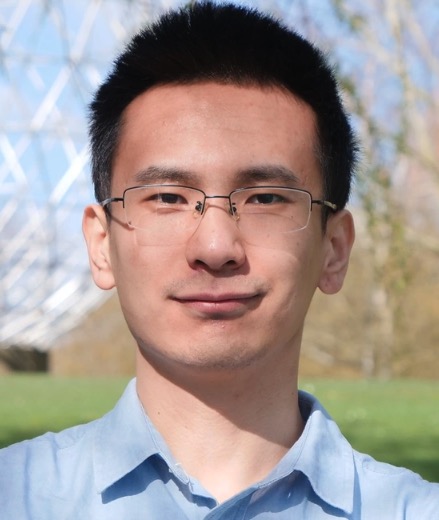 Yongxin Yang合作论文数Centre for Multimodal AI, School of Electronic Engineering and Computer Science, Faculty of Science and Engineering, Queen Mary University of London3
 Panagiotis Eustratiadis合作论文数University of Amsterdam3
 Huon Fraser合作论文数2
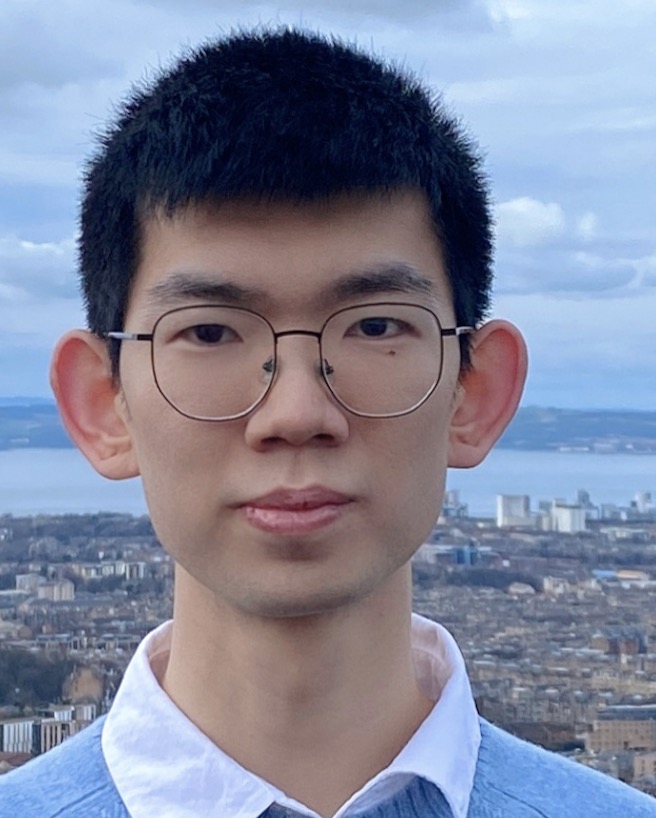 Yongshuo Zong合作论文数School of Informatics, University of Edinburgh;Centre for Doctoral Training in Biomedical Artificial Intelligence, University of Edinburgh2
 Ondrej Bohdal合作论文数Samsung Electronics2Gehan Anthonys合作论文数School of Engineering, University of Waikato2
 Massimiliano Pontil合作论文数Computational Statistics and Machine Learning Unit, Istituto Italiano di Tecnologia;Centre for Artificial Intelligence, University College London;Department of Computer Science, University College London2
 Minyoung Kim合作论文数Samsung AI Center2
 Jan N. Van Rijn合作论文数Leiden Institute of Advanced Computer Science (LIACS), Leiden University2
 Vithya Yogarajan合作论文数School of Computer Science, Faculty of Science, The University of Auckland2
 John A. Perrone合作论文数University of Waikato2
 Felix Mohr合作论文数Department of Computer Science, University of Paderborn2
 Subramanian Ramamoorthy合作论文数School of Informatics, University of Edinburgh;Institute of Perception, Action and Behaviour, University of Edinburgh;FiveAI Ltd;Alan Turing Institute2
 Jan Stühmer合作论文数Heidelberg Institute for Theoretical Studies;Karlsruhe Institute of Technology;Motif2
 Geoff Holmes合作论文数University of Waikato2
 Fady Rezk合作论文数Institute for Infocomm Research1
 Taehoon Kim合作论文数School of Informatics, University of Edinburgh1Philipp Bomatter合作论文数School of Informatics, University of Edinburgh1Mike Huisman合作论文数1
 Xin Wang (王鑫)合作论文数Institute of Human-Computer Interaction and Media Integration, Department of Computer Science and Technology, Tsinghua University1
 Alexander Rutherford合作论文数Oxford Robotics Institute, University of Oxford1
 Sahel Torkamani合作论文数ANGLE Lab, School of Informatics, University of Edinburgh1
 Adrián Javaloy合作论文数April Lab, University of Edinburgh1
 Rana Alkhoury Maroun合作论文数1
 Lu Yihe合作论文数1Hong Chen (陈虹)合作论文数1
 Haozhe Sun合作论文数1Adrian El Baz合作论文数1Yinbing Tian合作论文数1
 Edesio Alcobaca合作论文数Univ Sao Paulo ICMC USP, Inst Math & Comp Sci, Sao Carlos, SP, Brazil1
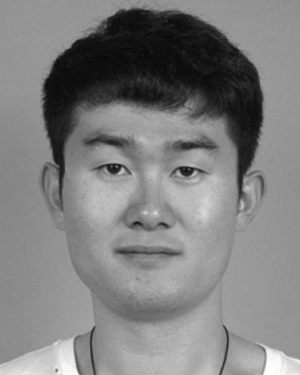 Debin Meng合作论文数Shenzhen Institutes of Advanced Technology, Chinese Academy of Sciences, Shenzhen, China1
 Ihsan Ullah合作论文数Korea Univ Technol & Educ, Adv Technol Res Ctr, Cheonan, South Korea1Lien T.H. Pham合作论文数1Rik Sarkar合作论文数School of Informatics, The University of Edinburgh1
 Elliot J. Crowley合作论文数Institute of Imaging, Data and Communications, School of Engineering, The University of Edinburgh1
 Zhengying Liu (刘正莹)合作论文数School of Urban Planning and Design, Peking University ShenZhen Graduate School1
 Antonio Vergari合作论文数Dept Comp Sci Bari, Univ Bari Aldo Moro1
 Royson Lee合作论文数Samsung AI Center1
 Tony Smith合作论文数University Department of Rural Health1




